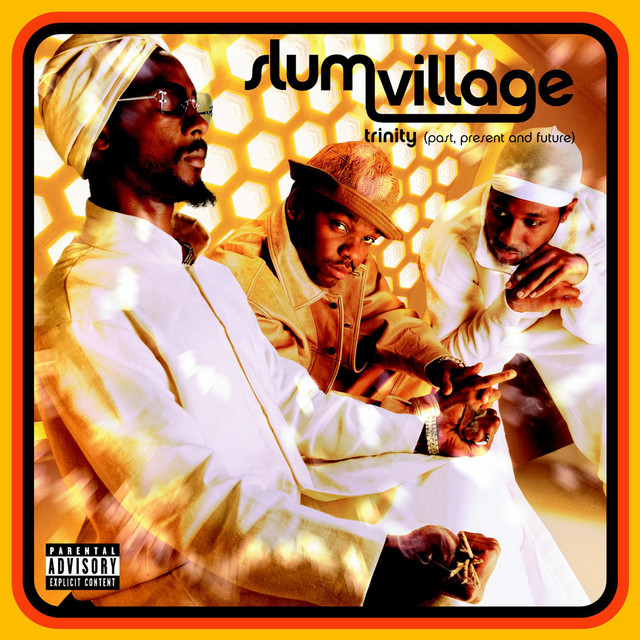
It can be easy to get stuck on Slum Village’s label debut Fantastic, Vol. 2 (2000), one of the finest hip-hop albums of any era. With J Dilla at the helm, it bumps and grooves on a level that is strictly more beautiful than other records. It’s not hard to see why Dilla has attained a legendary status, but his absence from Fantastic follow-ups (he left the group to focus on a solo career several years before his death in 2006) leaves them relatively underrated.
Trinity is a great example of this. Take it on its own terms and it’s a very rewarding project. Despite a lack of Dilla’s production (only 3 tracks out of 23), the sound of Slum Village very much remains, in no small part due to the presence of founding member T3 on the boards as well as Detroit producers of the same ilk like Waajeed and Black Milk. Baatin’s trademark voice (similar to Q-Tip’s) carries along from the first album, and a young Elzhi (!) joins as a welcome addition to the crew.
“Tainted”, produced by Roots-affiliate Karriem Riggins and featuring Dwele, is an early highlight with one of the few classic SV videos. Elzhi sounds energized all over the project, with his verse on “La La” standing out as a particular scorcher. “One” has one of the wackiest Dilla beats I know of, with a twinkly piano sample and a punching drum. “Slumber” bangs with a beat courtesy of Hi-Tek.
At nearly 70 minutes, Trinity could have done with some trimming. I mean, there are 2 intros on this thing. Still, for fans of Fantastic and hip-hop in general, Trinity has a lot to give.
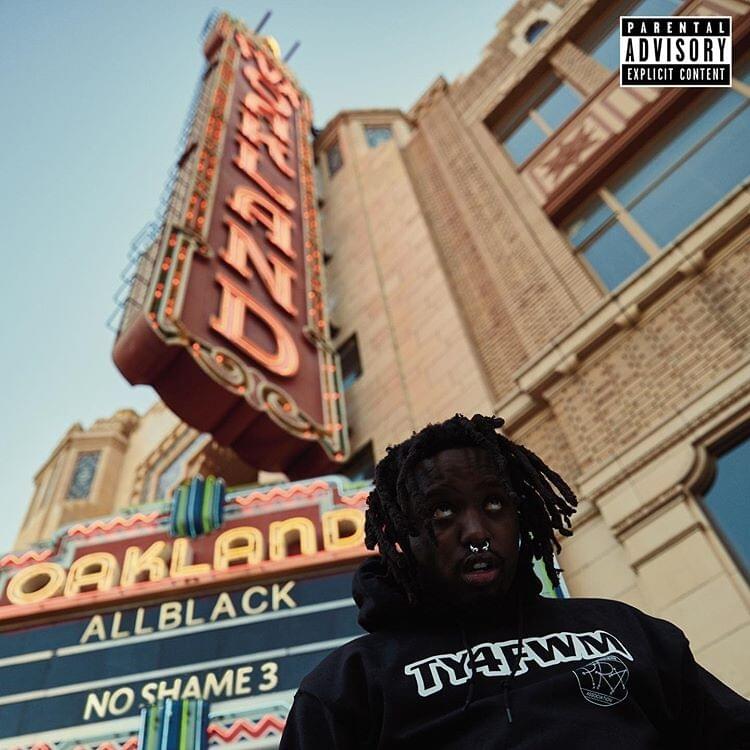
First off, I want to give a shoutout to DJ Fresh. For 15 years he’s been making killer beats for artists in the Bay Area and elsewhere. His Tonite Show series of full length collaborations with various rappers never fails to impress me. He only produced 2 tracks on No Shame 3 (“All My Children” and “S.H.E.”), but they both stand out.
I first heard Allblack on Nef the Pharaoh and 03 Greedo’s “Ball Out” (2018). That one’s a slapper, opening with an Allblack verse over a beat from DTB, who produced almost half of No Shame 3. Allblack is from Oakland, but he has a fast, punchline-filled approach that would fit well with the contemporary Detroit sound. Indeed, Detroit’s Helluva has 2 beats on here including the title track.
The vibe throughout No Shame 3 is fun, an impressive display of lyrical energy with distinctive Oakland swagger in both beats and rhymes. The aforementioned DTB pumps bass into tracks like “Pizza Rolls”, with its hilarious depiction of drug-induced paranoia (“I watched Silence of the Lambs and had a bad dream / I stopped smokin cause I caught my potna lacin weed”). Overall, I’d call it one of the more under-appreciated rap full-lengths of the last couple years.
“Crushed out tank on my neck / protect my chest like a vest / No more coke, no more dope / just alcohol and sess“
I wish I could find a huge high-res version of this album cover because it’s just that good. White Flame is my favorite Lil B mixtape, and that cover is a take on this one. It’s just one example of the late Soulja Slim’s wide influence in hip-hop. Known as a teen for rocking block parties in New Orleans’ oft-namedropped Magnolia Projects (his home), he was signed to Master P’s No Limit label where he recorded Give It 2 ‘Em Raw at 20 years old.
A young man, it seems Soulja Slim had seen enough for 2 lifetimes (hence “You Ain’t Never Seen”), which could be the reason he has so much to say. Over 20 tracks, Slim raps like he’ll never be able to get everything off his chest. He repeatedly references a past life of snorting dope and the reality of doing time in jail. According to nola.com, he “was serving in prison on a probation violation in 1998 when… Give it 2 ‘Em Raw fell just short of selling the 500,000 copies needed for coveted gold-record status.” However, his debut seemed to lead him in a positive direction. Having sworn off hard drugs, Slim focused on music and continued to record up until his murder in 2003.
“From What I Was Told” busts this album open with a vocal energy that just keeps going and going. The explosion sound effects compliment Beats by the Pound’s cartoonish digital production. No Limit is really in full effect here. You have Percy on 5 tracks, 2 Mia X duets (of which “Anything” is superior), C-Murder, Silkk the Shocker, Mr. Serv-On, the then-No Limit artist Snoop Dogg(!), and an uncredited appearance from Mystikal on the standout “Get High With Me”. Another favorite of mine is “Getting Real” with Fiend, whose energy puts him among the best of No Limit’s best (and he’s still rapping 25 years later, god bless him).
If you can get with the somewhat dated production, it’s not hard to appreciate Soulja Slim’s gift. You can hear his influence on the GOAT Weezy, especially on a track like “Takin’ Hits” – early Lil Wayne sounds a lot like this.
“He would have you laughin’ all day, he would say somethin’ out of the blue to make you laugh.” -5th Ward Weebie
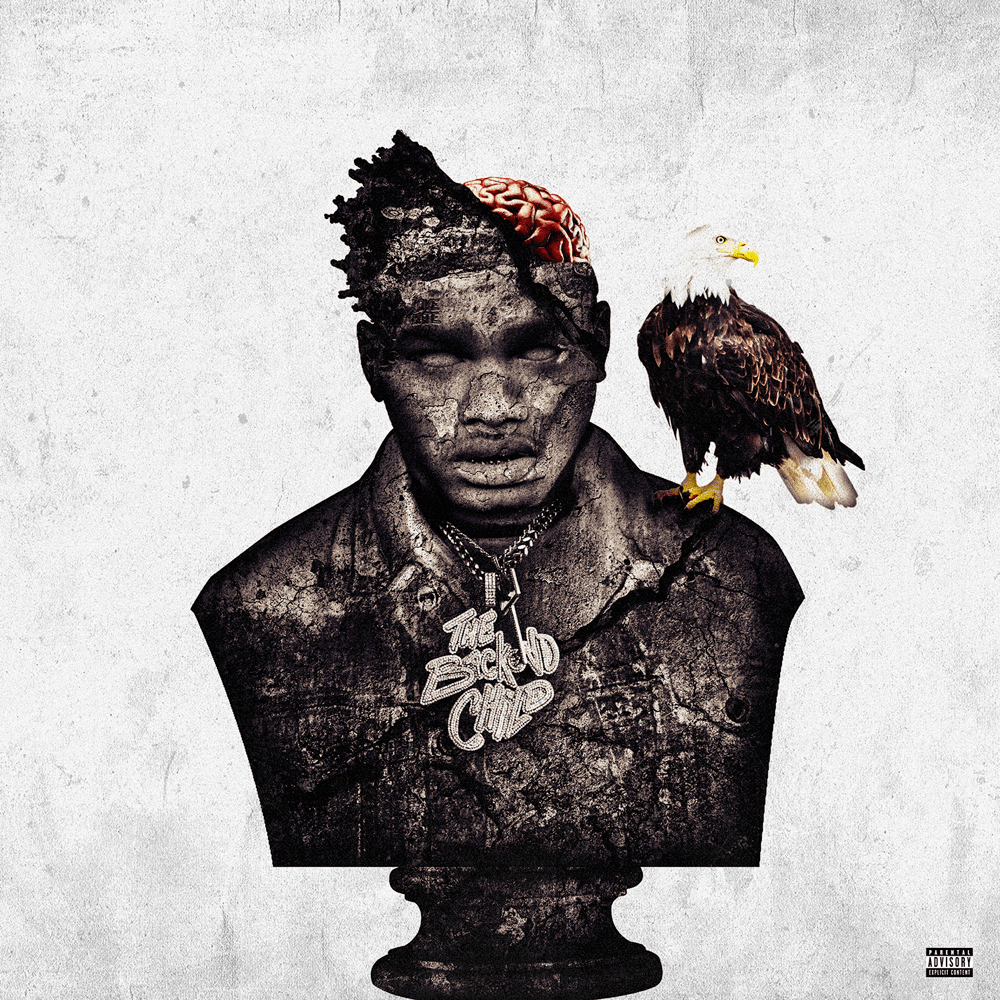
In the streaming version, the eagle has a chain, too.
NoCap! If you’re unfamiliar, the name might be too ridiculous for you to commit to the music. But I implore you, if you’ve never heard “Ghetto Angels”, listen to it. The song is an incredible ode to the artist’s fallen friends, expressing a vulnerability (“I end up cryin’ on my best days”) that is often missing in hip-hop, over an appropriately heavenly beat.
It’s hard to say “Ghetto Angels”, from The Backend Child (2019) isn’t the young rapper’s best song, but lately I’ve been stuck on Steel Human, which as it stands is the most recent project from the 23-year old artist. Like a lot of newer rappers, Cap does the rap-singing thing. He stands out for a couple reasons: for one, he has a great voice and ear for melody. And lyrically, he has a unique and clever approach. The song that really sold me on NoCap (besides “Ghetto Angels”) was Lil Baby’s “Dreams 2 Reality” from 2018. Produced by frequent collaborator and fellow Alabama native Al’Geno, it features the NoCap line, “I’m on top of all these n****s, I can see when all these angels piss.” It’s such a weird way of bragging that it stuck with me.
Steel Human contains similarly confounding gems. “If I leave the game, will my Xbox love me?” “I’m a drunk boxer / I pour lean in my Hawaiian Punch”. “Playground love / I let her slide and she got mood swings”. The more you listen to NoCap, the more wordplay you uncover. As far as younger rappers with a pop/melodic sensibility, NoCap is one of the best. Also, all the features here are great. Here’s hoping for more from NoCap.
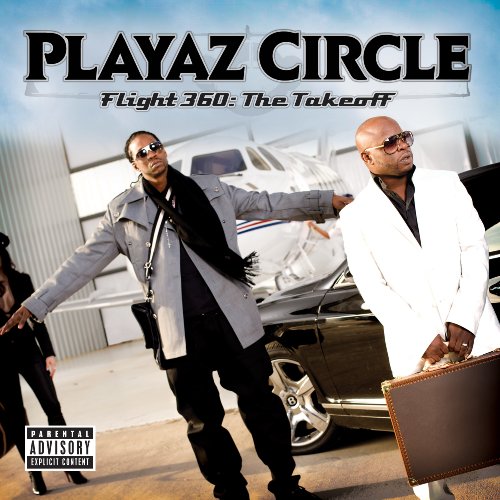
You may not fully understand why 2 Chainz is doing that ridiculous airplane wing-arms pose on the cover until you hear Playaz Circle’s “Look What I Got” in a car: truly soaring, blissful music and the finest gem on this largely-forgotten album from the Atlanta duo. Dolla Boy (seen above on the right) is a more than serviceable rapper, occupying the same confident, punchline-filled style as Tity Boi. But it’s clear that he doesn’t have that same X Factor as 2 Chainz, who consistently outshines his partner here. Back to that cover: Deuce is poised to takeoff, paving the way for his solo career (especially that crazy 2012 era in which he had a million features) with very entertaining verses, displaying his outstanding humor and style.
When I play an older release like this one it helps to confirm my opinion that he deserves his props as a seasoned vet, one who has spitting heat since 2003 (see Ludacris’ “We Got”) and finally got his respect with a breakthrough after Playaz Circle. This isn’t an amazing disc, but it is filled with excellent music. The Raekwon track is super hot, “Ghetto” is a great Outkast nod (with what may be 2 Chainz’s strongest verse on the album) and “Stupid”‘s indulgence is delightful. I even dig the corny R&B tracks in the middle, particularly “Quit Flossin” (shoutout Jagged Edge!). Unfortunately “Big Dawg” is like a weaker version of “Duffle Bag Boy”: Wayne’s decent hook and disappointing lack of a verse don’t help a not-that-great song. But it may be the only letdown on this album.
If you have little tolerance for hip-hop post 1997 that isn’t ultra conscious, political or abstract, Flight 360 isn’t for you. But it can get props from me! Maybe this will remain a forgotten portrait of 2 Chainz as a rising star. If so it will still be music that just makes me happy.
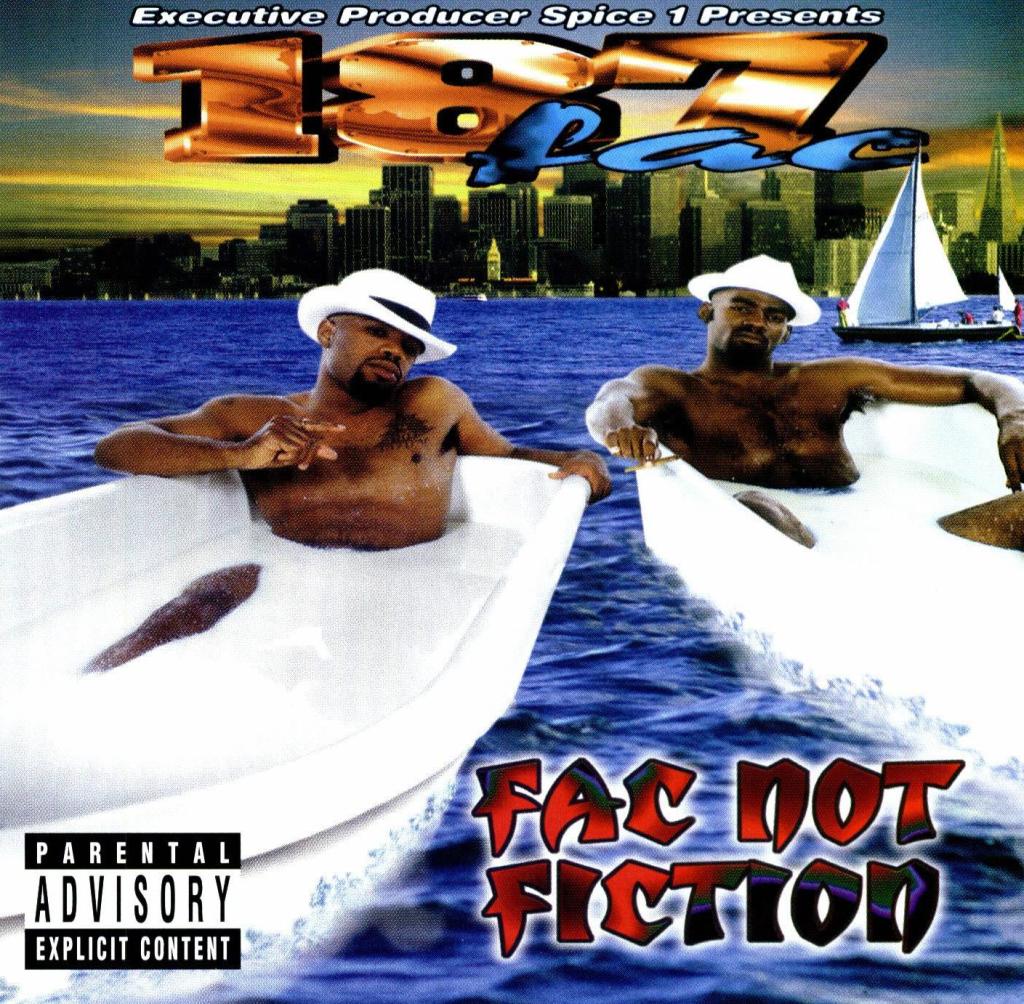
Sometimes an album cover just pulls you in, y’know? When I saw Fac Not Fiction it was like, no question, I have to hear this. Not only are these guys lounging in their own personal hot tubs, but the tubs are in the San Francisco Bay. Amazing! I like the little sailboat in the background, too, good detail.
Enter 187 Fac. A weird name for sure, and it’s no great wonder this duo didn’t take off. But if you’re a fan of 90s Bay Area rap, you’ll find some gems here. As you can see from the cover they were tight with Spice-1, who executive produced. Ant Banks, who frequently worked with Spice and Too $hort, takes the wheel on production here, and the results are excellent.
Opener “Tha Frontline” sets the tone right, with a nice balance of ominous and chill. DJ Screw did justice to “Peer Pressure” on one of his tapes, and the original is great. One thing I like about 187 Fac is their quick flows, and over the g-funk instrumentals the combination is super smooth. They also like to say “facadelic”.
Would it be a Bay Area 90s rap album without a feature from someone in E-40’s Click? Of course not, and that’s why B-Legit shows up on “All Head No Body”. Unfortunately this is a weak track, just some ugly sex raps (this is one of the worst trends in west-coast hip-hop). “Graphic”, though, with what is as far as I can tell the only 187 Fac video, is a slapper. The bass lines are fat, and the mid-tempo bump suggests a lowrider with hydraulics.
“2 Geez”, the single, is a concept song about what the rapper’s personal lives might look like at the turn of the millenium. The guest (I believe it’s the brilliantly named Almon D) wonders if he will be “living like a Flinstone or a Jetson” in the year 2000. He fantasizes starring in a sitcom, “some shit that’ll make your mother laugh,” and owning a hovercraft. Excellent 3-year plan.
The closer “Paul Masson” is a redux of the Beasties’ “Paul Revere”, and we didn’t really need another “Paul Revere”, did we? This and the aforementioned “All Head No Body” are the only obvious skips to me. That means a solid, groovy Bay Area rap album. Since it’s a rarity, finding a physical copy can be expensive – Google the album and you will find copies offered for well over $100! In the year 2Geez, 187 Fac changed their name to DenGee and released one more album, DenGee Livin’. Rapper G-Nut passed away in 2018.
Fac Not Fiction is not streaming as of this write-up.
If you’re around my age, this CD cover haunted your childhood. It’s so ridiculous: Ludacris’s meteor-sized fro branching out over his snarling maw, slapped on a bobblehead-body, wad of cash in hand. And that dog, that fucking cartoon dog. The dog’s face is so eye-popping, you might never notice that he’s perched atop a trash can, or that there’s an Atlanta street depicted behind Luda, the city’s evergreen canopy poking out from the blank spaces. Lurking behind this wacky cover is an outstanding album, Luda’s sophomore release and arguably his greatest effort.
Ludacris likes cars. 2 years before co-starring in 2 Fast 2 Furious (2003), Ludacris told an interviewer about his writing process for Word of Mouf, “most of the time I write [while] just driving in the car. When I’m driving alone and I’m listening to my music is where I write most my stuff. It’s usually dangerous because I’m writing and driving at the same time.” This clearly translates to the smash hit single “Move Bitch” – “I’m doin’ 100 on the highway / so if you do the speed limit, get the fuck outta my way!“. This banger (those drums!) was tailor-made for Mystikal, who delights in his absurd delivery (“Hold up wait up shawty ooh aw whazzap…”). While I-20 dilutes the track a little bit, it’s still a classic. Plus, the Wiki page currently contains this incredible description: “In the song, the rapper exhorts a person to move.”
The Nate Dogg assisted “Area Codes” is another classic single. Jazze Pha (Mr. “1, 2 Step”, if you didn’t know) provides the perfect laid-back groove for Luda and Nate to slide on. No less than 43 area codes are name-dropped (shoutout to the 215) and thanks to Wikipedia you can see a complete list of them. Years later Luda would reflect, “The song could only be but so… long. And yes, there are many area codes that I wish I could’ve put in there. However, I tried to get the ones that were as honest to the actual hoes I had in those area codes as possible.” Honesty!
And then there’s “Rollout”. A Timbaland production both brash and glittery allows Luda to be as pompous as he wants, lyrically predating the barrage of media questions on Drake’s “HYFR” by about a decade. On the note of production, the lineup throughout this disc is stacked, with major contributions from Organized Noise and, perhaps most notably, a young Bangladesh. The producer who would go on to make Weezy’s “A Milli” has 5(!) contributions here. I particularly love the deep cut “Freaky Thangs”, with an exceptional chemistry between Ludacris and Twist. Cris matches Twista’s signature triplicate flow with both rappers in peak form, (also, both are Chicago natives). It’s a fitting follow-up to the classic “What’s Your Fantasy”.
“Growing Pains” is also incredible. A collective reminiscence on growing up in the 80s, Lil Fate and Ludacris detail the toys they played with, clothes they wore, dreams dreamt and friendships forged. It’s a track with refreshing emotional depth amidst lots of (effective) bravado and sex raps. “Cold Outside” has weight to it too, with a relatable refrain: “I’m hidin’ out and smokin’ herb / Cause my boss is gettin’ on my motherfuckin’ nerves / but I gotta take it, cause it’s cold outside”.
Jermaine Dupri’s “Welcome to Atlanta” serves as a victory lap of a bonus track. At this point in the album, Ludacris has proven himself a multi-faceted talent with humor, vulnerability and technical skill in spades. Throughout the next decade he would remain a tried-and-true hitmaker, as inescapable as any other rapper on the radio. It’s been 6 years since he released an album, and the 43-year old seems content to sit back and enjoy the fruits of his labor, deservedly so. On Word of Mouf, you can hear him transitioning from local phenom to superstar, and the sound is sweet.
Say what you will about Yelawolf, and since it’s 2021 you’re probably not saying anything. But back in 2011, Yelawolf was in the same XXL Freshman class as Kendrick Lamar, Meek Mill, YG and Mac Miller, and showed at least some of the same commercial, if not artistic, potential. The “Freshman” Yela was already in his 30s, having independently released his first album CreekWater in 2005. CreekWater wears the influence of ATLiens (1996) on its sleeve, which as hip-hop touchstones go is a pretty good one to use as a springboard, even for a white boy from Alabama. Listening to it today, it’s clear that from the early days of his career Yela could both rap and carry a hook well (see “Breathe”). In this early stage he wasn’t showing much Eminem influence (besides being a white rapper), but that connection would come to full fruition by the end of 2011, when he was signed to Universal’s Shady imprint by Em himself.
Even on 2010’s Trunk Muzik the comparison is hard to avoid, since Yela presents himself as a sort of Southern Slim Shady, spitting fast and hailing from the trailer parks of Gadsden, Alabama rather than the trailer parks of Detroit. But Eminem himself is nowhere to be found. I think, then, that this was a sweet spot in Yela’s career where he could operate as a still-gritty, rural counterpoint to Em without being overshadowed by the influence of the superstar, who was far past his prime even ten years ago.
I remember seeing the video for “Pop the Trunk” on MTV back in the day, and its slightly cartoonish, eerily vivid atmosphere is still an effective representation of what Yelawolf is about (“This ain’t a figment of my imagination, buddy / This is where I live”). But my real introduction to Trunk Muzik was “I Just Wanna Party”, which I discovered deep into my Gucci Mane phase of 2012-2013. The hook is absurd (I love it), but Gucci kills the shit, declaring himself a partying rockstar in the company of Jimi Hendrix, Bob Marley and Paul McCartney in a rapid-fire verse. Fans of Big Boi’s 2010 solo debut Sir Lucious Left Foot should recall that both Yelawolf and Gucci had great features on that album. Indeed, Big Boi himself appears in the “I Just Wanna Party” video. Rittz kills it on “Box Chevy”, another cool ode to cars that finds him rapping fast over a laid-back beat, bringing Houston’s Z-Ro to mind. “Love Is Not Enough” spins Rick James’ “Hollywood” (also sampled on Three 6 Mafia’s “Da Summa”) into a pained tale of high-school love.
This era of late 2000s-early 2010s rap music is special to me because it reflects my early teenage years. Trunk Muzik 0-60 is not one of the best rap albums of this era. “Get the Fuck Up!”, “Billy Crystal” and “Marijuana” are all pretty bad songs. Yelawolf is now 41 and it’s doubtful that he will ever regain anything close to the traction he had a decade ago. But I think this music is worth revisiting. After all, a rapper giving props to Kingpin Skinny Pimp, Beanie Siegel and Pastor Troy on the same album doesn’t happen that often. Yelawolf is the real deal.
“Gold house n****, only n**** with a house” – “Tiny Pants Bitch”
Lil B went on his most prolific run from 2010-2013 (2013 being the first year since 2009 that he released less than 5 mixtapes), and a decade later I’m inclined to agree with Tinymixtapes that 2012’s White Flame best exemplifies what is most incredible about this output. Admittedly, I’ve probably heard less than half of his 60+ full-length (or longer) projects, but recently I’ve enjoyed immersing myself in the mystifying ocean that is the Lil B discography. It helps that it’s all streaming. Whomst amongst us remembers downloading Basedgod tapes from Datpiff, often loaded with dozens of songs, only to find our laptops running low on space? Thankfully, the massive Lil B catalog came to streaming platforms in 2019, and now sampling any tape is as easy as a click.
Gold House (alternatively Goldhouse) was released on Christmas 2011, about a month before the aforementioned White Flame. What I love about this era of Lil B is the energy and off-the-wall performance, and I think a lot of this has to do with the production here. After White Flame came God’s Father, which has its own fanbase (it’s currently Lil B’s highest-rated project on RateYourMusic at an average of 3.77/5 from over 2500 ratings). However, God’s Father contains spacier, cloudier production. Over atmospheric production, Lil B is often more likely to loosen his flow and rap in a lethargic drawl, and this is where I feel he falters most as an artist.
This cloud-rap production is hard to find on White Flame and Gold House. Rather than the atmospherics beats of Clams Casino and the like, we get a style much more indebted to New Orleans: No Limit and Cash Money Records’ glitzy, turn-of-the-millenium bangers. Indeed, White Flame‘s album cover pays homage to Soulja Slim’s Give It 2 ‘Em Raw, he directly shouts out Cash Money here on “Im Like Killah Remix” and the ridiculous “Awsome” beat is simply a slowed “Go DJ”. An energized Lil B is rapping within one second of the opener “Green Card” (“Imma call you Homer, you got no dough”). The rapid-fire “I Love Strugglin” provides just one of many abstract kernels of Lil B’s unparalleled perspective: “Bitch Mob bitch, suck a dick / Gold House bitch, we love strugglin'”.
Lest you think Lil B solely exists in a fantasy realm, peep “Gangstas Smile” which begins, “My girl had an abortion, changed the game / I’m not ready to be a dad”. Damn. And all this over a gorgeous soul sample. Gold House concludes with “Based Gangstas Prayer”, a solemn conclusion to an otherwise rambunctious mixtape.
Hip-hop. Rap. Same thing. My favorite genre. This week it’s all rap rap rappity-rap mickey mouse cheese hip-hop walt disney.
We begin with the A.B.N. (Assholes by Nature) Z-Ro and Trae, who need No Help. Following that is a similar statement of independence from another great duo, 8Ball & MJG with Nobody But Me. Young Thug celebrates fatherhood on Daddy’s Birthday before we take it back to ’94 with Ill Al Skratch’s Where My Homiez? (sick beat on this one). Then Souls of Mischief producer Long Beach’s Domino gets funky on Sweet Potatoe Pie. Staying in California we revisit L.A.’s Bloods & Crips (composed of real gang members) with Steady Dippin’. Coolin’ is Chief Keef in the sublime Valley, then Cam’ron provides a proletariat anthem in (I Hate) My Job. Next is an underrated track from Migos’ Quavo, South Africa. We round things out this week with Cities Aviv’s cathartic Worlds of Pressure.





 good singing gum