Album of the Week: Miles Davis’s Blue Moods (1955)

from user dennislamenace on rateyourmusic

The prolific Miles Davis rarely ever played with a vibraphonist (I don’t believe he ever did after the 50s), and he played with the legendary Charles Mingus even less often. In July 1955 the two artists were on the cusp of brilliance: Miles was about to form his First Great Quintet, which would eventually feature John Coltrane, and Mingus was only 6 months from recording Pithecanthropus Erectus, arguably his first masterpiece. Miles was in debt and agreed to a hastily-arranged session with Mingus for Mingus’s recently formed Debut label. The resulting album is Blue Moods, a short and oft-overlooked record that features the only full-length collaboration between Miles and Mingus.

Although the two legends had something of a love/hate relationship, the 4 songs on Blue Moods are fairly quiet standards. The album begins with “Nature Boy”, the best-known song of bohemian writer/oddball Eden Ahbez, whose Eden’s Island album is something of a lost exotica treasure. Teddy Charles’ vibraphone creates a deep atmosphere for Miles’ trumpet, and Mingus’s strumming about 4 minutes into the track. Miles’s wonderful interplay with drummer Elvin Jones (perhaps best known for becoming a mainstay in John Coltrane’s 60s bands) about 6 minutes into “There’s No You” is another highlight of this brief album. Perfectly mellow, Blue Moods is both a unique early entry in the discographies of two jazz giants and a go-to for when I want to play something relaxing.

Album of the Week: E-40’s Poverty and Prosperity (2015)

In 2015, E-40 had spent the past 5 years releasing double- and triple-albums (The Block Brochure had a whopping six installments). But then, the 47 year old rapper decided to switch things up by releasing an anomaly in his discography: a 7-track EP with themes of family, introspection, and god-fearing christianity.

So here’s an easy litmus test for this one: If a 7-minute version of “Across 110th Street” as interpreted by E-40 sounds good to you then you’re in luck, because that’s exactly how Poverty and Prosperity starts. No, he doesn’t sing the chorus (that’s Park Ave.), but his repurposing of Bobby Womack’s classic anthem into a tribute and commentary on his hometown of Vallejo, California is a surprising and welcome start to this release.

More surprises abound: The soulful Mike Marshall (who sang the iconic chorus of “I Got 5 On It”) helps turn “The Way I Was Raised” into a gospel dirge; “Appreciation” is practically pop country! Although its Uncle Kracker sheen may be overly saccharine to some, the sincerity of “Appreciation” pours through 40’s preaching. “I’ve been speakin’ these real deep messages for many moons, man,” he begins, before addressing the importance of loving family, difficult relationship issues, and how to help a friend addicted to drugs. Almost surreal in its honesty, it stands as one the more unique rap songs I’ve heard from a seasoned veteran and is a successful experiment in genre-blending.

Poverty and Prosperity is not without a classic Yay Area slapper. “Gamed Up” truly endows the listener with indispensable “game” (meaning knowledge or wisdom): “You can hate / Or you can learn”. But my favorite track is the closer, “The End”. Beginning ominously with a sample of Revelation 1:7, 40 then enters this dramatic track by reminiscing on a lost friend. In the second verse he rebukes Satan while owning up to his own habits (“Show me where in the Good Book say I can’t smoke a Taylor!”).

E-40 has always been in his own lane, but his messages of love and devotion are universal. As the man himself would say, “I ain’t above you, I ain’t below you, but I’m right beside you.”

Stream the EP on Spotify.

Album of the Week: Linda Ronstadt’s Silk Purse (1970)

Linda Ronstadt - Silk Purse
via PC_Music on rateyourmusic

Not knowing much about Linda Ronstadt outside of some big hits, I stumbled upon Silk Purse last year while looking for cover versions of “Will You (Still) Love Me Tomorrow?”, as made famous by The Shirelles. I loved Linda’s take on the song and this quickly became one of my favorite country albums.

Recorded in Nashville at age 23, Rondstadt’s second album Silk Purse is a mostly breezy record, as evidenced by its adorable album cover and short runtime (just under 30 minutes). The brevity makes it easier to love. There’s an undeniable Soul imbued in the aforementioned Shirelles cover as well as “Are My Thoughts With You?” (written by the great Mickey Newbury,), and the traditional singalong closer “Life is Like a Mountain Railway”.

Elsewhere, “Long Long Time” is a wrenching ballad with the album’s best vocal performance, and according to an admin on a Linda Ronstadt fan forum, “Linda was so exhausted after doing that take that she fell asleep in the control room.” The single earned her a Grammy nomination for Best Contemporary Vocal Performance, and was the only semblance of a hit from the album, peaking at #25 on the Billboard Hot 100.

A few years later in 1974, Ronstadt would reach superstar status with Heart Like a Wheel. That’s an excellent album in its own right, but Silk Purse is simply an underrated gem that deserves more love. See a couple great related photos below and a link to stream the album today.

1970 LA billboard via simpledreamin-blog on tumblr, photo by Anthony Fawcett
Album cover outtake via rockcellarmagazine.com

Listen on Spotify

Album of the Week: Roberta Flack’s Feel Like Makin’ Love (1975)

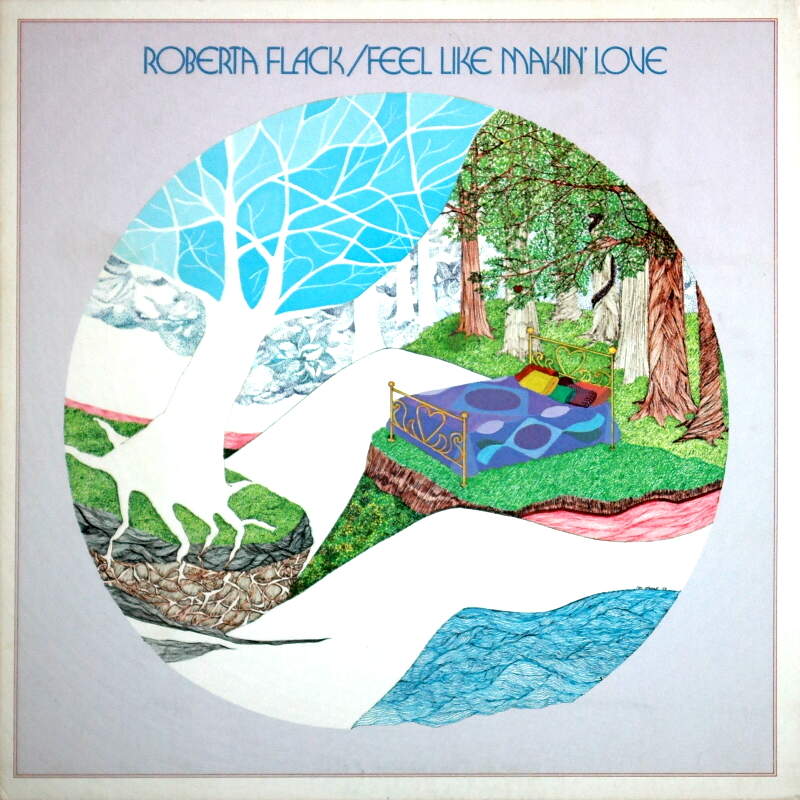
Atlantic / SD 18131 via LogicalSpock

Some of legendary singer Roberta Flack’s most popular albums include her debut First Take and later Killing Me Softly, gospel-leaning soul albums with immortal ballads like “The First Time Ever I Saw Your Face” and the latter album’s famously Fugees-covered title track. But my favorite is the under-appreciated Feel Like Makin’ Love, a lush and sensual foray into the Adult Contemporary sound that defined many hits of the mid-70s.

Musically, Feel Like Makin’ Love is more Carole King than Nina Simone, its breezy title track earning a #1 spot on Billboard’s Hot 100 as well as three Grammy noms including Song of the Year. Younger heads like myself may also recognize it from D’Angelo’s cover version on his mid-career masterwork Voodoo.

The vibe here is resolutely mellow and sexy, with a much larger band than previous Flack recordings, including but not limited to jazz legends Bob James (keyboards), Idris Muhammad and Alphonse Mouzon (drums), and Joe Farrell (oboe). Though quite accessible, the record is expertly arranged and performed, with an early highlight in “I Can See the Sun in Late December”.

“I Can See the Sun” was penned by Stevie Wonder, who was at a career peak around this time. It shows: the nearly 13-minute epic feels less than half that length, with Flack carrying the soaring melody and the band filling out the sound like sunlight shining into the forest of the album cover. It’s a wonderful song on an album full of them.

Feel Like Makin’ Love‘s recording process took over a year and was reportedly fraught with production disputes, leading to delays in its release and an emotionally distressed Roberta Flack. But you wouldn’t know that upon hearing it. The final product is an outstanding collection of smooth soul, ideal for summer days and nights.

Click here to listen on Spotify.