Lo-fi production has a special resonance with music nerds like me. Whether it’s Ariel Pink’s early material (recently re-mastered and re-released), or an obscure gem like Otis G. Johnson’s God Is Love ’78, various genres achieve a special luster when they sound like they’re recorded in a trash can.
Timex Social Club never really made it big. Formed in Berkeley, California in the early 80s, they reached an apex in 1986 opening for Run-DMC while simultaneously hitting #8 on the Billboard Charts with their single “Rumors”. “Rumors” is a glossy, goofy song in the vein of New Edition or Alexander O’Neal. It’s good, but not remarkable amidst a swarm of similar 80s R&B singles. Plagued by infighting and a suit from Timex watches, the group broke up shortly after their hit. Member Michael Marshall would go on to sing the hook for Luniz’s “I Got 5 On It” and have his own solo career. Founder Marcus Thompson currently operates as a DJ and performer under the Timex Social Club name.
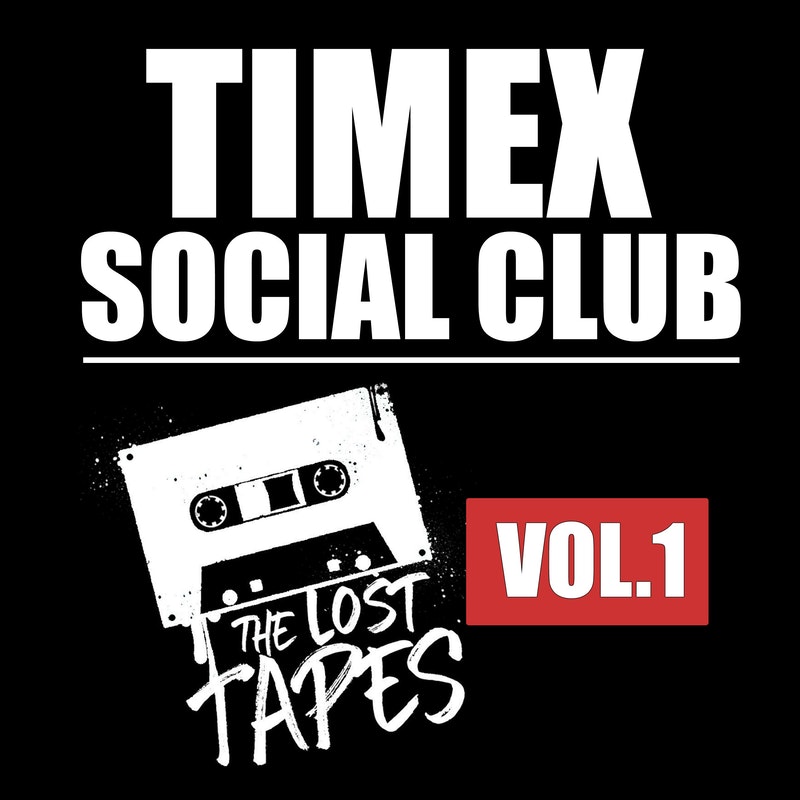
In 2019, Thompson released The Lost Tapes, Vol. 1. These songs were recorded in the mid-80s and sound drastically different from “Rumors”. Recorded on a 4-track and truly lo-fi, these Lost Tapes are gritty, weird, minimal R&B jams. The killer, unfinished “Coke Life” envisions a world of beepers, plastic baggies and pistols, while “Driving With Dee-Dee’s” employs sounds of screeching tires and laughter over an anxious beat.
As far as I can tell, Thompson as bandleader sings every song here. Of the bizarre ballad “Green Tears” he writes, “Michael [Marshall] was supposed to come and lay vocals, but he never showed. I thought he might not come because he never liked the song” (How Do Rumors Get Started: The True Story of Timex Social Club, 74). The desperation heard in synth-laden ballads like this and “Heart Like Mine” recalls the outsider romantics of Lewis Baloue. “Heart Like Mine” has a little bit of “Betcha By Golly, Wow” in its noodling background synth melody, but none of the lush nature of classic R&B is shared here. These songs are stark and strange.
It’s not all great. “I’m In Love” is the misstep: it’s simply way too long. But things end on a cute note with “Loving Angelina”. This tale of puppy love is full of fake handclaps and a humming Kurzweil K250 synth.
It’s unclear how much other unreleased Timex material Mr. Thompson has in his possession (I assume much more if the Vol. 1 is any indication). For now we have a worthwhile curio that, at its weirdest, is more Night Dolls With Hairspray than Michael Jackson.
Laura Nyro is one of my favorite artists ever, and one of the more underrated singer-songwriters of the fruitful 60s and 70s period when such musicians were found in abundance. More deeply rooted in R&B than the Laurel Canyon artists like Joni Mitchell, yet jazzier and more expansive than the great Carole King, New York’s Nyro imbued pure emotion into her music from a young age.
As a teen, she enjoyed tripping on cough syrup and listening to John Coltrane records – and if you don’t believe me, consult Michele Kort’s biography Soul Picnic. I would venture to assume that some of this mind-altered consumption to jazz influenced her masterpiece New York Tendaberry (1969). But that would come later.
The First Songs, however, are exactly that. A reissue of Nyro’s debut More Than a New Discovery (1967), all 12 of these songs were recorded in 1966 (by an 18/19 year old Nyro!). I highlight this reissue for several reasons: it’s more ubiquitous (it’s the version you’ll find on streaming services), it’s the one I own on LP, and it has a better tracklist.
The songs themselves are fairly straightforward: breezy, classic piano pop and R&B, all penned by the brilliant young Nyro. My favorites are the ballad “He’s a Runner,” with its catchy chorus and Stevie-esque harmonica accompaniment, and the sublime “Buy and Sell”. “Lazy Susan” is perhaps the best indicator of what was to become Nyro’s signature style: a lush song with several unexpected changes in rhythm and structure, as well as an emotive vocal performance (hear her almost gutturally bellow “black-eyed Sue” in the middle of the track).
Not unlike Carole King, Nyro initially made it in the industry via the success of her songs being performed by other artists. The 5th Dimension went number 1 with “Wedding Bell Blues” in 1968, and Blood, Sweat & Tears made it to number 2 on the charts a year later with their cover of “And When I Die”. Here you’ll find the original compositions in all their tender glory. As I mentioned above, Nyro would go on to make even greater music, but The First Songs holds a special place in my collection and my heart.
Imagine a party outside, in Japan, on a mountain. Heavy rain falls as ambient techno plays late into the night. This isn’t a dream: this is Labyrinth, an annual music festival on Japan’s Mt. Naeba.
It was here at Labyrinth 2012 that Italian techno producer Donato Dozzy met Philadelphian ambient/experimental musician Chris Madak, AKA Bee Mask. Dozzy called the festival “Simply, the best thing I ever experienced in my life,” and connected with Madak in an environment ripe for both musicians. Initially commissioned for a single remix of Bee Mask’s “Vaporware” (note: not “vaporwave”) 12″, Dozzy produced an entire album of reimaginings of the source material. The result: Donato Dozzy Plays Bee Mask.
The original “Vaporware” is initially a jarring track, its bleeps and blips immediately scrambling the listener’s brain before gaining a rhythm. Plays Bee Mask brilliantly uses the source material to create a much more subtle and calming experience. Infused with raindrops, the opener “Vaporware 1” is ambient bliss, looping the bells of “Vaporware” to create a sonic dreamscape.
Elsewhere, “Vaporware 3” freezes what sounds like a vocal loop a la The Field, “Vaporware 4” finds a techno groove, and “Vaporware 7” is a mind-melting finale. What Dozzy accomplished with Plays Bee Mask is outstanding in both the ambient and techno genres, especially considering the amount of music released in both fields over the past 10 years. If you consider yourself a fan of either type of music, do yourself a favor and listen to this album.
The great Joni Mitchell has a number of classic albums under her belt, and is perhaps best known for her melancholy masterpiece Blue (1971), surely one of the best singer-songwriter albums in an era chock full of them. But a year later, she wrote and recorded the underrated For the Roses, an intimate and poetic look into the demise of a celebrity couple, decades before the internet made the ups and downs of such relationships so transparent.
Nearly every song on For the Roses concerns the fallout of her romance with James Taylor. As Laurel Canyon mainstays, the fact of Mitchell and Taylor’s relationship in the early 70s is unsurprising. They sang, recorded and loved together, and Mitchell even accompanied Taylor for some of the filming of Two-Lane Blacktop (1971), the seminal road movie in which he starred. But it was not to last. As Taylor’s stardom increased, so did his roving eye, and his infidelities eventually brought an end to their affair. Fed-up and heartsick, Mitchell abandoned LA for a cabin in the wilds of northern British Columbia:
At a certain point, I actually tried to move back to Canada, into the bush. My idea was to follow my advice and get back to nature. I built a house that I thought would function with or without electricity. I was going to grow gardens and everything. Most of For the Roses was written there.
-Mitchell, 1989 interview with Rolling Stone
Living in solitude and wrapped up in books on philosophy and the nature of human existence (Thus Spoke Zarathustra was never far from reach), it makes sense that “Banquet”, the first track on For the Roses, addresses inequality and the search for meaning among people. Using a banquet as a metaphor for what is divvied up among the social classes, she sings “Some get the gravy / Some get the gristle / Some get nothing / Though there’s plenty to spare”. “Some turn to Jesus / And some turn to heroin,” she adds. This is her first dig at Taylor, who picked up the habit early on in their relationship.
“Cold Blue Steel and Sweet Fire” continues this theme, telling an ominous tale of James trying to score smack. “Let the Wind Carry Me”, on the other hand, sounds like freedom. One can sense the openness Joni explored in the wilds of Canada in the song’s jazzy strides into the sublime. It’s similar to what Laura Nyro had accomplished a couple years earlier on tracks like “Upstairs By a Chinese Lamp”. Lyrically, Mitchell analyzes both her mother’s disapproval of her youthful ways, and her own internal desire to raise a child. But this feeling “passes like December / I’m a wild seed again / Let the wind carry me”. Despite internal and external constraints, her own freedom is paramount.
I can’t quote every line that touches upon her relationship with Taylor, but it is remarkable to hear how stark she is about it. “See You Sometime” is heartbreaking: “Why do you have to be so jive? / OK, hang up the phone / It hurts / But something survives / Though it’s undermined / I’d still like to see you sometime.” The pain of a broken love is sustained in the sound. “Blonde in the Bleachers” examines Taylor’s inability to stay monogamous from his perspective, while “Woman of Heart and Mind” is biting:
You come to me like a little boy And I give you my scorn and my praise You think I’m like your mother Or another lover or your sister Or the queen of your dreams Or just another silly girl When love makes a fool of me After the rush when you come back down You’re always disappointed Nothing seems to keep you high Drive your bargains Push your papers Win your medals Fuck your strangers Don’t it leave you on the empty side?
According to Mark Bego’s biography Joni Mitchell, Rolling Stone took a deep dig at her in their year-end 1972 issue, bestowing her the “Old Lady of the Year Award”. Bego writes, “It included a chart intimating that she had slept with half of the music business. Mitchell was represented as a pair of lips pursed in a kiss. Lines were drawn to the names of Graham Nash (identified as a broken heart), David Crosby (broken heart), and gay David Geffen (erroneously identified with kisses). Also on the list were supposed lovers like her band member Russ Kunkel and her buddy Stephen Stills.”
The double-standard in rock, where men became legendary for their exploits with groupies, and women were chastised for sleeping with multiple people, was extremely apparent. The sexist distinction hurt Mitchell and severed her ties to Rolling Stone for many years. To me, it also shows how strong she was in making an album about her side of the story in a time where this was the press’s response. Almost 40 years later, I can only thank her for doing so. Transmuting all of her pain and heartbreak into a cathartic and profound collection of songs, Mitchell gave us an all-timer in For the Roses.
In a 1987 interview for Musician, speaking on her retreat from fame, the interviewer asks, “Could you find a place in yourself where you could sort things out?” Joni replies:
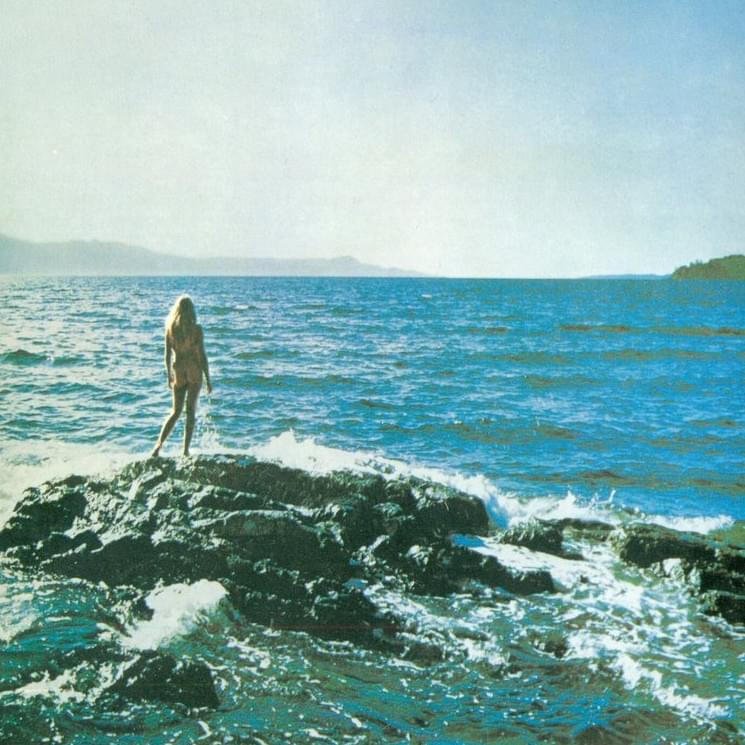
One day about a year after I started my retreat in Canada I went out swimming. I jumped off a rock and into this dark emerald green water with yellow kelp in it and purple starfish at the bottom. It was very beautiful, and as I broke up to the surface of the water, which was black and reflective, I started laughing. Joy had suddenly come over me, you know? And I remember that as a turning point. First feeling like a loony because I was out there laughing all by myself in this beautiful environment. And then, right on top of that was the realization that whatever my social burdens were, my inner happiness was still intact.
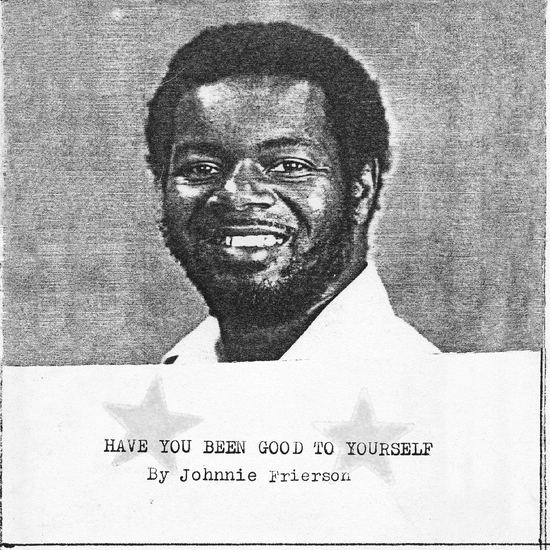
When quarantine began in March, I experienced feelings of despair. With life turned on its head, I looked for something in music to help lift me up. And what I turned to time and time again was this, Johnnie Frierson’s lost classic Have You Been Good to Yourself.
Recorded in the 90s* and released on cassette tape, Frierson’s songs are simple. The only sounds you hear are guitar, voice and occasionally the beat of a stomping foot.
What hooked me on this release is the song “Miracles”. Hypnotic and slightly bizarre, the chugging “Miracles” tells the tale of a Memphis car-customizer known as “Spaceman”. According to a 2017 article from WMC Action News 5 of Memphis, “Spaceman was a Memphian who was ahead of his time. He’d created a self-driving, voice-activated car. This was 1988 in Memphis; not 2020 in Silicon Valley.” See a surreal news clip of the report below:
“We all airplanes in this big airport called the world. We all are capable of flying,” Spaceman says. According to the reporter, “Everything [Spaceman] does is a testament to God”. Not surprsing, then, that he and Frierson would be friends.
One needn’t be a christian to feel something from Frierson’s overtly religious songs. His piety is so touching because it translates to pure passion in his music, and this passion reverberates throughout these recordings, especially in Frierson’s voice. Occasionally he releases a chilling wail, as in “Woke Up This Morning” when he cries, “I could’ve been deaaaaad! In my graaaave! But the lord has blessed me!” The straightforward lyrics, clearly delivered from the heart as the entire recordings are without any studio embellishment, are pure and uplifting. On “You Were Sent to this World”, Frierson tells the listener that they were brought to this Earth for a purpose, and that their life has meaning. Even from a disembodied voice of the past, it’s nice to hear in these difficult times.
To my ears, the best song on Have You Been Good to Yourself is the final track “Trust in the Lord”, which combines everything that makes this album so great: Frierson’s passionate singing, homey guitar playing, and simple and sincere lyrics, as well as a beautiful interpretation of “Amazing Grace”.
Have You Been Good to Yourself was re-released in 2016 by the great folks at Light in the Attic Records. According to the Memphis Flyer, label founder Matt Sullivan heard the tape from a friend and record dealer who had randomly found the cassette in a Memphis thrift store, and he was blown away. From the Flyer: “No doubt this is one of my favorite things in our catalog,” Sullivan says. “It’s one of those special albums where you feel like you’re in the room with the man, almost eavesdropping on an incredibly personal moment. He’s singing from the bottom of his heart and soul. Personally, it doesn’t get better than this.”
*Most sources indicate that this music was recorded and released by Frierson in the 90s, however I’ve also read that he recorded these songs in the 70s after returning from Vietnam. The references to Memphis’ Spaceman lead me to believe that these songs were most likely recorded in the late 80s or early 90s. The true nature of the recording dates seems unknown, but I also have not read the liner notes of the release.
Perhaps my favorite quality in music is a dreamy atmosphere. From rap (Blowout Comb) to jazz (In a Silent Way) to rock (any Cocteau Twins LP), many of my favorite albums have more in common with the lush trappings of ambient and new age music than is standard within their respective genres. And when it comes down to it, it doesn’t get much more dreamy than Julee Cruise.
Immortalized by her appearances in Twin Peaks, Julee Cruise has been making music since the 80s and her collaborations with David Lynch are well known. Since I first watched Blue Velvet in high school I was enthralled by her song “Mysteries of Love”, and I quickly bought her debut album Floating Into the Night on CD. Floating, by far her most well known project, features such legendary tracks as “Falling” (the Twin Peaks theme), “The World Spins” and the aforementioned “Mysteries”. But it wasn’t until years later that I discovered The Voice of Love, her underrated follow-up album that almost matches the consistency of the debut.
Some reggae in my Julee Cruise? Yes please! The Voice of Love opens with “This Is Our Night”, which bobs along like a Sly & Robbie remake of “Falling”. While “Friends For Life” also executes something of a reggae rhythm, the rest of the album is less surprising in its styles: “Movin’ in on You” recalls the doo-wop balladry of “Rockin’ Back Inside My Heart”, “Up in Flames” sounds like an ominous vocal take over the Bookhouse Boys theme (complete with those jazzy drum brushes), and the goofy “Kool Kat Walk” is almost a reprise of “Audrey’s Dance”.
Donna sings along to Cruise’s “Rockin’ Back Inside My Heart”, via Welcome to Twin Peaks
According to a 2018 interview with Pitchfork, Julee Cruise is not a fan of The Voice of Love. “It sounds like soup and the songs are bad”, she said. “They put on too much fucking reverb.” Surely the album isn’t for everyone, especially if it’s not for Cruise herself. It’s largely a retread of the first album, and Lynch’s lyrics are no deeper than the ones on …Baby One More Time. But if you, like me, love those earlier songs and truly believe that Twin Peaks is some life-changing shit, The Voice of Love is absolutely worth checking out.
John Holt was one of the great songwriters in Reggae, and you are probably familiar with his work whether you’ve heard his name or not. As a teen in 1967 he wrote “The Tide Is High” for his vocal group The Paragons, which was more famously covered by Blondie 13 years later (“I’m gonna be your nuuuumber oooone…”). Destined to be covered, the young Holt went solo in 1970 and recorded many cover songs himself.
“The best selling single artist Trojan album of all time” according to the monumental label (whose compilation albums include a mind-blowing collection of some of the best rocksteady, dub and dancehall reggae ever), 1000 Volts of Holt is comprised of all cover songs. Lushly orchestrated in Jamiaca, Holt tackles such diverse artists as The Ronettes (“You Baby”) Kris Kristofferson (“Help Me Make It Through the Night”, a hit in the UK), Jobim (“Girl From Ipanema”) and Roberta Flack (“Killing Me Softly”). Its most genius moment comes halfway through “I’d Love You to Want Me”, when Holt switches up the rhythm mid-chorus to sing the chorus of The Beatles’ “Let It Be”. I live for reggae brilliance like this.
Holt followed up 1000 Volts with 2000, 3000, and yes, 4000 Volts of Holt. Gems are scattered throughout (notably 2000 Volts‘ “I Will” [Beatles], which was sampled heavily on Jay-Z’s “Encore”), but 1000 Volts is the best selection and a very accessible collection for Reggae neophytes and fans alike. If you dislike heavily orchestrated music, these albums might be too saccharine for your taste, but I would recommend them to anyone else. Holt continued a productive music career for many years and passed away in 2014.
Listen to 1000 Volts of Holt on Spotify. Or, if you’re feeling really crazy, check out the super deluxe 4000 Volts of Holt.
As we enter the 2020s, one of the most interesting and productive rap scenes to keep an eye on is the Earl Sweatshirt school of artists like MIKE, Medhane, Maxo, Liv.e, Pink Siifu, Akai Solo, Adé Hakim, and others who form a loose collective of bright new ideas in music, and have released a plethoraofoutstandingprojectsandcollaborations (each word links to a Spotify stream of a great release).
Now, when I say “Earl Sweatshirt school”, I must clarify that Earl isn’t really a ringleader for these young artists. But, in addition to frequently collaborating and touring with them, his footprint on their music is indelible. The weed-drenched, emotionally direct and proudly black music that Earl has been making since his teenage years is reflected in this newer scene.
So where does Denmark Vessey fit in? The Detroit rapper and producer is older than all of these artists and isn’t strongly aligned with any of them, except maybe Earl, with whom he has collaborated several times. But I think his music forms something of a missing link in considering what has influenced this new scene.
Enter Martin Lucid Dream. This album is like a blast of fresh air – equal parts hard-hitting and tounge-in-cheek. Guilty Simpson comes repping Detroit out the gate with a brash “Warning”, then on the title track we hear Denmark rap for the first time. Over a kaleidoscopic beat, Denmark strings along stream-of-consciousness bars before Little Brother affiliate Von Pea steps in with “I wrote an article for Lifehacker / It simply said ‘Don’t Be a Rapper'”.
Vessey clearly isn’t afraid to switch things up. “Nerd N***as” closes with a long speech from the 1972 blaxploitation film The Final Comedown, and “Chemtrails” features no rapping at all, only singing. The variety in sound and concise runtime seems like a potential blueprint for a project such as Medhane’s FULL CIRCLE.
The greatest song on Martin Lucid Dream comes last with “Everyday”. Over a fantastic flip of Leon Ware’s “Rockin’ You Eternally”, Denmark and fellow Detroit rappers shine effortlessly. And before you know it, Martin Lucid Dream is over. Reissued in 2017 with the bonus tracks “Katt Williams” and “Snowing in L.A.” (prod. by Earl), the album (or EP) still barely scratches a half-hour. Brimming with fresh ideas nearly 5 years later, this is one of the tightest and most underrated underground rap projects of the 2010s.
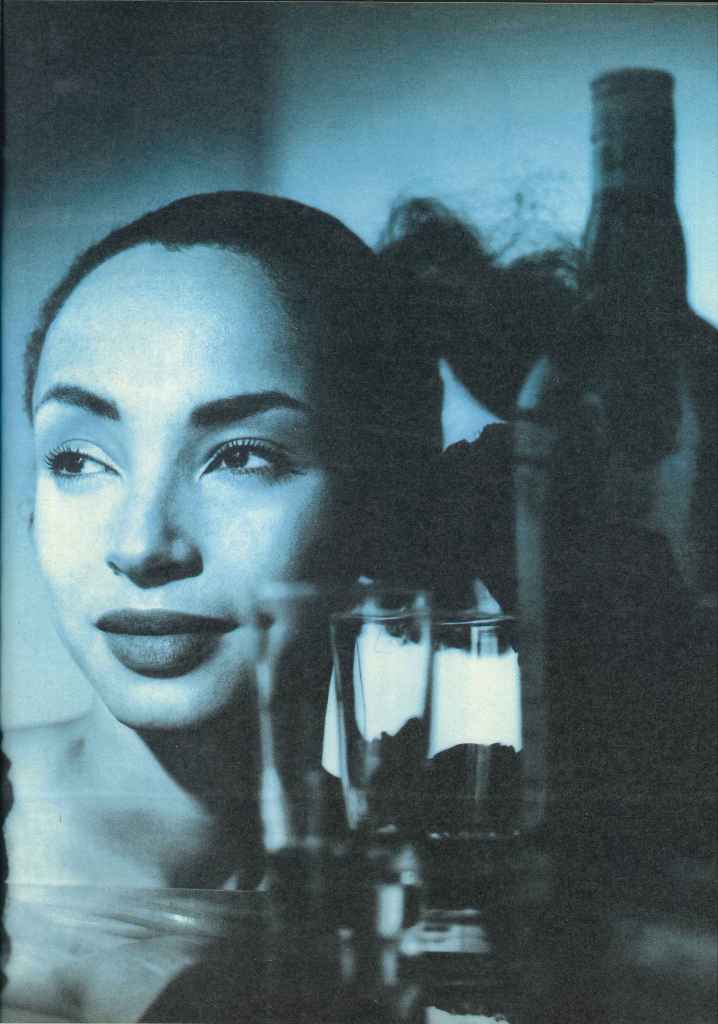
One may be forgiven for dismissing Sade’s Stronger Than Pride as something of a transitional album between Promise and Love Deluxe. Both albums are tighter than this one, with better songs and a more expansive sound. But what speaks to me here is the subtlety. The atmosphere imbued in every track of Stronger Than Pride is like water to me. There was a period of time in 2017 where I listened to this album every night, and it comforted me from the first second.
The title track is a sublime ballad, while “Paradise” is one of few upbeat tracks on the album. These two are highlights, but I love the second side of the record most. “Keep Looking” recalls the rhythms of Sade’s classic debut Diamond Life, where “Clean Heart” and “Give It Up” are more easygoing but with no less impact. I have a soft spot for songs with no drums, and the penultimate “I’d Never Thought I’d See the Day” fits the bill. “You shed a shadow on my life,” begins Sade over an ambient keyboard melody which acts as a platform for her to show off her vocal prowess.
Stronger Than Pride is almost perfect. Its weak spots are “Turn My Back On You”, which plods on for too long without much substance, and the instrumental closer “Siempre Hay Esperanza”, which would be eclipsed by Love Deluxe‘s much-stronger (also instrumental) closer “Mermaid”. But these tracks hardly negate the brilliance on display here. It’s not the Sade album I’d recommend to a beginner, but don’t underestimate it. Give it some patience and you’ll fall deeply in love.
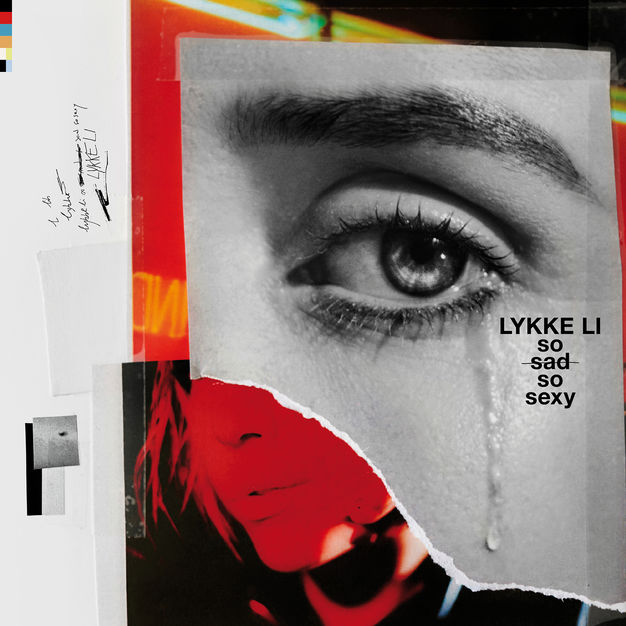
If this one slipped under your radar at the time then don’t worry, because I missed it too. But in 2018, Lykke Li’s sound changed for the better. Since the retro rock hit of “I Follow Rivers” in 2011 and the lowkey followup I Never Learn in 2014, the Swedish singer relocated to Los Angeles, had a baby, and made the best work of her career.
“For the first time in my life, I was actually inspired by what was happening right now in music. Before, I would only listen to old shit and just kind of reminiscing of the past,” she told The Fader. And working in the present with pop producers brings a much-welcomed direction to her sound.
Malay stands out as a key component of so sad so sexy. The producer who crafted much of Frank Ocean’s channel ORANGE and Blonde, as well as 3 tracks on Lorde’s Melodrama, was at the helm of production on 7 of the 10 tracks on this album. Sonically, we hear echoes of Frank’s futuristic, ambient beats. Structurally, the songs are uninhibited in their display of emotion, like Lorde’s “Sober”.
I first discovered this album last summer when Li released the follow-up remix EP still sad still sexy. The “sex money feelings die” remix features Lil Baby, and the existence of a collaboration between the two seemingly disparate artists caught my attention. Surprisingly, the combination was not bizarre at all. Since Lykke Li is no longer stuck in the past, she is using her talents as a songwriter and singer to make some of the most outstanding pop music of the present.






 good singing gum