Album of the Week: Nina Simone’s Emergency Ward! (1972)

The great Nina Simone has several lauded live albums, but Emergency Ward! stands out for two key reasons. First, there are are only three songs on this full-length LP. Second, only the first half was recorded in front of a live audience.

The live A-side, “My Sweet Lord / Today Is a Killer” was performed on November 18, 1971 at the Town Theatre in Wrightstown, NJ (just outside of Fort Dix). Noted political activist Jane Fonda (remember when she starred in an experimental political comedy by Jean-Luc Godard?) organized the event as a continuation of the vaudeville/variety anti-Vietnam War FTA tour. A transgressive performance, it allowed the soldiers stationed at Fort Dix the “chance to rail against the army”. Good thing Fonda was a Nina Simone fan.

The Fort Dix performance is electric. The band gets right to it: drums, tambourines, handclaps, bass and a choir quickly develop a rollicking groove to back up Simone on piano and vocals. Audience cheers and the timbre of the recording perfectly capture the live atmosphere of the theater. David Nelson, a founding member of The Last Poets, contributed the poem “Today is a Killer”, which Simone brilliant splices into George Harrison’s “My Sweet Lord”. The album refers to the piece as a medley, but it’s really more of a new song, a lighting-in-a-bottle creation that was thankfully recorded by RCA technicians at the performance. Which, at 18 minutes on the album, is one of those tracks that sounds way shorter than it is. In fact, the only complaint I have about this release is how quickly this opening track fades out. Surely the live show was longer, but as listeners we can’t be sure what happened.

The last two tracks were recorded in-studio. “Poppies” is a lush song that RCA billed as a “poignant tribute to a drug victim” (see the ad below), though it probably has as much, if not more, to do with war. Then another George Harrison cover (again from his debut) in “Isn’t It a Pity”. If you’re a Galaxie 500 fan like me, you probably think that their version (which closes On Fire) is the best one. Unless you’d like it more sombre and less Beatles-y (Beatlesian?), Simone’s 11-minute rendition won’t change that. But it is lovely and intimate. The reissue/streaming version also adds “Let It Be Me”, culled from the Fort Dix performance.

This image has an empty alt attribute; its file name is nina.jpg
Somewhat strange RCA promo for Emergency Ward! Source: trunkworthy.com

The George Harrison connection isn’t all that strange if you know that her preceding album was Here Comes the Sun, which began with the titular track (written by Harrison). In addition, the concert she performed before the Fort Dix show (October 10 at Lincoln Center) featured a cover of another track from Abbey Road, “Come Together”. Thank god we don’t have to hear an 18-minute version of that. Apparently, Harrison was inspired by Nina’s take on “Isn’t It a Pity”, but I’m not sure the two artists ever met, let alone recorded together.

This period of Simone’s career was marked by frustration. Between the late 60s and early 70s, she had a strained relationship with RCA and America as a whole. Amidst label disputes, sociopolitical unrest and Simone’s increasing mental health issues, the fact of Emergency Ward‘s existence at all is kind of a miracle. This is an anti-war album, largely recorded (by RCA) at an anti-war event, and released (by RCA) with a collage of Vietnam-related news clippings (like Bombing of North Termed Highly Effective by U.S. – Accurate Laser Guided Bombs Believed Freely Used) on the album cover. But you probably won’t find it in your parents’ record collection. “While Nina remained proud of Emergency Ward, essentially a concept album, the commercial payoff was minimal,” writes Nadine Cohodas in her Simone biography Princess Noire (2012).

The next decade of Nina Simone’s career would be markedly less prolific than the previous one. In 1973 she moved to Liberia, then three years later to Switzerland. ”Switzerland is the only place in the world where I am at peace,” she told the Times in 1983. ”The people live in peace, and they don’t steal, and no one’s crazy. When the Swiss see fat tourists from America, they laugh as though it’s a circus and say it’s not possible for people to look like that. The Swiss have protected me. They know that after every visit to America I would always have to go to the hospital to recover.”

Not exactly high praise for the USA, but I can’t blame her. I’m just glad that today, as a time-capsule of a uniquely tumultuous period in American history, we have this magnificent album.

Listen to Emergency Ward! on Spotify.
Weekly Mix: 11/8/20

Howdy folks. After an eventful week in America I can finally relax a little bit. Of course, I can’t relax too much, because that would mean not updating my site every week. And like Obama said after sinking a 3 the other week, “That’s what I do!”

Things get started with Zlatan’s Wake Up, then Philly singer Barbara Mason’s biggest hit, Yes I’m Ready. Next, a cut from Blu’s underrated NoYork! project with an incredible game-show referencing guest verse in Annie Hall. Reggae legend Alton Ellis covers Procol Harum’s Whiter Shade of Pale and Massive Attack mash up the sound with Five Man Army. Then Cocteau Twins amazing b-side Ice-Pulse (which I discovered via Jonathan Caoutte’s Tarnation), followed by Del’s goofy Sleepin on My Couch. A gem amongst many 2010s Migos tracks, Zaytoven and Quavo’s Stars in the Ceiling is next, followed by Sarah Vaughan’s classic Lullaby of Birdland. Rounding things out this week is a great one from the major dudes Steely Dan, Katy Lied‘s Your Gold Teeth II.

As always, check out the playlist on Spotify.

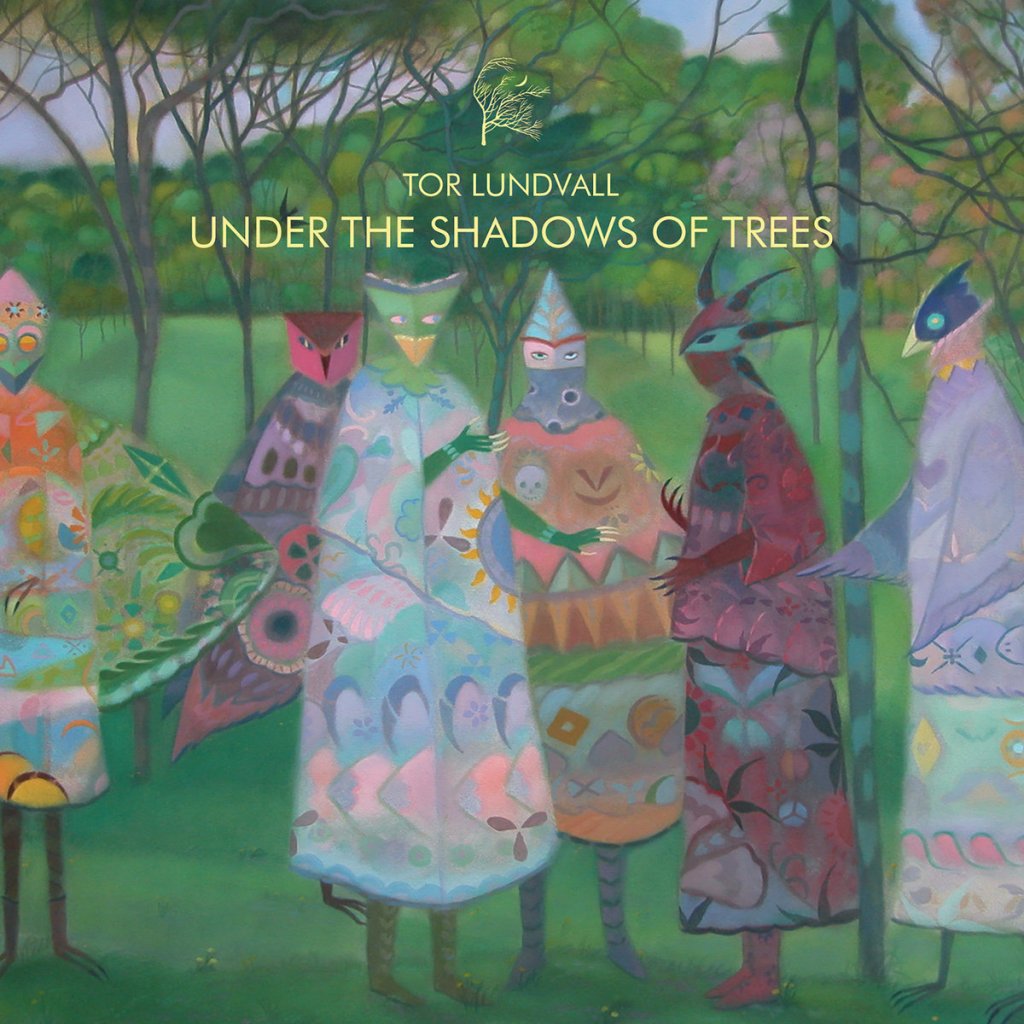
Album of the Week: Tor Lundvall’s Under the Shadows of Trees (2003)

Not gonna lie, when I discovered this album I assumed Tor Lundvall was someone in Scandanavia, perhaps making experimental records for Oslo’s Rune Grammofon label. But no, my man Tor is a good ol’ American like me, born in Jersey and based in Long Island. His self-described “ghost ambient” music is soothing, spectral and perfect for Fall, the spookiest season.

Lundvall’s primary output is his paintings, and his website hosts a gallery where you can view hundreds of them. The album cover above is a good representation of what you’ll find: tree-filled landscapes as well as costumed characters who are occasionally a bit creepy. And his painting style is absolutely reflected in the music: pastoral and gentle tones abound.

I’ve probably mentioned before that I love music with no drums, and like a lot of ambient music, Under the Shadows of Trees fits that description. It is a a collection of reverb-soaked synthesizer and piano pieces, many featuring vocals with discernible lyrics (“Distant Children” is almost a pop song) or muted cries (adding to the “ghost” theme).

At just over an hour, Under the Shadows of Trees is fairly long and many tracks sound the same, but this is rarely a problem for me when it comes to ambient music. If quiet, contemplative full-lengths are your thing, then this is a beautiful choice. On its Bandcamp page, Lundvall suggests that listeners play the album outside as the sun sets, “just as the evening ghosts call softly from the woods”.

Listen to Under the Shadows of Trees on Spotify.

Weekly Mix: 11/01/20

It’s officially November, and in Pennsylvania it kinda feels like there’s nothing to do but focus on the election. While this will definitely define the upcoming week, there’s still an abundance of music out there to relax the nerves during this tense time. This week’s addition to the playlist is quite mellow.

Grant Green’s Idle Moments is probably the longest single addition to the playlist at almost 15 minutes, followed by T-Pain’s underrated album cut Time Machine. Rema’s hit Dumebi is next, with John Holt’s optimistic Reality after that. Then we have Yo La Tengo with their lovely ballad Nowhere Near and another indie stalwart, Bill Callahan with Too Many Birds. Then the gospel instrumental Blessed Quietness by Pastor T.L. Barrett and the Youth for Christ Choir, followed by R.E.M.’s gentle Star Me Kitten. If you’ve never heard it, Planet Caravan will take you by surprise as it is extremely out-of-character for Black Sabbath (with amazing results). Rounding things off is Nico’s wonderful cover of Wrap Your Troubles in Dreams.

And friends, you can stream the playlist on Spotify.

Album of the Week: Yusef Lateef’s Eastern Sounds (1962)

So I was thinking, I bought this 1200 year-old Chinese clay flute and I’ve been learning to play it. It only has a scale of five notes, and it is like blowing over a Coke bottle, but I’ve written this piece called ‘The Plum Blossom”, and I think I can make it work.

The accomplished Dr. Yusef Lateef passed away 7 years ago in 2013, at the age of 93. He was 40 when he recorded Eastern Sounds in 1961. All this to say, the man was from a different era. “The idea of the album, as he tells it, was to have an oriental feel,” wrote Joe Goldberg in the liner notes. To quote The Big Lebowski, that’s not the preferred nomenclature, at least not today. The term “oriental” is about as dated as “negro”, but I think it’s important when approaching this album to consider the context of the time in which it was recorded and the artist’s intentions. Granted, I am a white person of no Asian descent, but to me Lateef’s exploration of Eastern Sounds are genuinely informed by his practice of Ahmadiyya Islam (a movement based in India) and, as the quote above shows, an interest in experimenting with instruments uncommon in the Western hemisphere.

This context in mind, it’s not hard to see why Eastern Sounds is Lateef’s most popular recording today. We begin with the aforementioned “Plum Blossom”, and indeed the Chinese flute, or xun, sounds a bit like a Coke bottle or jug instrument. It’s a bit funky, but it has legs. In particular it reminds me of Bennie Maupin’s bass clarinet on “Bitches Brew”: deep and ominous, but wonderful all the same.

The next couple tracks were penned by Lateef as well and continue the album’s theme, but after that we get just as many American standards. It breaks up the sound a bit, but these songs are lovely and mellow. This is also, with “Love Theme from Spartacus“, the only jazz album I can think of that incorporates a theme from a Kubrick movie, and to great effect.

A later highlight is “Purple Flower”, which has all the space and beauty of a 60s Miles ballad, albeit with no trumpet. The album rounds out with “The Three Faces of Balal”, on which bassist Ernie Farrow makes great use of the plucked rabab instrument.

This month, Lateef would have turned 100, and UMass Amherst has launched an online celebration of his life featuring music, writing, photos and more focusing on the late jazz legend. One thing I love in particular is this short NPR tribute by John Rogers on his friendship with Lateef. Yusef Lateef has a large discography, but Eastern Sounds is a great place to start. May his life and music be celebrated for centuries to come!

Listen to Eastern Sounds on Spotify.

Weekly Mix: 10/25/20

Looks like Judee Sill’s fantastic Dreams Come True compilation has been removed from Spotify so we no longer have the 45th entry in the mix, “Sunnyside Up Luck” – big SMH. Not replacing it for now, so this week we reach a weird-numbered 159 tracks in the mix. More rap and upbeat stuff in this one!

Big Homie from the short-lived Future Brown project and Sicko Mobb starts things off, followed by the sick AJ Tracey and Mabel track West Ten. Then Tyga’s emo Down For a Min and Jhené Aiko’s brilliant P*$$Y Fairy (OTW). From Method Man’s debut Tical we get Sub Crazy, then Etta James sings her version of Stormy Weather. After that, the first track on Arthur Russell’s classic World of Echo, Tone Bone Kone. Following this is Talk Talk with I Believe in You. Rounding things out this week, Funkadelic’s creepy Atmosphere and Dum Dum Girls’ Coming Down.

As always, check out the playlist on Spotify.

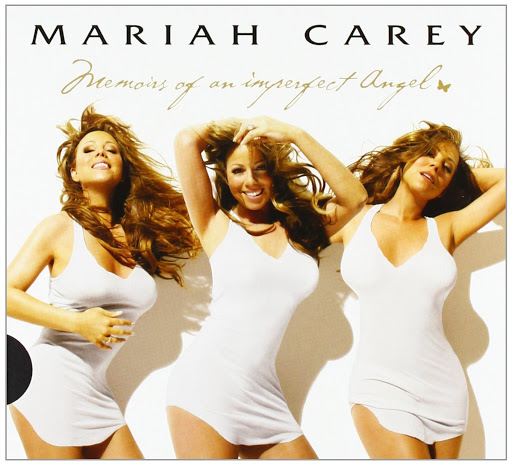
Album of the Week: Mariah Carey’s Memoirs of an Imperfect Angel (2009)

Mariah Carey is snarky. After Eminem repeatedly dissed her and then-husband Nick Cannon, she made “Obsessed“, a smash hit that still ranks among the most popular songs in her extremely successful catalog. And she wasn’t afraid to bite back at Em: “See, the difference is, my song is on the radio and his, you have to search for it,” she said in 2009.

Of course I knew the brilliant “Obsessed” back then, but I just discovered Memoirs of an Imperfect Angel earlier this year and my first thought was, “how did it take so long for me to hear this album?” I’ve followed The-Dream for the past decade as a big fan, so it surprised me that until 2020 this album, almost-entirely penned and produced by The-Dream, somehow Mandela effect-ed its way from seeming nonexistence into my ears. And – surprise! – it’s her best work.

Most Mariah full-lengths are scattershot. And that’s ok! She’s made a lot of music, and plenty of it is top-notch. But for every “Vision of Love” or “Fantasy”, there’s usually some sappy filler that lines the rest of the album. Memoirs, however, hits over and over.

Much of Memoirs sounds exactly like what Dream was doing on his first three albums (AKA The Love Trilogy), and that is a good thing. “Candy Bling”‘s beat is almost identitcal to “I Luv Your Girl”; the screwed “lovin’ on my mind” vocals on “Ribbon” recall the same effect on “She Needs My Love”; the whole album is filled with ay-ay’s and oh-oh-oh’s that are hallmarks of Dream’s sound. No complaints there.

What separates the album from being just another Dream record is, of course, Mariah herself. Besides contributing her iconic vocals, the female voice in her songwriting is the antidote to what we hear excessively on Dream’s solo albums, namely the licentious tales of an extremely horny guy. Take “It’s a Wrap”: over a silky piano line, she begins, “Yet another early morning and you walk in like it’s nothing / Hold up, hold up, hold tight / Ain’t no donuts, ain’t no coffee / See, I know you seen me calling and calling / I should crack you right in your forehead”. Damn, MC. Sass is a consistent lyrical motif in this album, and she pulls it off. For the last few songs, however, Mariah changes her tune and goes full ballad mode, covering Foreigner’s “I Want to Know What Love Is”. She pulls that off, too.

In fact, Carey’s cover of “I Want to Know What Love Is” got the nod of approval from Foreginer’s Mick Jones, and broke the record for longest-running number 1 on the charts… in Brazil. It’s a euphoric end to her tightest album. I only wish that Spotify had a version of the album without the bonus remixes, so that I don’t have to hear a ridiculous techno mix of “Obsessed” every time the main album ends.

Listen to Memoirs of an Imperfect Angel on Spotify.

Weekly Mix: 10/18/20

Loving life this morning as we reach 150 songs on the GSG playlist.

We begin with Andy Stott’s wonderful Faith in Strangers, then turn back in time for Patsy Cline’s Crazy. The Brazilian duo of Nelson Ângelo and Joyce follow with Comunhão, and after that is Abbey Lincoln’s spooky Lonely House. Next is underrated producer Suzi Analogue’s BeachCruiser, Shackleton’s Touched, and Trippie Redd’s Feel Good. The eternal dude Lee Hazlewood sings Friday’s Child, and Grover Washington Jr. plays the magnificent Lover Man. We round out this week’s selection with a track that really blew me away this past week, the veteran trumpeter Jon Hassell’s Dreaming.

As always, check out the playlist on Spotify.

5 Songs and Moods That Defined Quarantine

In April, over 85% of people in the United States were under some form of lockdown. I spent most of the Spring in Philadelphia working from home, living with my girlfriend and my four other roommates. Moods were mercurial as astonishment turned to fear, confusion to fun and everything in between.

Now living alone and with some time to reflect (plus it’s not like the news cycle is still as crazy… right?), I’ve picked 5 key songs, and their accompanying moods, that defined my experience in quarantine.

5. Thundercat – “Dragonball Durag”

Mood: Fuck It

Thundercat was supposed to come to Philly on my birthday in late March, but alas, everything came crashing down. On March 13, he cancelled the rest of his then-underway tour by posting an extremely bass-boosted Ken Burns-effect of Michael Jackson. This was super on-brand for Thundercat, who released not only the best video of the year (above, directed by Zack Fox), but also the catchiest song in “Dragonball Durag”.

The start of quarantine definitely had moments of “Shit, I don’t have to go into work, I can just smoke weed and marvel at how bizarre everything is”. By eliminating the outdoors, life became an absurd continuum of domestic theater. Upstairs, downstairs. Entering a room was soundtracked by the opening bass notes of this song, which was literally fucking impossible to get out of my head. Any response (whether spoken or internal) to “how are you?” was inevitably “I feel kinda fly…” Bonus points for, like Thunder, being covered in cat hair. Not sure if I still smelled good, I don’t have a great sense of smell.

4. Judee Sill – “The Kiss”

Mood: Mystical/Love

I got really into The Legend of Zelda: Breath of the Wild in March – about 3 years late, but this was unexpectedly perfect timing. Trapped inside, I could easily convince myself that spending hours exploring the cliffs and shrines of Hyrule was not hopelessly nerdy, but totally reasonable – practical, even. What better way to pass this time of uncertainty and anxiety than to enter a parallel universe, horseback-riding through lush mountain landscapes?

Definitely a good idea, and while the game had a nice soundtrack I usually preferred listening to other music while playing. Concurrently discovering Heart Food, a soulful folk masterpiece by Judee Sill, was icing on the cake. “The Kiss” is an impossibly gorgeous song. A mystical, angelic tear-jerker. In turbulent times it guided me towards love.

3. Cam’ron – “Losing Weight Part 2”

Mood: Paranoia

Remember wondering if it was okay to go outside? In the city, every run to the grocery store felt like a deadly mission. Surrounded by potentially contaminated bodies, buildings, light poles, I wondered where I could go and what I could touch without ending up sick.

I would play this game where I would take a walk, but if I saw anyone coming towards me or on the same sidewalk, I would turn or cross the street. It helped me feel like I was both dodging danger and making my walk more interesting (which, after staying inside for days on end, was helpful). “Losing Weight Part 2”, from Cam’ron’s brilliant Come Home With Me perfectly soundtracked these paranoid walks. Over an anxious beat that sounds like the Halloween theme, Cam raps about goons that will “rat-poison your relish”, and the vibe walking around was just fear. “It’s real dog, I live in the fire,” says Juelz Santana. Exactly.

2. ‘Til Tuesday – “Coming Up Close”

Mood: Depression

Some 80s rock ballads hit a soft spot. The day after the 2016 election I think I listened to Roxette’s “It Must Have Been Love” at least 5 times, completely despondent. “Coming Up Close” is kind of like that.

‘Til Tuesday was Aimee Mann’s band, and you’ve probably heard their hit “Voices Carry” (FWIW I always thought she was singing “oh-so scary”). I can’t remember how I found “Coming Up Close”, but it was around the time quarantine began and I immediately fell in love. It’s very 1986: immaculate shimmering production, synthesizer, and just look at the hair on the cover art.

For all its 80s cheese, this song made me pretty sad. It’s incredibly wistful: Mann sings about driving around on a summer night, being sad, being alone in a hotel room. And I doubt I’m the only one who spent much of quarantine reminiscing about things we used to be able to do that we can’t anymore. Traveling without worry, going to a restaurant, having a party, even just y’know, human interaction, being able to hug people and stuff. Fuck, man. How many times was each depressive slump or existential crisis soundtracked by that grand chorus of “Eeverything souunds liike… welcome home, come hooome“. I suppose only Spotify will tell.

1. Odunsi (the Engine) – “Better Days”

Mood: Hope

Even though it came out last summer, I’m sure I listened to “Better Days” more than any other song this year. If we learned anything from Rex Orange County, it’s that “You got me fucked up” makes for a great chorus. Following this formula, Odunsi, the effortlessly cool young artist from Nigeria, created a classic.

With a title like “Better Days”, of course this would be the perfect quarantine song. Meditative, yet fun, danceable but not a banger, it’s the one to jam out to alone. For when you finish the work week and don’t have much to look forward to on the weekend, but at least you can relax. Feeling blue, but there’s a big twinkle of hope. Things might never be the same, but it’s not gonna be like this forever.

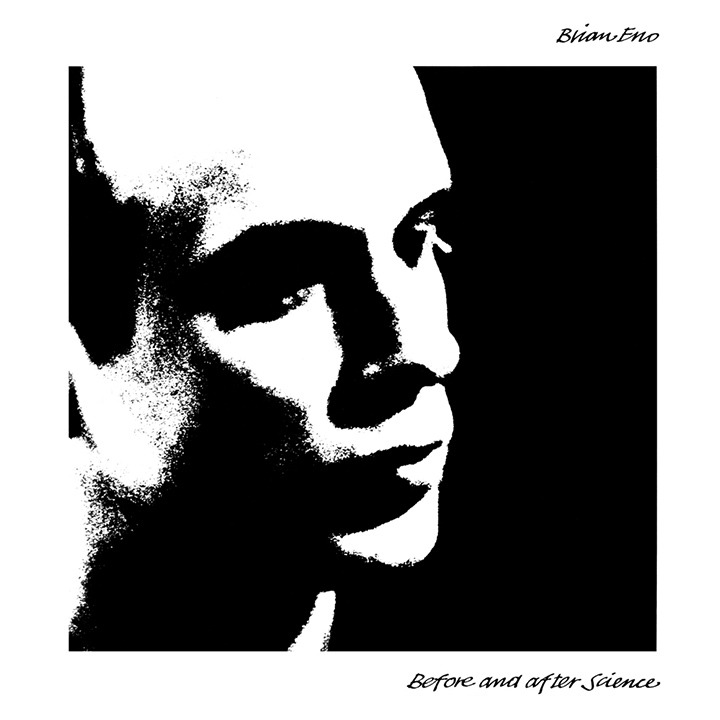
Album of the Week: Brian Eno’s Before and After Science (1977)

What a wonderland of a zoo, a cross between steaming smoke, atonal mystery and hanging, frothy ditties…

Brian Eno is an agent from some other time and some other place who seems to know something that we don’t but should…

There’s a scene in Y tu mamá también where the protagonists are driving across rural Mexico listening to Brian Eno’s “By This River”, and one of the stoned teens says “This song rules!” As someone who spent many a stoned teenage night with Before and After Science, I absolutely identify with this moment. Like the quotes above (from Down Beat and Crawdaddy! respectively) suggest, Eno was tapping in to something otherworldly with Before and After Science, a record that took two years to compose and represents an artist at a peak of his musical powers (Low, “Heroes” and Cluster & Eno were recorded in the same time period).

Like his preceding masterpiece Another Green World, Before and After Science mixes the art-rock of Eno’s first two albums with the ambient sounds he pioneered. But unlike Another Green World, the two sides are distinctly separate in their styles.

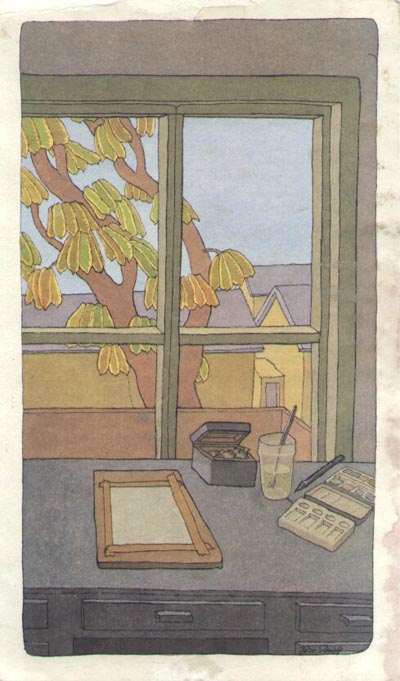
If you’re familiar with Eno’s career, you probably know of his Oblique Strategies. This creation method takes the form of a deck of cards, with suggestions like “Ask your body” or “Not building a wall but making a brick”. Created by Eno and artist Peter Schmidt, this technique was utilized heavily by Eno in this period and inspired many, if not all, of the songs on Before and After Science (apparently over 100 tracks were written for it).

“Look at September, Look at October”, Peter Schmidt

Schmidt’s contributions to Before & After Science are particularly notable. Apart from co-authoring the Oblique Strategies cards, four of Schmidt’s prints (including the image above) were included in the original packaging of the album. Schmidt’s work inspired Eno, and the prints included in Before & After Science seem to reflect the meditative, autumnal quality of the album.

As I mentioned before, the two sides of Before & After Science have different styles. With the exception of “Energy Fools the Magician”, the first side is a collection of upbeat, vocal-lead art rock tracks, with a standout in “Backwater”, featuring drumming from Can’s Jaki Liebezeit. It’s a great bunch of songs, but the second side makes the album a 5-star masterpiece, and for my money the greatest work of Eno’s career.

After the pastoral “Here He Comes”, “Julie With…” creates a celestial atmosphere featuring Eno’s Moog synth and bells. It is a dazzling six-and-a-half minutes. “By This River” is a meditative yet moving song made with Eno’s Cluster buddies Moebius and Roedelius. It has a descending piano line that embodies Schmidt’s watercolor depictions of nature. “Through Hollow Lands” is an instrumental piece that acts as a sort of preamble to the album’s final track.

If the heavenly sprawl of Eno’s many lengthy ambient works were distilled into a sublime four-minute “pop” song, the result would be “Spider and I”. Indeed, the album closer achieves the great beauty of “Discreet Music”, while the lyrics paint a youthful fantasy: “We sleep in the morning / We dream of a ship that sails away / A thousand miles away…”

Of course, Eno has continued to make stellar music over the past 40+ years, and any fan of ambient or work labelled “art rock” may have a different favorite in his discography. After years of listening to it, Before and After Science remains his dearest treasure to me.

Listen to Before and After Science on Spotify.