Weekly Mix: 2/21/21

It’s Sunday, and you know what that means: time to Chill. Today is the day to hang and kick it and so forth. Oh, and I have more songs for you.

Speaking of chill, we’ll start with Samantha James’s Amber Sky and move on to Sweet Trip’s Milk, which is probably the most mindblowing thing I’ve heard in the past two weeks. Then a killer Alchemist production in Step Brothers’ Tomorrow. All Donuts fans (I know you’re out there) will recognize Dionne Warwick’s You’re Gonna Need Me. Some classic Little Brother recently came to streaming, including their genius Mos Def collab Let It Go. Next, the very smooth I Try from Angela Bofill. After that, Project Pablo asks Why, Though? and then things get very twee very quickly with Saturday Looks Good To Me’s Meet Me By the Water. The late Allen Toussaint’s Southern Nights is the penultimate track today, with Aphrodite’s Child’s ballad It’s Five O’Clock to finish this week’s playlist additions off. Take care all.

And listen here.

Album of the Week: Lil B’s Gold House (2011)

“Gold house n****, only n**** with a house” – “Tiny Pants Bitch”

Lil B went on his most prolific run from 2010-2013 (2013 being the first year since 2009 that he released less than 5 mixtapes), and a decade later I’m inclined to agree with Tinymixtapes that 2012’s White Flame best exemplifies what is most incredible about this output. Admittedly, I’ve probably heard less than half of his 60+ full-length (or longer) projects, but recently I’ve enjoyed immersing myself in the mystifying ocean that is the Lil B discography. It helps that it’s all streaming. Whomst amongst us remembers downloading Basedgod tapes from Datpiff, often loaded with dozens of songs, only to find our laptops running low on space? Thankfully, the massive Lil B catalog came to streaming platforms in 2019, and now sampling any tape is as easy as a click.

Gold House (alternatively Goldhouse) was released on Christmas 2011, about a month before the aforementioned White Flame. What I love about this era of Lil B is the energy and off-the-wall performance, and I think a lot of this has to do with the production here. After White Flame came God’s Father, which has its own fanbase (it’s currently Lil B’s highest-rated project on RateYourMusic at an average of 3.77/5 from over 2500 ratings). However, God’s Father contains spacier, cloudier production. Over atmospheric production, Lil B is often more likely to loosen his flow and rap in a lethargic drawl, and this is where I feel he falters most as an artist.

This cloud-rap production is hard to find on White Flame and Gold House. Rather than the atmospherics beats of Clams Casino and the like, we get a style much more indebted to New Orleans: No Limit and Cash Money Records’ glitzy, turn-of-the-millenium bangers. Indeed, White Flame‘s album cover pays homage to Soulja Slim’s Give It 2 ‘Em Raw, he directly shouts out Cash Money here on “Im Like Killah Remix” and the ridiculous “Awsome” beat is simply a slowed “Go DJ”. An energized Lil B is rapping within one second of the opener “Green Card” (“Imma call you Homer, you got no dough”). The rapid-fire “I Love Strugglin” provides just one of many abstract kernels of Lil B’s unparalleled perspective: “Bitch Mob bitch, suck a dick / Gold House bitch, we love strugglin'”.

Lest you think Lil B solely exists in a fantasy realm, peep “Gangstas Smile” which begins, “My girl had an abortion, changed the game / I’m not ready to be a dad”. Damn. And all this over a gorgeous soul sample. Gold House concludes with “Based Gangstas Prayer”, a solemn conclusion to an otherwise rambunctious mixtape.

“Keep that love in your heart.” – Lil B

Listen to Gold House on Spotify.

Weekly Mix: 2/7/21

Hip-hop. Rap. Same thing. My favorite genre. This week it’s all rap rap rappity-rap mickey mouse cheese hip-hop walt disney.

We begin with the A.B.N. (Assholes by Nature) Z-Ro and Trae, who need No Help. Following that is a similar statement of independence from another great duo, 8Ball & MJG with Nobody But Me. Young Thug celebrates fatherhood on Daddy’s Birthday before we take it back to ’94 with Ill Al Skratch’s Where My Homiez? (sick beat on this one). Then Souls of Mischief producer Long Beach’s Domino gets funky on Sweet Potatoe Pie. Staying in California we revisit L.A.’s Bloods & Crips (composed of real gang members) with Steady Dippin’. Coolin’ is Chief Keef in the sublime Valley, then Cam’ron provides a proletariat anthem in (I Hate) My Job. Next is an underrated track from Migos’ Quavo, South Africa. We round things out this week with Cities Aviv’s cathartic Worlds of Pressure.

Ch-check it out here.

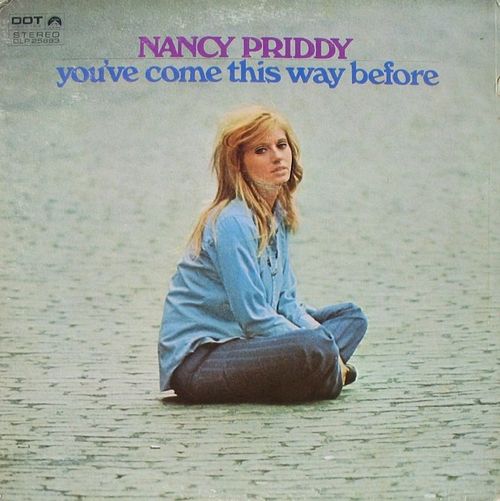
Album of the Week: Nancy Priddy’s You’ve Come This Way Before (1968)

“Feelin’ strange sensations / Familiar old vibrations” – so begins the trippy odyssey of renaissance woman Nancy Priddy’s You’ve Come This Way Before, released on the relatively unknown Dot Records label. Priddy was involved in the Greenwich Village folk scene of the 60s and sang back-up vocals on Leonard Cohen’s classic debut (you can hear her on the timeless songs “Suzanne” and “So Long, Marianne”). She also dated Stephen Stills, and eventually turned to acting, often starring alongside her daughter Christina Applegate. You’ve Come This Way Before, then, works as something of a successful one-time experiment for the talented Priddy.

At its best, Priddy’s music achieves a blend of Margo Guryan’s comfy psych-pop and Nico’s more doom-and-gloom baroque songs. “Ebony Glass” employs some eerie harpsichord and strings as well as a child singing “This is the way the world ends”. The rhythm section is tight (courtesy of jazz veteran Bernard Purdie), and the vibe is pure lava-lamp psychedelia. The album peaks early with the frankly incredible “Mystic Lady”, which is everything great about the album and the genres it includes in one track. A shifting opus not unlike “A Day in the Life”, it is in one section an orchestral ballad, another a festive merry-go-round, and finally a jaunty soul show-stopper in the vein of Laura Nyro.

Part of the album’s classic sound is attributable to co-producer and arranger John Simon, who worked with Leonard Cohen, The Band, Janis Joplin and Margo Guryan among others. “We Could Have It All” could be a Mamas & The Papas song. “Christina’s World” is apparently inspired by the painting of the same name, though it works doubly as a tribute to Applegate, who was curiously not yet born when the song was made.

My biggest complaint with this album is that it’s too short. There are 10 mostly brief songs and it barely clocks in at half an hour, with the longest track displaying the most brilliance. It ends on a curious note with the weird “Epitaph”, which leaves me wanting more. I will be seeking out more of Priddy’s music, but she didn’t release another album for decades, and I’m currently listening to 2007’s “Y2k Drinking Song”, which sounds like Jimmy Buffett (read: terrible). However, You’ve Come This Way Before is nothing less than a true hidden gem.

Listen to You’ve Come This Way Before on Spotify.

Album of the Week: Roy Montgomery & Grouper’s Split EP (AKA Vessel) (2009)

In 2009, veteran New Zealand psych-guitarist Roy Montgomery (of Dadamah and Hash Jar Tempo, among other things) and Liz Harris’ Grouper released this magnificent split 12″ on Harris’ Yellow Electric label as well as ambient artist Jefre Cantu-Ledesma’s now defunct Root Strata label.

Montgomery’s side is dedicated to Sandy Bull. Bull was a groundbreaking folk-guitarist who became a staple performer in the Greenwich Village scene of the early 60s and pushed boundaries on his albums, mixing international instruments, sounds and genres. His “Blend” is presumably the inspiration for Montgomery’s “Fantasia on a Theme by Sandy Bull (Slight Return)”. Like “Blend”, “Fantasia” is a roughly 20-minute piece of marvelous acoustic guitar work, with multiple changes in tempo and melody. A significant difference is that on “Blend”, Bull was accompanied by jazz drummer Billy Higgins (of Ornette Coleman’s band, among others), where Montgomery’s “Fantasia” has no drums. This is made up for by the reverb on Montgomery’s guitar, which gives the effect of the artist accompanying himself. It’s a brilliant psychedelic piece to get lost in.

Grouper’s side comes from one of the strongest periods of her consistent career: between the releases of Dragging a Dead Deer Up a Hill and AIA, arguably her two best full-lengths. If you’re a fan of Grouper you know what to expect: music that is hazy, delicate and touching. There are four songs, the standout being “Vessel”, which recalls (to me) the melody of “The Star-Spangled Banner”. “Pulse”, the instrumental closer, features some prominent dog-barking (presumably from the one pictured here).

Harris and Cantu-Ledesma would later collaborate as Raum on 2013’s Event of Your Leaving, and Harris featured on Roy Montgomery’s 2018 album Suffuse.

This split is not on Spotify. Check out Grouper’s side on Youtube, below.

Weekly Mix: 1/24/21

Hey there, we’re back after a break and a holiday weekend. This week brings some welcome additions to the playlist from two of the greatest living American artists, Chief Keef and Bob Dylan, among others.

We begin a capella with Ellen McIlwaine’s Farther Along followed by the late Bill Withers’ Can We Pretend. Then, Отношения (“Relationship” ?) from the Ukranian artist Luna. Then throwing it back with Bay Area classic Playaz Club from Rappin’ 4 Tay and Les McCann’s Sometimes I Cry. Women’s Black Rice is next, then Roger Eno & Kate St. John’s tender ballad The Blue Sea. Similarly dark is Migos’ early tribute to lost ones, R.I.P.. A brilliant Chief Keef track Green Light and Bob Dylan’s take on My One and Only Love close this week’s selections.

Check ’em out here.

Album of the Week: Volodos Plays Mompou (2013)

The Catalan composer Frederic Mompou died in 1987 at the age of 94. That same year, the 15 year old Russian student Arcadi Volodos, who had previously taken vocal training and shown an intrust in conducting, began seriously studying piano. 25 years later, after international awards and performances, Volodos released these recordings of Mompou’s compositions.

Described as “music of an ultimate inwardness and confidentiality”, Mompou’s pieces are minimalist enough to make any fan of Satie or Chopin swoon. Though born in the 19th century, Mompou lived long enough to record and release his compositions. Indeed, you can listen to about 5 hours of Mompou playing his Complete Piano Works on Spotify.

Needless to say, Volodos Plays Mompou is a more easily digested set. At 24 short tracks, much of the album is divided into two different books: “Scènes d’enfants” which is happy, even playful at times, and “Musica callada” (“Silent music”). In-between, appropriately, lovely pieces like “Hoy la tierra y los cielos me sonríen” (“Today the earth and the heavens smile at me”) split the difference. The “Musica callada” suite, “considered by some to be Mompou’s masterpiece”, is the highlight. Turn up your volume and enjoy – there are particularly breathtaking moments (“Lento molto”, “Calme”).

Much has been made of Catalan architecture and indeed a visit to Barcelona isn’t complete without viewing the work of Antoni Gaudí. The Catalan vault (like the vaulted ceiling on the album cover), according to one case study, is made thusly: “Traditionally thin bricks – or thin tiles – are used because of their lightness, which is a necessary condition to build the first layer ‘in space’ (without a continuous formwork)… as the self-weight of thin-tile vaults is low in comparison to other masonry structures, the falsework does not have to support high stresses.” Concluding, Catalan vaulting provides “large, suggestive, habitable and safe free-form vaulted spaces with an inexpensive, efficient and sustainable technique”. It is fitting, then, that the Catalan Mompou’s music finds power in lightness. Like the vault, Volodos Plays Mompou creates a space that is supportive, suggestive, and airy all the same.

Listen to Volodos Plays Mompou on Spotify.

Weekly Mix: 1/10/21

What day is it? What year is it? What’s happening? Oh… it’s Sunday. Right. Okay, here we go:

Ever heard of Day 26? Me neither, but their song Co Star is really good. So is Don’t You Worry by Freestyle Fellowship’s Myka 9. And rest in peace to John Prine man, I recently heard Hello in There and loved it, so it’s on here. I put a Chris Bell song earlier in the playlist but today I’m including This Mortal Coil’s version of You and Your Sister. After that, Italian synth dudes Sensations’ Fix with Acudreaming, from a great RVNG compilation of their material. Then, one of my favorite (and one of the most ominous) songs by the great Shangri-Las, Past, Present and Future. Sic Alps (whatever happened to them?) are next with Wake Up, It’s Over II. Following this, everyone’s favorite Grateful Dead with Mountains of the Moon from Aoxomoxoa. Then, Marvin Gaye’s She Needs Me and Phoebe Snow’s All Over conclude this week’s additions.

We’ve hit 250 songs this week! Celebrate with me by listening here.

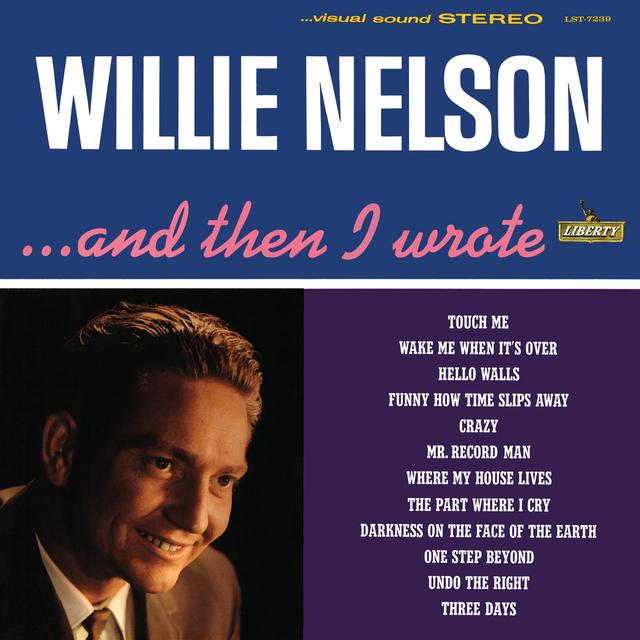
Album of the Week: Willie Nelson’s …And Then I Wrote (1962)

Willie Nelson has been around the block. By the time he finished writing and recording his 1962 debut album …And Then I Wrote, he was almost 30. It boggles the mind today that Nelson had been making music for years without success or interest from labels. With a reflective lens, we can easily say that Nelson’s smoky-voice and knack for writing made him a talent that was overlooked for a long time. But back then, things didn’t work the way they did today. A 2020 New Yorker profile notes that “Before he moved to Nashville, in 1960, he worked as a radio d.j., pumped gas, did heavy stitching at a saddle factory, worked at a grain elevator, and had a brief gig as a laborer for a carpet-removal service.” The young Texan Willie Nelson spent years doing just about everything besides being the country superstar he is today.

According to one of his autobiographies, Nelson wrote many songs while still living in Texas. Among these is “Crazy”, which became a big hit for superstar Patsy Cline, helping to jumpstart Willie’s career. I knew the Cline version before I knew that Nelson wrote it, and there are marked differences in delivery between the two recordings. Patsy Cline’s is melodic and whimsical, while Nelson’s near-spoken-word vocal in his version reveals more personal pain. He actually sounds kind of crazy, or at least hurt and lost. It’s incredible.

…And Then I Wrote‘s title reflects the fact that Nelson was a hit songwriter long before he was a solo star. And as a showcase of songwriting talent, the album is both an unheralded country classic and an excellent precursor to more expansive and well-known Nelson releases like Red-Headed Stranger. These songs are stark expressions of heartbreak. “If you can’t say you love me, say you hate me,” Nelson sings on “Undo the Right”, desperate to feel something. “Three Days” is darkly comic: “Three days I dread to be alive: today, yesterday and tomorrow.” “The Part Where I Cry” and “Where My House Lives” are brilliantly coded expressions of grief. In the former, Nelson describes his life as a movie (or “picture”) and sells it to the listener-turned-viewer (“I was great in the part where she found someone new”). “Where My House Lives” is a heartbreaking closer: “Here’s where my house lives… I never go there / ‘Cause it holds too many memories” Nelson tells the listener, removing himself from the picture of domestic happiness and accepting the role of lonesome cowboy-drifter that would come to define his future.

Musically, …And Then I Wrote is Willie Nelson at his simplest, but don’t let that fool you. This seemingly effortless collection of hits (it’s one of those studio albums that plays like a best-of compilation) was borne from years of toil, failure and heartbreak. It wasn’t a huge success upon its release and still seems relatively unknown today, but thankfully, we know ol’ Willie got his due. If you’ve any interest in hearing how it started, I highly recommend a listen to this album.

Listen to …And Then I Wrote on Spotify.

Weekly Mix: 1/3/21

Welcome to 2021 my people.

We enter the year with Bowie’s ballad Win, followed by Hieroglyphics’ Casual with Be Thousand (no relation to the GBV album as far as I can tell). Then South African “Om” Alec Khaoli’s jam Say You Love Me. Next, Organ Tapes’ banger Stunna and soul man Lee Dorsey’s Sneakin’ Sally Thru the Alley. Yoshio Suzuki’s chill Kane, Jadakiss’ By Your Side and Toni Braxton’s Talking in His Sleep come after that. Concluding this week’s additions to the playlist are Thomas Dolby’s Screen Kiss and Sibylle Baier’s I Lost Something in the Hills.

Happy new year to all, and check out the playlist here.