Album of the Week: Stevie Wonder’s Conversation Peace (1995)

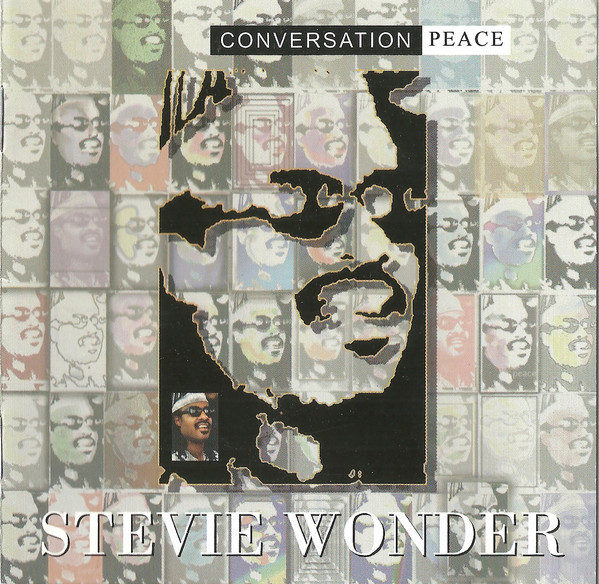
Stevie Wonder has never seen this album cover, which may be for the best.

According to a New Yorker article, Stevie Wonder began working on Conversation Peace in 1987. By this time Wonder was releasing music at a slower clip than his 70s output, and adapting to 80s pop styles by working with the latest in synthesizer technology. This would prove successful for him on tracks like 1984’s “I Just Called to Say I Love You” (his biggest hit ever), and 1985’s Billboard number 1 hit “Part-Time Lover”. Less successful and less talked about is the finished Conversation Peace album, which dropped not in the 80s but the same week I did in March 1995.

Multiple sources attest that Wonder wrote the entirety of Conversation Peace in Ghana, but this is apparently a country that Wonder first visited in 1993, years after he started working on the album. Whether or not most of it was written there, the country doesn’t seem to have a discernible impact on the music. Production wise, Stevie finds his New Jack Swing bag here, with opener “Rain Your Love Down” kicking things off like a Boyz II Men track, and a great one at that. “Edge of Eternity” is, despite its ominous title, an upbeat sex jam, with Wonder singing, “Girl I’m gonna hit it like it ain’t been hit before!” Damn!

My favorite song here is probably “Treat Myself”, a proto-self care anthem that bounces atop synthesized pan flutes and slap bass (ending with classic Stevie harmonica vamping). If that sounds like a lot, it kind of is, and you have to give yourself to the elastic 90s sound of the album to really enjoy it. The “Sorry” beat seriously sounds like a leftover from the Mario Kart 64 soundtrack. But these elements are also what makes Conversation Peace a forgotten gem in the Stevie Wonder discography. “My Love Is With You” has a chorus built in the model of “As”, from Songs in the Key of Life: rhythmic, circular and truly moving.

One thing that holds this album back from being a classic is the lyrical content. The album’s theme of peace is written with a sort-of “We Are the World” banality, as seen on the opening and closing tracks and this particularly awkward verse of “Take the Time Out”: “There’s a man in a house where they’re selling crack / Yet he’s trying to be strong / But when lost in the sea of no hope / He must be saved from wrong” What? Otherwise, you mostly have love lyrics that are either overly simplistic or clunky.

The album’s biggest and most enduring song, “For Your Love” is an accurate reflection of Conversation Peace as a whole. There’s a clunky verse in there: “A diamond that shines / Like a star in the sky / Is nothing to behold / For minuscule is any light / If it can’t, like you, brighten up my soul” But this is still a great song, no doubt, because it is wonderfully written musically, and Stevie Wonder is an incredible singer. It may not have all the genius of his greatest work, but there is little in recorded music that does, and Conversation Peace is worth a listen.

Listen to Conversation Peace here.
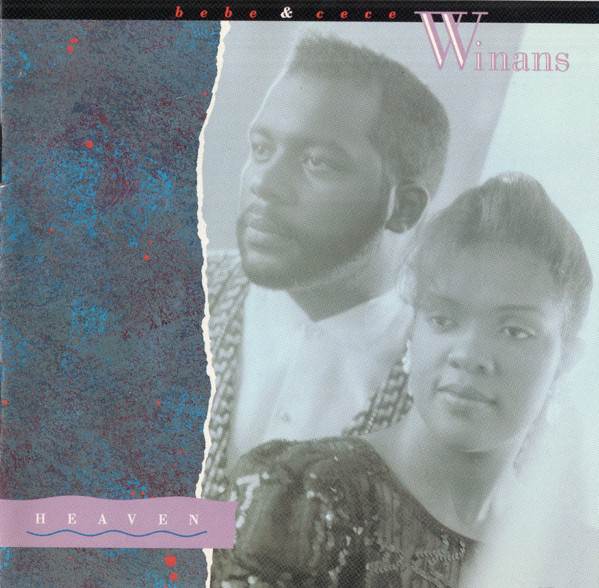
Album of the Week: Bebe & Cece Winans’ Heaven (1988)

The existence of God is a question that has been pondered by humans for millennia, and there is no definitive answer. It is a matter of personal belief and faith...

Ultimately, the question of whether God exists is one that each individual must answer for themselves.

-Google’s AI chatbot Gemini, in response to “is God real?”

Well, jury’s out on whether or not God is real. But Heaven definitely is! And its leadoff title-track is certainly heavenly. As “The White Cliffs of Dover” envisioned a post-WWII world of peace, Bebe Winans’ “Heaven” anticipates the celestial realm as a place where “there’s no more use for guns and war.” Over a beat that melds disco, processed Brazilian percussion, funky bass, and glass synth stabs, the brother-sister duo sing their gospel. It’s a masterstroke of pop-R&B and an ultimate 80s time capsule.

Keith Thomas, who later co-wrote Usher’s “Love in This Club”, takes the helm on the music side here, and not all of his tracks are as successful as “Heaven”. “Celebrate New Life” bores in comparison. “Lost Without You”, though, retains the synth magic. Winans’ lyrical odes to God are thinly veiled, but veiled enough that the choosy agnostic can enjoy this as a ballad of lost love. The Whitney Houston-featuring “Hold Up the Light” is another banger, with Bebe quoting the Pledge of Allegiance toward the end (probably the only song you can say that about).

The back half of Heaven is a little less interesting, but things close well with a cover of “Bridge Over Troubled Water” followed (on the CD/streaming version) by a 6-minute extended dub of “Heaven”. The Simon & Garfunkel cover is delightfully ethereal, and the “Heaven” remix is fun, if a bit of a mess. Overall, Heaven rides on the strength of its title track, with some other worthy tracks here and there.

Listen to Heaven here.

Album of the Week: T-Pain’s Epiphany (2007)

Tebunon… pedalophagus… from the planet Tallagoosa…

Can I get a witness? T-Pain is a Florida guy through-and-through (the T stands for Tallahassee), so he’s been on my mind this past month as Florida has battled two serious hurricanes. We all know “Bartender” and “Buy U a Drank”, but is the rest of T-Pain’s second album worth a listen? Yes, yes it is.

Epiphany was produced entirely by T-Pain, whose smooth production holds up some 17 years later. Shawnna (“What’s Your Fantasy?”) provides the assist on “Backseat Action”, a song about fucking on the highway which is far from the weirdest sex song on here. You know that saying, “he could sing the phone book”? That’s T-Pain. He has a whole song about the sexual appeal of… stomachs, and it sounds great. Yes, “Yo Stomach” is a real song. It’s absurd, it’s funny, it’s catchy. “Them crunches got me punchin’ the wall!” Change the lyrics to being in the club or falling in love or something and you have a hit. But I love that Pain stuck with his weird fetish song instead. I don’t think I have to explain what “69” is about, but it is NSFW.

“Time Machine” is my favorite T-Pain deep cut because it strikes a brilliant balance between humor and heartfelt emotion. In it, he reminisces on the ease of his life before fame. In his signature auto-tune he coos, “No matter how bad the weather, everything back then was just so better,” followed by a wistful “heh”, as if acknowledging the bastardized syntax. It’s not the only combination of humor and emotion from Pain, whose closer “Sounds Bad” is an over-the-top look at the struggles of the little guy, a la Justin Timberlake’s “Losing My Way”.

T-Pain raps with a tight flow on “Show U How”, proving himself a one-man hit machine. He rap, he sing… and anyone who doubts his ability as a singer (what with all the autotune) need only peep his Tiny Desk Concert, which is my favorite of the series. It’s a thing of beauty. But back to Epiphany. Yeah, it’s not without a few skips, but really it’s an excellent album by a national icon, with surprisingly human moments. I’d recommend it to any fan of pop music.

Listen to Epiphany here.

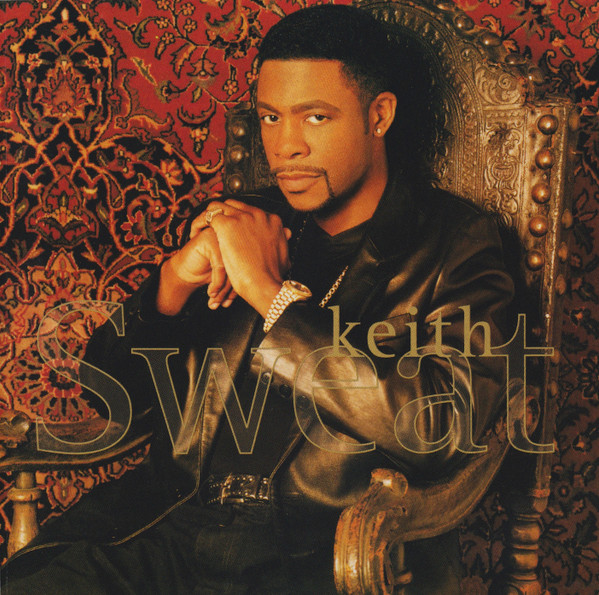
Album of the Week: Keith Sweat’s s/t (1996)

I worked on the album on and off for more than a year. I heard each of the songs probably a hundred times before I was completely happy with them.

Did you know Keith Sweat’s real name is Keith Sweat?

Nine years and three albums after his debut Make It Last Forever, a landmark release in new jack swing, Mr. Sweat dropped a bomb with “Twisted”. Enlisting the help of his group Kut Klose, the hopping single reached #2 on the Billboard Hot 100, and it leads off the fantastic Keith Sweat album. Keith is absolutely in his bag here, delivering a succinct and supreme collection of 90s R&B.

Sweat is the king of “begging”, a style of adlib runs that he pioneered on his debut. “Yumi” is already a silky smooth groove, but the vocals added in-between lines are masterful touches. Sweat does his begging like a great jazz artist solos, switching between lower and higher registers, moaning, ooh-ing, absolutely catching a vibe. “Freak With Me” has some extremely 90s rap verses while interpolating “(Not Just) Knee Deep”. The legendary Ronald Isley provides the assist on “Come With Me” – did you think it could get any more sensual? Just listen to this. Absolute liquid sex.

The last three songs here are a veritable triple threat. “Show Me the Way”, the lone track here produced by Sweat, is a simple and effective track that also acts as a prelude for “Nobody”, the album’s climax. “Twisted” is great, but “Nobody” is a masterpiece. Sweat and Athena from Kut Klose duet over a deep slow jam with a knockout refrain. The verses show some restraint, but the begging intensifies gradually as both artists build to a vocal showcase in the final minute. “Chocolate Girl”, then, acts as a sort of comedown to close things out. The pace is slow as molasses (chocolate syrup?), but it could be a minute or two longer and I wouldn’t mind. I adore this album.

Listen to Keith Sweat here.

Album of the Week: The Sylvers II (1973)

Some soul groups live in relative obscurity despite their fantastic music. Enter The Sylvers: supremely 70s, afros so large on this album cover that it becomes hard to tell where one ends and the next begins. Leon Sylvers III, up there in the top-right corner, was the brainchild of this Watts (LA) family act, writing most of their songs. Their early albums have provided legendary sample fodder and are killer soul LPs in their own right.

The small-time MGM subsidiary label Pride, who also released the probably unauthorized The History of the Grateful Dead album, signed The Sylvers in the early 70s for a string of soul records. By the time Pride folded in 1975, The Sylvers were recording for Capitol and had moved in the disco direction (their biggest hit, “Boogie Fever”, was released the same year).

Sylvers II features outstanding arrangements from David Crawford. The ballad “I’ll Never Let You Go” is both groovy and spooky. The string and horn arrangements on “Cry of a Dreamer” are beautiful and vault the song from good to great territory. B-side opener “Stay Away From Me” is bold and biting, and was sampled prominently on Ghostface Killah’s “Be Easy”. This song was also (perhaps strangely, since album-opener “We Can Make It If We Try” has more pop potential) released as a single by both Pride and MGM, with a contrasting B-side of the chill The Sylvers (1972) cut “I’ll Never Be Ashamed”, a harpsichord-laden groove.

“I remember when it was yesterday,” goes the chorus of the wistful “I Remember”, before the album closes, appropriately, with a cover of The Beatles’ “Yesterday”. This a capella cover is the most unique track on the album, showcasing the group’s full vocal range and plumbing the depths of the oft-covered song’s sorrowful melody. Though the “I Remember (Yesterday)” > “Yesterday” combo closes the chapter on The Sylvers II, The Sylvers would remain recording consistently until disbanding in the mid-80s. While they reunited for a live performance in 2017, it is unclear to me what the future holds for this overlooked group.

Listen to The Sylvers II here.

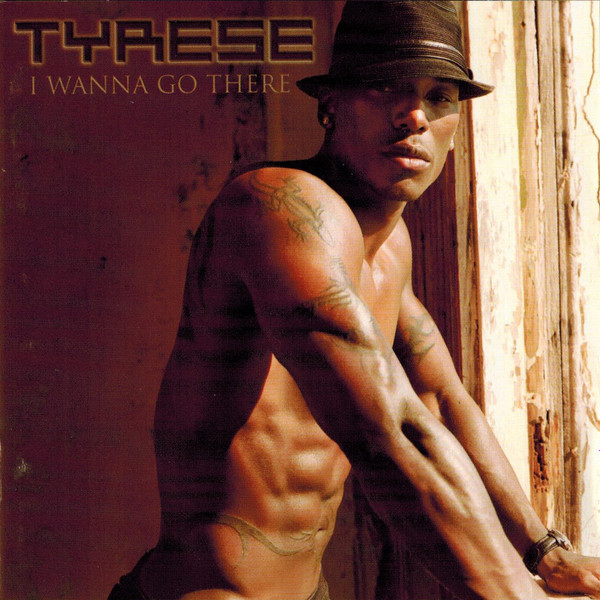
Album of the Week: Tyrese’s I Wanna Go There (2002)

Yo Tyrese, put some clothes on!

I can’t remember the first time I heard Chingy’s “Pullin’ Me Back”, but I was hooked. Tyrese’s chorus bolsters Chingy in a way that he wasn’t able to do on his own choruses, resulting in a 2000s pop/R&B classic. Recently rediscovering that and 2Pac’s “Neva Call U Bitch Again” made me feel like Tyrese must be some kind of unsung genius, so I dug into his third album, I Wanna Go There, on the strength of its single “How You Gonna Act Like That”. This track was produced by The Underdogs, who later made some of my personal favorite 2000s R&B tracks, such as Marques Houston’s “Sex Wit You” and Omarion’s “O”. Like the aforementioned tracks, the magic in this one lies in the chorus, which with its double-tracked vocals sounds wonderfully harmonious. I Wanna Go There as a whole is imperfect, but it’s still a worthy album.

In his music and public life, Tyrese puts it all out there. He has a strong vocal range and successfully employs a formula of restrained singing in his verses followed by bellowing choruses and impressive vocal runs toward the end of his songs. In late-album highlights like “All Ghetto Girl” and “Kinna Right”, his vocals really seal the deal over the music’s smooth production.

There are some lesser tracks here, like the redo of 2Pac’s “How Do You Want It” featuring the less-than-Pac-ish Mr. Tan. The Jermaine Dupri featuring “Girl I Can’t Help It” is surprisingly one of the weaker songs here as well. Still, most of the album sticks to a formula that is really solid R&B. The Poke & Tone produced closer, which samples the same Aretha Franklin song sampled on Mos Def’s “Ms. Fat Booty” is different, but it’s fun to see Tyrese explore his origin story on record. The guy may be mostly known for the Fast & Furious franchise, but he’s got some serious gems.

Listen to I Wanna Go There here.

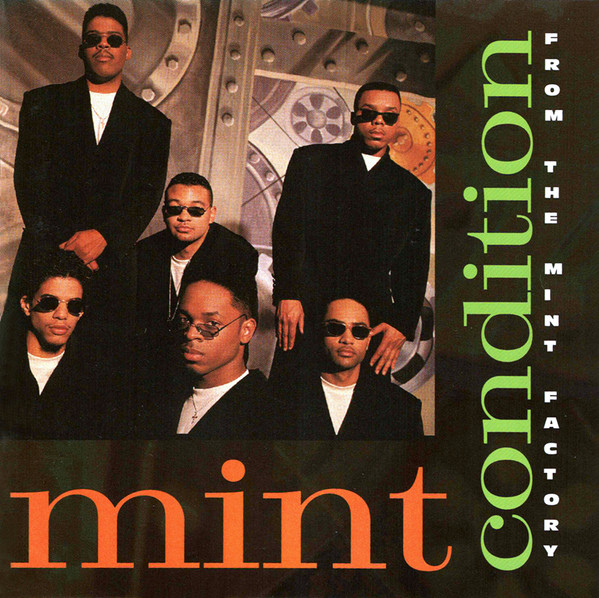
Album of the Week: Mint Condition’s From the Mint Factory (1993)

I listened to this album many years ago, initially wrote it off as average, and forgot about it for a while. But as the years went by and I got more into Babyface and groups like After 7 and Silk, I kept seeing this one pop up. Upon re-evaluation, this is an outstanding and somewhat back-heavy release.

Mint Condition hail from Minneapolis, where they were discovered by Jam & Lewis. I wouldn’t necessarily lump their sound in with Janet Jackson or Prince, and frontman Stokley sounds more like Raphael Saadiq than any Minnesotan, but they do lean on live instruments. While the Purple One was recording with The New Power Generation – a large and rotating band of at least eight members – in the early 90s, Mint Condition were releasing their first two albums, Meant to Be Mint (1991) and From the Mint Factory.

The production on this record is super slick, and I think it will be make-or-break for anyone revisiting it today. The drum programming dips into a New Jack Swing sound, which by the time of this album had been around for several years. Guy, Keith Sweat and Bobby Brown all dropped genre-defining albums in ’87-88, and even “Do the Bartman” was released in 1990. By 1993, New Jack Swing was past its critical and commercial peak. But Mint Condition sort of split the difference between New Jack pop and midwestern soul.

When it leans into live drums is often where the album finds its greatest success. “Someone to Love” is a tender ballad with drumkit and saxophone that wouldn’t be out of place in a Prince playlist. “10 Million Strong” has a cool live-sounding hiss in the background in addition to its drums. “U Send Me Swingin'” is a plain revelation. I was listening to this song a lot in 2021 and after I got my Covid shot I was up at 3am in a dazed delirium, drinking grapefruit Polar, watching Cluny Brown and singing “U send me sWANNGgANNN!” These are memories you just don’t forget.

“So Fine” is an electric guitar-heavy ballad, and “Back to Your Lovin'” is a slow-jam oozing with sweetness. I can’t get enough of this one. Also, the last two tracks here are really interesting because they both employ electric guitar in ways you wouldn’t normally expect for a 90s R&B album. “My High” is like a vignette and “Fidelity” has an almost heavy metal guitar and goes all-out rock to become an album closer sort of like Goodie Mob’s “Just About Over”, their rock song which is the penultimate track on Still Standing (1998). These songs are both hate-it-til-you-love-it things for me. My guy Jellybean Johnson who did the solo on Alexander O’Neal’s “Criticize” (one of the best songs ever) plays electric guitar here and really hammers it home.

“Harmony” is a little corny with its steel drums and as I mentioned earlier, some of the tracks in the first half of this album are underwhelming. Despite that, From the Mint Factory is an excellent disc. I also recommend seeking out the Ummah (production from Q-Tip and J Dilla) Mix of “Let Me Be the One” from Mint Condition’s The Collection (1991-1998) featuring a great verse from Phife – who says “Meet me at the T-Wolves game tonight!”

Listen to From the Mint Factory here.

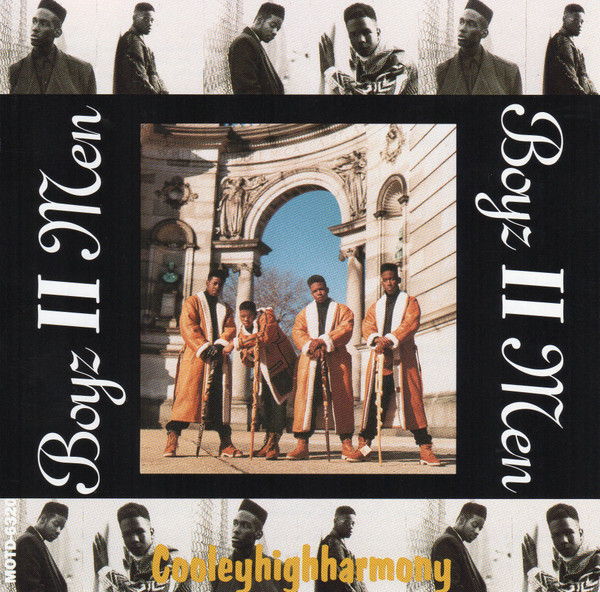
Album of the Week: Boyz II Men’s Cooleyhighharmony (1991)

Boyz II Men, ABC, BBD – the East Coast fam

So I knew the “BBD” was for Bell Biv Devoe (“Poison”), but I learned today that “ABC” stands for Another Bad Creation, a kid R&B group which I think I came across while practically studying Immature. I got this CD at some point in high school and it lived in the Honda Pilot. I also made “screwed” versions of “Please Don’t Go” and “Your Love”, both of which I jammed a lot.

Though not as consistent as its forebear Heart Break by New Edition (featuring “Boys to Men”, the song B2M named themselves after) or TLC’s CrazySexyCool (a spiritual successor by way of title if nothing else), there are some classic tracks here. They would go on to work with my R&B MVP Babyface later, but the Boyz peaked here on their debut with producer Dallas Austin at the helm. In 2016, Austin would tell Waxpoetics, “I went to Philadelphia with them to record “Motownphilly” and “Sympin’,” and they were the only two tracks I was going to produce for their album. When I got there, I clicked with the guys, they asked, ‘Why can’t you do our whole album?’ Then, they asked me, ‘Can you do ballads?’ So I went and bought some Babyface records to listen to them, and I figured out how to do ballads. I ended up doing their whole album.” So even though Babyface didn’t work on the album, his influence looms!

Working with Dallas Austin was a good idea! Opener “Please Don’t Go”, while never a big hit, is one of those songs I never tire of. Awash in 90s synth and robo-harpsichord, it’s sleeker than New Edition and a far cry from the textbook New Jack Swing of “Poison”. Saccharine, sure, but to me it’s perfect: the voiceover intro, the orchestra hits, and the harmonies that they’d come to be known for are all amazing. Then you have another sad song in “Lonely Heart” and two sexx jams in “This Is My Heart” and “Uhh Ahh” – which went number one! A pretty minimal, weird track to go number one, the production of which sounds really dated now (that makes it even cooler!).

This is the canonical version of “It’s So Hard to Say Goodbye to Yesterday”, which is either wistful or devastating depending on the context you use it in. Another strange hit! Almost acapella, and it went to number two on the charts. What can be said about “Motownphilly”: it’s a Motown classic, a Philly classic, a grocery store classic… just a banger.

There are some B-side gems in “Little Things”, where the production reminds me of the James Ferraro I was listening to in the early 2010s, and the fantastic, cloying closer “Your Love”. As opposed to Austin and the rest of the band, these were both written by Troy Taylor (who would later work with Trey Songz) and made by his production duo The Characters. But they fit right in. Also, “UR LOVE IS 2 HYPE” would be a good tattoo or bumper sticker I think.

Listen to Cooleyhighharmony here.

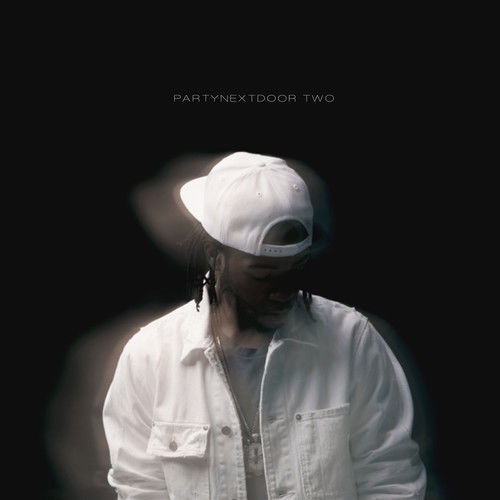
Album of the Week: Partynextdoor’s Partynextdoor Two (2014)

Critics haven’t always been kind to my guy PND over the years, and while he does have some duds (2020’s limp Partymobile comes to mind), I think he’s an outstanding artist. Writing, producing and singing his own songs as a teenager, he came into the game with his own style and sound. I love a lot of his songs but PND 2 is probably the one project I’ve spent the most time with.

PND’s career is forever linked to Drake, and their stylistic similarities are evident from the jump here. “East Liberty”‘s opening line “The summer’s over…” recalls “The summer’s mine…” from Drake’s “Good Ones Go” (Take Care). Like Drake, Party’s songs revolve around the flashy lifestyle of a young star in Toronto, and his production echoes Drake producer 40’s muted beauty. Raps themselves take more of a backseat in PND’s work, and by leaning into the chill R&B thing his work is less memorable but for me more comfortable than Drake’s. It’s so easy for me to revisit – I just pop on these hazy beats and get in the zone.

The collection here is full of classics, with PND producing or co-producing all but one track. “SLS” is so well-constructed in its buildup of drums and vocal samples, and all the shit-talking he does (dude was 20 when he made this album) is convincing wrapped up in the music. The drum production on a track like this or “Her Way” feels really good. It’s difficult for me to describe, or maybe I just have a nostalgia for it, but I feel like drums in this era hit better than what’s in hip-hop and R&B today.

I think “Sex On the Beach”‘s Disclosure sample has aged well. At the time it almost felt like a mistake given how huge “Latch” was, but ultimately it turns a pop smash into a kind of underground banger (surprised this one wasn’t a single). I think I listened to “Bout It” every day in college for a while, just walking around campus getting that in-between-classes dopamine rush from the first 5 seconds. Listening to Drake’s verse on “Recognize” today, I’m surprised at how different his voice sounds and not surprised that he’s totally in his bag. The beat would go on to repeatedly soundtrack the legendary Nileseyy Niles “disappearing” meme, and samples some patois-laden deejay type vocals.

“Muse” ends things in stellar fashion. I think of this as a Kehlani tribute (“bad bitch is from Oakland…”), and all the little production quirks, the little piano notes, the “Lemme-Lemme get that A”, and the reconstruction of the Ginuwine sample really make it a song she’s deserving of. Plus dude is talking about getting flustered and dropping his weed, which is funny. PND would go on to release more good stuff including PND 3, Colours 2, and Seven Days, which all got a lot of play from me. I like some of his newer songs too and given his increased output I would guess a new album is on the way soon.

Listen to Partynextdoor Two here.

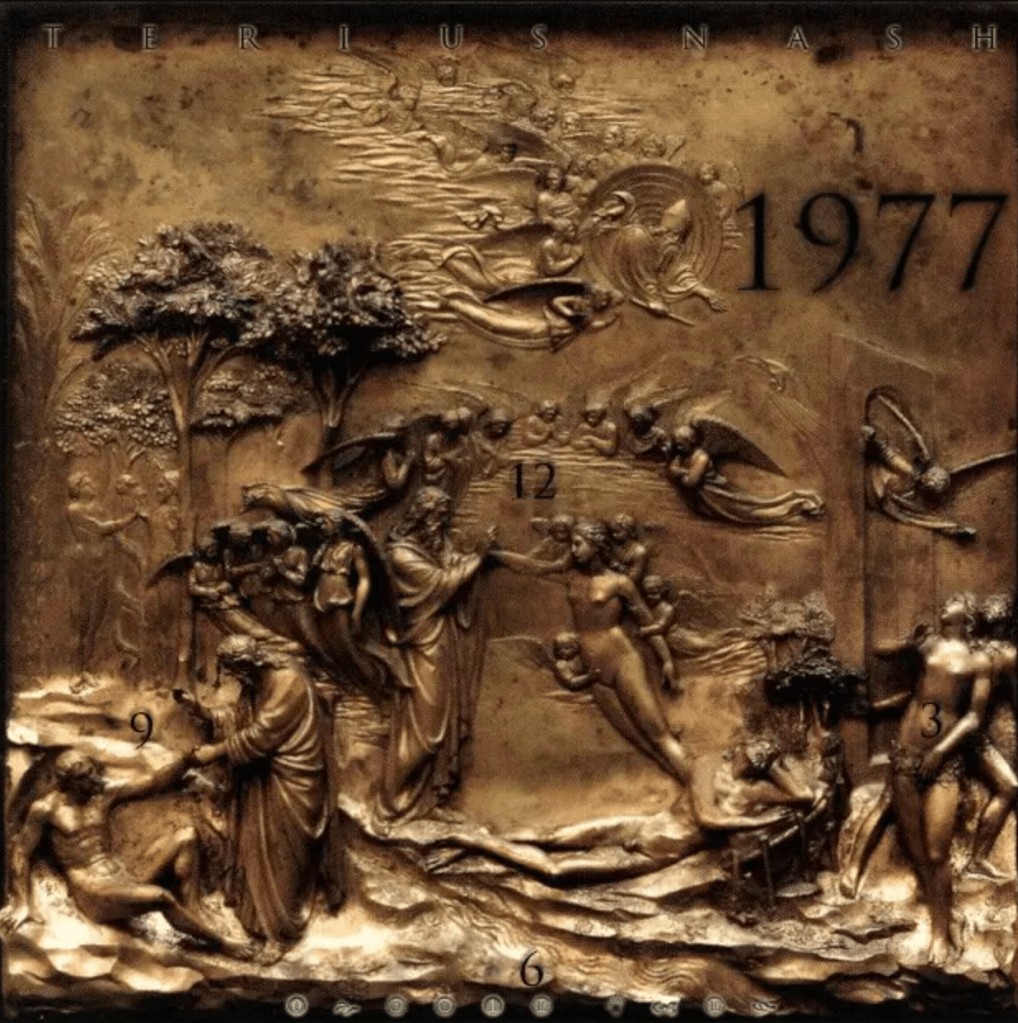
Album Review: Terius Nash’s (AKA The-Dream) 1977 (2011)

I think 1977‘s “Ghetto” is my most listened-to The-Dream song, and it doesn’t have much of a right to be. It’s got a phoned-in Big Sean verse, a slightly-too-long outro, and it’s about sex, the most common topic in Dream’s oeuvre. So why have I spend damn near ten years playing this track over and over again? It’s the melodies. They’re so good. Those first two minutes of “Ghetto” go by in a flash every time, and when I hear them I just want to listen to it again.

A master at his craft, The-Dream spent the mid-to-late 2000s carving out a new peak in pop-R&B with his Love trilogy: three albums loaded with brilliant melodies and immaculately constructed, flowing freely from one track to the next. How would he follow this trilogy up?

On Love King‘s (2010) “Sex Intelligent Remix”, he prescribed his next step: on 6/7/2011 he would release Love Affair. That never happened, presumably due to label issues, but at the peak of his might Dream was reluctant to go a whole summer without delivering. He would tweet the following: “The “TERIUS NASH EST. 1977″ is very personal and to my Fans! BTW NO ONE AT DEFJAM IS HAPPY ABOUT A FREE ALBUM LOL…. they are trying to stop it!” 1977 was released for free on the internet on August 31 under Dream’s birth name, Terius Nash.

Though rare, the Love trilogy’s darker tracks like “Nikki” and “Abyss” were highlights of their respective albums. On 1977, this mode is the standard rather than the exception. Unquestionably informed by his then-recent divorce, many of 1977‘s tracks are bleak and beautiful. “Used to Be” is acerbic, and “Long Gone” is a nothing-to-lose confessional: “I’ve forgotten how to fuck you / Now when you say my name it don’t feel the same way”.

Mid-album, things lighten up a bit with the aforementioned “Ghetto” and the Rick Ross-like “Rolex”. But the rich flexing doesn’t last: the title-track (Dream’s birth year) is brutal: “It hurts me just to see your name / And that tattoo runs through my veins”. “Form of Flattery”, which closed the original album, is the closest thing to The-Dream’s “Fast Car”: a simple acoustic guitar loop underlies a spare track over which Nash demurs over his ex’s words: “I’m not better than that / But I appreciate the form of flattery.”

1977 was re-released in 2012 on CD with a slightly altered tracklist, removing the mellow “Kill the Lights” and the Casha (presumably a Dream protégé) solo “Silly” (sidebar: when I saw Dream perform live around this time, he brought out Casha mid-show to sing some solo tracks, which weren’t particularly well-received). However, the 1977 re-release (the version on streaming) adds “Long Gone” as well as two great bonus tracks: the flat-out incredible “AK-47”, and the downcast, self-criticizing “Tender Tendencies”.

In an era when Drake was at his peak and Kanye was still making amazing music, 1977 got lost in the cracks and is still under-rated, and The-Dream hasn’t made an album as good since. If you’re looking for an R&B gem, or a strong album borne of personal pain, check this one out.

Listen to 1977 here.