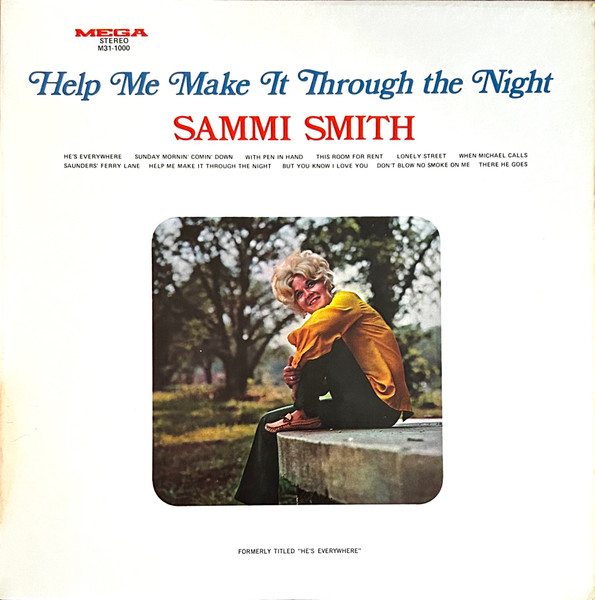
Album of the Week: Sammi Smith’s He’s Everywhere (AKA Help Me Make It Through the Night) (1970)

Country music has increased in popularity over the past few years, and so has my own interest in it. What used to be an appreciation for the hipster-approved Townes Van Zandt and Gram Parsons has extended to digging on Linda Ronstadt, Tanya Tucker, Nanci Griffith, Lyle Lovett etc. Safe to say I love me some Country! Sammi Smith was a name I didn’t know until recently, but her debut album He’s Everywhere blows me away.

Born in California, Smith once said of her childhood, “I moved around more than dust,” living in Oklahoma and Arizona. A friend of Waylon Jennings and Kris Kristofferson, Smith covers Kristofferson’s “Sunday Mornin’ Comin’ Down” and “Help Me Make It Through the Night” on He’s Everywhere, released on the short-lived Mega Records out of Nashville. He’s Everywhere, re-released as Help Me Make It Through the Night was Mega’s biggest hit, with the title track topping the Billboard Country charts.

The strings on opener “Saunders Ferry Lane”, paired with Smith’s smoky voice, create a cinematic atmosphere. The vibe is perhaps more torch song than classic Country. “There He Goes”, then, could be a Patsy Cline track. With vibraphones, steel guitar and a strong vocal take, it’s simply gorgeous. Kristofferson’s storytelling brilliance (not unlike that of Mickey Newbury, a favorite of Smith’s) shines through on “Sunday Mornin’ Comin’ Down”. This track captures the sort of Lonesome Country Blues vibe that the album succeeds in owning throughout. “He’s Everywhere” is a great and sorrowful song about not being able to get someone out of your head. “But You Know I Love You” and “Don’t Blow No Smoke on Me” are more straightforward Country tracks (the latter in the honky tonk vein), but the record is no worse off for that. He’s Everywhere ends abruptly during “This Room For Rent”, with an out-of-nowhere cut after the line “She’s heard no word from God, and nothing seems to matter anymore”.

After Mega folded, Smith signed to Elektra but was not well-promoted and seems to have never really gotten her due. She passed away in 2005 and is survived by her children, including her son Waylon Payne, a Country singer.

Listen to He’s Everywhere here.
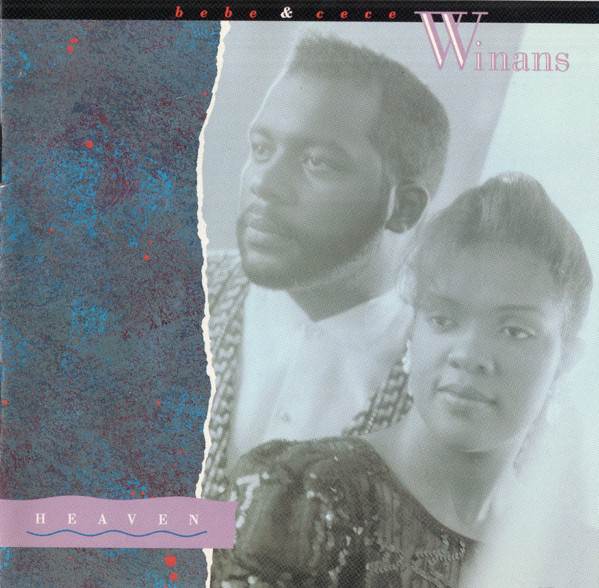
Album of the Week: Bebe & Cece Winans’ Heaven (1988)

The existence of God is a question that has been pondered by humans for millennia, and there is no definitive answer. It is a matter of personal belief and faith...

Ultimately, the question of whether God exists is one that each individual must answer for themselves.

-Google’s AI chatbot Gemini, in response to “is God real?”

Well, jury’s out on whether or not God is real. But Heaven definitely is! And its leadoff title-track is certainly heavenly. As “The White Cliffs of Dover” envisioned a post-WWII world of peace, Bebe Winans’ “Heaven” anticipates the celestial realm as a place where “there’s no more use for guns and war.” Over a beat that melds disco, processed Brazilian percussion, funky bass, and glass synth stabs, the brother-sister duo sing their gospel. It’s a masterstroke of pop-R&B and an ultimate 80s time capsule.

Keith Thomas, who later co-wrote Usher’s “Love in This Club”, takes the helm on the music side here, and not all of his tracks are as successful as “Heaven”. “Celebrate New Life” bores in comparison. “Lost Without You”, though, retains the synth magic. Winans’ lyrical odes to God are thinly veiled, but veiled enough that the choosy agnostic can enjoy this as a ballad of lost love. The Whitney Houston-featuring “Hold Up the Light” is another banger, with Bebe quoting the Pledge of Allegiance toward the end (probably the only song you can say that about).

The back half of Heaven is a little less interesting, but things close well with a cover of “Bridge Over Troubled Water” followed (on the CD/streaming version) by a 6-minute extended dub of “Heaven”. The Simon & Garfunkel cover is delightfully ethereal, and the “Heaven” remix is fun, if a bit of a mess. Overall, Heaven rides on the strength of its title track, with some other worthy tracks here and there.

Listen to Heaven here.

Album of the Week: T-Pain’s Epiphany (2007)

Tebunon… pedalophagus… from the planet Tallagoosa…

Can I get a witness? T-Pain is a Florida guy through-and-through (the T stands for Tallahassee), so he’s been on my mind this past month as Florida has battled two serious hurricanes. We all know “Bartender” and “Buy U a Drank”, but is the rest of T-Pain’s second album worth a listen? Yes, yes it is.

Epiphany was produced entirely by T-Pain, whose smooth production holds up some 17 years later. Shawnna (“What’s Your Fantasy?”) provides the assist on “Backseat Action”, a song about fucking on the highway which is far from the weirdest sex song on here. You know that saying, “he could sing the phone book”? That’s T-Pain. He has a whole song about the sexual appeal of… stomachs, and it sounds great. Yes, “Yo Stomach” is a real song. It’s absurd, it’s funny, it’s catchy. “Them crunches got me punchin’ the wall!” Change the lyrics to being in the club or falling in love or something and you have a hit. But I love that Pain stuck with his weird fetish song instead. I don’t think I have to explain what “69” is about, but it is NSFW.

“Time Machine” is my favorite T-Pain deep cut because it strikes a brilliant balance between humor and heartfelt emotion. In it, he reminisces on the ease of his life before fame. In his signature auto-tune he coos, “No matter how bad the weather, everything back then was just so better,” followed by a wistful “heh”, as if acknowledging the bastardized syntax. It’s not the only combination of humor and emotion from Pain, whose closer “Sounds Bad” is an over-the-top look at the struggles of the little guy, a la Justin Timberlake’s “Losing My Way”.

T-Pain raps with a tight flow on “Show U How”, proving himself a one-man hit machine. He rap, he sing… and anyone who doubts his ability as a singer (what with all the autotune) need only peep his Tiny Desk Concert, which is my favorite of the series. It’s a thing of beauty. But back to Epiphany. Yeah, it’s not without a few skips, but really it’s an excellent album by a national icon, with surprisingly human moments. I’d recommend it to any fan of pop music.

Listen to Epiphany here.

Album of the Week: Coco & Clair Clair’s Sexy (2022)

As we experience the Braternization of pop music (it was only a matter of time), I’d like to look back a ways to one of the most fun pop albums of our era. And when I say “back a ways”, I mean 2022, because time moves fast in music.

I first heard Coco & Clair Clair in 2019 on Deaton Chris Anthony’s “RACECAR”, then discovered their immaculate song “Pretty”. The girlies enlisted Kreayshawn on their 2020 song “TLG”, thereby showing some love to a forebear of their sound and style. It’s a fantastic track that cemented my place as a fan. Sexy, then, turned out to be about everything I hoped for in a C&CC album.

The first few tracks follow the group’s established style: candy-coated beats, Coco’s humor and Clair Clair’s dream-pop melodies. “The Hills” is like the musical equivalent of a Kirby plushy, and “U & Me” is a doe-eyed Britney tribute. “8AM” throws a curveball by going sunshine pop, while “Bitches” enlists the help of niche west coast rapper Marjorie W.C. Sinclair, with a rare and thrilling Clair Clair rap verse (“The Louis, the prada? / both mine / Your man and his friend? / both mine / Kissin’ my ass / full-time”). It’s a burst of serotonin that makes for one of my most-listened to tracks on the album.

“Lamb” taps indie artist Porches for some slacker guitar and proves another highlight. meltycanon’s toy music box beat for “TBTF” works perfectly for Coco & Clair Clair’s carefree approach, and there’s a hilarious slideshow video (see above). Single “Pop Star” rounds things out, appropriately, as the album’s most popular song. Coco & Clair Clair recently followed this one up with Girl, which plays more like an EP at 24 minutes, but is also worth a listen.

Listen to Sexy here.

Album of the Week: Lana Del Rey’s Ultraviolence (2014)

In June of 2014 I was 19, home from my freshman year of college. I was unemployed and spent many nights staying up past 3 or 4am listening to music in my mom’s basement. This was a great time for rap and the typical basement jamming involved Main Attrakionz and Young Thug, but I was also listening to artists like Beach House, Mazzy Star, Galaxie 500, and my perennial favorite Cocteau Twins. I mention this because the dream-pop adoration really set me up to enjoy Ultraviolence.

Not following Lana Del Rey closely before this album, it was a surprising and awesome experience how much it grabbed me. I also found Lana’s publicized depression surrounding the Born to Die (2012) backlash grounded and relatable. This was a really unique era in the first decade of social media when artists were subjected to a newer, overwhelming way of receiving unfiltered criticism, and the Guardian interview accompanying this album’s release on June 13, 2014 revealed Lana as someone who didn’t “enjoy being a pop star, [felt] constantly targeted by critics,” and, most alarmingly, “[didn’t] want to be alive at all.” Ultraviolence, then, was a dramatic turn in every sense of the word: a theatrical display of intense sadness, an abandonment of the hip-hop pop of Born to Die and Paradise, and a uniformly striking collection of dark rock songs.

The Black Keys aren’t too similar to the bands I mentioned in the first paragraph, but when you marry the rich, slow guitar atmosphere of Dan Auerbach’s production with Lana’s velvety voice, you get something of a scarred dream-pop revival, featuring classic pop references. “West Coast” rotates with tension before breaking into a slow-motion interpolation of Stevie Nicks’ “Edge of Seventeen”. “Ultraviolence” reworks The Crystals’ “He Hit Me (and It Felt Like a Kiss)” into twisted Kubrick worship. And fittingly, the album is cinematic in scope. Where Honeymoon (2015) and later albums portray a more chilled-out woman in her thirties, Ultraviolence is a stylized portrayal of youthful sadness. Her Americana-obsessed mythos, though it contains genuine roots, is thematically stretched out for show. This is how you end up with lyrics like “They think I don’t understand the freedom land of the seventies… I’m churning out novels like beat poetry on amphetamines,” (“Brooklyn Baby”) or the (seemingly!) vapid “Sad Girl”. But the results are ultimately bold, inventive and and personal songs that don’t (or didn’t) pander to any formula of commercial success (some of 2014’s top hits: “Happy” by Pharrell; “Talk Dirty” by Jason Derulo; “All About That Bass” by Meghan Trainor).

Whereas newer LDR albums are (imo) overstuffed with stark ballads, Ultraviolence has a solid flow with elements that enhance the strength of her songwriting and singing instead of leaving them repetitively unadorned. The barest ballad here, the penultimate “Old Money”, is gorgeous and welcomed after the hazy atmosphere of the preceeding tracks. Closing with a cover of “The Other Woman” is the album’s final and most gracious nod to classic pop, and Lana’s vocal performance on the song is stunning. Even the leftovers are worth seeking out: bonus track “Black Beauty” is a soaring torch song, and iTunes bonus track “Is This Happiness?” absolutely wrecks me (I wish this were on Spotify!).

In 2019, critical praise of Lana’s music reached a high with the success of Norman Fucking Rockwell!, but Born to Die and Ultraviolence still strike me as her greatest albums. If you can’t dig her, these albums likely won’t change your mind more than anything else she’s done since. But by leaning into her pain, Lana shone on Ultraviolence, and it stands as a unique peak in her career.

Listen to Ultraviolence here.

Album of the Week: Better Person’s Something to Lose (2020)

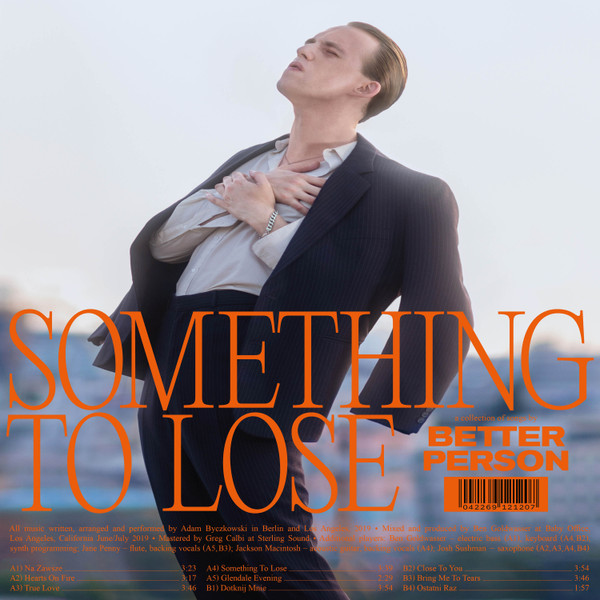
During my research for Jane Penny of TOPS’s recent EP, I learned about Better Person, the solo project of Adam Byczkowski. His lone album (unless you count the 23 minute It’s Only You) is 2020’s Something to Lose, which has quickly become one of my most-played picks in recent weeks. Byczkowski lived with Penny and the album is inspired by her.

In an interview with Breaking Glass Magazine, he described the record as “Heartfelt ballads sung by a Polish man who fell deeply in love.” Tender as all get-out, the Polish-language opener “Na Zawsze” (Forever) is a delicate expression of feeling, accompanied by a touching synth melody. This sets the tone for Something to Lose, which is indeed heartfelt and alternates between driving drum programming (“Hearts on Fire”) and more ambient production (“Glendale Evening”). MGMT’s Ben Goldwasser produced the album in LA after Better Person wrote the songs in Berlin, and it has a consistently lovestruck vibe that will be comfortable to any fans of smooth pop.

Originally planning to title the album True Love, he changed the name after Devon Welsh released his record True Love (2019). Still, the theme comes across as on “Next to You” or the title track “Something to Lose”, an outstanding piece of pop magic. When BP sings “touch me baby” it comes off as completely genuine. Though the synths and programmed drums here might strike some as kitschy, they reflect more on the artist’s bedroom setup than a retro aesthetic.

Released on the heavy-hitting Canadian label Arbutus (as well as Mansions and Millions in Germany), Something to Lose is a worthy addition to their already superb catalog, and an album that unfairly fell through the cracks during the 2020 pandemic. The artist himself suffers from long Covid and has not released music since. Hopefully he will continue to recover and further explore his talent as a musician.

Listen to Something to Lose here.

Album Review: Terius Nash’s (AKA The-Dream) 1977 (2011)

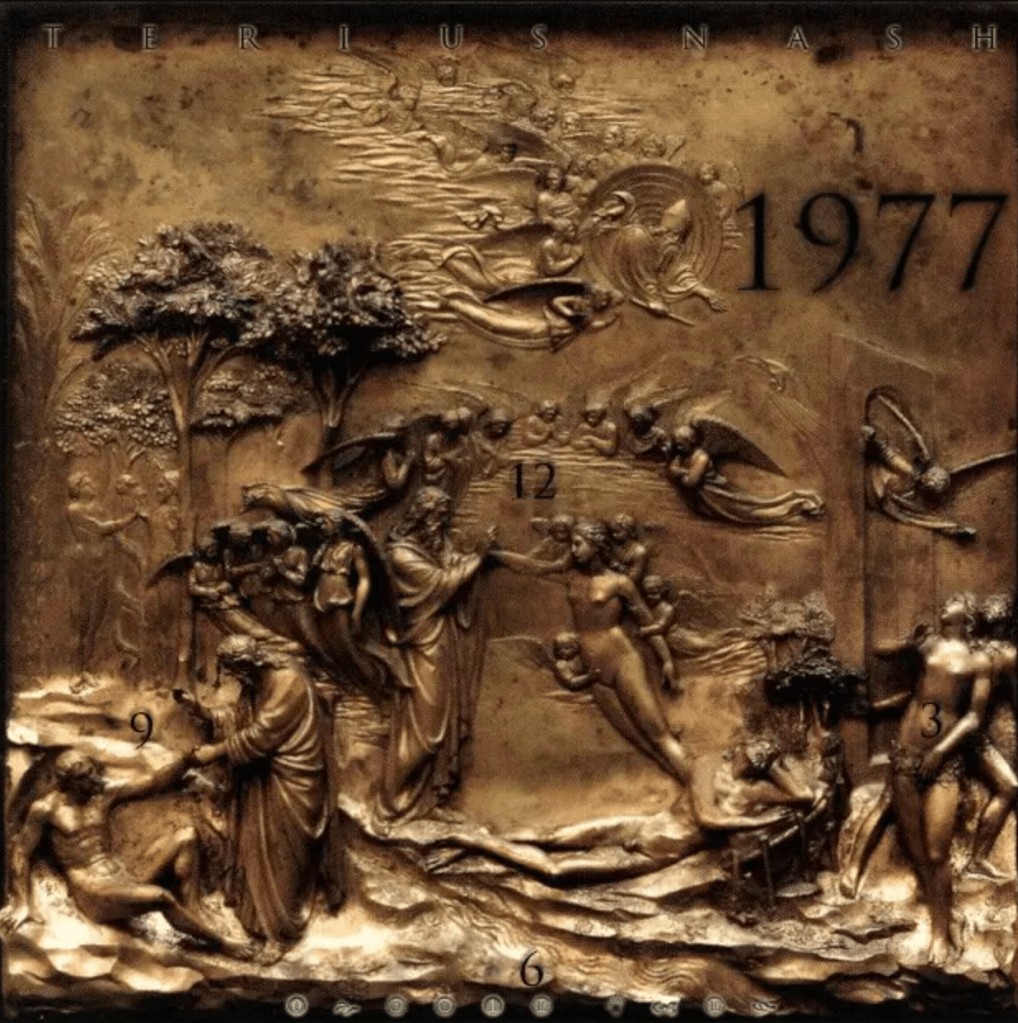
I think 1977‘s “Ghetto” is my most listened-to The-Dream song, and it doesn’t have much of a right to be. It’s got a phoned-in Big Sean verse, a slightly-too-long outro, and it’s about sex, the most common topic in Dream’s oeuvre. So why have I spend damn near ten years playing this track over and over again? It’s the melodies. They’re so good. Those first two minutes of “Ghetto” go by in a flash every time, and when I hear them I just want to listen to it again.

A master at his craft, The-Dream spent the mid-to-late 2000s carving out a new peak in pop-R&B with his Love trilogy: three albums loaded with brilliant melodies and immaculately constructed, flowing freely from one track to the next. How would he follow this trilogy up?

On Love King‘s (2010) “Sex Intelligent Remix”, he prescribed his next step: on 6/7/2011 he would release Love Affair. That never happened, presumably due to label issues, but at the peak of his might Dream was reluctant to go a whole summer without delivering. He would tweet the following: “The “TERIUS NASH EST. 1977″ is very personal and to my Fans! BTW NO ONE AT DEFJAM IS HAPPY ABOUT A FREE ALBUM LOL…. they are trying to stop it!” 1977 was released for free on the internet on August 31 under Dream’s birth name, Terius Nash.

Though rare, the Love trilogy’s darker tracks like “Nikki” and “Abyss” were highlights of their respective albums. On 1977, this mode is the standard rather than the exception. Unquestionably informed by his then-recent divorce, many of 1977‘s tracks are bleak and beautiful. “Used to Be” is acerbic, and “Long Gone” is a nothing-to-lose confessional: “I’ve forgotten how to fuck you / Now when you say my name it don’t feel the same way”.

Mid-album, things lighten up a bit with the aforementioned “Ghetto” and the Rick Ross-like “Rolex”. But the rich flexing doesn’t last: the title-track (Dream’s birth year) is brutal: “It hurts me just to see your name / And that tattoo runs through my veins”. “Form of Flattery”, which closed the original album, is the closest thing to The-Dream’s “Fast Car”: a simple acoustic guitar loop underlies a spare track over which Nash demurs over his ex’s words: “I’m not better than that / But I appreciate the form of flattery.”

1977 was re-released in 2012 on CD with a slightly altered tracklist, removing the mellow “Kill the Lights” and the Casha (presumably a Dream protégé) solo “Silly” (sidebar: when I saw Dream perform live around this time, he brought out Casha mid-show to sing some solo tracks, which weren’t particularly well-received). However, the 1977 re-release (the version on streaming) adds “Long Gone” as well as two great bonus tracks: the flat-out incredible “AK-47”, and the downcast, self-criticizing “Tender Tendencies”.

In an era when Drake was at his peak and Kanye was still making amazing music, 1977 got lost in the cracks and is still under-rated, and The-Dream hasn’t made an album as good since. If you’re looking for an R&B gem, or a strong album borne of personal pain, check this one out.

Listen to 1977 here.

Album of the Week: Sixpence None the Richer’s Divine Discontent (2002)

Have you ever seen She’s All That with Freddie Prinze Jr. (of Scooby-Doo fame), Rachel Leigh Cook and Matthew Lillard (also of Scooby-Doo fame)? It’s basically an above-average teen movie, but the best scene is undoubtedly when Rachel Leigh Cook’s character walks down her staircase as Sixpence None the Richer’s “Kiss Me” is playing. “Kiss Me” (1997) is peak grocery store-core. Happy, catchy, mellow and saccharine, it’s a smash hit that remains Sixpence’s most popular song.

After their (now certified Platinum) self-titled album came out in 1997, it took almost 5 years for the band (with ties to Texas and Nashville) to release a follow-up. Lead singer Leigh Nash, an unabashed Christian, stated in a 2003 interview with Jesus Freak Hideout that label problems delayed the release of Divine Discontent, and that it wasn’t supposed to feature the Crowded House cover “Don’t Dream It’s Over”, which Sixpence recorded for the TV show Smallville.

Though the inclusion of “Don’t Dream It’s Over” may have been a push to sell the album rather than an artistic decision, it’s still a standout here. They stick fairly close to the original version, which is not a bad idea. I became obsessed with the Crowded House version recently, which led me to finding Divine Discontent in the first place. With this song, two versions are better than one.

The rest of the album is cash money too, though. “Breathe Your Name” sets things off with as much sunshine as Natasha Bedingfield’s “Unwritten”, but it’s a little groovier. “Waiting on the Sun” is another pop banger. “Paralyzed” is the rocker that I imagine them ripping in a live setting. “Tension is a Passing Note” is a broken ballad that Nash has called her favorite Sixpence song. “Do I murder us / putting pavement in my veins?” she asks. It’s an unsettling moment, and it works in the band’s favor. The Van Dyke Parks-assisted “Dizzy” is like a primer for the soaring closer “A Million Parachutes”, another stand-out.

As far as being lumped into the Christian rock category, as Sixpence often is, Nash has said “I am a big fat Christian and do not care who knows that. When it comes to our music we’d just like it to be taken for it’s musical value and not lobbed onto a big bandwagon.” Divine Discontent far exceeds any expectations of generic Christian rock, and it has aged well in the same way that Michelle Branch’s early 2000’s hits have aged well. They’re well-written rock songs produced to pop perfection.

Listen to Divine Discontent here.

Album of the Week: Ana Mazzotti’s Ninguém Vai Me Segurar (1974)

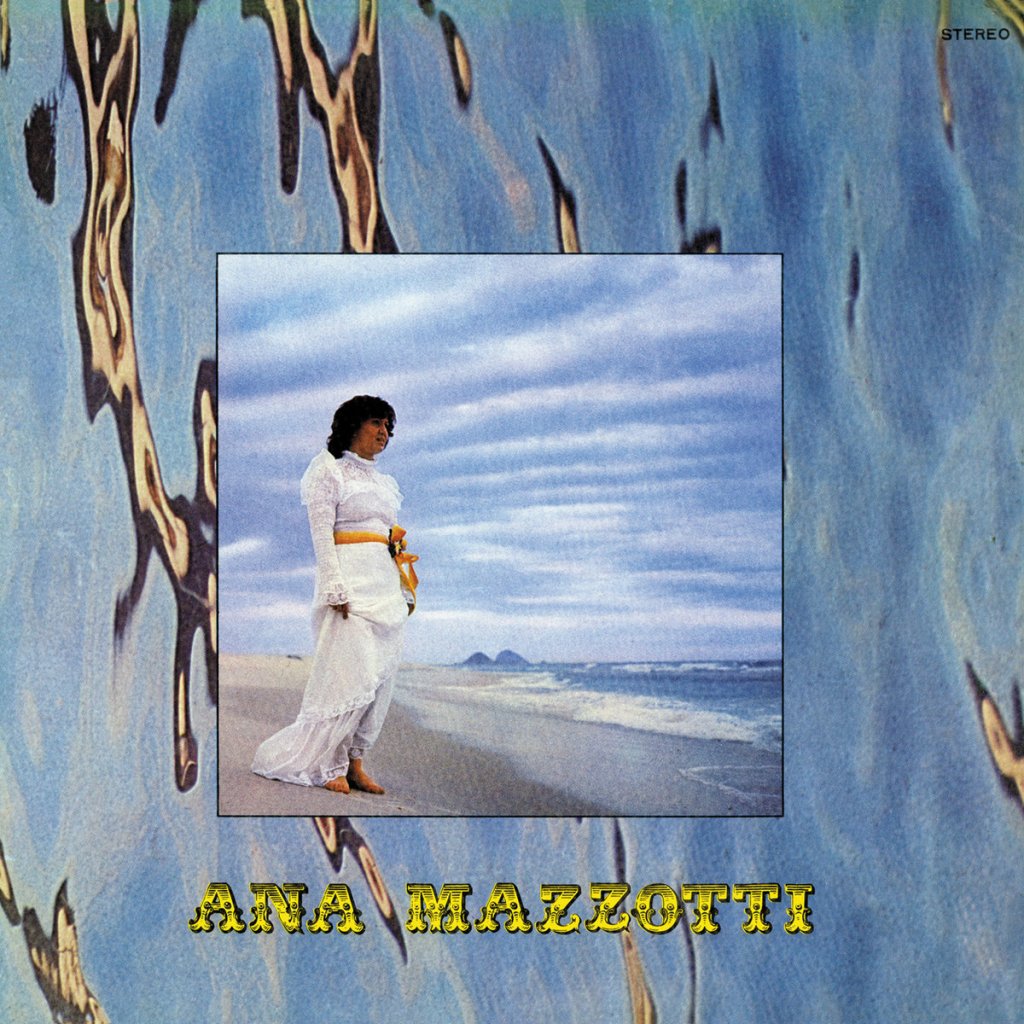
Brazil in the 60s/70s was, among other things, fertile ground for amazing music. Ana Mazzotti began playing accordion at age 5, before moving to keys and forming a Beatles cover band while still in school. A move from Brazil’s southernmost state of Rio Grande do Sul to the more populated São Paulo found her introduced to Rio de Janeiro’s Azymuth, the fusion/funk band that would play a key role in her music. By 1974, Azymuth keyboardist José Roberto Bertrami was already something of a session wizard, having played with luminaries such as Tim Maia and Marcos Valle. When Mazzotti recorded this, her first album, Bertrami and the Azymuth crew were her backing band.

Ninguém Vai Me Segurar translates to “Nobody will hold me”, which is probably a statement of loneliness but which I prefer to liken to Rick Ross’s refusal to be stopped. Mazzotti’s confident vocals and great songs are only the first layer of the music. Bertrami’s contributions are massive: these synths are FUNKY. “Roda Mundo” features some synth-spazzing that rivals Chick Corea and “Eu Sou Mais Eu” has a particularly funky bounce to it.

I think I discovered this record via “Feel Like Makin’ Love”, a cover of the Roberta Flack song (written by Eugene McDaniels) that served as the title track to the first AOTY I ever posted on this blog. Mazzotti’s version is sampled on Isaiah Rashad’s “Cilvia Demo”, and matches the mellow of Flack’s take. We get a sort of Syreeta vibe on “Acalanto” with its sleepy Sunday atmosphere and Stevie-like synths.

Ana Mazzotti followed Ninguém with a self-titled album in 1977, but unfortunately neither were very commercially successful. Little is known (at least to me) about her last 10-or-so years, and she passed away from cancer early in 1988. Thanks to a 2019 reissue on Far Out Recordings, more is known about Ninguém and it is easy to find and stream, which is fantastic as this album is an absolute delight.

Listen to Ninguém Vai Me Segurar here.

Album of the Week: Valerie Carter’s Wild Child (1978)

At a party a few months ago, I was enjoying a very 2022-sounding playlist of Charli XCX and rap stuff when someone threw on Steely Dan’s “Hey Nineteen”. I was flabbergasted. WHO had the cojones to throw on this cut from Gaucho, my favorite Dan album, and interrupt the frenetic hyper-pop with this smooth whiteboy funk? And why was it so GOOD?

Okay, so alcohol was involved, but I’ll never forget how (probably embarrassingly) excited this made me. That late 70s LA sound is so special, so fine and mellow, with slick session musicians who cut classic records in the place where it never rains. Chuck Rainey is here, who played bass on most Steely Dan albums, as is Victor Feldman, who also played (percussion/keys) on most Steely Dan albums. Jay Graydon, who plays guitar on Aja‘s “Peg”, provides a sick solo here on standout “What’s Become of Us”. Multiple horn players here also recorded with Steely Dan.

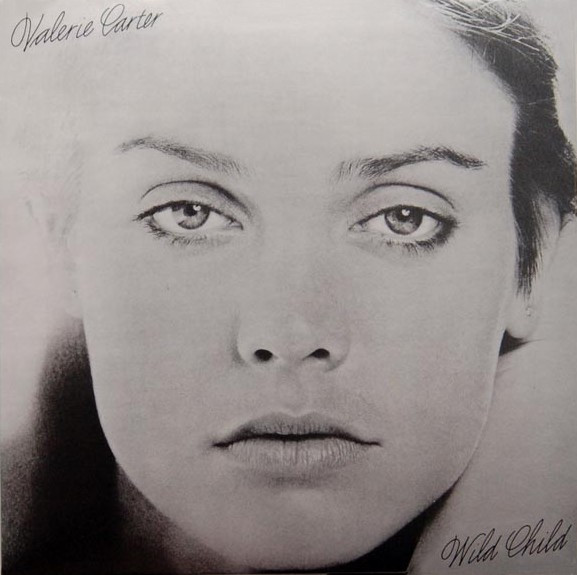
It makes sense then, that I think of the Dan when I pop on Wild Child, its opener “Crazy” just dripping with that disco-era production, all soulful and sexy. Admittedly, I don’t know much about Valerie Carter, other than that she was a singer-songwriter who worked with James Taylor and similar artists. She passed away in 2017, and her relative anonymity in the pop world today has me approaching this album almost as more of a Columbia Records group project than a solo album.

Wild Child doesn’t really separate Carter from her contemporaries (Jackson Browne, Phoebe Snow etc.) in that it is lyrical content is all love songs, and musically it’s pure Yacht Rock. This album’s strength is in its consistent quality. “Taking the Long Way Home” is sappy, but builds to a tight climax. “The Blue Side” rolls in like a Pacific breeze. “Wild Child” closes the set on an extremely strong note, with Feldman’s jazzy atmosphere and Carter’s most arresting vocal performance. Though it lacks that X factor found in stone-cold classic albums, Wild Child doesn’t deserve to be a forgotten, bargain-bin mainstay. It’s an excellent record with lasting music, and a defining piece of the late-70s LA sound.

Listen to Wild Child here.