Album of the Week: Ray Charles & Milt Jackson’s Soul Brothers / Soul Meeting (1958)

I recently rewatched Ray (2004) on HBO, which was fun, since Jaime Foxx is so charismatic and the music is so good. I think I realized this last year watching Fassbinder’s Gods of the Plague (1970), in which the protagonist slow-dances to “Here We Go Again” in one of the best scenes. Indeed, Ray Charles was immensely talented and his discography is full of gems. In 1958 he recorded Soul Brothers with the famed jazz vibraphonist Milt Jackson, AKA Bags.

This collaboration is interesting for a few reasons. For one, there are no vocals, which makes it atypical of Ray’s output and is probably why it’s one of the lesser-known releases in his oeuvre. Additionally, the two musicians decided to play around with different instruments, switching roles occasionally. That’s Ray Charles on saxophone on “Soul Brothers” and “How Long Blues”, where Milt Jackson plays the piano.

Soul Brothers and Soul Meeting were originally released as two different albums, both culled from 1958 sessions with the latter first released in 1961. The reissue combines them and sort of jumbles the track orders: for example “Soul Brothers”, originally the first track on the titular album, is now track 8. No matter – the two albums are quite similar and the relaxed nature of the pieces don’t require much of a formal order.

As I mentioned above, Ray plays the sax here, and he rips it. I especially love “How Long Blues”. Like most of these tracks, it’s in no hurry, but once you do reach Ray’s sax playing about 6 minutes in, it’s well worth the wait. “Blue Funk” has some tight guitar playing (courtesy of Skeeter Best) and groovy vibes from Bags. You can practically smell the smoke wafting out of some southern bar 60 years ago. As a jazzy collab, this is not the most immediate Ray Charles release. But it’s perfect for that laid-back Sunday afternoon vibe.

Listen to Soul Brothers / Soul Meeting on Spotify.

Album of the Week: Yelawolf’s Trunk Muzik: 0-60 (2010)

Say what you will about Yelawolf, and since it’s 2021 you’re probably not saying anything. But back in 2011, Yelawolf was in the same XXL Freshman class as Kendrick Lamar, Meek Mill, YG and Mac Miller, and showed at least some of the same commercial, if not artistic, potential. The “Freshman” Yela was already in his 30s, having independently released his first album CreekWater in 2005. CreekWater wears the influence of ATLiens (1996) on its sleeve, which as hip-hop touchstones go is a pretty good one to use as a springboard, even for a white boy from Alabama. Listening to it today, it’s clear that from the early days of his career Yela could both rap and carry a hook well (see “Breathe”). In this early stage he wasn’t showing much Eminem influence (besides being a white rapper), but that connection would come to full fruition by the end of 2011, when he was signed to Universal’s Shady imprint by Em himself.

Even on 2010’s Trunk Muzik the comparison is hard to avoid, since Yela presents himself as a sort of Southern Slim Shady, spitting fast and hailing from the trailer parks of Gadsden, Alabama rather than the trailer parks of Detroit. But Eminem himself is nowhere to be found. I think, then, that this was a sweet spot in Yela’s career where he could operate as a still-gritty, rural counterpoint to Em without being overshadowed by the influence of the superstar, who was far past his prime even ten years ago.

I remember seeing the video for “Pop the Trunk” on MTV back in the day, and its slightly cartoonish, eerily vivid atmosphere is still an effective representation of what Yelawolf is about (“This ain’t a figment of my imagination, buddy / This is where I live”). But my real introduction to Trunk Muzik was “I Just Wanna Party”, which I discovered deep into my Gucci Mane phase of 2012-2013. The hook is absurd (I love it), but Gucci kills the shit, declaring himself a partying rockstar in the company of Jimi Hendrix, Bob Marley and Paul McCartney in a rapid-fire verse. Fans of Big Boi’s 2010 solo debut Sir Lucious Left Foot should recall that both Yelawolf and Gucci had great features on that album. Indeed, Big Boi himself appears in the “I Just Wanna Party” video. Rittz kills it on “Box Chevy”, another cool ode to cars that finds him rapping fast over a laid-back beat, bringing Houston’s Z-Ro to mind. “Love Is Not Enough” spins Rick James’ “Hollywood” (also sampled on Three 6 Mafia’s “Da Summa”) into a pained tale of high-school love.

This era of late 2000s-early 2010s rap music is special to me because it reflects my early teenage years. Trunk Muzik 0-60 is not one of the best rap albums of this era. “Get the Fuck Up!”, “Billy Crystal” and “Marijuana” are all pretty bad songs. Yelawolf is now 41 and it’s doubtful that he will ever regain anything close to the traction he had a decade ago. But I think this music is worth revisiting. After all, a rapper giving props to Kingpin Skinny Pimp, Beanie Siegel and Pastor Troy on the same album doesn’t happen that often. Yelawolf is the real deal.

Listen to Trunk Muzik: 0-60 on Spotify.

Album of the Week: Erika de Casier’s Essentials (2019)

Copenhagen’s Erika de Casier just announced her next song “Drama” with an eye-popping Instagram post, so to celebrate I decided to revisit her debut album Essentials, which blew my mind upon first listen nearly two years ago and sounds amazing today, too. Now signed to one of my favorite labels, 4AD, I can’t wait to here what she has in store for her follow-up. Below is a slightly edited version of my Essentials review, which I wrote in 2019:

I love Aaliyah, Destiny’s Child, Craig David, Usher, Janet Jackson, Toni Braxton, and so on.

Erika de Casier wears her influences on her sleeve, as Essentials makes quite clear. But this isn’t some trendy gimmick. As the above quote (from an interview with i-D) demonstrates, the 90’s nostalgia comes from the heart. And with the help of mysterious Danish production team El Trick (aka Central) and DJ Sports*, de Casier’s debut is as much an enjoyable blast of nostalgia as it is a refreshingly new pop album.

The hits come early and just keep on hitting. After the lush pull of “The Flow”, the g-funk bounce of “Do My Thing” delivers her M.O. in its earworm chorus (bonus points for the brilliant no-budget video). It’s hard to pick stand-outs from the rest of the bunch because the sound is so fully-formed and consistent, but its worth mentioning the three-song arc of “What U Wanna Do?”, “Rainy”, and “Space”, tracks which in their moodiness work as effective contrasts to the sunshine of the album’s first half.

Erika de Casier’s vocal presence is warm and light, allowing her to float perfectly in the mix of the airy production. Lyrically, this is pretty standard pop fare that could have been written for most any Destiny’s Child song 20 years ago, but there is a repeated theme of de Casier urging her lover/listener to put their phone down and enjoy life (“Good Time”, “Intimate”), which I can totally get behind. Multiple listens reveal a handful of funny quirks and adlibs which are hard not to love. There are no features and other than “Photo of You”, which I think samples “Summer Madness”, there are no discernible samples.

I did a double-take on first listen here and it’s fair that you might too. But as she says on “Story of My Life”, Not tryna hide nothin’ / yeah I’m just comin’ real wit it. A superb debut that holds up well.

Listen to Essentials on Spotify.

*For more on these two, check out this p4k sampler and their distribution website.

Album of the Week: Lil B’s Gold House (2011)

“Gold house n****, only n**** with a house” – “Tiny Pants Bitch”

Lil B went on his most prolific run from 2010-2013 (2013 being the first year since 2009 that he released less than 5 mixtapes), and a decade later I’m inclined to agree with Tinymixtapes that 2012’s White Flame best exemplifies what is most incredible about this output. Admittedly, I’ve probably heard less than half of his 60+ full-length (or longer) projects, but recently I’ve enjoyed immersing myself in the mystifying ocean that is the Lil B discography. It helps that it’s all streaming. Whomst amongst us remembers downloading Basedgod tapes from Datpiff, often loaded with dozens of songs, only to find our laptops running low on space? Thankfully, the massive Lil B catalog came to streaming platforms in 2019, and now sampling any tape is as easy as a click.

Gold House (alternatively Goldhouse) was released on Christmas 2011, about a month before the aforementioned White Flame. What I love about this era of Lil B is the energy and off-the-wall performance, and I think a lot of this has to do with the production here. After White Flame came God’s Father, which has its own fanbase (it’s currently Lil B’s highest-rated project on RateYourMusic at an average of 3.77/5 from over 2500 ratings). However, God’s Father contains spacier, cloudier production. Over atmospheric production, Lil B is often more likely to loosen his flow and rap in a lethargic drawl, and this is where I feel he falters most as an artist.

This cloud-rap production is hard to find on White Flame and Gold House. Rather than the atmospherics beats of Clams Casino and the like, we get a style much more indebted to New Orleans: No Limit and Cash Money Records’ glitzy, turn-of-the-millenium bangers. Indeed, White Flame‘s album cover pays homage to Soulja Slim’s Give It 2 ‘Em Raw, he directly shouts out Cash Money here on “Im Like Killah Remix” and the ridiculous “Awsome” beat is simply a slowed “Go DJ”. An energized Lil B is rapping within one second of the opener “Green Card” (“Imma call you Homer, you got no dough”). The rapid-fire “I Love Strugglin” provides just one of many abstract kernels of Lil B’s unparalleled perspective: “Bitch Mob bitch, suck a dick / Gold House bitch, we love strugglin'”.

Lest you think Lil B solely exists in a fantasy realm, peep “Gangstas Smile” which begins, “My girl had an abortion, changed the game / I’m not ready to be a dad”. Damn. And all this over a gorgeous soul sample. Gold House concludes with “Based Gangstas Prayer”, a solemn conclusion to an otherwise rambunctious mixtape.

“Keep that love in your heart.” – Lil B

Listen to Gold House on Spotify.

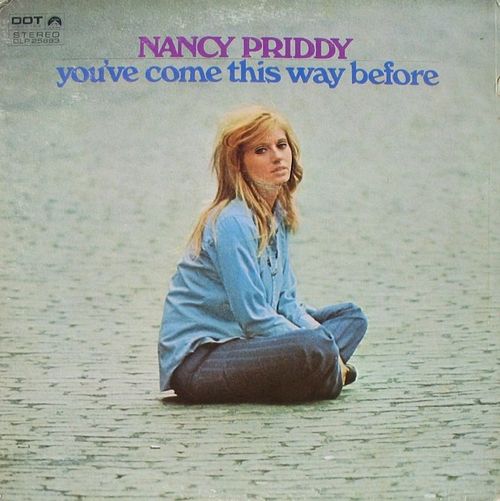
Album of the Week: Nancy Priddy’s You’ve Come This Way Before (1968)

“Feelin’ strange sensations / Familiar old vibrations” – so begins the trippy odyssey of renaissance woman Nancy Priddy’s You’ve Come This Way Before, released on the relatively unknown Dot Records label. Priddy was involved in the Greenwich Village folk scene of the 60s and sang back-up vocals on Leonard Cohen’s classic debut (you can hear her on the timeless songs “Suzanne” and “So Long, Marianne”). She also dated Stephen Stills, and eventually turned to acting, often starring alongside her daughter Christina Applegate. You’ve Come This Way Before, then, works as something of a successful one-time experiment for the talented Priddy.

At its best, Priddy’s music achieves a blend of Margo Guryan’s comfy psych-pop and Nico’s more doom-and-gloom baroque songs. “Ebony Glass” employs some eerie harpsichord and strings as well as a child singing “This is the way the world ends”. The rhythm section is tight (courtesy of jazz veteran Bernard Purdie), and the vibe is pure lava-lamp psychedelia. The album peaks early with the frankly incredible “Mystic Lady”, which is everything great about the album and the genres it includes in one track. A shifting opus not unlike “A Day in the Life”, it is in one section an orchestral ballad, another a festive merry-go-round, and finally a jaunty soul show-stopper in the vein of Laura Nyro.

Part of the album’s classic sound is attributable to co-producer and arranger John Simon, who worked with Leonard Cohen, The Band, Janis Joplin and Margo Guryan among others. “We Could Have It All” could be a Mamas & The Papas song. “Christina’s World” is apparently inspired by the painting of the same name, though it works doubly as a tribute to Applegate, who was curiously not yet born when the song was made.

My biggest complaint with this album is that it’s too short. There are 10 mostly brief songs and it barely clocks in at half an hour, with the longest track displaying the most brilliance. It ends on a curious note with the weird “Epitaph”, which leaves me wanting more. I will be seeking out more of Priddy’s music, but she didn’t release another album for decades, and I’m currently listening to 2007’s “Y2k Drinking Song”, which sounds like Jimmy Buffett (read: terrible). However, You’ve Come This Way Before is nothing less than a true hidden gem.

Listen to You’ve Come This Way Before on Spotify.

Album of the Week: Roy Montgomery & Grouper’s Split EP (AKA Vessel) (2009)

In 2009, veteran New Zealand psych-guitarist Roy Montgomery (of Dadamah and Hash Jar Tempo, among other things) and Liz Harris’ Grouper released this magnificent split 12″ on Harris’ Yellow Electric label as well as ambient artist Jefre Cantu-Ledesma’s now defunct Root Strata label.

Montgomery’s side is dedicated to Sandy Bull. Bull was a groundbreaking folk-guitarist who became a staple performer in the Greenwich Village scene of the early 60s and pushed boundaries on his albums, mixing international instruments, sounds and genres. His “Blend” is presumably the inspiration for Montgomery’s “Fantasia on a Theme by Sandy Bull (Slight Return)”. Like “Blend”, “Fantasia” is a roughly 20-minute piece of marvelous acoustic guitar work, with multiple changes in tempo and melody. A significant difference is that on “Blend”, Bull was accompanied by jazz drummer Billy Higgins (of Ornette Coleman’s band, among others), where Montgomery’s “Fantasia” has no drums. This is made up for by the reverb on Montgomery’s guitar, which gives the effect of the artist accompanying himself. It’s a brilliant psychedelic piece to get lost in.

Grouper’s side comes from one of the strongest periods of her consistent career: between the releases of Dragging a Dead Deer Up a Hill and AIA, arguably her two best full-lengths. If you’re a fan of Grouper you know what to expect: music that is hazy, delicate and touching. There are four songs, the standout being “Vessel”, which recalls (to me) the melody of “The Star-Spangled Banner”. “Pulse”, the instrumental closer, features some prominent dog-barking (presumably from the one pictured here).

Harris and Cantu-Ledesma would later collaborate as Raum on 2013’s Event of Your Leaving, and Harris featured on Roy Montgomery’s 2018 album Suffuse.

This split is not on Spotify. Check out Grouper’s side on Youtube, below.

Album of the Week: Volodos Plays Mompou (2013)

The Catalan composer Frederic Mompou died in 1987 at the age of 94. That same year, the 15 year old Russian student Arcadi Volodos, who had previously taken vocal training and shown an intrust in conducting, began seriously studying piano. 25 years later, after international awards and performances, Volodos released these recordings of Mompou’s compositions.

Described as “music of an ultimate inwardness and confidentiality”, Mompou’s pieces are minimalist enough to make any fan of Satie or Chopin swoon. Though born in the 19th century, Mompou lived long enough to record and release his compositions. Indeed, you can listen to about 5 hours of Mompou playing his Complete Piano Works on Spotify.

Needless to say, Volodos Plays Mompou is a more easily digested set. At 24 short tracks, much of the album is divided into two different books: “Scènes d’enfants” which is happy, even playful at times, and “Musica callada” (“Silent music”). In-between, appropriately, lovely pieces like “Hoy la tierra y los cielos me sonríen” (“Today the earth and the heavens smile at me”) split the difference. The “Musica callada” suite, “considered by some to be Mompou’s masterpiece”, is the highlight. Turn up your volume and enjoy – there are particularly breathtaking moments (“Lento molto”, “Calme”).

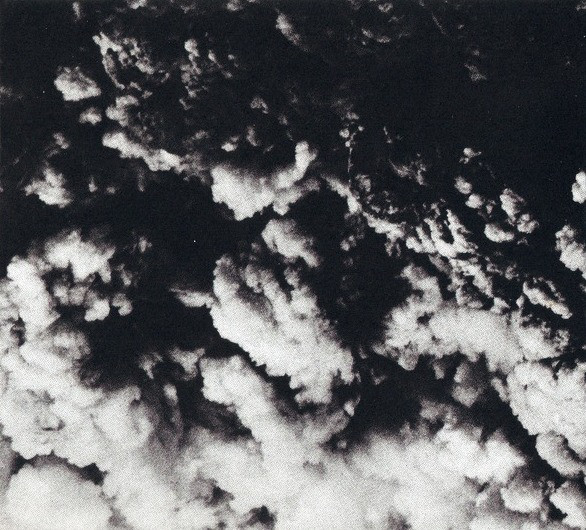
Much has been made of Catalan architecture and indeed a visit to Barcelona isn’t complete without viewing the work of Antoni Gaudí. The Catalan vault (like the vaulted ceiling on the album cover), according to one case study, is made thusly: “Traditionally thin bricks – or thin tiles – are used because of their lightness, which is a necessary condition to build the first layer ‘in space’ (without a continuous formwork)… as the self-weight of thin-tile vaults is low in comparison to other masonry structures, the falsework does not have to support high stresses.” Concluding, Catalan vaulting provides “large, suggestive, habitable and safe free-form vaulted spaces with an inexpensive, efficient and sustainable technique”. It is fitting, then, that the Catalan Mompou’s music finds power in lightness. Like the vault, Volodos Plays Mompou creates a space that is supportive, suggestive, and airy all the same.

Listen to Volodos Plays Mompou on Spotify.

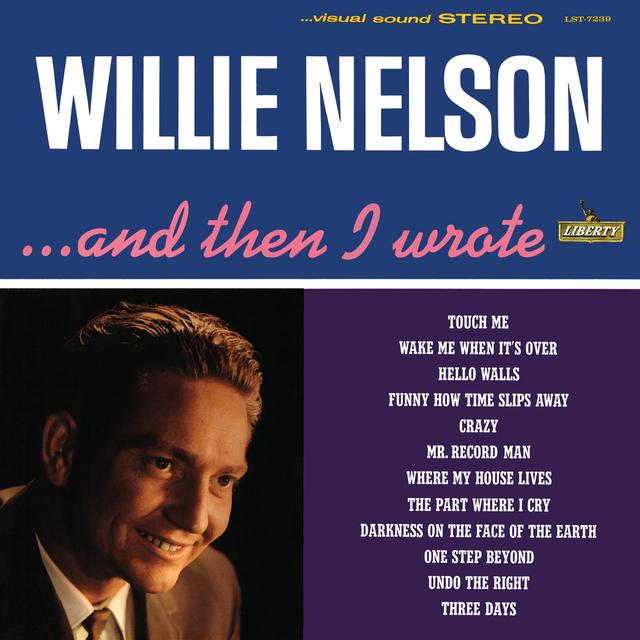
Album of the Week: Willie Nelson’s …And Then I Wrote (1962)

Willie Nelson has been around the block. By the time he finished writing and recording his 1962 debut album …And Then I Wrote, he was almost 30. It boggles the mind today that Nelson had been making music for years without success or interest from labels. With a reflective lens, we can easily say that Nelson’s smoky-voice and knack for writing made him a talent that was overlooked for a long time. But back then, things didn’t work the way they did today. A 2020 New Yorker profile notes that “Before he moved to Nashville, in 1960, he worked as a radio d.j., pumped gas, did heavy stitching at a saddle factory, worked at a grain elevator, and had a brief gig as a laborer for a carpet-removal service.” The young Texan Willie Nelson spent years doing just about everything besides being the country superstar he is today.

According to one of his autobiographies, Nelson wrote many songs while still living in Texas. Among these is “Crazy”, which became a big hit for superstar Patsy Cline, helping to jumpstart Willie’s career. I knew the Cline version before I knew that Nelson wrote it, and there are marked differences in delivery between the two recordings. Patsy Cline’s is melodic and whimsical, while Nelson’s near-spoken-word vocal in his version reveals more personal pain. He actually sounds kind of crazy, or at least hurt and lost. It’s incredible.

…And Then I Wrote‘s title reflects the fact that Nelson was a hit songwriter long before he was a solo star. And as a showcase of songwriting talent, the album is both an unheralded country classic and an excellent precursor to more expansive and well-known Nelson releases like Red-Headed Stranger. These songs are stark expressions of heartbreak. “If you can’t say you love me, say you hate me,” Nelson sings on “Undo the Right”, desperate to feel something. “Three Days” is darkly comic: “Three days I dread to be alive: today, yesterday and tomorrow.” “The Part Where I Cry” and “Where My House Lives” are brilliantly coded expressions of grief. In the former, Nelson describes his life as a movie (or “picture”) and sells it to the listener-turned-viewer (“I was great in the part where she found someone new”). “Where My House Lives” is a heartbreaking closer: “Here’s where my house lives… I never go there / ‘Cause it holds too many memories” Nelson tells the listener, removing himself from the picture of domestic happiness and accepting the role of lonesome cowboy-drifter that would come to define his future.

Musically, …And Then I Wrote is Willie Nelson at his simplest, but don’t let that fool you. This seemingly effortless collection of hits (it’s one of those studio albums that plays like a best-of compilation) was borne from years of toil, failure and heartbreak. It wasn’t a huge success upon its release and still seems relatively unknown today, but thankfully, we know ol’ Willie got his due. If you’ve any interest in hearing how it started, I highly recommend a listen to this album.

Listen to …And Then I Wrote on Spotify.

Album of the Week: Irma Thomas’s Wish Someone Would Care (1964)

Have you ever felt so lonely you could die? This is that feeling as an album. It’s filled with more lovelorn despair than any of my favorite sad-sack slowcore albums, all while being ten times as soulful and only half as long.

Dubbed the “Soul Queen of New Orleans”, Irma Thomas spent several years recording singles for New Orleans-based Ron Records and Minit Records while raising three children. The late, great Allen Toussaint found success as an arranger and producer on Minit (soon to be bought by Imperial Records), writing Thomas’s 1961 single “Girl Meets Boy”. The song is beautiful, but it does not foreshadow the hopelessness of this record, Wish Someone Would Care. Released at 23, her debut is lyrically pleading, but vocally it exudes the confidence and maturity of someone beyond her years.

The title track, composed by Thomas, opens the album perfectly. Every instrument is bursting with life, and Thomas’s first vocal is a great moan, filled with as much pain as melody. You can’t get a more perfect mission statement for a record filled with lonely yearning than “Wish Someone Would Care”. The next few tracks continue the theme, including the stand-out “Time on My Side”. This song was also released as a single three months later by the young British band known as The Rolling Stones, who had just released their first album and met Thomas in the UK.

Irma Thomas never had an album as commercially successful as this one since, but she is still around. In February, she said, “Survival is the thing I know how to do very well. Today or tomorrow, I get to the point where I can’t make a living singing. I know how to sew. I do a mean pot of red beans and rice.”

Listen to Wish Someone Would Care on Spotify.

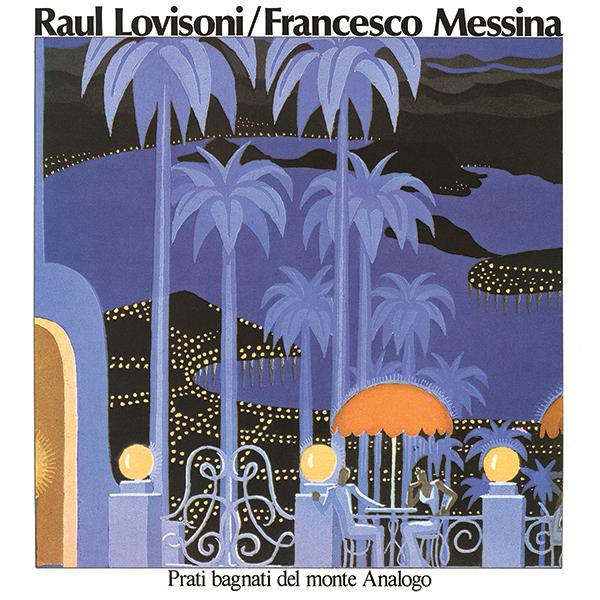
Album of the Week: Raul Lovisoni & Francesco Messina’s Prati bagnati del monte Analogo (1979)

Whew, that title is a mouthful. Okay, ever seen Jodorowsky’s Holy Mountain? Well, it’s partially inspired by French writer René Daumal’s surrealist novel Mount Analogue, in which the titular mountain is either imaginary or inaccessible. Daumal died before the book was finished, and the first track of this album acts as a sort of companion piece envisioning what the mountain contains – the title translating to Wet Meadows of Mount Analogue. I’m using some conjecture here – the album contains no lyrics and I cannot find an English translation to the Italian LP insert. The music, though, is sure to please fans of ambient and minimalist music.

Prati bagnati is composed of three tracks, the title track taking up the album’s first side and most of its running time. This is Messina’s side, and he adds synths to the piano playing of Michele Fedrigotti. The piano is delicate as a lullaby. At about the 14:45 mark, a synth melody slowly enters the mix – it sounds like what an ambulance siren would sound like if ambulances were calming instead of alarming. Then at 18 minutes we hear a couple stronger synth swaths that make me think of OPN’s maximalist soundtrack work.

Lovisoni’s b-side begins with “Hula Om”, a solo piece performed on harp, and ends with “Amon Ra”. “Amon Ra” features vocals by Juri Camisasca, who has appeared on several albums by Franco Battiato, who produced this record. Lots of Italian names, I know, but don’t worry I won’t quiz you. Both tracks continue the meditative vibe of the a-side, albeit to slightly less hypnotizing effect. But if you’re down with the 23-minute jam that opens the album, you’ll be into the rest. As a package, Prati bagnati is a heavenly slice of Milanese minimalism.

Listen to Prati bagnati del monte Analogo on Spotify.