Album of the Week: Stevie Wonder’s Conversation Peace (1995)

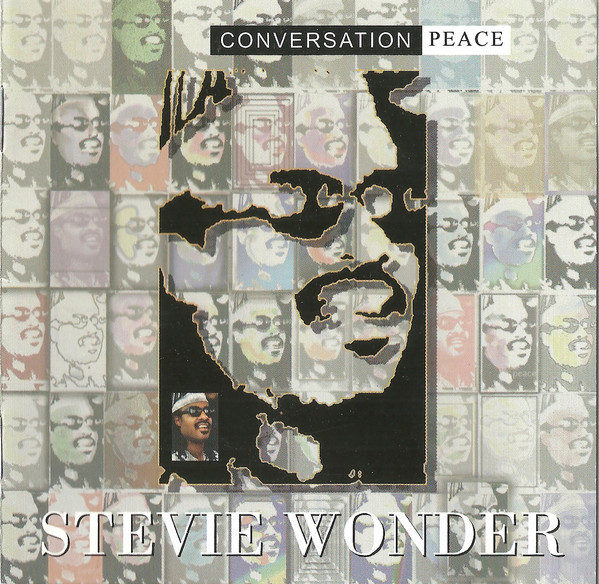
Stevie Wonder has never seen this album cover, which may be for the best.

According to a New Yorker article, Stevie Wonder began working on Conversation Peace in 1987. By this time Wonder was releasing music at a slower clip than his 70s output, and adapting to 80s pop styles by working with the latest in synthesizer technology. This would prove successful for him on tracks like 1984’s “I Just Called to Say I Love You” (his biggest hit ever), and 1985’s Billboard number 1 hit “Part-Time Lover”. Less successful and less talked about is the finished Conversation Peace album, which dropped not in the 80s but the same week I did in March 1995.

Multiple sources attest that Wonder wrote the entirety of Conversation Peace in Ghana, but this is apparently a country that Wonder first visited in 1993, years after he started working on the album. Whether or not most of it was written there, the country doesn’t seem to have a discernible impact on the music. Production wise, Stevie finds his New Jack Swing bag here, with opener “Rain Your Love Down” kicking things off like a Boyz II Men track, and a great one at that. “Edge of Eternity” is, despite its ominous title, an upbeat sex jam, with Wonder singing, “Girl I’m gonna hit it like it ain’t been hit before!” Damn!

My favorite song here is probably “Treat Myself”, a proto-self care anthem that bounces atop synthesized pan flutes and slap bass (ending with classic Stevie harmonica vamping). If that sounds like a lot, it kind of is, and you have to give yourself to the elastic 90s sound of the album to really enjoy it. The “Sorry” beat seriously sounds like a leftover from the Mario Kart 64 soundtrack. But these elements are also what makes Conversation Peace a forgotten gem in the Stevie Wonder discography. “My Love Is With You” has a chorus built in the model of “As”, from Songs in the Key of Life: rhythmic, circular and truly moving.

One thing that holds this album back from being a classic is the lyrical content. The album’s theme of peace is written with a sort-of “We Are the World” banality, as seen on the opening and closing tracks and this particularly awkward verse of “Take the Time Out”: “There’s a man in a house where they’re selling crack / Yet he’s trying to be strong / But when lost in the sea of no hope / He must be saved from wrong” What? Otherwise, you mostly have love lyrics that are either overly simplistic or clunky.

The album’s biggest and most enduring song, “For Your Love” is an accurate reflection of Conversation Peace as a whole. There’s a clunky verse in there: “A diamond that shines / Like a star in the sky / Is nothing to behold / For minuscule is any light / If it can’t, like you, brighten up my soul” But this is still a great song, no doubt, because it is wonderfully written musically, and Stevie Wonder is an incredible singer. It may not have all the genius of his greatest work, but there is little in recorded music that does, and Conversation Peace is worth a listen.

Listen to Conversation Peace here.

Album of the Week: MJG’s No More Glory (1997)

Yes, one of the most whoa-inducing covers of 90s hip-hop, and it only gets wilder when you notice the little details: MJG’s baggy coat on the ground, his wild tips, nipple piercing, and long-ass fingernails. 8Ball & MJG are known more for their albums as a unit than their solo ventures, but both of their 90s solo projects are worth checking out. I’ve already covered 8Ball’s excellent Lost (1998), which was preceded by MJG’s No More Glory. Sometimes I wonder how good a 97 or 98 8Ball & MJG album would have been, because their collab tracks with each other on these solo efforts are among their greatest songs.

Take “Middle of the Night”, for example. 8Ball’s smooth flow on the first verse is a standout moment for him, and MJG’s chorus is addictive. The song reaches the upper echelon that Do or Die’s “Po Pimp” inhabits, so it’s only fitting that they tapped Twista for the remix. Elsewhere, “Shine & Recline” is a slap that would fit nicely on On Top of the World (1995), my favorite 8Ball & MJG album.

For his part, MJG’s solo tracks are largely excellent. “Hip Hop Voodoo” (“I’m throwin’ pepper in yo salt!”) finds him snapping over a crazy beat switch. A lot of the late-90s Suave House production is pretty dated, but it also has a really lovable quality, like it’s just silly enough to stand out and neither boom bap nor g-funk. “That Girl” is a re-work of the Stevie Wonder classic and was a hit. “Don’t Hold Back” is a straight-up great R&B crossover track, sort of bringing to mind early Darkchild production with a banging chorus. Amazing.

Despite its killer album cover, I don’t think that No More Glory has some grand political message – the title track is about the challenges of the rap industry and not racism. Nevertheless, the album has been in rotation and is better than I expected, which as a fan of 8Ball & MJG is saying something.

Listen to No More Glory here.

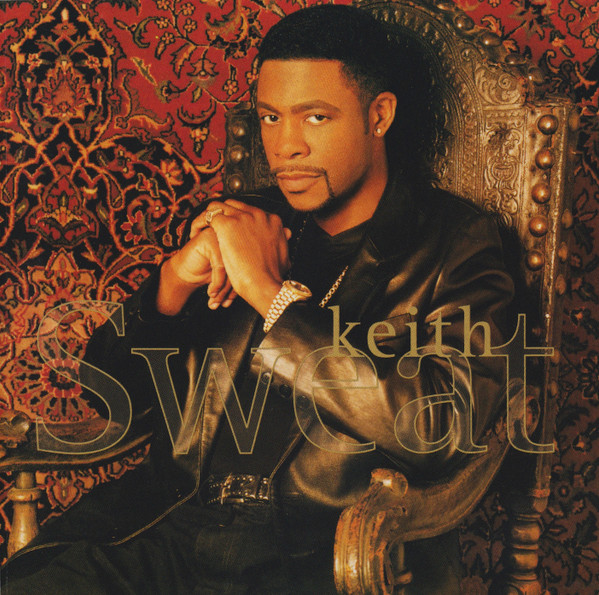
Album of the Week: Keith Sweat’s s/t (1996)

I worked on the album on and off for more than a year. I heard each of the songs probably a hundred times before I was completely happy with them.

Did you know Keith Sweat’s real name is Keith Sweat?

Nine years and three albums after his debut Make It Last Forever, a landmark release in new jack swing, Mr. Sweat dropped a bomb with “Twisted”. Enlisting the help of his group Kut Klose, the hopping single reached #2 on the Billboard Hot 100, and it leads off the fantastic Keith Sweat album. Keith is absolutely in his bag here, delivering a succinct and supreme collection of 90s R&B.

Sweat is the king of “begging”, a style of adlib runs that he pioneered on his debut. “Yumi” is already a silky smooth groove, but the vocals added in-between lines are masterful touches. Sweat does his begging like a great jazz artist solos, switching between lower and higher registers, moaning, ooh-ing, absolutely catching a vibe. “Freak With Me” has some extremely 90s rap verses while interpolating “(Not Just) Knee Deep”. The legendary Ronald Isley provides the assist on “Come With Me” – did you think it could get any more sensual? Just listen to this. Absolute liquid sex.

The last three songs here are a veritable triple threat. “Show Me the Way”, the lone track here produced by Sweat, is a simple and effective track that also acts as a prelude for “Nobody”, the album’s climax. “Twisted” is great, but “Nobody” is a masterpiece. Sweat and Athena from Kut Klose duet over a deep slow jam with a knockout refrain. The verses show some restraint, but the begging intensifies gradually as both artists build to a vocal showcase in the final minute. “Chocolate Girl”, then, acts as a sort of comedown to close things out. The pace is slow as molasses (chocolate syrup?), but it could be a minute or two longer and I wouldn’t mind. I adore this album.

Listen to Keith Sweat here.

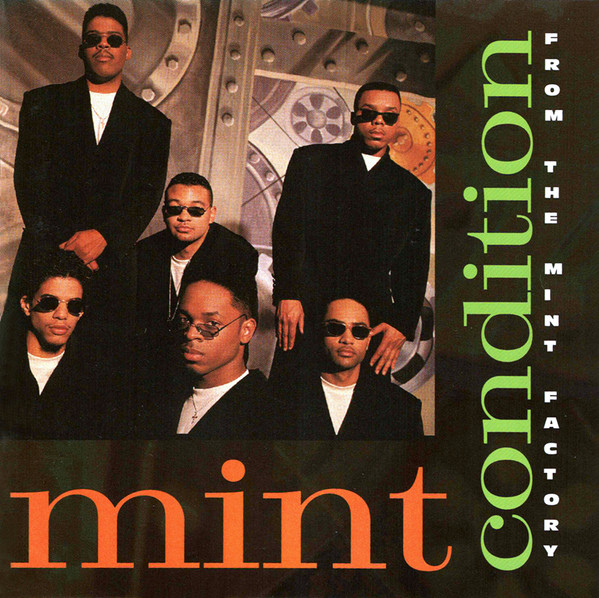
Album of the Week: Mint Condition’s From the Mint Factory (1993)

I listened to this album many years ago, initially wrote it off as average, and forgot about it for a while. But as the years went by and I got more into Babyface and groups like After 7 and Silk, I kept seeing this one pop up. Upon re-evaluation, this is an outstanding and somewhat back-heavy release.

Mint Condition hail from Minneapolis, where they were discovered by Jam & Lewis. I wouldn’t necessarily lump their sound in with Janet Jackson or Prince, and frontman Stokley sounds more like Raphael Saadiq than any Minnesotan, but they do lean on live instruments. While the Purple One was recording with The New Power Generation – a large and rotating band of at least eight members – in the early 90s, Mint Condition were releasing their first two albums, Meant to Be Mint (1991) and From the Mint Factory.

The production on this record is super slick, and I think it will be make-or-break for anyone revisiting it today. The drum programming dips into a New Jack Swing sound, which by the time of this album had been around for several years. Guy, Keith Sweat and Bobby Brown all dropped genre-defining albums in ’87-88, and even “Do the Bartman” was released in 1990. By 1993, New Jack Swing was past its critical and commercial peak. But Mint Condition sort of split the difference between New Jack pop and midwestern soul.

When it leans into live drums is often where the album finds its greatest success. “Someone to Love” is a tender ballad with drumkit and saxophone that wouldn’t be out of place in a Prince playlist. “10 Million Strong” has a cool live-sounding hiss in the background in addition to its drums. “U Send Me Swingin'” is a plain revelation. I was listening to this song a lot in 2021 and after I got my Covid shot I was up at 3am in a dazed delirium, drinking grapefruit Polar, watching Cluny Brown and singing “U send me sWANNGgANNN!” These are memories you just don’t forget.

“So Fine” is an electric guitar-heavy ballad, and “Back to Your Lovin'” is a slow-jam oozing with sweetness. I can’t get enough of this one. Also, the last two tracks here are really interesting because they both employ electric guitar in ways you wouldn’t normally expect for a 90s R&B album. “My High” is like a vignette and “Fidelity” has an almost heavy metal guitar and goes all-out rock to become an album closer sort of like Goodie Mob’s “Just About Over”, their rock song which is the penultimate track on Still Standing (1998). These songs are both hate-it-til-you-love-it things for me. My guy Jellybean Johnson who did the solo on Alexander O’Neal’s “Criticize” (one of the best songs ever) plays electric guitar here and really hammers it home.

“Harmony” is a little corny with its steel drums and as I mentioned earlier, some of the tracks in the first half of this album are underwhelming. Despite that, From the Mint Factory is an excellent disc. I also recommend seeking out the Ummah (production from Q-Tip and J Dilla) Mix of “Let Me Be the One” from Mint Condition’s The Collection (1991-1998) featuring a great verse from Phife – who says “Meet me at the T-Wolves game tonight!”

Listen to From the Mint Factory here.

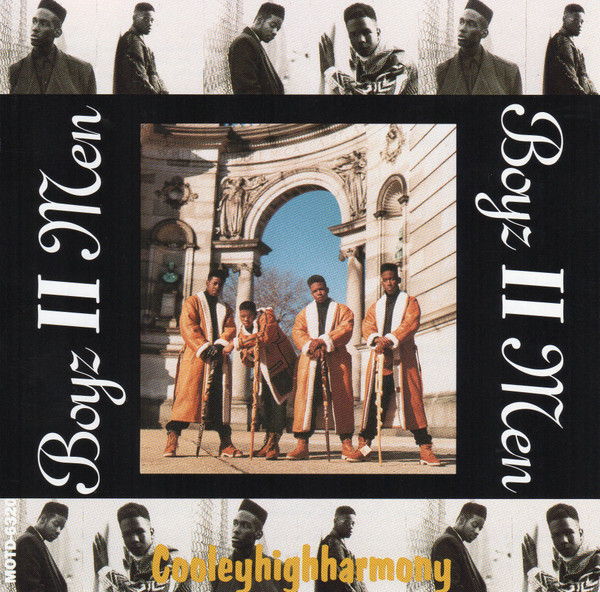
Album of the Week: Boyz II Men’s Cooleyhighharmony (1991)

Boyz II Men, ABC, BBD – the East Coast fam

So I knew the “BBD” was for Bell Biv Devoe (“Poison”), but I learned today that “ABC” stands for Another Bad Creation, a kid R&B group which I think I came across while practically studying Immature. I got this CD at some point in high school and it lived in the Honda Pilot. I also made “screwed” versions of “Please Don’t Go” and “Your Love”, both of which I jammed a lot.

Though not as consistent as its forebear Heart Break by New Edition (featuring “Boys to Men”, the song B2M named themselves after) or TLC’s CrazySexyCool (a spiritual successor by way of title if nothing else), there are some classic tracks here. They would go on to work with my R&B MVP Babyface later, but the Boyz peaked here on their debut with producer Dallas Austin at the helm. In 2016, Austin would tell Waxpoetics, “I went to Philadelphia with them to record “Motownphilly” and “Sympin’,” and they were the only two tracks I was going to produce for their album. When I got there, I clicked with the guys, they asked, ‘Why can’t you do our whole album?’ Then, they asked me, ‘Can you do ballads?’ So I went and bought some Babyface records to listen to them, and I figured out how to do ballads. I ended up doing their whole album.” So even though Babyface didn’t work on the album, his influence looms!

Working with Dallas Austin was a good idea! Opener “Please Don’t Go”, while never a big hit, is one of those songs I never tire of. Awash in 90s synth and robo-harpsichord, it’s sleeker than New Edition and a far cry from the textbook New Jack Swing of “Poison”. Saccharine, sure, but to me it’s perfect: the voiceover intro, the orchestra hits, and the harmonies that they’d come to be known for are all amazing. Then you have another sad song in “Lonely Heart” and two sexx jams in “This Is My Heart” and “Uhh Ahh” – which went number one! A pretty minimal, weird track to go number one, the production of which sounds really dated now (that makes it even cooler!).

This is the canonical version of “It’s So Hard to Say Goodbye to Yesterday”, which is either wistful or devastating depending on the context you use it in. Another strange hit! Almost acapella, and it went to number two on the charts. What can be said about “Motownphilly”: it’s a Motown classic, a Philly classic, a grocery store classic… just a banger.

There are some B-side gems in “Little Things”, where the production reminds me of the James Ferraro I was listening to in the early 2010s, and the fantastic, cloying closer “Your Love”. As opposed to Austin and the rest of the band, these were both written by Troy Taylor (who would later work with Trey Songz) and made by his production duo The Characters. But they fit right in. Also, “UR LOVE IS 2 HYPE” would be a good tattoo or bumper sticker I think.

Listen to Cooleyhighharmony here.

Album of the Week: The Sea and Cake’s The Biz (1995)

Is Chicago underrated? Reading The Adventures of Augie March and listening to The Biz has me missing the Windy City, a feeling that was only amplified by a recent conversation I had with a gray-haired hipster dude at a Spellling show in Oakland. The guy was from Chicago and mentioned that Jeff Parker from Tortoise used to DJ some of the clubs he went to. Cue nostalgia for an era I never experienced!

Hipster mecca as it is (the home of Pitchfork!), Chicago in the early 90s found singer/guitarist Sam Prekop fronting the indie band Shrimp Boat. This great Pitchfork article notes that at the venue Lounge Ax in Lincoln Park, “Shrimp Boat played, according to [Doug] McCombs [of Tortoise], ‘this totally skronky, weird, idiosyncratic music with pop songs on top of it. They probably played like two shows a week and it felt like they were doing a completely new set of material each time they played.'”

When Shrimp Boat dissolved, Sam Prekop and SB bassist Eric Claridge formed The Sea and Cake with Tortoise’s John McEntire on drums and Archer Prewitt on guitar. Prekop hopped back into the local live circuit with the new band and they recorded and released three albums in the span of two years, The Biz being the third. Of the album, Prekop later said, “This one was recorded live, and I think we had worked out most of the tunes to play live, and that makes it different. We’d done shows with those songs before we’d put them on the record…and I think that’s the last time we worked that way… The way the songs arrived at that point was totally mysterious. Especially the song, ‘The Biz’… I still marvel at the bizarre chord progressions.”

Live and mysterious, yes, The Biz has that charming bookish 90s indie band style going for it from the jump. I’m surprised at how long it took for me to listen to The Sea and Cake given that I like them more than some of their contemporaries, other bands that are too dense/noisy or have bad vocals. Since you could apply the adjectives “chill” and “jammy” to a bunch of this, it makes perfect sense that I enjoy it. But I do think TSaC have an appeal broader than their popularity reflects, especially today when all their albums are available at the touch of a button. You could put on “Station in the Valley” at a laidback outdoor function and no one would bat an eye. And “The Transaction” resounds with the kind of sunny chords that populate some of the bigger Alex G songs.

That live recording/feeling Prekop mentioned translates here and the band sounds really tight. They’re also using EML-101 and ARP 2600 synths for an added dimension of sound. The band’s been labeled post-rock, but what they’re doing here doesn’t feel overly complicated or even dramatic. It’s not like it’s one-note either: “Darkest Night” is quite relaxing and “Escort”, two tracks later, is angular and noisy. File The Biz in with your overlooked indie rock records, and jam out.

Listen to The Biz here.

Album of the Week: Kool Keith’s Black Elvis / Lost in Space (1999)

I first discovered this one in 2016, and revisiting it recently I thought, “this is definitely the best thing Kool Keith’s ever done”. But then I was like, wait, Sex Style is really good… actually, The Cenubites is really good… actually, Critical Beatdown is REALLY good. And that’s not to mention any of the 25(!) or so albums Keith has released so far this millennium, most of which I haven’t heard. So you can’t really jump to a clear best with this guy.

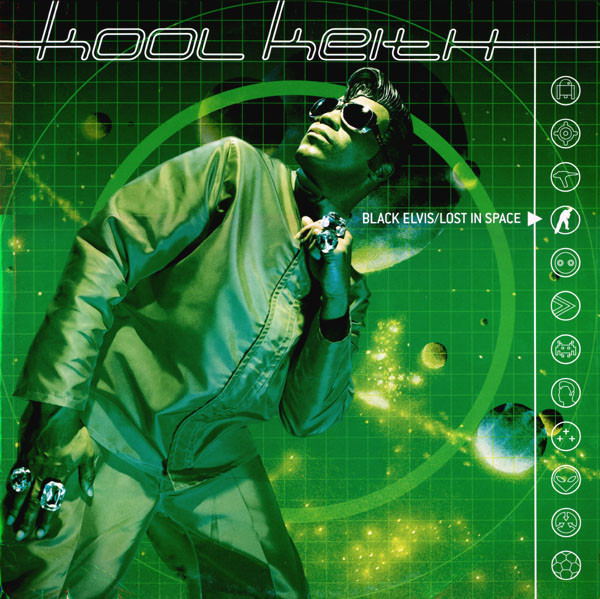
Keith was and always has been a trailblazer, and this is clear from the title and cover here alone. The damn Elvis wig… and with the flashy, turn-of-the-millennium neon green style this looks more like an N*Sync album cover than a rap record. But what lies within is hardly pop or R&B. It’s Keith’s signature bizzaro-rap, a two-sided journey through the mind of a hip-hop visionary.

Whereas Dan the Automator produced the bulk of Keith’s most popular Dr. Octagonecologyst (1996), Keith handles the production here himself (with frequent collaborator Kutmasta Kurt assisting). The result is a consistent and original sound, with enough synths and beeps to fit the space theme, but enough bass and kick to feel like pure hip-hop.

Keith’s rap style is wild because he has an effortless cool (he was well over a decade deep in the rap game by the time of this recording) but he’s also a weird motherfucker. “Keep it simple, baby young girl / Now squeeze your pimple,” he raps on “Static”. This Sadat X feature is great because Sadat is another OG who also has an idiosyncratic and funny style, like when he starts singing “our house in the middle of our street” in the middle of his verse. “The year 2005…” Keith begins on “Lost in Space”, which is more “Star Trekkin'” than any other rap song I can think of. These are just a couple of highlights early on.

As good as the Lost in Space side is here, I think I would give the win to Black Elvis, the second half of this record. Kid Capri sets it off, and then “Black Elvis” and “Maxi Curls” have some of the fastest rapping on the album, Keith dropping his Supreme Clientele-like stream-of-consciousness raps (except this album came first). “The Girls Don’t Like the Job” is one of the best examples of Keith’s uniqueness: his weird falsetto chorus and strange subject matter – “With a loan from General Mills I would start a new NBA team in Baldwin Hills: / The Baldwin Hills Spacemen / Lime green uniforms… I ripped up four tickets to the Grammy Awards”. “Clifton” features Keith’s perfect foil Motion Man, probably the only guy on his level of bizarre. No strangers to alter egos, they appear here as “Clifton Santiago” and “Keith Televasquez”, a duo of sex-crazed bandits. Things get rounded out with “All the Time” (one of the more straightforward tracks here) and “I Don’t Play”, which was lyrically interpolated by Deftones on “Back to School”, the first track on White Pony – this should probably tell you something about the reach of Kool Keith’s influence.

Three months ago, Keith released Black Elvis 2, a sequel 24 years in the making. I haven’t heard it, but he’s on tour now. By the time he plays San Francisco in October, he’ll be 60. For this year’s “Hip-Hop Turns 50” reflections, Kool Keith described himself as “a one-person Parliament-Funkadelic” to The New York Times. And like George Clinton, it’s amazing to look back at his wide body of work and marvel at the fact that he’s still doing it.

Listen to Black Elvis / Lost in Space here.

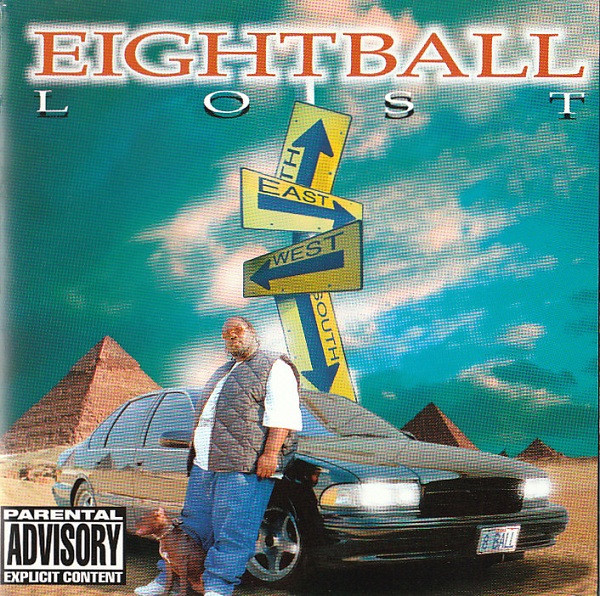
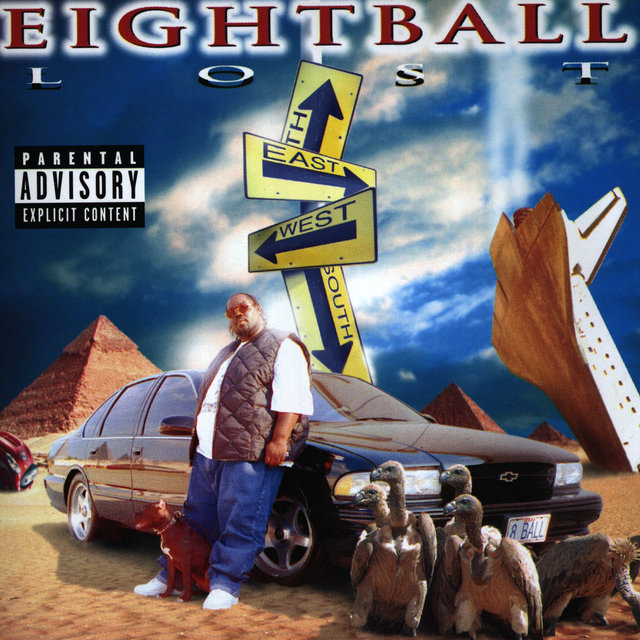
Album of the Week: 8Ball’s Lost (1998)

Wait, that album cover’s not crazy enough… hold on…

There we go.

Deeper than Encyclopedia Brittanica…

In 2006, XXL ran an online piece on the 90s label Suave House. Black Ice, the writer of the article, states that “starting completely independent in 1993 and then getting national distribution through Relativity Records and eventually Universal, Suave opened the floodgates in the mid-90s for Southern imprints to secure support from major labels,” and that the artists on the label lived in an actual house together.

Presumably this group included 8Ball & MJG, Memphis hip-hop legends who released their first four albums on Suave House, years before becoming immortalized on Three 6 Mafia’s “Stay Fly”. Though they work best as a duo, I’ve recently found a lot to enjoy on 8Ball’s solo debut Lost. A double-album (technically a triple-album if you include the Suave House sampler bonus disc, which is not streaming) largely forgotten in the 90s rap canon, it is remarkably consistent in style and quality, with great guest features and an even better solo performance. In this way it reminds me of E-40’s The Element of Surprise, one of my favorite double-albums ever.

40 Water is present here, along with Goodie Mob, Busta Rhymes, and of course MJG. But Ball shines brightest. On single “My Homeboy’s Girlfriend”, he spins a tale that is both hilarious and tragic, and sings the hook. His storytelling is in full effect on this track and “Time”, a dramatic reminiscence on a friendship gone sour. There are straight-up bangers too, like the MJG-featuring “Let’s Ride” and the penultimate “Gett Bucked” (classic Memphis phrase right there). My favorite guest spot comes from Redman, who in the late 90s was just scorching every feature (see also: The Luniz “Hypnotize”).

This is one of those albums that is so long you really can’t mention every track. The production is all in-house and somewhat dated, and there is some filler here and there. But it’s worth a look, especially if you’ve checked out 8Ball and MJG’s high-water mark On Top of the World and want more.

Listen to Lost here.

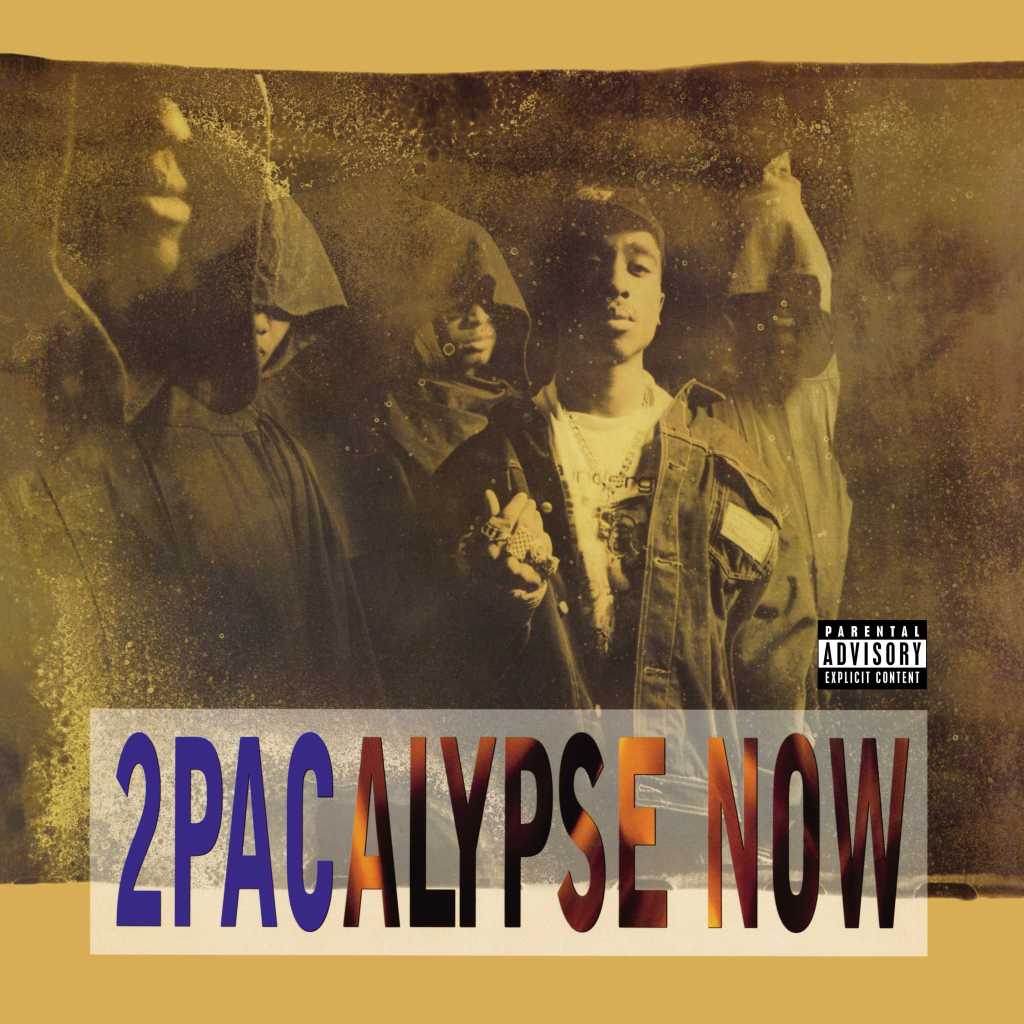
Album of the Week: 2Pac’s 2Pacalypse Now (1991)

I’d like to dedicate this post to De La Soul’s Dave, AKA Trugoy, who passed away recently. On 2Pac’s 1995 track “Old School”, Pac reminisces on the incomparable times and artists who shaped him, and De La are namedropped in the first verse. I think that begins to illustrate how important and influential De La are, and Dave was a core part of that.

Rewind to 1991: Despite the goofy title, 2Pacalypse Now is a remarkably mature and political debut album from a 19-turning-on-20 year old soon-to-be-superstar, one that laid the groundwork for music like Kendrick’s To Pimp a Butterfly.

As exemplified in Kendrick’s “Mortal Man”, 2Pac was incredibly prescient. His first single, “Trapped”, is a 5-minute story of racial profiling. Although it lacks some of the more profoundly emotional delivery of his later work, “Trapped” is a strong and unified lyrical display. It serves as not only a strong start to Pac’s rap career but a signpost of what may be his most overtly political full-length. You can hear the roots of Kendrick’s style on “Words of Wisdom”: it’s a jazzy interlude which finds Pac rewriting the etymology of the n-word and fast-paced rapping about America’s racial suppression.

During these nascent stages of Pac’s rap career, he was in the Bay area recording this album in Richmond. As he would go on to rap on the title track of his second album, Strictly 4 My N.I.G.G.A.Z., “I’m comin’ out of O-Town, bitch, fuck around”. That album would find Tupac at his most aggressive, whereas 2Pacalypse is more relaxed in production and delivery. “Soulja’s Story” employs the same smoky Isaac Hayes sample (“No Name Bar”) as Tommy Wright and DJ Paul would (separately) employ later for some defining Memphis atmosphere.

“I Don’t Give a Fuck” finds Pac with couplets that set 2Pacalypse firmly in the early 90s, rap’s Golden Age: “And now they tryna send me to Kuwait? / Give me a break… Who’s that behind the trigger? / A motherfuckin’ 90s ni**a.” It’s a blueprint for the young Shakur, one that he would re-shape and transcend until his death.

“Brenda’s Got a Baby” is probably the most popular song from 2Pacalypse, but in its intensely melodramatic presentation is also one of the most dated. Still, it’s a classic storytelling rap in the conscious style. This one and the Stevie Wonder quoting “Part Time Mutha”, with its strange placement as an album closer, are probably the only 2 tracks here I would skip.

For the amount of music he recorded and the impact he has on pop culture, it’s still mind-boggling how short 2Pac’s career was. Killed in 1996 less than 3 months after his 25th birthday, Pac had spent nearly all of 1995 in prison, a superstar missing in action. Listening to 2Pacalypse today is like watching a fuse get lit. It’s a reminder that even in the beginning, 2Pac was something special.

Listen to 2Pacalypse Now here.

Album of the Week: Az Yet’s s/t (1996)

Wtf happened last night? Oh, that’s right… Az Yet were making love… to you.

Even though most of the disembodied faces on the album cover look like they just dropped their phone in a sewer grate, Az Yet deliver the goods on their self-titled debut. Some people really can’t stomach the kind of intensely saccharine R&B heard on the opener “Last Night”, and I get that. But Babyface wrote or co-wrote 7/12 of these songs (I should also mention Keith Andes is credited on 5 of those), and he was no slouch in the 90s! While “Last Night” is not my favorite track on the album, it has the winning Babyface touch and reached #9 on the Billboard Hot 100.

Elsewhere, Babyface’s “Care For Me” glides with the same slow-jam arranging that carried tracks like “Red Light Special” and “Rock Wit’cha”. Singer Marc Nelson (the Chris Paul-looking dude on the cover) had previously been in Boyz II Men, which comes through on the almost acapella “Hard to Say I’m Sorry”, which was written by and features Chicago’s Peter Cetera (what?). “Secrets” is another standout jam, courtesy of the legend Jon B. “Sadder Than Blue” takes the vibe into more jazzy hip-hop territory to good results.

I’m not really sure what happened to Az Yet, they seem to have gone fairly quiet after this album and then resurfaced 10 and 20 years later with follow-ups. I wouldn’t recommend it to Babyface n00bs as the place to start, but Az Yet is yet another winner on his CV.

Listen to Az Yet here.