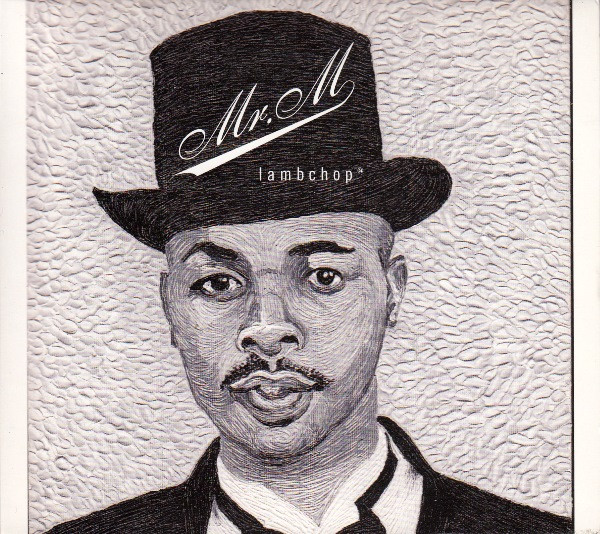
Album of the Week: Lambchop’s Mr. M (2012)

Driving to my 6AM grocery store shifts in the summer of 2015, Mr. M was an album I frequently listened to, needing something soothing and unhurried in my state of sleepy discomfort. My brother owned this CD (good choice, bro) so I took it with me in the car, sitting in there outside ShopRite drinking my coffee, smoking a cigarette on my breaks.

I never got over the perfection of opener “If Not I’ll Just Die” (the title cribbed from Bacharach’s “This Guy’s in Love With You”). Featuring “A London String Ensemble”, this song resonates with a calm beauty while exhibiting the wry humor that’s always been a part of Lambchop’s music. Lyrically, frontman Kurt Wagner seems to exist in and outside of the song: “crazy flutes” are mentioned, but never heard. Some lines seem to trail off (“maybe blowin’ kisses, blowin’ ?”), or are cryptic – “seagulls just avoid talk about seagulls,” or simple (“clean the coffeemaker”). I used to try to write these lyrics down from memory, and I’m still mesmerized by this song.

There is a heartbroken, bittersweet quality to much of this music. Singer and friend of the band Vic Chesnutt took his own life in late 2009, and Mr. M (recorded in the two years following) is dedicated to him. A line like “loss made us idiots” reflects the mental state of the band, again with dark humor. Really I never connected the impact of that event with the making of Mr. M until now, which is to say that the gloom of loss does not overpower the music. If anything there is a healing power in its soft delivery and smooth overtures.

Seasoned players create a slow atmosphere on many of these songs (see also: Is a Woman from 2002). But the meandering 10 minutes of “Gar” and “Nice Without Mercy” set “Buttons” in high relief. “I used to know your girlfriend / back when you used to have a girlfriend,” Wagner sings amid sad memories and observations. “Now she’s had another baby / and her life has gone suburban /And I wonder what she thinks of / when she thinks back now of you.” It’s hard not to read “Buttons” as a last letter to Chesnutt.

“It’s the kind of day you never wake up from,” begins “Kind Of”. This is Mr. M‘s big tearjerker, nestled between “Betty’s Overture” and the upbeat “The Good Life (is wasted)”. “Speak now love to me of your return,” sings Wagner in front of pleading strings. It’s the most tender moment on an album from a band that is usually as aloof as it is tender. In a discography loaded with great records, this is Lambchop’s masterpiece. Mr. M is a product of grief, but in its transfusion of pain it becomes a balm in itself, a work of magic.

Listen to Mr. M here.

Album of the Week: Lana Del Rey’s Ultraviolence (2014)

In June of 2014 I was 19, home from my freshman year of college. I was unemployed and spent many nights staying up past 3 or 4am listening to music in my mom’s basement. This was a great time for rap and the typical basement jamming involved Main Attrakionz and Young Thug, but I was also listening to artists like Beach House, Mazzy Star, Galaxie 500, and my perennial favorite Cocteau Twins. I mention this because the dream-pop adoration really set me up to enjoy Ultraviolence.

Not following Lana Del Rey closely before this album, it was a surprising and awesome experience how much it grabbed me. I also found Lana’s publicized depression surrounding the Born to Die (2012) backlash grounded and relatable. This was a really unique era in the first decade of social media when artists were subjected to a newer, overwhelming way of receiving unfiltered criticism, and the Guardian interview accompanying this album’s release on June 13, 2014 revealed Lana as someone who didn’t “enjoy being a pop star, [felt] constantly targeted by critics,” and, most alarmingly, “[didn’t] want to be alive at all.” Ultraviolence, then, was a dramatic turn in every sense of the word: a theatrical display of intense sadness, an abandonment of the hip-hop pop of Born to Die and Paradise, and a uniformly striking collection of dark rock songs.

The Black Keys aren’t too similar to the bands I mentioned in the first paragraph, but when you marry the rich, slow guitar atmosphere of Dan Auerbach’s production with Lana’s velvety voice, you get something of a scarred dream-pop revival, featuring classic pop references. “West Coast” rotates with tension before breaking into a slow-motion interpolation of Stevie Nicks’ “Edge of Seventeen”. “Ultraviolence” reworks The Crystals’ “He Hit Me (and It Felt Like a Kiss)” into twisted Kubrick worship. And fittingly, the album is cinematic in scope. Where Honeymoon (2015) and later albums portray a more chilled-out woman in her thirties, Ultraviolence is a stylized portrayal of youthful sadness. Her Americana-obsessed mythos, though it contains genuine roots, is thematically stretched out for show. This is how you end up with lyrics like “They think I don’t understand the freedom land of the seventies… I’m churning out novels like beat poetry on amphetamines,” (“Brooklyn Baby”) or the (seemingly!) vapid “Sad Girl”. But the results are ultimately bold, inventive and and personal songs that don’t (or didn’t) pander to any formula of commercial success (some of 2014’s top hits: “Happy” by Pharrell; “Talk Dirty” by Jason Derulo; “All About That Bass” by Meghan Trainor).

Whereas newer LDR albums are (imo) overstuffed with stark ballads, Ultraviolence has a solid flow with elements that enhance the strength of her songwriting and singing instead of leaving them repetitively unadorned. The barest ballad here, the penultimate “Old Money”, is gorgeous and welcomed after the hazy atmosphere of the preceeding tracks. Closing with a cover of “The Other Woman” is the album’s final and most gracious nod to classic pop, and Lana’s vocal performance on the song is stunning. Even the leftovers are worth seeking out: bonus track “Black Beauty” is a soaring torch song, and iTunes bonus track “Is This Happiness?” absolutely wrecks me (I wish this were on Spotify!).

In 2019, critical praise of Lana’s music reached a high with the success of Norman Fucking Rockwell!, but Born to Die and Ultraviolence still strike me as her greatest albums. If you can’t dig her, these albums likely won’t change your mind more than anything else she’s done since. But by leaning into her pain, Lana shone on Ultraviolence, and it stands as a unique peak in her career.

Listen to Ultraviolence here.

Album of the Week: Neil Young’s A Letter Home (2014)

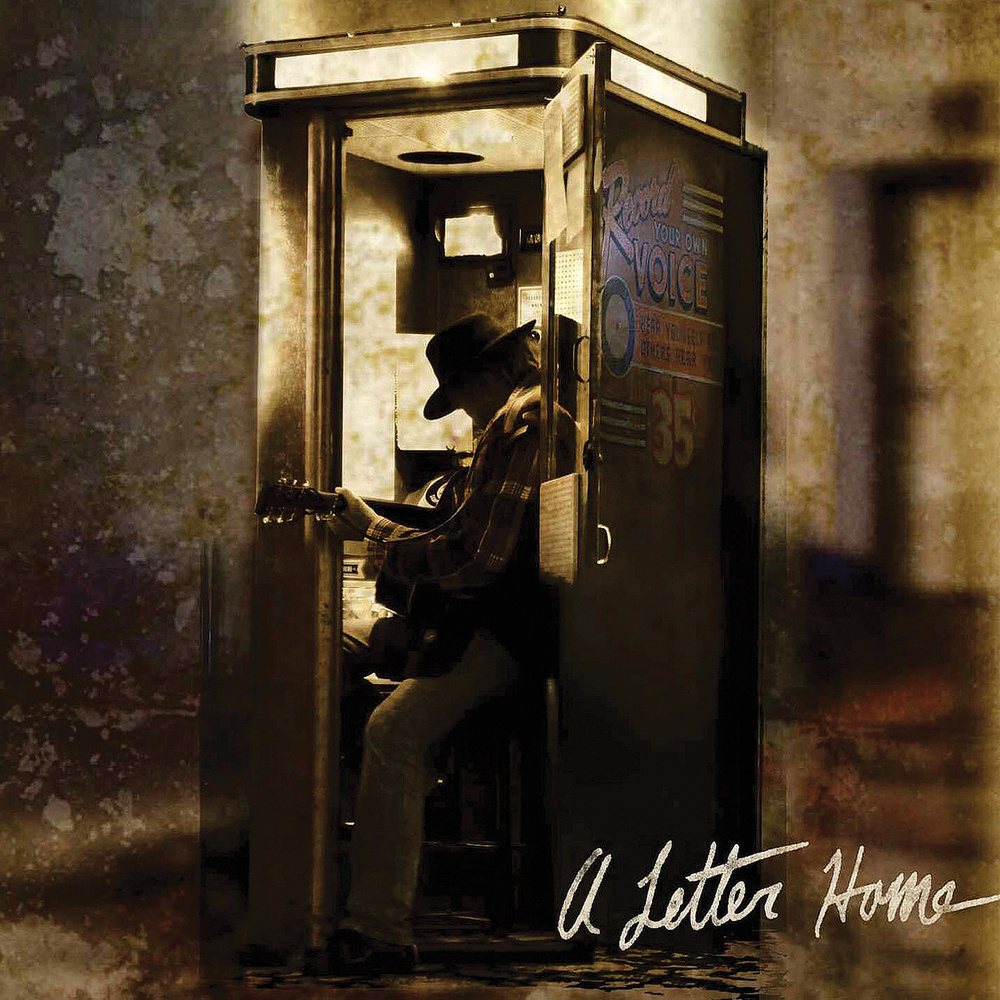
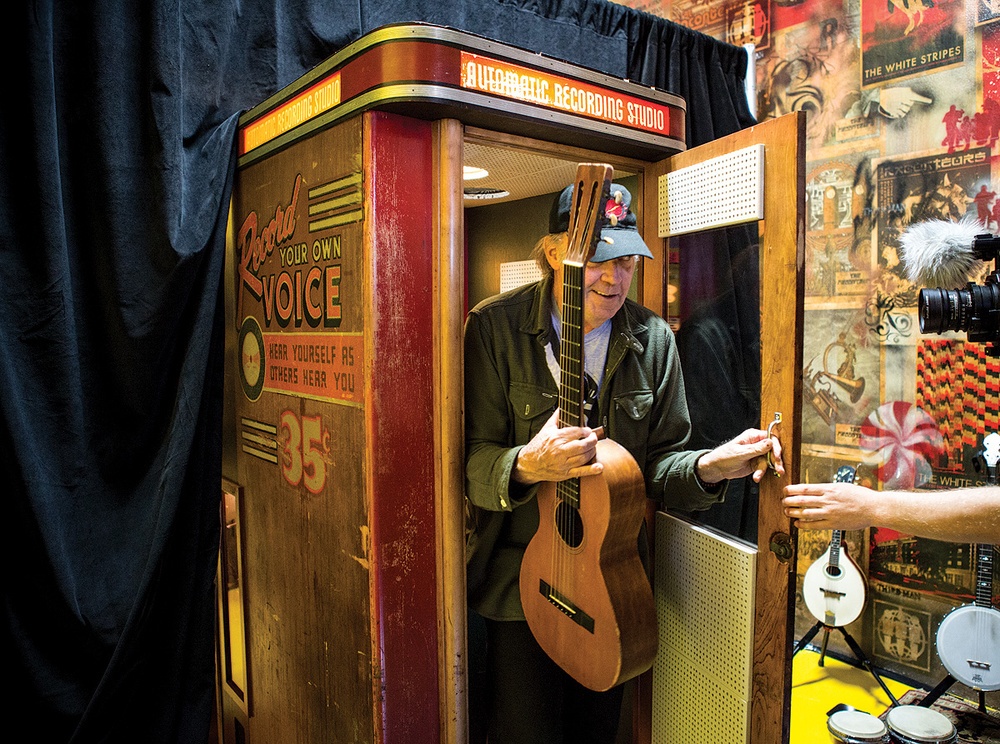
In which Jack White convinces Neil to play a bunch of acoustic covers inside of a coin-operated 1940s-era vinyl recording booth. The result? The 28th best Neil Young album. No, but really, there’s something comforting about lo-fi Neil. I wouldn’t want to actually listen to this on vinyl/great speakers since the recording quality is so poor; rather, this is an album to play at normal-to-quiet volume on your phone in bed at 1am. With this method you can reasonably convince yourself that Neil has inhabited the ghosts of Phil Ochs and Bert Jansch and is singing to you as you lapse into a dream state.

Bro actually recorded an album in this thing.

Alternatively, you can just treat A Letter Home as an album that a legendary 68-year-old guy would approach from the bottom of his heart. What’s especially precious about A Letter Home is that Neil frames the antiquated recording booth as a kind of magical device allowing him to speak to his late mother. This adds a note of earnestness to what would otherwise be an overly gimmicky project. It also explains the Bidenesque rambling (which I love) of the intro track and the beginning of “Reason to Believe”.

As far as song choices go, Ochs’ “Changes” stands out as an early highlight for its theme-appropriate wistfulness. Other tracks appear as memories from his youth (Willie Nelson’s “Crazy”) and/or later influences (Springsteen’s “My Home Town”). Neil approaching “Needle of Death” reveals its melodic influence on his own “Ambulance Blues”. Listening to the album 10 years later, I can’t help but think of Bob Dylan’s mid-2010s run covering pop standards (including the triple-album Triplicate). While Young’s choices are slightly more contemporary, both artists spent time in the mid-2010s sincerely channeling music of a bygone era. Neither project ranks among the respective artists’ greatest work, but they are worthy for their uniqueness and especially their maker’s honest connection to the songs.

Listen to A Letter Home here.

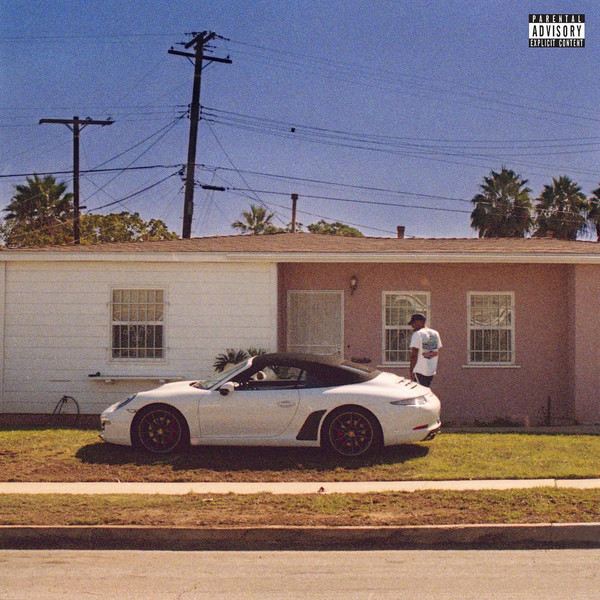
Album of the Week: Dom Kennedy’s Los Angeles Is Not For Sale, Vol. 1 (2016)

I’m not sure if Dom Kennedy would appeal to a hip-hop outsider: his flows are a little off-kilter; his rhymes often slow. But a couple of key early 2010s hip-hop moments helped me really appreciate this dude. The first is “Real Estates” from Curren$y’s Pilot Talk 2 (2010), an album that is (along with the preceding Pilot Talk) a benchmark for the kind of stoner rap music that doesn’t really exist anymore. “The game don’t get any realer” chirped Dom on his knot-tight “Real Estates” verse. Then 2012’s “Grooveline” (Schoolboy Q , 2012) verse showcased his relaxed playboy style, ending hilariously with a “Dom Kennedy” drop that sounds like a producer tag.

I never followed him enough to track a new release, but when Frank Ocean included “T P O” on his blonded radio it seemed like a good idea to check out this album. “T P O” is a mellow slap, immediately memorable for the beat’s harpsichord melody, but it’s also funny: “I was young, but I went to the Grand Canyon once / Now I’m at a stripper house makin’ tacos, rollin’ blunts.” The song exemplifies this album as a whole, which is Dom Kennedy at his best: a realist who is cool, confident and relatable, with fantastic production choices. Clearly following the mold of 90s LA g-funk, “Dominic, Pt. 2” updates the style with fantastic synth notes.

In college I fantasized about living in California and listening to “California”, and now I can finally do it. Something about the drums on this one… I would play this over and over again on my little wired earbuds walking around in the cold Pennsylvania winter daydreaming about life in Cali. “Wake up at 1:30, In-N-Out ‘fore it close / Catch me in the drive-thru, then spin out on these hoes.” Sounds like a good time, man… my plays of “California” dwarf the rest of the album.

I think sometimes Dom Kennedy is unintentionally funny or irreverent. Like, “Since We’re Telling the Truth” is ostensibly a love song, but the chorus ends with “I could have a statue downtown.” The lyrics “Even if I was starvin’ / I’m the type to pass on baloney / Walkman by Sony / I’m big as Tony, Toni, Tone,” read like Riff Raff bars, but they’re delivered earnestly over the heavenly beat of “When I’m Missin’ U”. Maybe it’s just the nostalgia, but I see these as pluses.

This album was not received well. You have to really dig Dom as a kind of normal-guy-who-likes-hanging-out if you want to sit through this whole record, which could be 3-4 tracks shorter. But revisiting it today it still strikes me as underrated.

Listen to Los Angeles Is Not For Sale, Vol.1 here.

Album of the Week: Mirrorring’s Foreign Body (2012)

In reviewing Grouper’s split release with Roy Montgomery from 2009 I described her “hazy, delicate and touching” sound, one that would carry into the 2010s successfully – including on this sole album from Mirrorring, the duo of Liz (Grouper) and Jesy (Tiny Vipers). This is, I believe, Grouper’s first release for Kranky (unless you count the digital premiere of “Fell Sound” a month earlier). At the time of its release Grouper’s output seemed like an embarrassment of riches (the double album AIA and the astounding “Water People” / “Moving Machine” 12″ had both been out less than a year) and I didn’t think too much of Foreign Body. Now I approach it like a Champion Sound of the contemporary ambient or folk scene: two greats in collaboration, switching off on lead vocals.

Truly, the Internet has broken my brain because the first word that comes to mind with this album is “goated”. I’ve yet to listen to it on good speakers, but I fear my mind and body might be transported to some far-away desert dimension and never return. In my taste for music that is unhurried, it seems the collaboration of Grouper and Tiny Vipers is the perfect recipe. Heavenly to start, Grouper takes vocals over a massive expanse of drone. It’s a bit surprising, though, that this was released as the album’s advance track and not “Silent From Above”. This is not a judgement of value, but Jesy’s vocals are far less murky than Liz’s, and her words much easier to parse. This suits the tighter “Silent From Above”, its bittersweet and blue guitars and vocals sounding like they were recorded outside by the campfire. “Cliffs”, the longest track here, is also the sleepiest, but it picks up a bit past the 5-minute mark.

Later, “Mine” proves the album’s climax – a huge drone with Jesy’s strong, melodic vocals. Boy if this doesn’t make you feel something. Towards the end the track appears to be eating itself, but then the monster reverb itself fades out, leaving little but space, with “Mirror of Our Sleeping” as a post-script.

Grouper followed Mirrorring with the Dragging a Dead Deer-era compilation The Man Who Died in His Boat (2013) and the sparse Ruins (2014). Tiny Vipers would later release an album of ambient excursions, Laughter, in 2017, which I find under-rated and is for some reason not on streaming services.

Listen to Foreign Body here.

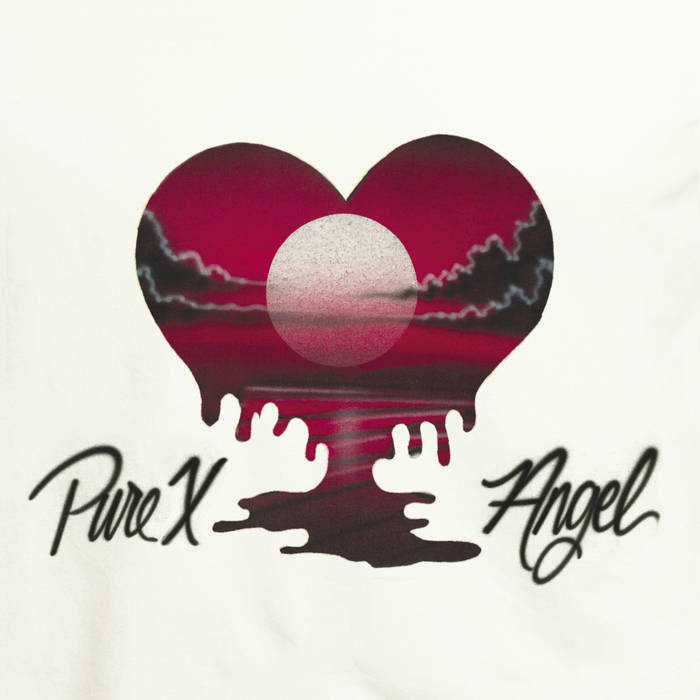
Album of the Week: Pure X’s Angel (2014)

Did you forget me?

I had (a thankfully pretty minor case of) covid this week, so there wasn’t much to do but sit around and get stoned, which led me to revisiting some of Gorilla Vs. Bear’s old AOTY lists. The GvB peeps specialize in indie stoner music, and I found a familiar name I hadn’t thought about in a while – Pure X! The dudes from Austin have 4 full-length albums, with 2014’s Angel – their first and only LP on Fat Possum – being my favorite.

This week we say RIP Gary Wright, whose iconic 70s soft-pop smash “Dream Weaver” is echoed here in “Fly Away with Me Woman” – silky smooth! It’s no secret by now that I like chill music. And holy shit! Angel makes Phish sound like Iron Maiden. From the jump the vibe is gentle and relaxing, “Starlight” is just a real mellow jam. “Livin’ the Dream” dips a bit deeper into psych-rock, but it’s still exceptionally chill. (Stuck in my room with covid… now that’s what I call livin’ the dream!) “Rain”, with its slo-mo fuzz buildup, also produces a bit of a different vibe.

A huge highlight comes during the synth and strings in the back half of “Every Tomorrow”, one of the best and sweetest songs here. There’s also a nice turn of phrase in “White Roses” – “Turn the music up / Let the flowers bloom”. Kinda sounds like a Grateful Dead lyric! Hell yeah. They should consider playing this album at my dentist’s office. It would be way more relaxing than the John Fogerty covers or whatever the hell’s going on there.

Listen to Angel here.

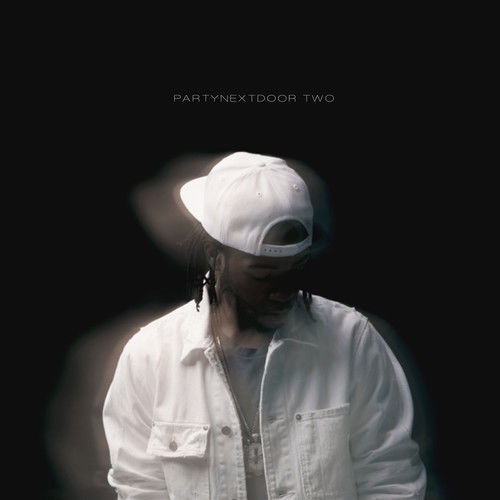
Album of the Week: Partynextdoor’s Partynextdoor Two (2014)

Critics haven’t always been kind to my guy PND over the years, and while he does have some duds (2020’s limp Partymobile comes to mind), I think he’s an outstanding artist. Writing, producing and singing his own songs as a teenager, he came into the game with his own style and sound. I love a lot of his songs but PND 2 is probably the one project I’ve spent the most time with.

PND’s career is forever linked to Drake, and their stylistic similarities are evident from the jump here. “East Liberty”‘s opening line “The summer’s over…” recalls “The summer’s mine…” from Drake’s “Good Ones Go” (Take Care). Like Drake, Party’s songs revolve around the flashy lifestyle of a young star in Toronto, and his production echoes Drake producer 40’s muted beauty. Raps themselves take more of a backseat in PND’s work, and by leaning into the chill R&B thing his work is less memorable but for me more comfortable than Drake’s. It’s so easy for me to revisit – I just pop on these hazy beats and get in the zone.

The collection here is full of classics, with PND producing or co-producing all but one track. “SLS” is so well-constructed in its buildup of drums and vocal samples, and all the shit-talking he does (dude was 20 when he made this album) is convincing wrapped up in the music. The drum production on a track like this or “Her Way” feels really good. It’s difficult for me to describe, or maybe I just have a nostalgia for it, but I feel like drums in this era hit better than what’s in hip-hop and R&B today.

I think “Sex On the Beach”‘s Disclosure sample has aged well. At the time it almost felt like a mistake given how huge “Latch” was, but ultimately it turns a pop smash into a kind of underground banger (surprised this one wasn’t a single). I think I listened to “Bout It” every day in college for a while, just walking around campus getting that in-between-classes dopamine rush from the first 5 seconds. Listening to Drake’s verse on “Recognize” today, I’m surprised at how different his voice sounds and not surprised that he’s totally in his bag. The beat would go on to repeatedly soundtrack the legendary Nileseyy Niles “disappearing” meme, and samples some patois-laden deejay type vocals.

“Muse” ends things in stellar fashion. I think of this as a Kehlani tribute (“bad bitch is from Oakland…”), and all the little production quirks, the little piano notes, the “Lemme-Lemme get that A”, and the reconstruction of the Ginuwine sample really make it a song she’s deserving of. Plus dude is talking about getting flustered and dropping his weed, which is funny. PND would go on to release more good stuff including PND 3, Colours 2, and Seven Days, which all got a lot of play from me. I like some of his newer songs too and given his increased output I would guess a new album is on the way soon.

Listen to Partynextdoor Two here.

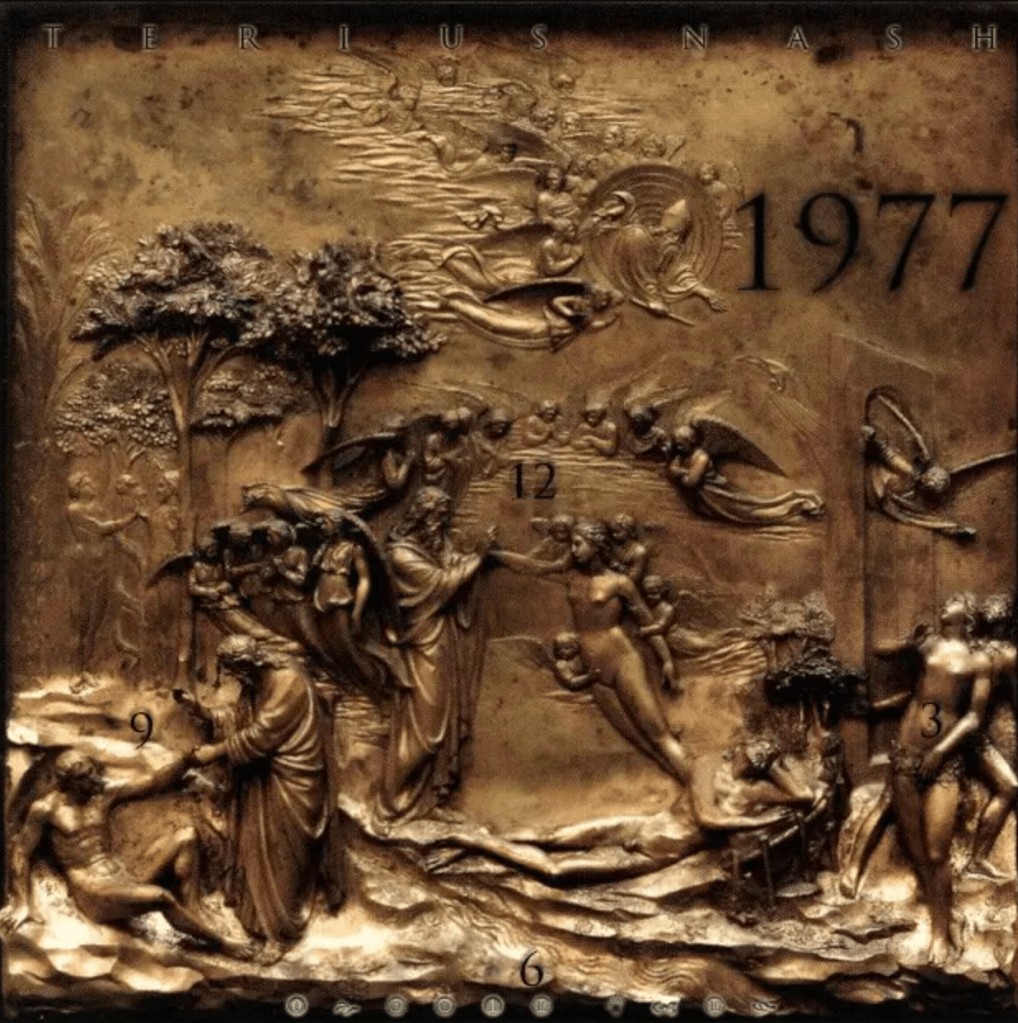
Album Review: Terius Nash’s (AKA The-Dream) 1977 (2011)

I think 1977‘s “Ghetto” is my most listened-to The-Dream song, and it doesn’t have much of a right to be. It’s got a phoned-in Big Sean verse, a slightly-too-long outro, and it’s about sex, the most common topic in Dream’s oeuvre. So why have I spend damn near ten years playing this track over and over again? It’s the melodies. They’re so good. Those first two minutes of “Ghetto” go by in a flash every time, and when I hear them I just want to listen to it again.

A master at his craft, The-Dream spent the mid-to-late 2000s carving out a new peak in pop-R&B with his Love trilogy: three albums loaded with brilliant melodies and immaculately constructed, flowing freely from one track to the next. How would he follow this trilogy up?

On Love King‘s (2010) “Sex Intelligent Remix”, he prescribed his next step: on 6/7/2011 he would release Love Affair. That never happened, presumably due to label issues, but at the peak of his might Dream was reluctant to go a whole summer without delivering. He would tweet the following: “The “TERIUS NASH EST. 1977″ is very personal and to my Fans! BTW NO ONE AT DEFJAM IS HAPPY ABOUT A FREE ALBUM LOL…. they are trying to stop it!” 1977 was released for free on the internet on August 31 under Dream’s birth name, Terius Nash.

Though rare, the Love trilogy’s darker tracks like “Nikki” and “Abyss” were highlights of their respective albums. On 1977, this mode is the standard rather than the exception. Unquestionably informed by his then-recent divorce, many of 1977‘s tracks are bleak and beautiful. “Used to Be” is acerbic, and “Long Gone” is a nothing-to-lose confessional: “I’ve forgotten how to fuck you / Now when you say my name it don’t feel the same way”.

Mid-album, things lighten up a bit with the aforementioned “Ghetto” and the Rick Ross-like “Rolex”. But the rich flexing doesn’t last: the title-track (Dream’s birth year) is brutal: “It hurts me just to see your name / And that tattoo runs through my veins”. “Form of Flattery”, which closed the original album, is the closest thing to The-Dream’s “Fast Car”: a simple acoustic guitar loop underlies a spare track over which Nash demurs over his ex’s words: “I’m not better than that / But I appreciate the form of flattery.”

1977 was re-released in 2012 on CD with a slightly altered tracklist, removing the mellow “Kill the Lights” and the Casha (presumably a Dream protégé) solo “Silly” (sidebar: when I saw Dream perform live around this time, he brought out Casha mid-show to sing some solo tracks, which weren’t particularly well-received). However, the 1977 re-release (the version on streaming) adds “Long Gone” as well as two great bonus tracks: the flat-out incredible “AK-47”, and the downcast, self-criticizing “Tender Tendencies”.

In an era when Drake was at his peak and Kanye was still making amazing music, 1977 got lost in the cracks and is still under-rated, and The-Dream hasn’t made an album as good since. If you’re looking for an R&B gem, or a strong album borne of personal pain, check this one out.

Listen to 1977 here.

Album of the Week: Phish Live 6/27/2010 at Merriweather Post Pavilion (2010)

I’ve been to Maryland’s Merriweather Post Pavilion exactly once, to see Animal Collective perform for the very first time at the venue they named their seminal 2009 album after (the Centipede Hz-heavy show included just 3 songs from MPP). This was in July 2011, and as a high-schooler I was ecstatic to see my favorite band deliver the goods. I knew almost nothing about Phish at the time except that my dad considered them a shameless Grateful Dead ripoff, and being far from even a Deadhead myself I was in no rush to counter. Phish was a total blindspot.

A decade and change later, Phish is my most listened-to artist (I type this with as much humility as possible). Most “phans” consider the mid-to-late 90s as their peak live era, and I won’t dispute that claim. But for whatever reason, a disproportionate amount of their 2010 shows are available on streaming services. This is one show deserving of attention.

The band’s first two-night stand at Merriweather (there have been seven since) began on Saturday, 6/26/10, with the band notably performing a cover of Neutral Milk Hotel’s “In the Aeroplane Over the Sea”. While I haven’t heard that whole set, the “Aeroplane” indicates the magic in the air at Merriweather that weekend.

Merriweather Post is a beautiful venue with a large outdoor lawn and a summery roof over the stage. A phish.net review sets the scene for 6/27: “The HEAT was bad! Lot’s of humidity, def. could have rained on us but it held back. This actually created a sweaty, half naked crowd that was just waiting to get down.” Sunday night’s show opens with a rare “Walfredo” (one of only two in the past 20 years!), which despite some speaker feedback and a forgotten line signaled a special night ahead with its appearance. A Marley cover (“Mellow Mood”), the evergreen “Divided Sky”, a roaring “Bathtub Gin” and a ripping “Run Like an Antelope” highlight a fun first set.

The second set is where things step into all-killer no-filler territory. “Wilson” starts things off by rocking the engaged crowd before “Meatstick” sends things into funkier territory. One thing about Phish: they are silly. I don’t think everyone will appreciate just how goofy “Meatstick” is, but if you let it take you there, it’s 8 minutes of liquid funk. This jam somehow morphs into the near-metal of “Saw It Again”, which turns into a repeated theme for the rest of the show. This “Saw It” is the first since 2003, and it appropriately fries the brains of the present crowd as it explodes. From the ashes of “Saw It” rises a “Piper” which starts delicately enough before Trey absolutely rips shit on guitar. The cheers are audible around the 11:45 mark when Page finally takes over on organ.

“Ghost” is one of Phish’s all-around best and one of their most consistently played songs (they’ve played it at 2 of the 4 shows I’ve seen) for good reason. On this version, Trey’s got that wet guitar tone and stretches the notes out while the rhythm section churns. In the blink of an eye this “Ghost” turns into the Stones’ “Jumpin’ Jack Flash” (only time ever played!), an unexpected treat, before resolving as a reprisal of the monstrous “Saw It Again”.

“Contact” is a great breather between the climactic “Saw It Again” and the set-ending “You Enjoy Myself”, the most quintessentially Phish-y Phish song. As for the “Fire” encore, it’s an appropriate victory lap given the level they were at on this night. Give it a go and see for yourself.

Listen to 6/27/10 here.

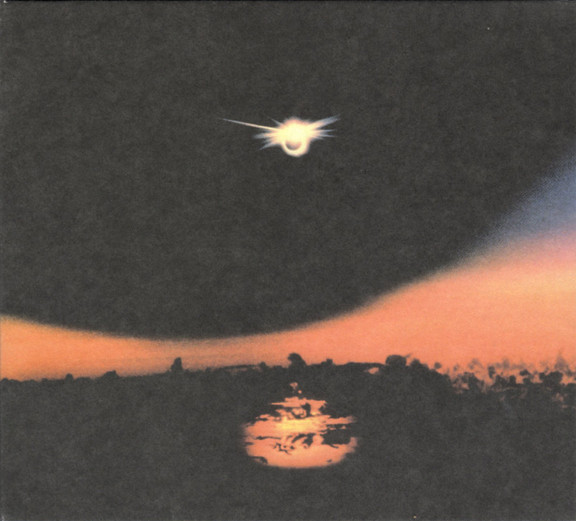
Album of the Week: Burial’s Young Death / Nightmarket (2016)

So, like most things Burial, this isn’t actually an album. By my count, Burial has released 20 singles and EPs since 2007’s full-length Untrue. Some of these releases are collaborative, most are solo. Some are one track, most are 2-4. There’s a lot of gems in the group, but this one stands out to me.

Side A’s “Young Death” has a heartbeat and ghostly vocal samples, at least for its first 3-and-a-half minutes (this section would fit well on Untrue). After that, things slow down to a crawl as thunder, breathing and a perfectly placed Skull Kid laugh create the track’s atmosphere. This section feels to me like a precursor to the B-side.

On “Nightmarket”, Burial flips an esoteric Mike Oldfield sample, and the result is like a rave frozen in time, or the biggest moment in trance suspended in amber. To me, it’s sort of like the spacey portion of “Born Slippy” in its epic reach. This sample recurs several times in the first 3 minutes of the track, and I spent countless nights in college with this addictive moment soundtracking nighttime wanderings about campus. The rest of “Nightmarket” (outside of its open space and vinyl hiss) diverges with a slew of video game-y prog-electro. Unlike “Young Death”, there is no backbeat on the track. Its Burial at his most mysterious.

Listen to “Young Death / Nightmarket” here.