You may not fully understand why 2 Chainz is doing that ridiculous airplane wing-arms pose on the cover until you hear Playaz Circle’s “Look What I Got” in a car: truly soaring, blissful music and the finest gem on this largely-forgotten album from the Atlanta duo. Dolla Boy (seen above on the right) is a more than serviceable rapper, occupying the same confident, punchline-filled style as Tity Boi. But it’s clear that he doesn’t have that same X Factor as 2 Chainz, who consistently outshines his partner here. Back to that cover: Deuce is poised to takeoff, paving the way for his solo career (especially that crazy 2012 era in which he had a million features) with very entertaining verses, displaying his outstanding humor and style.
When I play an older release like this one it helps to confirm my opinion that he deserves his props as a seasoned vet, one who has spitting heat since 2003 (see Ludacris’ “We Got”) and finally got his respect with a breakthrough after Playaz Circle. This isn’t an amazing disc, but it is filled with excellent music. The Raekwon track is super hot, “Ghetto” is a great Outkast nod (with what may be 2 Chainz’s strongest verse on the album) and “Stupid”‘s indulgence is delightful. I even dig the corny R&B tracks in the middle, particularly “Quit Flossin” (shoutout Jagged Edge!). Unfortunately “Big Dawg” is like a weaker version of “Duffle Bag Boy”: Wayne’s decent hook and disappointing lack of a verse don’t help a not-that-great song. But it may be the only letdown on this album.
If you have little tolerance for hip-hop post 1997 that isn’t ultra conscious, political or abstract, Flight 360 isn’t for you. But it can get props from me! Maybe this will remain a forgotten portrait of 2 Chainz as a rising star. If so it will still be music that just makes me happy.
I’ve not delved into much music by the British band Flying Saucer Attack, but I tend to trust anything released by Kranky, the superb American label that delivered masterpieces by Stars of the Lid, Labradford, Windy & Carl and so on.
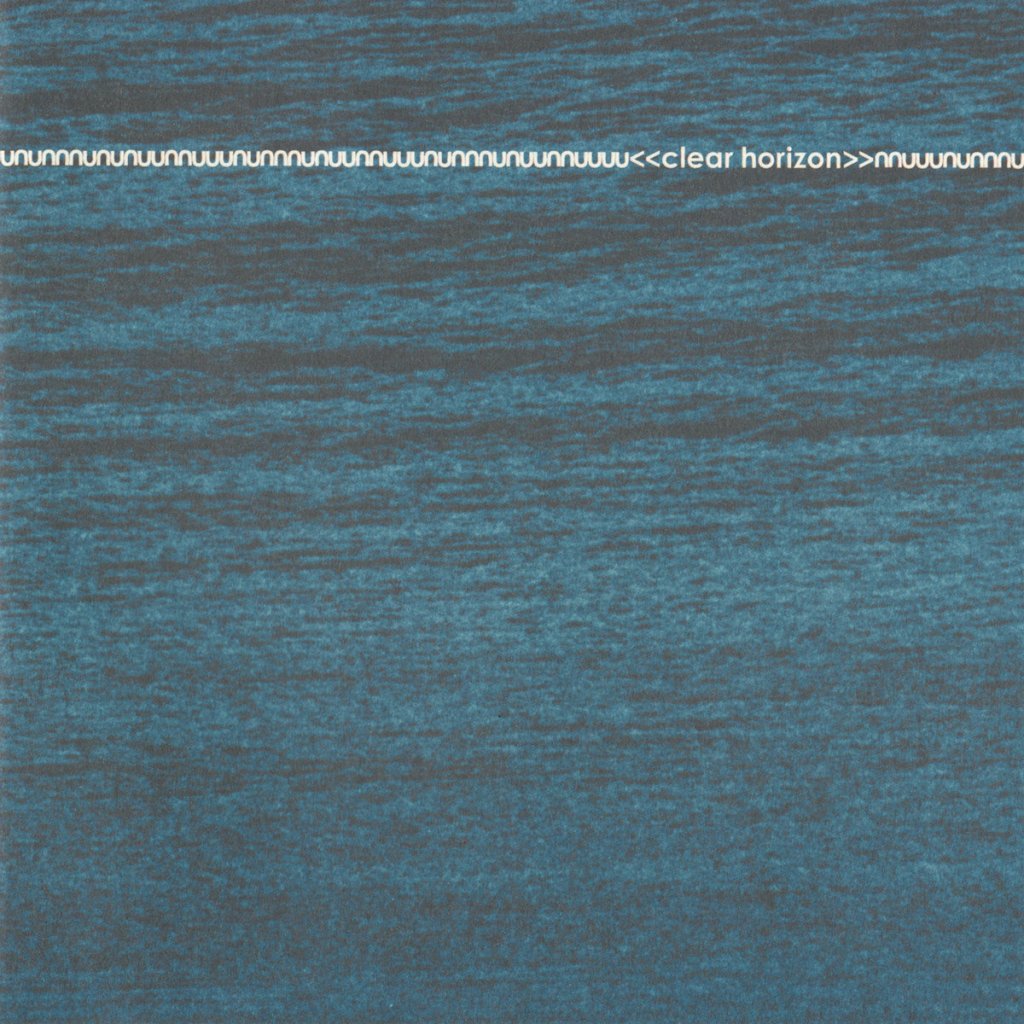
Clear Horizon was the collaborative project of Flying Saucer Attack’s David Pearce and Kranky recording artist Jessica Bailiff. By all accounts, the artists created the project by sending each other tapes across the Atlantic in the early 2000s, without recording in the same room.
For me, this is one of those albums where the first track is the best. “Watching the Sea” is some ascension type shit, all blissed-out guitar and sweet singing. I love this song.
“I wonder why you haven’t seen the light for days,” Bailiff sings on “For Days”. And there is a hermitic vibe to this album, everything cavernous, moving at a slow pace. The song structure fades into feedback, transitioning into ambient washes that sound more like Fennesz than any singer-songwriter project.
“Sunrise Drift” is the first song to float along with no rhythmic guitar strumming, just vocals and chimes in an ether of white noise. It’s meditative music. This stuff requires patience to be appreciated, and a more critical ear might deride this album for lack of direction. And it’s not all brilliant, of course. “Death’s Dance” in particular seems more unpleasant than enjoyable. But mostly, Clear Horizon is gorgeous and relaxing, and a forgotten gem.
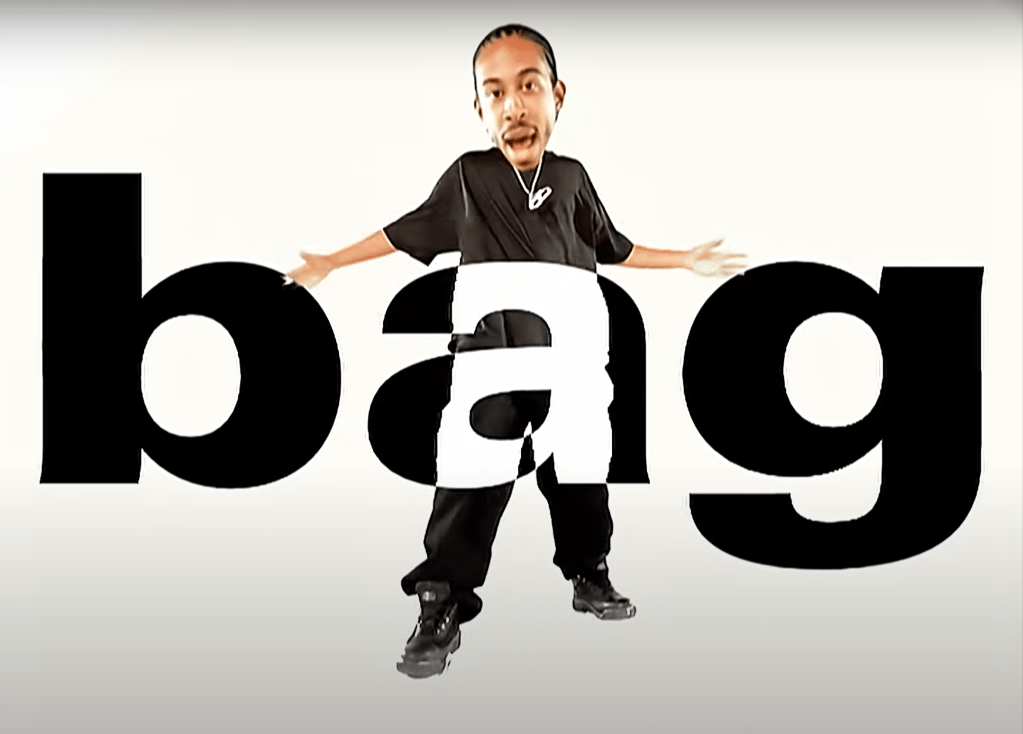
If you’re around my age, this CD cover haunted your childhood. It’s so ridiculous: Ludacris’s meteor-sized fro branching out over his snarling maw, slapped on a bobblehead-body, wad of cash in hand. And that dog, that fucking cartoon dog. The dog’s face is so eye-popping, you might never notice that he’s perched atop a trash can, or that there’s an Atlanta street depicted behind Luda, the city’s evergreen canopy poking out from the blank spaces. Lurking behind this wacky cover is an outstanding album, Luda’s sophomore release and arguably his greatest effort.
Ludacris likes cars. 2 years before co-starring in 2 Fast 2 Furious (2003), Ludacris told an interviewer about his writing process for Word of Mouf, “most of the time I write [while] just driving in the car. When I’m driving alone and I’m listening to my music is where I write most my stuff. It’s usually dangerous because I’m writing and driving at the same time.” This clearly translates to the smash hit single “Move Bitch” – “I’m doin’ 100 on the highway / so if you do the speed limit, get the fuck outta my way!“. This banger (those drums!) was tailor-made for Mystikal, who delights in his absurd delivery (“Hold up wait up shawty ooh aw whazzap…”). While I-20 dilutes the track a little bit, it’s still a classic. Plus, the Wiki page currently contains this incredible description: “In the song, the rapper exhorts a person to move.”
The Nate Dogg assisted “Area Codes” is another classic single. Jazze Pha (Mr. “1, 2 Step”, if you didn’t know) provides the perfect laid-back groove for Luda and Nate to slide on. No less than 43 area codes are name-dropped (shoutout to the 215) and thanks to Wikipedia you can see a complete list of them. Years later Luda would reflect, “The song could only be but so… long. And yes, there are many area codes that I wish I could’ve put in there. However, I tried to get the ones that were as honest to the actual hoes I had in those area codes as possible.” Honesty!
And then there’s “Rollout”. A Timbaland production both brash and glittery allows Luda to be as pompous as he wants, lyrically predating the barrage of media questions on Drake’s “HYFR” by about a decade. On the note of production, the lineup throughout this disc is stacked, with major contributions from Organized Noise and, perhaps most notably, a young Bangladesh. The producer who would go on to make Weezy’s “A Milli” has 5(!) contributions here. I particularly love the deep cut “Freaky Thangs”, with an exceptional chemistry between Ludacris and Twist. Cris matches Twista’s signature triplicate flow with both rappers in peak form, (also, both are Chicago natives). It’s a fitting follow-up to the classic “What’s Your Fantasy”.
“Growing Pains” is also incredible. A collective reminiscence on growing up in the 80s, Lil Fate and Ludacris detail the toys they played with, clothes they wore, dreams dreamt and friendships forged. It’s a track with refreshing emotional depth amidst lots of (effective) bravado and sex raps. “Cold Outside” has weight to it too, with a relatable refrain: “I’m hidin’ out and smokin’ herb / Cause my boss is gettin’ on my motherfuckin’ nerves / but I gotta take it, cause it’s cold outside”.
Jermaine Dupri’s “Welcome to Atlanta” serves as a victory lap of a bonus track. At this point in the album, Ludacris has proven himself a multi-faceted talent with humor, vulnerability and technical skill in spades. Throughout the next decade he would remain a tried-and-true hitmaker, as inescapable as any other rapper on the radio. It’s been 6 years since he released an album, and the 43-year old seems content to sit back and enjoy the fruits of his labor, deservedly so. On Word of Mouf, you can hear him transitioning from local phenom to superstar, and the sound is sweet.
In 2009, veteran New Zealand psych-guitarist Roy Montgomery (of Dadamah and Hash Jar Tempo, among other things) and Liz Harris’ Grouper released this magnificent split 12″ on Harris’ Yellow Electric label as well as ambient artist Jefre Cantu-Ledesma’s now defunct Root Strata label.
Montgomery’s side is dedicated to Sandy Bull. Bull was a groundbreaking folk-guitarist who became a staple performer in the Greenwich Village scene of the early 60s and pushed boundaries on his albums, mixing international instruments, sounds and genres. His “Blend” is presumably the inspiration for Montgomery’s “Fantasia on a Theme by Sandy Bull (Slight Return)”. Like “Blend”, “Fantasia” is a roughly 20-minute piece of marvelous acoustic guitar work, with multiple changes in tempo and melody. A significant difference is that on “Blend”, Bull was accompanied by jazz drummer Billy Higgins (of Ornette Coleman’s band, among others), where Montgomery’s “Fantasia” has no drums. This is made up for by the reverb on Montgomery’s guitar, which gives the effect of the artist accompanying himself. It’s a brilliant psychedelic piece to get lost in.
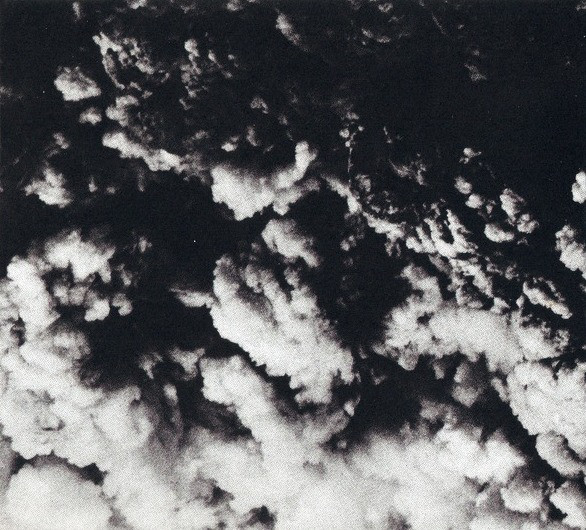
Grouper’s side comes from one of the strongest periods of her consistent career: between the releases of Dragging a Dead Deer Up a Hill and AIA, arguably her two best full-lengths. If you’re a fan of Grouper you know what to expect: music that is hazy, delicate and touching. There are four songs, the standout being “Vessel”, which recalls (to me) the melody of “The Star-Spangled Banner”. “Pulse”, the instrumental closer, features some prominent dog-barking (presumably from the one pictured here).
Harris and Cantu-Ledesma would later collaborate as Raum on 2013’s Event of Your Leaving, and Harris featured on Roy Montgomery’s 2018 album Suffuse.
This split is not on Spotify. Check out Grouper’s side on Youtube, below.
Not gonna lie, when I discovered this album I assumed Tor Lundvall was someone in Scandanavia, perhaps making experimental records for Oslo’s Rune Grammofon label. But no, my man Tor is a good ol’ American like me, born in Jersey and based in Long Island. His self-described “ghost ambient” music is soothing, spectral and perfect for Fall, the spookiest season.
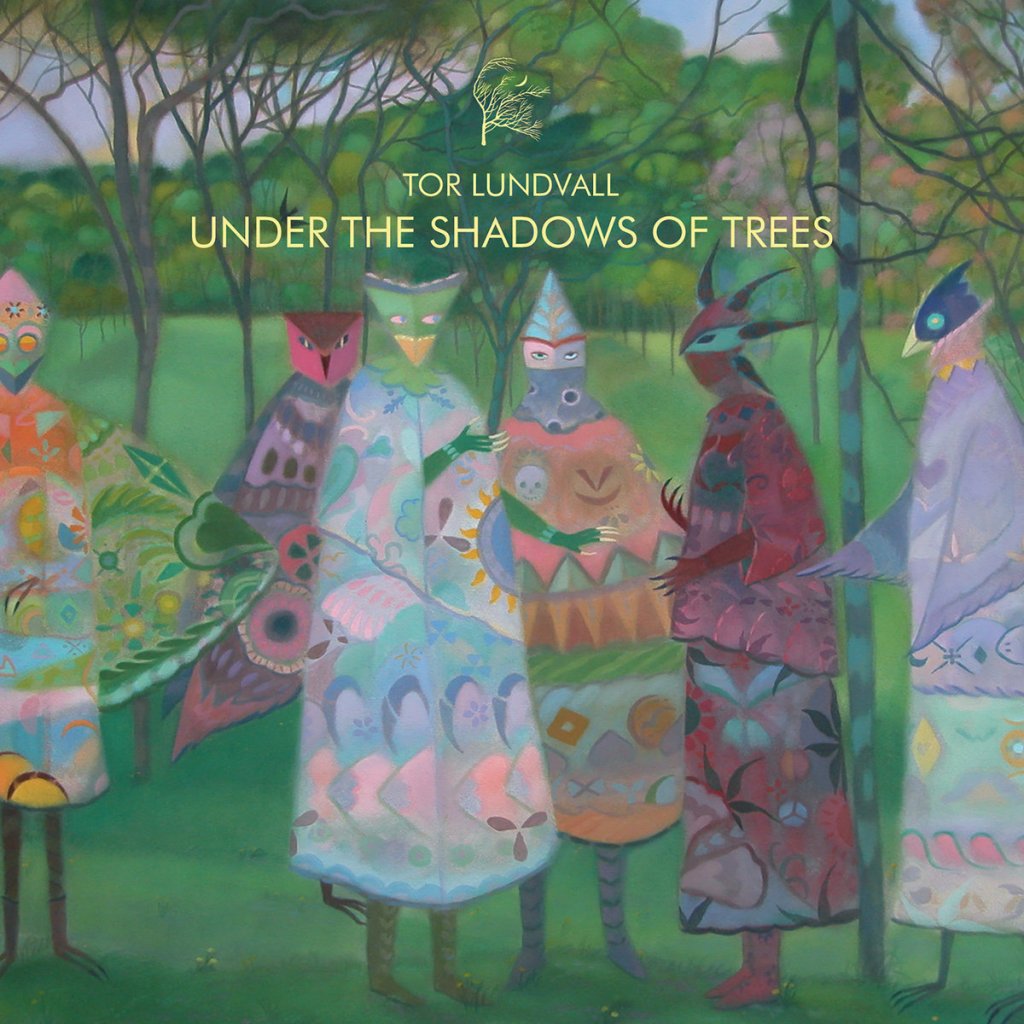
Lundvall’s primary output is his paintings, and his website hosts a gallery where you can view hundreds of them. The album cover above is a good representation of what you’ll find: tree-filled landscapes as well as costumed characters who are occasionally a bit creepy. And his painting style is absolutely reflected in the music: pastoral and gentle tones abound.
I’ve probably mentioned before that I love music with no drums, and like a lot of ambient music, Under the Shadows of Trees fits that description. It is a a collection of reverb-soaked synthesizer and piano pieces, many featuring vocals with discernible lyrics (“Distant Children” is almost a pop song) or muted cries (adding to the “ghost” theme).
At just over an hour, Under the Shadows of Trees is fairly long and many tracks sound the same, but this is rarely a problem for me when it comes to ambient music. If quiet, contemplative full-lengths are your thing, then this is a beautiful choice. On its Bandcamp page, Lundvall suggests that listeners play the album outside as the sun sets, “just as the evening ghosts call softly from the woods”.
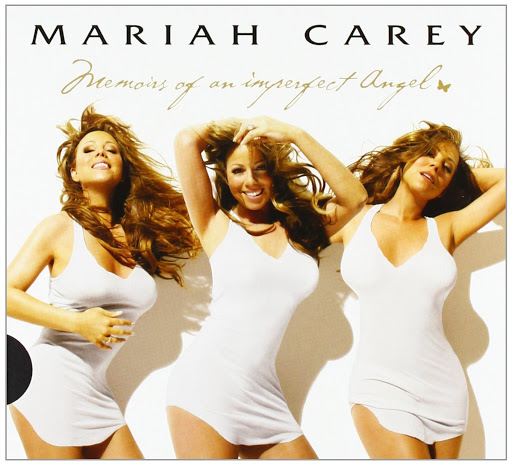
Mariah Carey is snarky. After Eminem repeatedly dissed her and then-husband Nick Cannon, she made “Obsessed“, a smash hit that still ranks among the most popular songs in her extremely successful catalog. And she wasn’t afraid to bite back at Em: “See, the difference is, my song is on the radio and his, you have to search for it,” she said in 2009.
Of course I knew the brilliant “Obsessed” back then, but I just discovered Memoirs of an Imperfect Angel earlier this year and my first thought was, “how did it take so long for me to hear this album?” I’ve followed The-Dream for the past decade as a big fan, so it surprised me that until 2020 this album, almost-entirely penned and produced by The-Dream, somehow Mandela effect-ed its way from seeming nonexistence into my ears. And – surprise! – it’s her best work.
Most Mariah full-lengths are scattershot. And that’s ok! She’s made a lot of music, and plenty of it is top-notch. But for every “Vision of Love” or “Fantasy”, there’s usually some sappy filler that lines the rest of the album. Memoirs, however, hits over and over.
Much of Memoirs sounds exactly like what Dream was doing on his first three albums (AKA The Love Trilogy), and that is a good thing. “Candy Bling”‘s beat is almost identitcal to “I Luv Your Girl”; the screwed “lovin’ on my mind” vocals on “Ribbon” recall the same effect on “She Needs My Love”; the whole album is filled with ay-ay’s and oh-oh-oh’s that are hallmarks of Dream’s sound. No complaints there.
What separates the album from being just another Dream record is, of course, Mariah herself. Besides contributing her iconic vocals, the female voice in her songwriting is the antidote to what we hear excessively on Dream’s solo albums, namely the licentious tales of an extremely horny guy. Take “It’s a Wrap”: over a silky piano line, she begins, “Yet another early morning and you walk in like it’s nothing / Hold up, hold up, hold tight / Ain’t no donuts, ain’t no coffee / See, I know you seen me calling and calling / I should crack you right in your forehead”. Damn, MC. Sass is a consistent lyrical motif in this album, and she pulls it off. For the last few songs, however, Mariah changes her tune and goes full ballad mode, covering Foreigner’s “I Want to Know What Love Is”. She pulls that off, too.
In fact, Carey’s cover of “I Want to Know What Love Is” got the nod of approval from Foreginer’s Mick Jones, and broke the record for longest-running number 1 on the charts… in Brazil. It’s a euphoric end to her tightest album. I only wish that Spotify had a version of the album without the bonus remixes, so that I don’t have to hear a ridiculous techno mix of “Obsessed” every time the main album ends.


 good singing gum