Album of the Week: T-Pain’s Epiphany (2007)

Tebunon… pedalophagus… from the planet Tallagoosa…

Can I get a witness? T-Pain is a Florida guy through-and-through (the T stands for Tallahassee), so he’s been on my mind this past month as Florida has battled two serious hurricanes. We all know “Bartender” and “Buy U a Drank”, but is the rest of T-Pain’s second album worth a listen? Yes, yes it is.

Epiphany was produced entirely by T-Pain, whose smooth production holds up some 17 years later. Shawnna (“What’s Your Fantasy?”) provides the assist on “Backseat Action”, a song about fucking on the highway which is far from the weirdest sex song on here. You know that saying, “he could sing the phone book”? That’s T-Pain. He has a whole song about the sexual appeal of… stomachs, and it sounds great. Yes, “Yo Stomach” is a real song. It’s absurd, it’s funny, it’s catchy. “Them crunches got me punchin’ the wall!” Change the lyrics to being in the club or falling in love or something and you have a hit. But I love that Pain stuck with his weird fetish song instead. I don’t think I have to explain what “69” is about, but it is NSFW.

“Time Machine” is my favorite T-Pain deep cut because it strikes a brilliant balance between humor and heartfelt emotion. In it, he reminisces on the ease of his life before fame. In his signature auto-tune he coos, “No matter how bad the weather, everything back then was just so better,” followed by a wistful “heh”, as if acknowledging the bastardized syntax. It’s not the only combination of humor and emotion from Pain, whose closer “Sounds Bad” is an over-the-top look at the struggles of the little guy, a la Justin Timberlake’s “Losing My Way”.

T-Pain raps with a tight flow on “Show U How”, proving himself a one-man hit machine. He rap, he sing… and anyone who doubts his ability as a singer (what with all the autotune) need only peep his Tiny Desk Concert, which is my favorite of the series. It’s a thing of beauty. But back to Epiphany. Yeah, it’s not without a few skips, but really it’s an excellent album by a national icon, with surprisingly human moments. I’d recommend it to any fan of pop music.

Listen to Epiphany here.
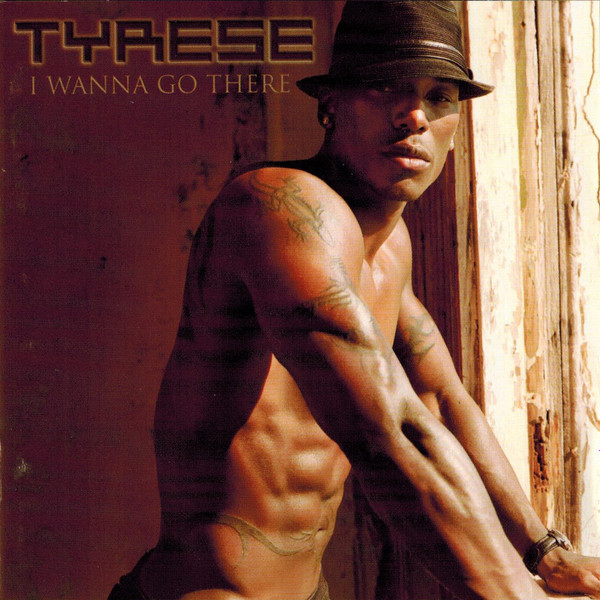
Album of the Week: Tyrese’s I Wanna Go There (2002)

Yo Tyrese, put some clothes on!

I can’t remember the first time I heard Chingy’s “Pullin’ Me Back”, but I was hooked. Tyrese’s chorus bolsters Chingy in a way that he wasn’t able to do on his own choruses, resulting in a 2000s pop/R&B classic. Recently rediscovering that and 2Pac’s “Neva Call U Bitch Again” made me feel like Tyrese must be some kind of unsung genius, so I dug into his third album, I Wanna Go There, on the strength of its single “How You Gonna Act Like That”. This track was produced by The Underdogs, who later made some of my personal favorite 2000s R&B tracks, such as Marques Houston’s “Sex Wit You” and Omarion’s “O”. Like the aforementioned tracks, the magic in this one lies in the chorus, which with its double-tracked vocals sounds wonderfully harmonious. I Wanna Go There as a whole is imperfect, but it’s still a worthy album.

In his music and public life, Tyrese puts it all out there. He has a strong vocal range and successfully employs a formula of restrained singing in his verses followed by bellowing choruses and impressive vocal runs toward the end of his songs. In late-album highlights like “All Ghetto Girl” and “Kinna Right”, his vocals really seal the deal over the music’s smooth production.

There are some lesser tracks here, like the redo of 2Pac’s “How Do You Want It” featuring the less-than-Pac-ish Mr. Tan. The Jermaine Dupri featuring “Girl I Can’t Help It” is surprisingly one of the weaker songs here as well. Still, most of the album sticks to a formula that is really solid R&B. The Poke & Tone produced closer, which samples the same Aretha Franklin song sampled on Mos Def’s “Ms. Fat Booty” is different, but it’s fun to see Tyrese explore his origin story on record. The guy may be mostly known for the Fast & Furious franchise, but he’s got some serious gems.

Listen to I Wanna Go There here.

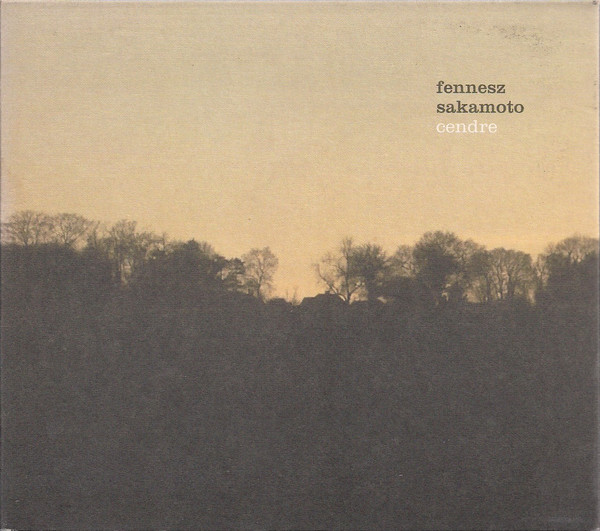
Album of the Week: Fennesz & Ryuichi Sakamoto’s Cendre (2007)

The great Ryuichi Sakamoto passed away recently, and while he has a lifetime of musical achievements under his belt, the work of his I’ve listened to the most is probably this collaboration with Christian Fennesz. The duo had previously collaborated at a live show in Rome, yielding the 2005 EP Sala Santa Cecilia, consisting of one 19-minute track.

If Sala Santa Cecilia is a journey (and an often-brilliant one), Cendre feels a bit more homey. Indeed, opener “Oto” hits like a fresh cup of tea, bright and mellow. Fennesz, whose guitar music occasionally commands with its intensity, steps back as Sakamoto’s piano playing takes center stage.

Sakamoto had the talent of imbuing his playing with emotion, whether that be on a stunning track like “Merry Christmas Mr. Lawrence” or a subdued release like Async. Cendre is no different. “Haru” (sunshine or springtime) radiates with calm satisfaction. “Trace” finds Sakamoto expertly navigating some minor-key dissonance beneath a film of laptop hiss in the record’s first unsettling moment.

Things slow down even more in the album’s back half, with the penultimate “Glow” moving at a crawl. A glitchy duet, it reveals beauty in empty space. Last up is “Abyss”, with Sakamoto’s circular piano melody broken up by a brief respite in the middle of the track. The album ends in 30 seconds of near silence, the curtain closing on an outstanding meeting of two giants.

Listen to Cendre here.

Album of the Week: Sixpence None the Richer’s Divine Discontent (2002)

Have you ever seen She’s All That with Freddie Prinze Jr. (of Scooby-Doo fame), Rachel Leigh Cook and Matthew Lillard (also of Scooby-Doo fame)? It’s basically an above-average teen movie, but the best scene is undoubtedly when Rachel Leigh Cook’s character walks down her staircase as Sixpence None the Richer’s “Kiss Me” is playing. “Kiss Me” (1997) is peak grocery store-core. Happy, catchy, mellow and saccharine, it’s a smash hit that remains Sixpence’s most popular song.

After their (now certified Platinum) self-titled album came out in 1997, it took almost 5 years for the band (with ties to Texas and Nashville) to release a follow-up. Lead singer Leigh Nash, an unabashed Christian, stated in a 2003 interview with Jesus Freak Hideout that label problems delayed the release of Divine Discontent, and that it wasn’t supposed to feature the Crowded House cover “Don’t Dream It’s Over”, which Sixpence recorded for the TV show Smallville.

Though the inclusion of “Don’t Dream It’s Over” may have been a push to sell the album rather than an artistic decision, it’s still a standout here. They stick fairly close to the original version, which is not a bad idea. I became obsessed with the Crowded House version recently, which led me to finding Divine Discontent in the first place. With this song, two versions are better than one.

The rest of the album is cash money too, though. “Breathe Your Name” sets things off with as much sunshine as Natasha Bedingfield’s “Unwritten”, but it’s a little groovier. “Waiting on the Sun” is another pop banger. “Paralyzed” is the rocker that I imagine them ripping in a live setting. “Tension is a Passing Note” is a broken ballad that Nash has called her favorite Sixpence song. “Do I murder us / putting pavement in my veins?” she asks. It’s an unsettling moment, and it works in the band’s favor. The Van Dyke Parks-assisted “Dizzy” is like a primer for the soaring closer “A Million Parachutes”, another stand-out.

As far as being lumped into the Christian rock category, as Sixpence often is, Nash has said “I am a big fat Christian and do not care who knows that. When it comes to our music we’d just like it to be taken for it’s musical value and not lobbed onto a big bandwagon.” Divine Discontent far exceeds any expectations of generic Christian rock, and it has aged well in the same way that Michelle Branch’s early 2000’s hits have aged well. They’re well-written rock songs produced to pop perfection.

Listen to Divine Discontent here.

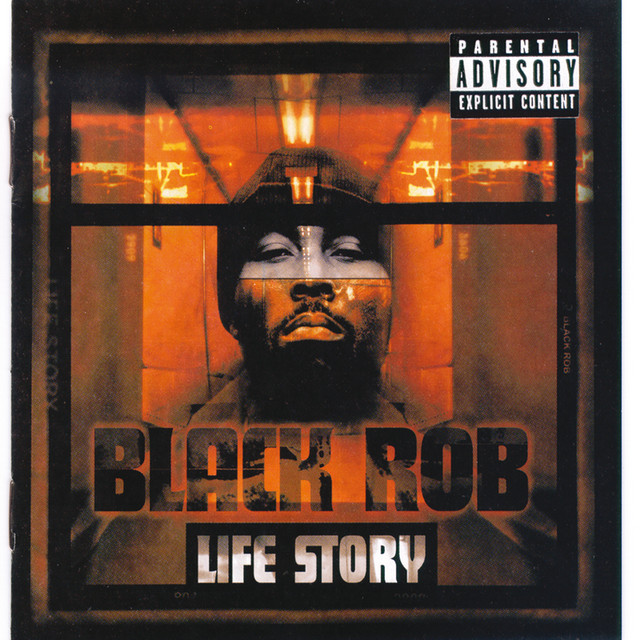
Album of the Week: Black Rob’s Life Story (2000)

I didn’t know much about Black Rob before he passed in 2021, except his song “Can I Live” with The LOX, which has a beautiful beat and finds Styles P fantasizing about “hang-glid[ing] to the Alps with a fly chick”. One of Bad Boy’s most promising artists after Biggie’s passing, Rob was featured on Motown’s “I Want You Back ’98”, a Jackson 5 remix that dropped, strangely, not 30 but 29 years after the original. Why this track was made, I’m not sure, but rapping on a track with (the then-living) Michael Jackson must have been a promising early-career move for Rob.

What followed in 1999 was the recording of Rob’s debut Life Story, including the smash lead single “Whoa!”, which has largely held up well (other than the f-slur). The Buckwild beat is bonkers, and Black Rob sells the single title as a catchall response to anything remarkable. Also worth pointing out is the 8-minute remix with Rah Digga, Beanie Sigel and more. Whoa.

But Life Story is a surprisingly solid front-to-back album. The title track is captivating as a wistful growing-up-in-the-ghetto song (“living in this tenement, eating stale Entenmann’s”). Rob’s character is quickly established: a hard-nosed jailbird who perseveres through life struggles by rapping. Somewhat unexpectedly, CeeLo Green appears as the album’s first rap feature on “Lookin’ at Us”, and he kills it. Sometimes I forgot how good at rapping CeeLo is. Then we have a Bad Boy posse cut with Diddy, Mase and G-Dep on “Down the Line Joint”.

Later on, “B.R.” is some expert noir-rap with gritty rhymes and the beat to match. “Thug Story” is a Slick Rick callback, and “Jasmine” is steel-drum infected storytelling rap. “I Love You Baby” originally appeared on the Puff & The Family album No Way Out (1997), which went 7x Platinum. Things wrap up with some pep on “I Dare You” (that’s after the J-Lo feature). I really like this album. It’s packed to the gills but there is nary a garbage track to be found. God bless Black Rob.

Listen to Life Story here.

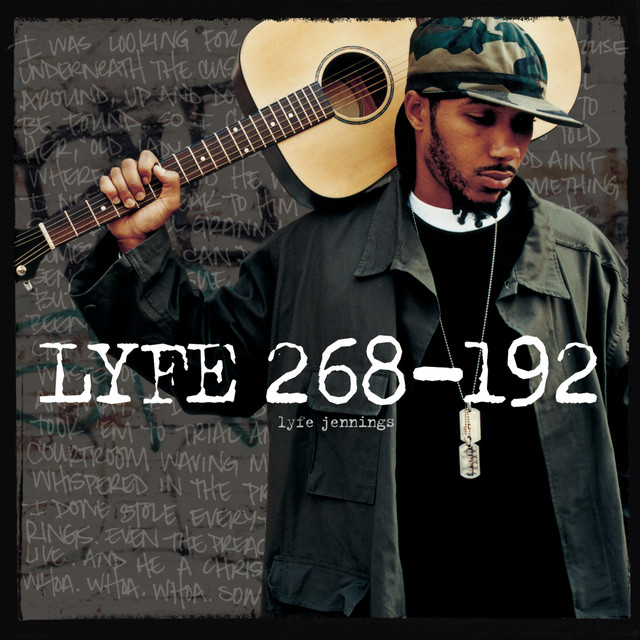
Album of the Week: Lyfe Jennings’ Lyfe 268-192 (2004)

“This falls into a full-bodied narrative arc so effortlessly. R&B neorealism.” -RYM user Rigondonuts

As suggested by the quote above, Lyfe 268-192 is as much a story as it is an album. Step aside, Kendrick! Lyfe gives the artist’s story in a brilliant, flowing song cycle of a debut. Having been incarcerated at a young age, the numbers in the album’s title refer to his prison number. But Lyfe is much more than a story of prison, it’s a story of love.

As Lyfe opens up to “Must Be Nice”, an ode to a loving partner, one of the first things you may notice is that Lyfe Jennings has a fantastic voice. I first discovered him on the posthumous Shawty Lo song “My Love”, which with its bittersweet sort of electronic harpsichord and the context of Shawty Lo’s untimely passing gives Lyfe a truly heartfelt chorus. He wrings emotion out of his notes in a smoky style similar to that of the classic R&B artists of the 60s. Having written and produced every song himself (with only two songs co-written by others), Lyfe stands out among other R&B albums of the early 2000s with a focused, cohesive vision and style.

Good R&B makes you want to sing. There are certain songs that revolve in your head like a special memory, encouraging off-the-cuff vamping whether you’re in the shower or not. “I Can’t” is one of those songs for me, and it wasn’t even a single from Lyfe. This fantastic love ballad is sandwiched between two excellent tracks about fairly specific relationship difficulties. “She Got Kids” weighs the pros and cons of dating a single mother with an empathetic view, while “Hypothetically” finds the narrative’s couple discussing difficult issues together.

The album’s middle section finds Lyfe single and in legal and financial trouble. The down-to-earth musings of “Stick Up Kid” (“You ever seen a n**** diggin’ in the ashtray? / I’m doin’ bad, y’all”) lead to “Cry”, which features one of my favorite Lyfe quotes: “Crying is like taking your soul to a laundromat.”

I would say the back half of this album is not quite at the level of the first, with its overly-rambling “Made Up My Mind”, but that would be doing a disservice to the amazing closer “Let’s Do This Right”. I love this song. A tribute to people in prison, Lyfe actually names his fellow inmates, effectively immortalizing them in his music. “Lyfe,” he muses in conclusion, “the soundtrack… to your life.”

Listen to Lyfe 268-192 here.

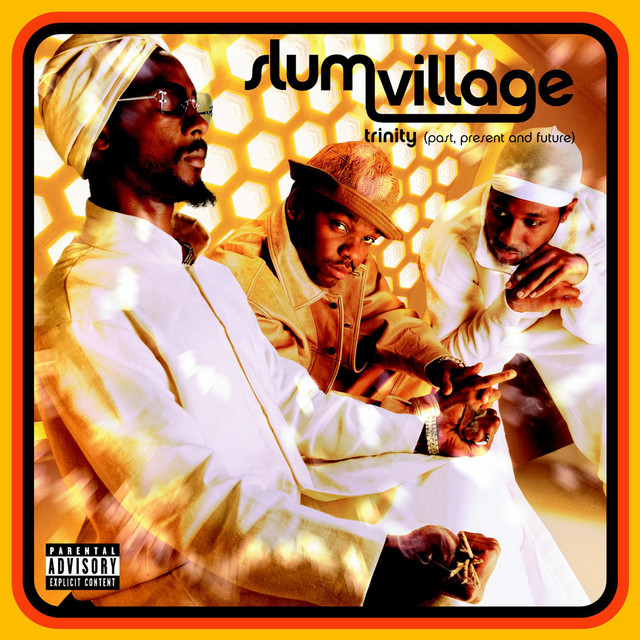
Album of the Week: Slum Village’s Trinity (Past, Present and Future) (2002)

It can be easy to get stuck on Slum Village’s label debut Fantastic, Vol. 2 (2000), one of the finest hip-hop albums of any era. With J Dilla at the helm, it bumps and grooves on a level that is strictly more beautiful than other records. It’s not hard to see why Dilla has attained a legendary status, but his absence from Fantastic follow-ups (he left the group to focus on a solo career several years before his death in 2006) leaves them relatively underrated.

Trinity is a great example of this. Take it on its own terms and it’s a very rewarding project. Despite a lack of Dilla’s production (only 3 tracks out of 23), the sound of Slum Village very much remains, in no small part due to the presence of founding member T3 on the boards as well as Detroit producers of the same ilk like Waajeed and Black Milk. Baatin’s trademark voice (similar to Q-Tip’s) carries along from the first album, and a young Elzhi (!) joins as a welcome addition to the crew.

“Tainted”, produced by Roots-affiliate Karriem Riggins and featuring Dwele, is an early highlight with one of the few classic SV videos. Elzhi sounds energized all over the project, with his verse on “La La” standing out as a particular scorcher. “One” has one of the wackiest Dilla beats I know of, with a twinkly piano sample and a punching drum. “Slumber” bangs with a beat courtesy of Hi-Tek.

At nearly 70 minutes, Trinity could have done with some trimming. I mean, there are 2 intros on this thing. Still, for fans of Fantastic and hip-hop in general, Trinity has a lot to give.

Listen to Trinity here.

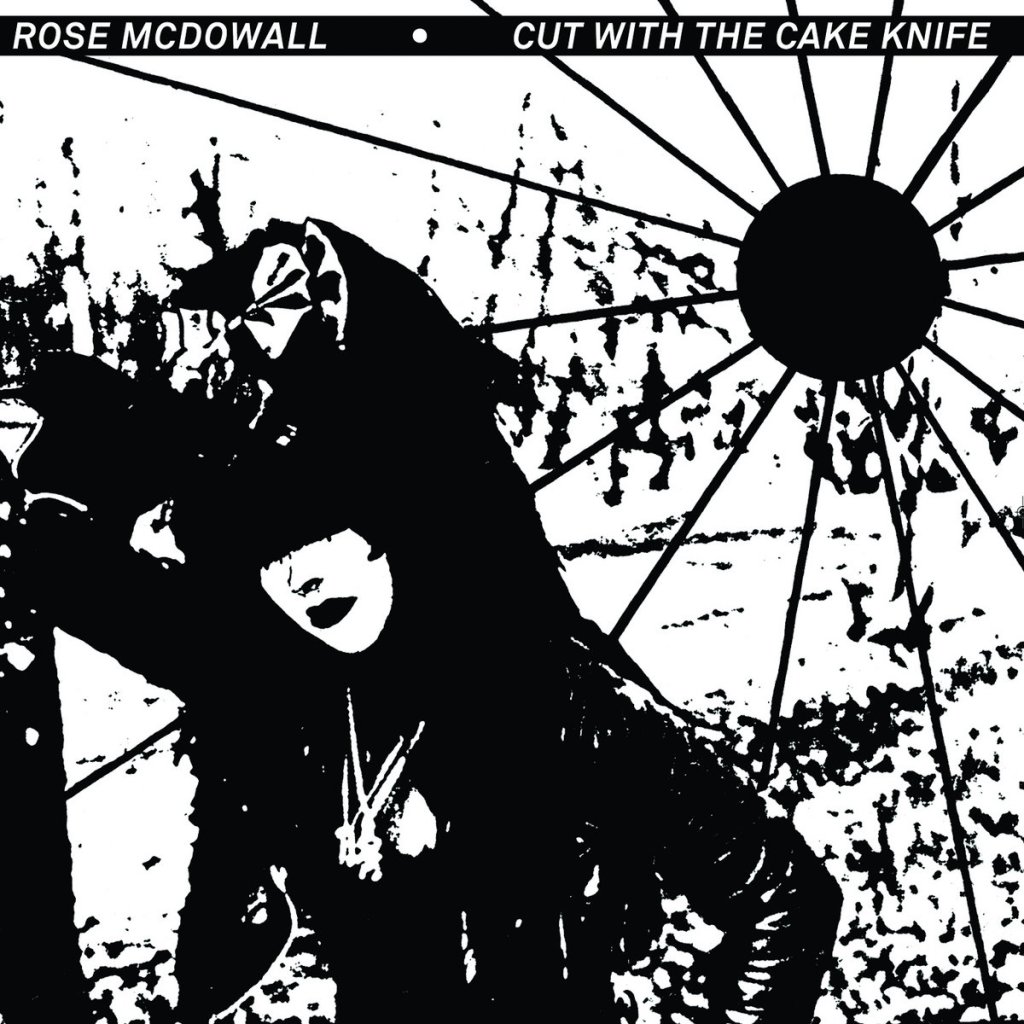
Album of the Week: Rose McDowall’s Cut With the Cake Knife (2004)

First off, if you haven’t listened to Strawberry Switchblade, do yourself a favor! The Scottish new wave group’s self-titled album from 1985 was a major revelation to me 4 years ago, and it still rules. As a major fan of Cocteau Twins and Kate Bush, I was amazed at how long it took me to hear Strawberry Switchblade, a record filled with great songs and effervescent charm.

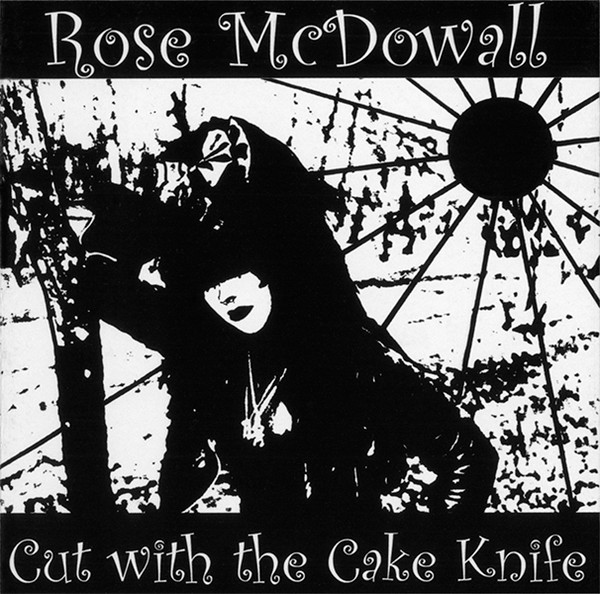
Although the group wrote songs for a second album, they broke up before it materialized. The band’s Rose McDowall then recorded Cut With the Cake Knife in 1988 and 1989, featuring some of the songs she wrote for this fabled follow-up (including the title-track).

Cake Knife, it would seem, met a similar fate as the unreleased Strawberry Switchblade album, given that it went unreleased until 2004. The original cover’s goofy Microsoft Word font was changed to the image above when re-released by Sacred Bones in 2015. Funny enough, I actually discovered this album recently from a thread of worst album cover fonts.

Onto the music: “Tibet” is a killer opener, a track that ranks among the best Switchblade material. “Sunboy”‘s drum machines are more dancey, backing a glimmering guitar melody and sparkly synths. “Darkness is my home,” McDowall sings, owning the emo-goth vibe that tows the line so brilliantly with the sugary goodness of her music.

Other than a decent, if unnecessary, cover of “Don’t Fear the Reaper”, Cut With the Cake Knife is a great slice of 80s pop that suggests Strawberry Switchblade had more to give than their short career allowed them to. McDowall recorded with several other acts, including SPELL with industrial weirdo Boyd Rice (NON). Thankfully, Cake Knife exists to extend the legacy of Strawberry Switchblade’s inimitable music and style.

Listen to Cut With the Cake Knife here.

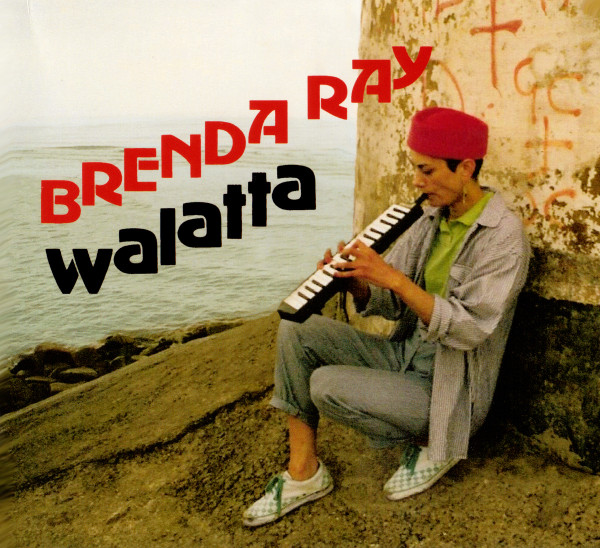
Album of the Week: Brenda Ray’s Walatta (2006)

Brenda Ray did it right. Flexing the melodica on the cover a la Augustus Pablo, the British musician gives a clear tribute to a hero who helped pave the way for Jamaican music’s international takeover in the late 20th century.

According to her Bandcamp, Ray “became ‘hooked to the dub’ via Roger Eagle. In between sets at Erics Club (Liverpool), he played the rarest cuts on the planet – dub plates to rockabilly out takes.” Beginning her career in the late 70s, she recorded with friends in a home-made Liverpool studio, releasing dub and pop records under the monikers Naffi and Naffi Sandwich.

Perhaps more fine-tuned than earlier releases, Walatta was recorded between 1993-2005 and acts almost as a greatest hits compilation of that era. Assisted by Roy Cousins (producer for King Tubby and others), for whom she was helping to remaster old reggae/dub tapes, she dubbed vocals, synths, koto and other instruments over some of his classic riddims. The legendary Prince Far I guests on “Sweet Sweet Wine”, though I’m not sure how exactly, since he died in 1983. Scientist, a gargantuan name in dub, appears on “Swirling Hearts”, which is indeed swirling in dubbed-out ecstasy. Anthony Doyley of the reggae band Knowledge assists on “Lend a Helping Hand”, where Brenda Ray harmonizes wonderfully with his voice. Given the personnel involved, there’s no real question as to the authenticity of the project.

Towards the back-half you get a solid cover of Fred Neil’s “Everybody’s Talkin'” (Midnight Cowboy) and the aptly titled “Vision-Dreamin”, which closes the album in a swoosh of drumless magic.

Listen to Walatta here.

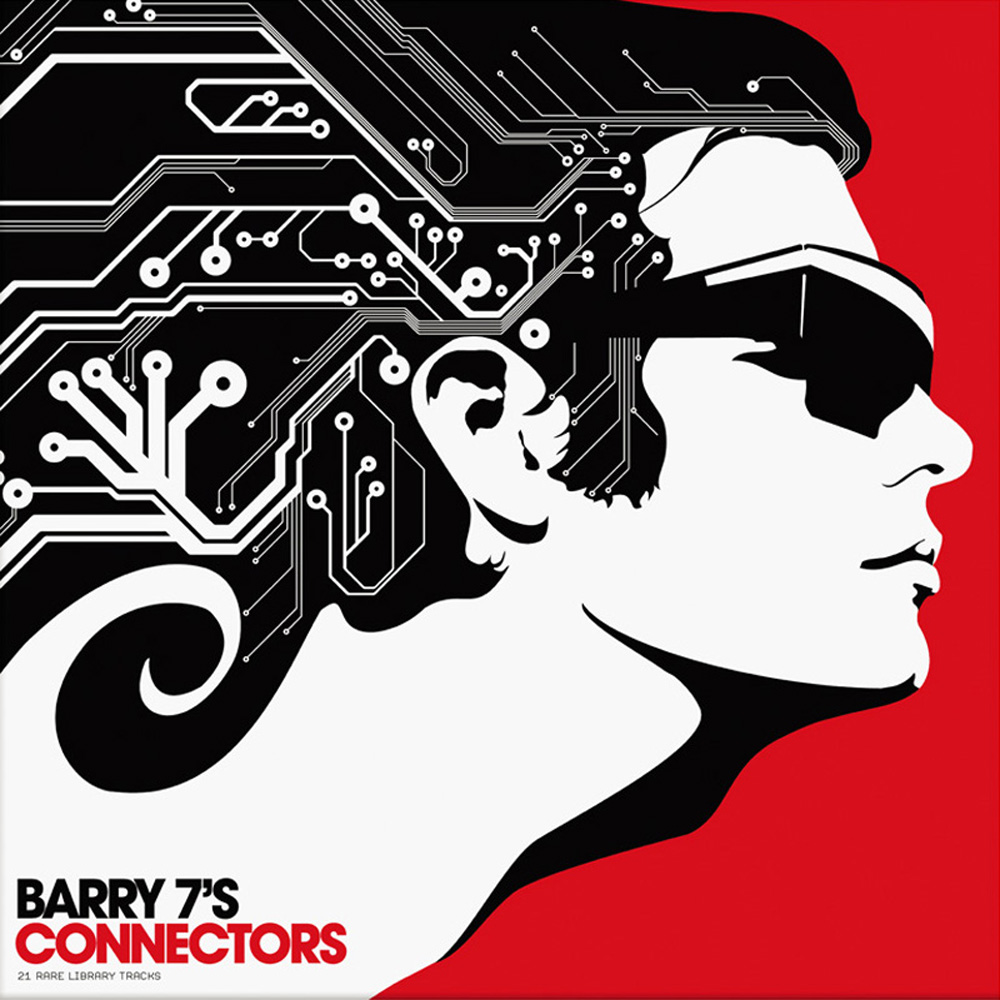
Album of the Week: Barry 7’s Connectors – 21 Rare Library Tracks (2001)

Barry 7’s Connectors raids the vinyl archives of 1970s library music, a cheap soundtrack source for films, TV and adverts. Mr. 7 is normally found fronting Add N To (X), or going out as a very alternative DJ.Lo Recordings

Sometimes, when you don’t know what to listen to, or when your enjoyment of everything else feels a bit saturated, a compilation of esoteric library music hits the spot. Thanks, Mr. 7! The first of 2 compilations, Connectors is a fun and varied sampler from the world of production music.

One thing that’s fun about library music is its range of styles. Since the music could potentially soundtrack any kind of TV show or movie, you’ll get the goofy “Catch That Man” next to the beautiful “Dawn Mists”. “Amour, Vacances et Baroque” has a classic French groove a la Gainsbourg’s Histoire de Melody Nelson. “Solar Flares” and “Quasars” by Sven Libaek, who produced music for Hanna-Barbera (including Yogi and the Invasion of the Space Bears), could be psych-rock hits of the early 70s if they had any vocals. The biggest highlight for me, though, comes from Roger Roger, a composer who was actually named Roger Roger. “Coconut Coast” is the perfect soundtrack to twirling around in a little outfit while drinking a little cup of tea.

Library music is a genre without many limitations, and thus recordings that are up to 60 years old still come off as inventive and strange. These recordings can be a good source of hip-hop samples, relaxing background music, or unique and heady experiences. Take a dip for a trip. Weird sounds abound!

Listen to Barry 7’s Connectors here.