Album of the Week: Luiz Bonfa’s Introspection (1972)

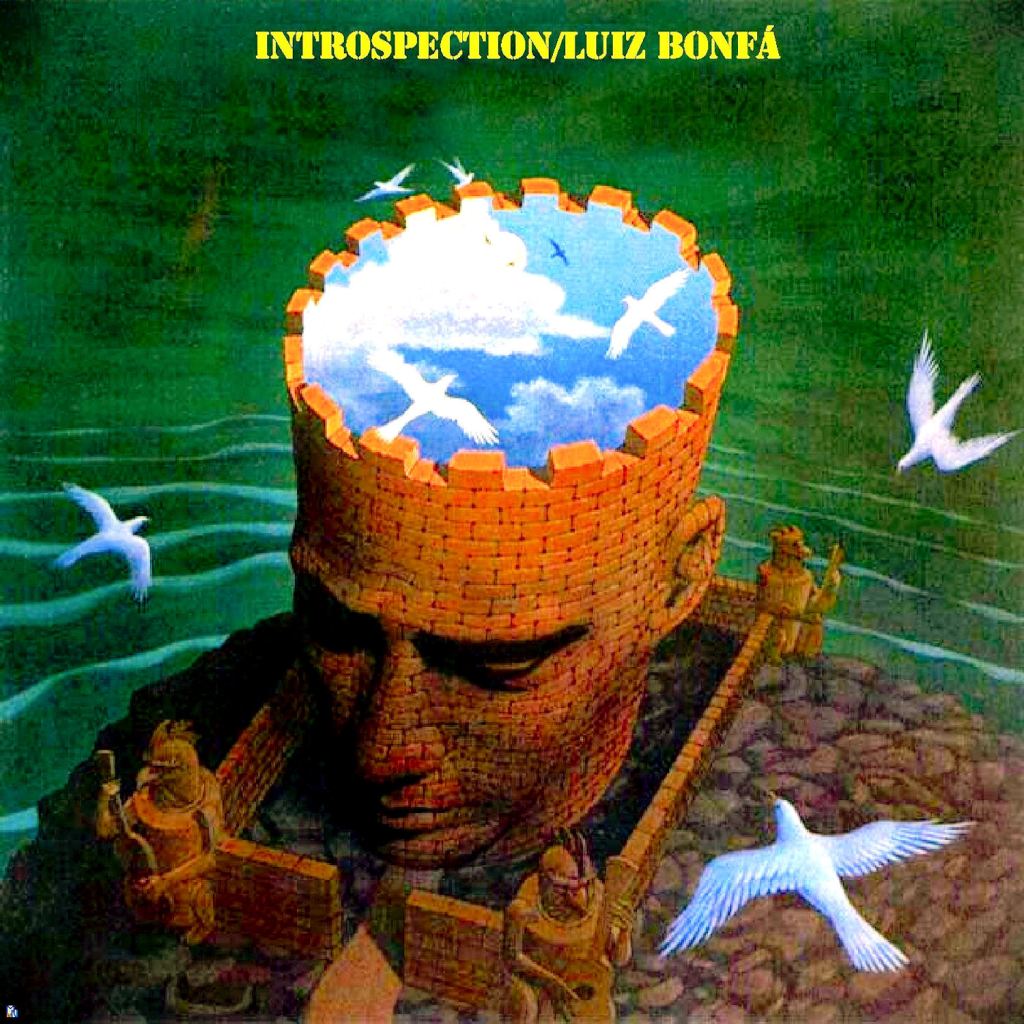
Introspection – How It Feels to Chew 5 Gum! Our head is a castle, our mind a sky. And what better way to journey through the clouds than on the wings of an acoustic guitar?

Rio de Janeiro’s Luiz Bonfa had a lucrative career as part of the samba scene of the 50s and 60s, notably writing some of the music for the brilliant film Black Orpheus (1959), including “Manha de Carnaval”, which has been covered by many including Astrud Gilberto. His collaboration with Stan Getz, Jazz Samba Encore! (1963), was a hit that includes Bonfa’s “Saudade Vem Correndo”, which was sampled by J Dilla on the Pharcyde classic “Runnin’”. The guy could write a good song.

Introspection feels more improvisational, but it’s short and sweet at just over 26 minutes. This works to the album’s advantage as the songs are quite similar. No vocals or accompanying instruments, just that airy guitar, slowing in tempo and then picking up again like a classical movement (hence, “Concerto for Guitar”). “Missal (Estudo)” stands out for having what sounds like two guitars in the mix (although I am almost certain there is only one) for a wonderful harmonic effect.

Listen to Introspection here.

Album of the Week: Curtis Mayfield’s Sweet Exorcist (1974)

We love Curtis Mayfield over here at GSG. Curtis, Roots, Superfly – all stone-cold classics, not to mention There’s No Place Like America Today, my personal favorite of his. A few of his albums slipped through the cracks though, including Sweet Exorcist.

A 1974 review in Rolling Stone complains that the album “sounds hastily conceived and then competently executed to meet some contractual deadline.” Christgau gave the album a C and wrote that “To Be Invisible” is “its only interesting song.” Was Sweet Exorcist deserving of its lukewarm reception?

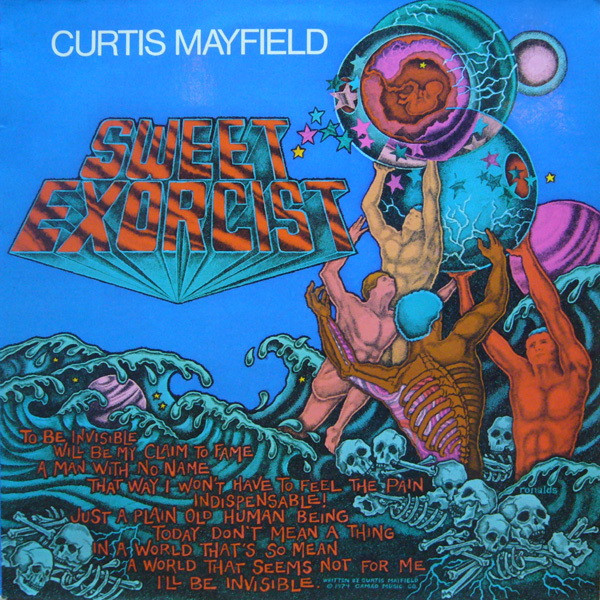
Well, yes and no. Compared to earlier outings from Mayfield, it’s a step down. But once you’ve listened to those records innumerable times, this one comes as something of a fresh discovery. It’s certainly not as weird as the cover would suggest – and seriously, what is going on here? Naked blue-haired men rising from a skeleton sea to lift up the planets and an electrified embryo? I’m not sure if this cover helped or hurt sales.

But the contents are, for the most part, classic Curtis. The title track grooves and “To Be Invisible” is a damn good ballad. While “Power to the People” is a bit rote and “Kung Fu” is lyrically silly, the rest are solid tracks. “Suffer” has a co-writing credit from Donny Hathaway and is accordingly heartfelt. “Make Me Believe in You” ends things on a strong note with a driving beat.

At just over half an hour, Exorcist feels a little slim. Who knows, maybe it was indeed executed to meet some contractual deadline. Nevertheless, we have in 2022 the convenient ability to instantly stream this music instead of going out and buying the record, weird-ass cover and all.

Listen to Sweet Exorcist here.

Album of the Week: Busta Rhymes’ Anarchy (2000)

Was Busta Rhymes ever an anarchist? His love of money and material things would suggest otherwise, but despite mainstream success, his earlier albums followed a pretty atypical theme. His debut The Coming and subsequent two albums are threaded with apocalyptic visions, looking toward the year 2000 as a doomsday clock would. With Anarchy, the new millennium has arrived, and with it a state of (purported) socio-political disarray.

Thus the cover of Anarchy looks more like something from Rancid or Iron Maiden than a rapper who had, in 1999, just reached #3 on Billboard with a Janet Jackson-featuring single. The heavy metal energy is there, but behind the dark presentation is an unsung masterpiece, arguably the most fun and passionate release in Busta Rhymes’ discography.

It doesn’t hurt that the first real song on here flips “Betcha by Golly Wow” into an addictive soulful beat that works as a perfect introduction into the world of the album (think Jay-Z’s “December 4th”). The next 9 tracks, featuring beats from J Dilla, Swizz Beatz, Scott Storch and Just Blaze are pure gold, all solo Busta at the top of his game with a couple notable peaks. Just Blaze’s “Street Shit” wobbles with that turn-of-the-century bounce you find in tracks by Timbaland. Shit slaps. On the other end of the spectrum is “Show Me What You Got”, a Dilla classic that flips Stereolab(!) into something marvelous (Busta’s words, mind).

The second half of the album is where the features are, with some interesting appearances. “The Heist” is, as far as I can tell, Roc Marciano’s first appearance on record (this happening a decade before his debut album), and he sounds great, which is no small feat when rapping after Rae and Ghostface. But to his credit, Busta Rhymes’ final verse annihilates the ones before it. “Make Noise” with Lenny Kravitz is as palatable as Goodie Mob’s rock track “Just About Over”, which is to say that it’s a lot at first, buuut give it a chance and it works. I mean, Busta had already featured Ozzy Osbourne on 1998’s ELE, so it’s not the craziest feature. And in any case it’s worth it just to hear Busta repeatedly exclaim, “Busta Rhymes! Lenny Kravitz!” Dude, I know. Awesome.

“How Much We Grew” is a beautiful track in which Busta takes you from his birth to his adolescence on a journey of reminiscence. “A Trip Out of Town” is captivating with its dramatic storytelling and unexpected turn. “Why We Die” opens with a typically emotive DMX and finds Jay-Z at his most contemplative (“They say the good die young / In the hood where I’m from / I only got one question for that- / Why the fuck am I here?”). I could go on listing great songs here.

Anarchy brims over with passion. Most Busta albums are long, and he’s surely a hard-worker. But other than his still under-appreciated debut The Coming, none of his releases are as consistent as Anarchy. The energy, technical skill, style, hell, even the adlibs are potent over the albums 22 tracks. Other than a couple f-slurs (smh), it’s hard for me to find fault in this album, which is perhaps one of the best-kept secrets in early 2000s hip-hop.

Listen to Anarchy here.
Album of the Week: A Date with the Everly Brothers (1960)

Who wants a date with The Everly Brothers?? Look, these guys were pretty charming. At the time of A Date‘s release, Don and Phil Everly were 23 and 21 respectively, and writing much of their own material, not to mention playing and singing it.

I checked out their fourth album, A Date with the Everly Brothers, on the strength of the final track, “Cathy’s Clown”, their biggest hit at the time of its release. This one got stuck in my head with its catchy chorus and emo vibe (“I die each time…”). The other well-known track on here is “Love Hurts”, which was actually not released as a single, but became a huge hit 14 years later for Nazareth. It might be corny, but it’s a great song.

I like all the tracks here except for “Donna, Donna”. To me, the Everlys actually sound best on their own songs, such as the aforementioned “Cathy’s Clown” and the tender “That’s Just Too Much”. Another thing that impresses me about the Everlys is the uniqueness of their sound. They got their start in Tennessee, but they’re not exactly country. They’re “pop”, but the Jimmy Reed song here is a blues track. Opener “Made to Love” and other tracks suggest the playful surf-rock of the early Beach Boys, but the Everlys predate them.

Oh, and the cover’s promised “Candid photos of the Everly Brothers with Hollywood stars” includes pictures of them with Roger Moore and Jack Kelly, among others.

Listen to A Date with the Everly Brothers here.

Album of the Week: Popol Vuh’s Das Hohelied Salomos (1975)

Popol Vuh have a few classics under their belt, but this is the jammiest. This is the one to smoke to. I mean, it literally starts out with a boom. Full of reverb and cymbal splashes, the atmosphere is so thick, the guitars so damn psychedelic, you might catch a contact high just listening to it.

The title translates to The Song of Solomon, and according to Light in the Attic, “the theme of the album is taken from biblical passages, using verses from King Salomon’s [sic] tales on The Old Testament.” I don’t understand singer Djong Yun’s lyrics any better than that of their high-water mark Hosianna Mantra (1972), but her voice is as lovely as ever. And just like on that album, she again sings “Hosianna”.

The second track “Du schönste der Weiber” starts off quite mellow, but builds up to a crescendo of Fichelscher’s positively face-stealing guitar. I only wish this track didn’t fade out so quickly. The fade-outs are probably my biggest gripe with an otherwise fantastic record.

On the second side, beginning with “Der Winter ist vorbei” (“The winter is over”), we have an added treat of sitar and tabla. To me, the tabla especially adds to the psychedelic groove that puts this band in an upper echelon of all-time rock groups. Sheesh. Spend an afternoon living in this one…

Listen to Das Hohelied Salomos here.

Album of the Week: Steel Pulse’s Earth Crisis (1984)

Forgive me if this one reads weird because I’m in the midst of a 4-days-and-running cold that is probably not Covid (but could be) but still kicking me around, and I’m under the influence of cold medicine and a weird sleep schedule. That said…

This album has one of the best opening lines ever, which is: “Open sesame / Here comes Rastaman!” Dudes were coming out the gate lit, and “Steppin’ Out” might feel almost too cheery an opener when you look at this album’s cover art. Interesting collage that features such evils as the KKK, napalm bombing, Reagan, and the uh… Pope? I don’t really know enough about history to know what Cold War England was like in the early 80s, but maybe the vibes were shaky. “Tightrope” and the title track embody this unease lyrically.

Reggae was not averse to the squeaky clean sheen of 80s production, and it shows here. While the smooth sax (“Throne of Gold”) and synthetic sounds might be a horrorshow to some, I love it. Plus, Steel Pulse have the songs to back it up. Their style isn’t for those who stick to early roots or obscure dub sounds, but they’ve certainly built up a legacy over some decades. The first time I heard them was playing Tony Hawk’s Underground 2, which featured “Born Fe Rebel”. Fantastic song, and I was later turned onto this album’s centerpiece “Rollerskates” (AKA “Life Without Music”) via DJ Screw’s legendary June 27 tape (whaaaat). The normal tempo version rules, too, and is one of Steel Pulse’s best known songs. Once again, Steel Pulse manage to take a dark subject (getting your radio jacked [smh]) and make it sound like sunshine.

I’ll let Wikipedia’s description of “Wild Goose Chase” take the lead here: “This song laments the misguided use of technology for purposes which the song’s author, David Hinds, views as unnatural, such as in vitro fertilization.” This one also calls out contraception and calls abortion “legal murder”. Bro are you an ally or what? It’s 2022. No but ending the album with an anti-abortion jam is pretty weird. Still kinda bops tho. Smh.

Overall, this album is fire and makes me want to listen to more Steel Pulse. If they have any better albums let me know.

Listen to Earth Crisis here.

Album of the Week: Slum Village’s Trinity (Past, Present and Future) (2002)

It can be easy to get stuck on Slum Village’s label debut Fantastic, Vol. 2 (2000), one of the finest hip-hop albums of any era. With J Dilla at the helm, it bumps and grooves on a level that is strictly more beautiful than other records. It’s not hard to see why Dilla has attained a legendary status, but his absence from Fantastic follow-ups (he left the group to focus on a solo career several years before his death in 2006) leaves them relatively underrated.

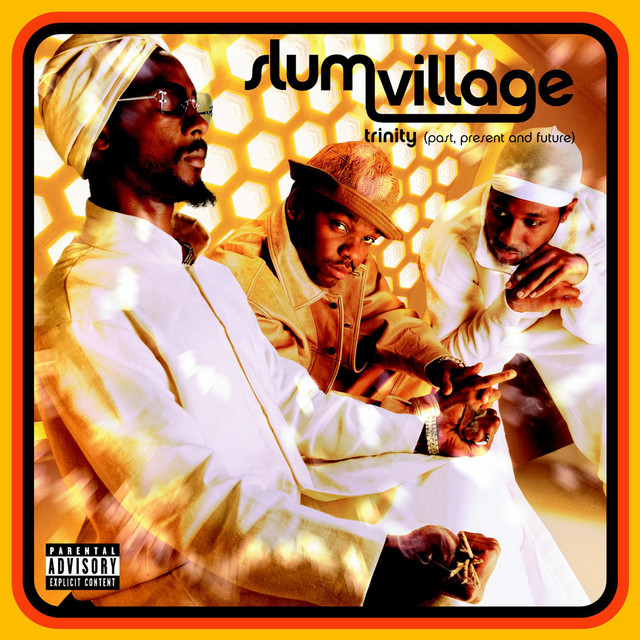
Trinity is a great example of this. Take it on its own terms and it’s a very rewarding project. Despite a lack of Dilla’s production (only 3 tracks out of 23), the sound of Slum Village very much remains, in no small part due to the presence of founding member T3 on the boards as well as Detroit producers of the same ilk like Waajeed and Black Milk. Baatin’s trademark voice (similar to Q-Tip’s) carries along from the first album, and a young Elzhi (!) joins as a welcome addition to the crew.

“Tainted”, produced by Roots-affiliate Karriem Riggins and featuring Dwele, is an early highlight with one of the few classic SV videos. Elzhi sounds energized all over the project, with his verse on “La La” standing out as a particular scorcher. “One” has one of the wackiest Dilla beats I know of, with a twinkly piano sample and a punching drum. “Slumber” bangs with a beat courtesy of Hi-Tek.

At nearly 70 minutes, Trinity could have done with some trimming. I mean, there are 2 intros on this thing. Still, for fans of Fantastic and hip-hop in general, Trinity has a lot to give.

Listen to Trinity here.

Album of the Week: The Intruders’ Cowboys to Girls (1968)

Remember as a kid when you used to chase girls and beat ‘em up? What? You don’t? Well, me neither actually. But this is a strange memory of the narrator in “Cowboys to Girls”, a lush dream of a track from The Intruders, an R&B group and early musical project for Philadelphians Gamble & Huff.

Though they would go on to write and produce bigger and better tracks, like “Love Train” and “Me and Mrs. Jones”, Gamble & Huff’s work on Cowboys to Girls has its own breezy charm. Reportedly from North Philly and led (originally) by the smoky voice of Sam “Little Sonny” Brown, The Intruders straddle the line between the harmony-heavy doo-wop of the early 60s and the smooth soul of the early 70s.

“Turn the Hands of Time” recalls The Supremes or Jackson 5 in its ecstatic chorus. Clocking in at under 2 minutes, “Sad Girl” is (perhaps too) short and sweet, rounding out the first side. In the second half we have the quite corny, yet cute “(Love Is Like A) Baseball Game”. Not really as great a metaphor/song as “Heat Wave”, but they can’t all be classics. I do like this brief version of “By the Time I Get to Phoenix”, which, although originally performed by Glen Campbell, I most associate with Isaac Hayes’ mammoth 18 minute version.

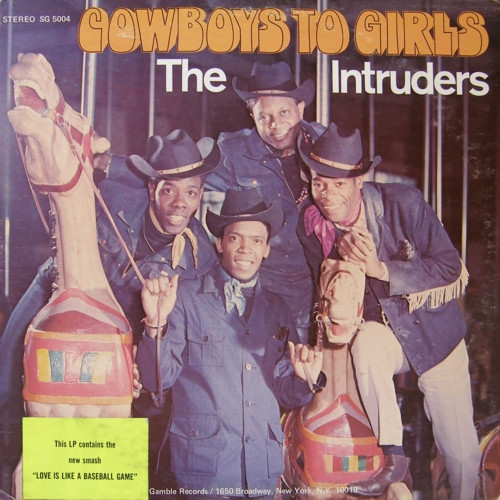
The Intruders would go on to release several more albums, which I have not yet heard at the time of this rating. But I recommend Cowboys to Girls to any soul/R&B fan looking for something slightly obscure (it is difficult even to find a high-res upload of the album cover) yet very smooth.

Listen to Cowboys to Girls here.

Album of the Week: Paul Bley’s Open, to Love (1973)

So check this out right… sometimes all you need is a piano. From Debussy to Monk to Ethiopia’s Emahoy Tsegué-Maryam Guèbrou, there are lots of artists in different styles who made incredible albums out of solely playing the piano. This one from Paul Bley, his third for German jazz giant ECM, is one of my favorites.

My man Paul got the assist from his ex-wife and brilliant artist in her own right Carla Bley, who wrote tracks 1, 2, and 6 on here. Opener “Closer” (heh) is a bit unsettling in its use of empty space, but it serves to make “Ida Lupino” that much more gratifying. This second track is almost jaunty in comparison, with a memorable melody that Bley rolls into with passion. “Started” also has a certain warmth to it.

What I really love about this album is the way that space is used. The compositions could certainly be played a lot faster, but Bley interprets them with a patience that alternately suggests contemplation, serenity, and occasionally something darker. These qualities are all present on the long title track (credited to Annette Peacock), after which Paul Bley’s “Harlem” enters with a bluesy familiarity, not unlike the aforementioned effect of the second track after the first.

The last two tracks are romantic at turns, with an air of mystery. I think Ms. Peacock wins the outré award here for the eerie, airy “Nothing Ever Was, Anyway”, which is nonetheless a beautiful way to close things out. Dig it.

Open to love? Stream it here.

Album of the Week: Rose McDowall’s Cut With the Cake Knife (2004)

First off, if you haven’t listened to Strawberry Switchblade, do yourself a favor! The Scottish new wave group’s self-titled album from 1985 was a major revelation to me 4 years ago, and it still rules. As a major fan of Cocteau Twins and Kate Bush, I was amazed at how long it took me to hear Strawberry Switchblade, a record filled with great songs and effervescent charm.

Although the group wrote songs for a second album, they broke up before it materialized. The band’s Rose McDowall then recorded Cut With the Cake Knife in 1988 and 1989, featuring some of the songs she wrote for this fabled follow-up (including the title-track).

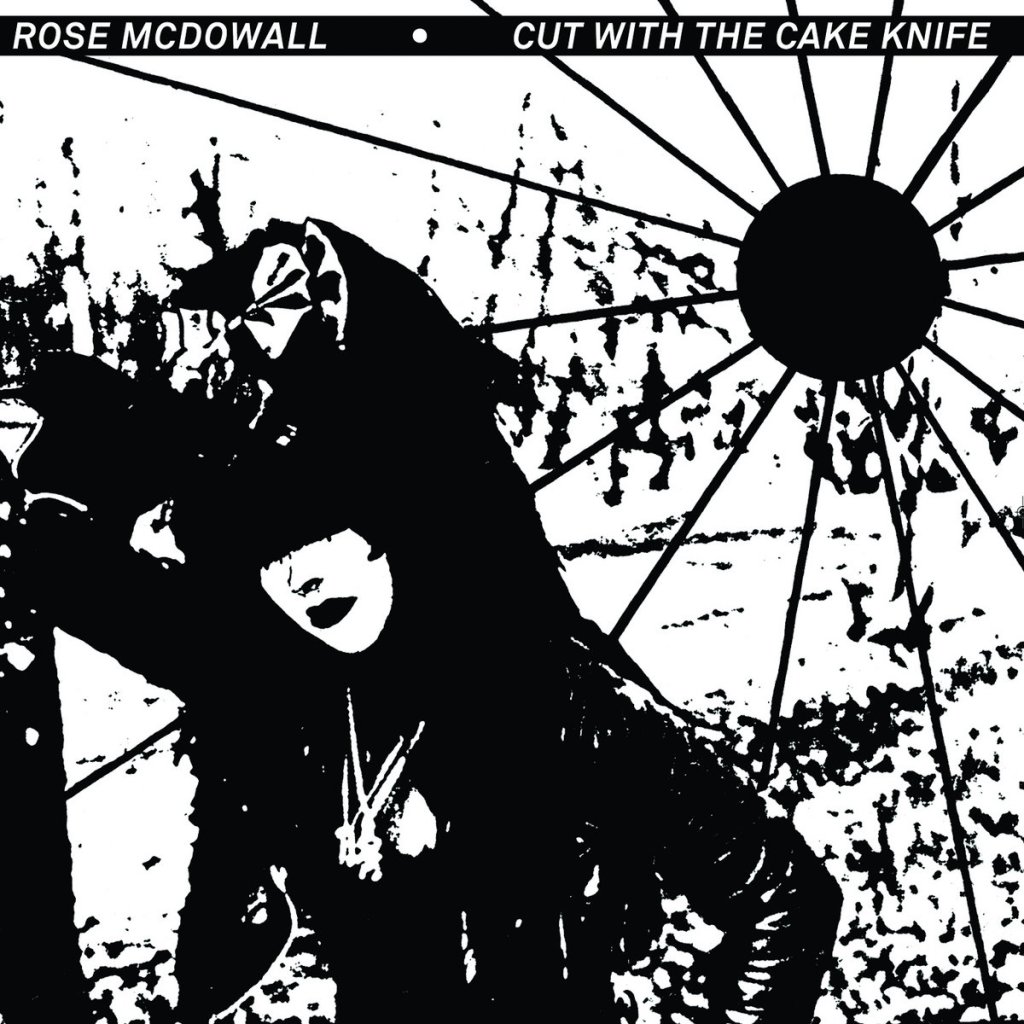
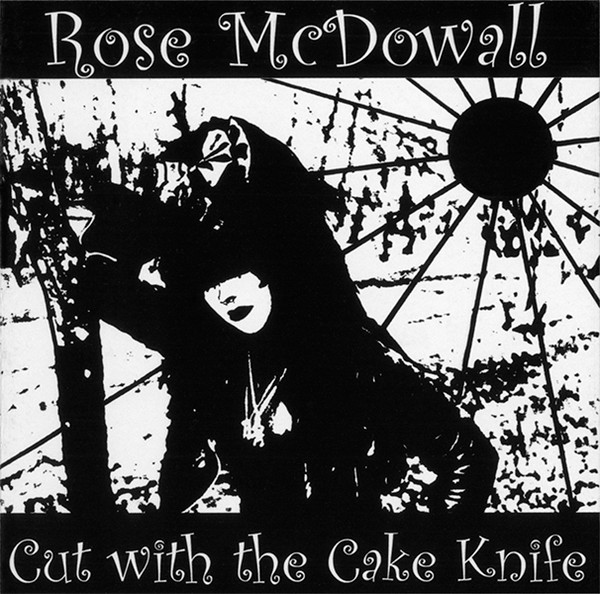
Cake Knife, it would seem, met a similar fate as the unreleased Strawberry Switchblade album, given that it went unreleased until 2004. The original cover’s goofy Microsoft Word font was changed to the image above when re-released by Sacred Bones in 2015. Funny enough, I actually discovered this album recently from a thread of worst album cover fonts.

Onto the music: “Tibet” is a killer opener, a track that ranks among the best Switchblade material. “Sunboy”‘s drum machines are more dancey, backing a glimmering guitar melody and sparkly synths. “Darkness is my home,” McDowall sings, owning the emo-goth vibe that tows the line so brilliantly with the sugary goodness of her music.

Other than a decent, if unnecessary, cover of “Don’t Fear the Reaper”, Cut With the Cake Knife is a great slice of 80s pop that suggests Strawberry Switchblade had more to give than their short career allowed them to. McDowall recorded with several other acts, including SPELL with industrial weirdo Boyd Rice (NON). Thankfully, Cake Knife exists to extend the legacy of Strawberry Switchblade’s inimitable music and style.

Listen to Cut With the Cake Knife here.