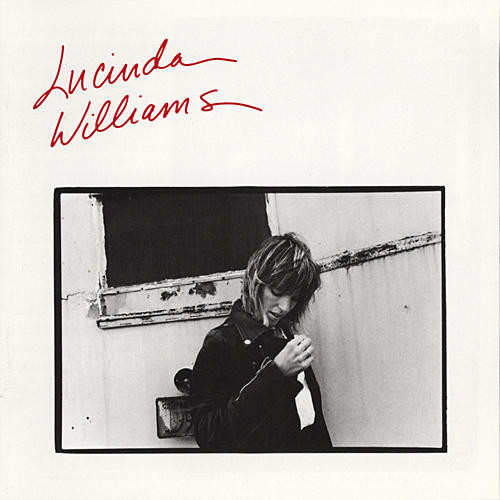
After recording for Folkways in 1979, Lucinda Williams spent several years playing shows around LA before finding commercial success. At one point, Williams was close to cutting a deal with Columbia, but “Ron Oberman and his colleagues in the L.A. offices of Columbia listened to [my demo] and… said it was too country for rock. They sent the tape to the Columbia executives in Nashville, who said it was too rock for country… I’ve always enjoyed saying that it took a British punk label to give me a chance to make a commercial record.” Punk or not, it was Rough Trade who finally took on Lucinda, and allowed her to self-produce and record the album organically in country engineer Dusty Wakeman’s Venice Beach studio.
I already loved Lucinda Williams by the time I finally heard this record, but it seems like a great entry point to the uninitiated. It’s a remarkably consistent set, and the songs are poppier than her breakout Car Wheels On a Gravel Road (1998), as heard right away on “I Just Wanted to See You So Bad”. This song dates back to the 70s, and is about the poet Bruce Weigl, who Williams “had a deep crush on” in 79-80.
Where Williams really shines is on the tender tracks. “Am I Too Blue” is a moving exercise in vulnerability, and “Crescent City” mentions Mandeville, a mental hospital outside of New Orleans where her mother spent time.
The production on here is somewhat dated, as it naturally has an 80s country feel that may not appeal to everyone. Yet I bet it would sound fantastic on cassette, and the album is all-killer, no-filler regardless of medium.
In June of 2014 I was 19, home from my freshman year of college. I was unemployed and spent many nights staying up past 3 or 4am listening to music in my mom’s basement. This was a great time for rap and the typical basement jamming involved Main Attrakionz and Young Thug, but I was also listening to artists like Beach House, Mazzy Star, Galaxie 500, and my perennial favorite Cocteau Twins. I mention this because the dream-pop adoration really set me up to enjoy Ultraviolence.
Not following Lana Del Rey closely before this album, it was a surprising and awesome experience how much it grabbed me. I also found Lana’s publicized depression surrounding the Born to Die (2012) backlash grounded and relatable. This was a really unique era in the first decade of social media when artists were subjected to a newer, overwhelming way of receiving unfiltered criticism, and the Guardian interview accompanying this album’s release on June 13, 2014 revealed Lana as someone who didn’t “enjoy being a pop star, [felt] constantly targeted by critics,” and, most alarmingly, “[didn’t] want to be alive at all.” Ultraviolence, then, was a dramatic turn in every sense of the word: a theatrical display of intense sadness, an abandonment of the hip-hop pop of Born to Die and Paradise, and a uniformly striking collection of dark rock songs.
The Black Keys aren’t too similar to the bands I mentioned in the first paragraph, but when you marry the rich, slow guitar atmosphere of Dan Auerbach’s production with Lana’s velvety voice, you get something of a scarred dream-pop revival, featuring classic pop references. “West Coast” rotates with tension before breaking into a slow-motion interpolation of Stevie Nicks’ “Edge of Seventeen”. “Ultraviolence” reworks The Crystals’ “He Hit Me (and It Felt Like a Kiss)” into twisted Kubrick worship. And fittingly, the album is cinematic in scope. Where Honeymoon (2015) and later albums portray a more chilled-out woman in her thirties, Ultraviolence is a stylized portrayal of youthful sadness. Her Americana-obsessed mythos, though it contains genuine roots, is thematically stretched out for show. This is how you end up with lyrics like “They think I don’t understand the freedom land of the seventies… I’m churning out novels like beat poetry on amphetamines,” (“Brooklyn Baby”) or the (seemingly!) vapid “Sad Girl”. But the results are ultimately bold, inventive and and personal songs that don’t (or didn’t) pander to any formula of commercial success (some of 2014’s top hits: “Happy” by Pharrell; “Talk Dirty” by Jason Derulo; “All About That Bass” by Meghan Trainor).
Whereas newer LDR albums are (imo) overstuffed with stark ballads, Ultraviolence has a solid flow with elements that enhance the strength of her songwriting and singing instead of leaving them repetitively unadorned. The barest ballad here, the penultimate “Old Money”, is gorgeous and welcomed after the hazy atmosphere of the preceeding tracks. Closing with a cover of “The Other Woman” is the album’s final and most gracious nod to classic pop, and Lana’s vocal performance on the song is stunning. Even the leftovers are worth seeking out: bonus track “Black Beauty” is a soaring torch song, and iTunes bonus track “Is This Happiness?” absolutely wrecks me (I wish this were on Spotify!).
In 2019, critical praise of Lana’s music reached a high with the success of Norman Fucking Rockwell!, but Born to Die and Ultraviolence still strike me as her greatest albums. If you can’t dig her,these albums likely won’t change your mind more than anything else she’s done since. But by leaning into her pain, Lana shone on Ultraviolence, and it stands as a unique peak in her career.
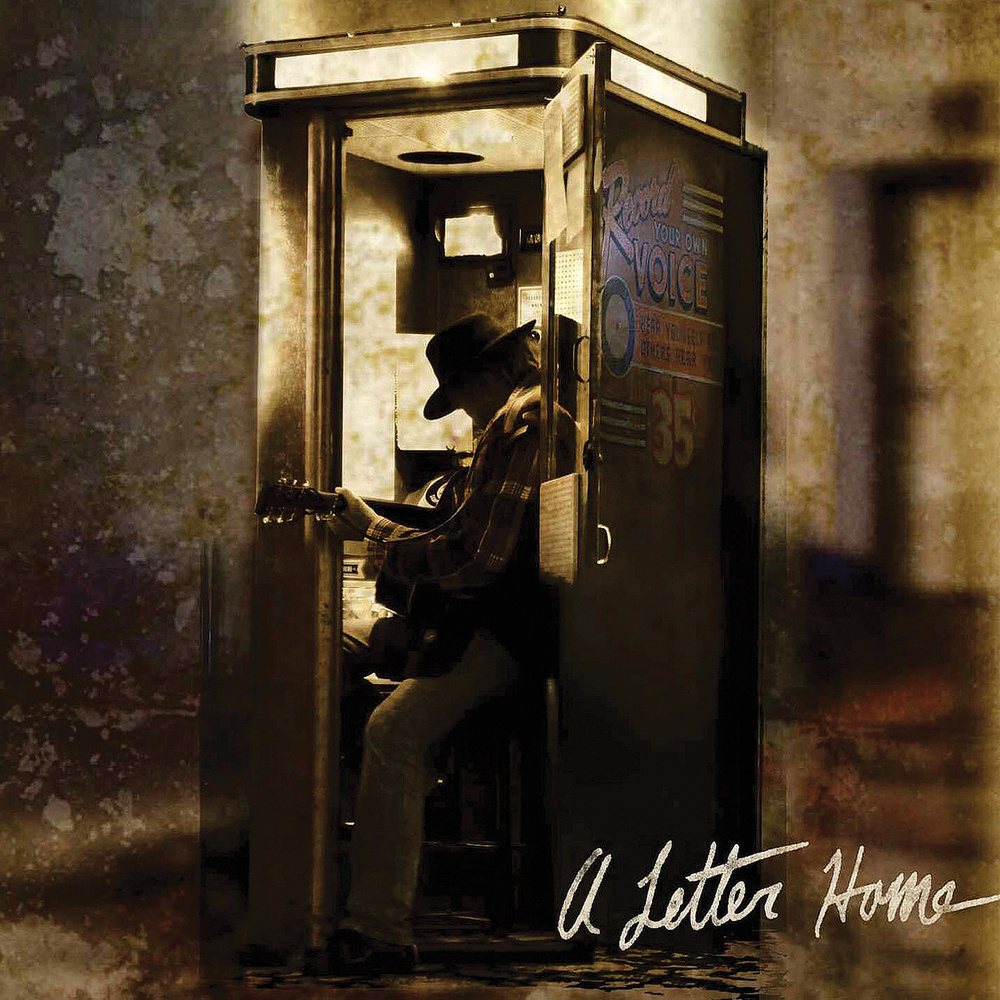
In which Jack White convinces Neil to play a bunch of acoustic covers inside of a coin-operated 1940s-era vinyl recording booth. The result? The 28th best Neil Young album. No, but really, there’s something comforting about lo-fi Neil. I wouldn’t want to actually listen to this on vinyl/great speakers since the recording quality is so poor; rather, this is an album to play at normal-to-quiet volume on your phone in bed at 1am. With this method you can reasonably convince yourself that Neil has inhabited the ghosts of Phil Ochs and Bert Jansch and is singing to you as you lapse into a dream state.
Bro actually recorded an album in this thing.
Alternatively, you can just treat A Letter Home as an album that a legendary 68-year-old guy would approach from the bottom of his heart. What’s especially precious about A Letter Home is that Neil frames the antiquated recording booth as a kind of magical device allowing him to speak to his late mother. This adds a note of earnestness to what would otherwise be an overly gimmicky project. It also explains the Bidenesque rambling (which I love) of the intro track and the beginning of “Reason to Believe”.
As far as song choices go, Ochs’ “Changes” stands out as an early highlight for its theme-appropriate wistfulness. Other tracks appear as memories from his youth (Willie Nelson’s “Crazy”) and/or later influences (Springsteen’s “My Home Town”). Neil approaching “Needle of Death” reveals its melodic influence on his own “Ambulance Blues”. Listening to the album 10 years later, I can’t help but think of Bob Dylan’s mid-2010s run covering pop standards (including the triple-album Triplicate). While Young’s choices are slightly more contemporary, both artists spent time in the mid-2010s sincerely channeling music of a bygone era. Neither project ranks among the respective artists’ greatest work, but they are worthy for their uniqueness and especially their maker’s honest connection to the songs.
Now that Joni Mitchell’s music has been removed from Spotify, you might find yourself yearning for some lovely 70s female folk singer-songwriter type beats. Well, you’re in luck if you’ve never heard of Catherine Howe. The British Howe made a brilliant debut that may have been more well known had the ill-fated record label Reflection not shuttered about a month after their release of the album.
What a Beautiful Place, produced by Bobby Scott, who wrote “A Taste of Honey” (most famously known as the opener to that evergreen bargain-bin classic, Whipped Cream & Other Delights) and produced Roland Kirk’s superb I Talk With the Spirits (1965). Two very different styles, no doubt, but they show the range that Scott was capable of. He plays keys on What a Beautiful Place, adding a delicate (or, as on the title track, jaunty) touch.
If you listen to “Up North”, you will know peace. This is the first real song on the album and a true standout. The London Symphony Orchestra brings a lush and moody accompaniment to “On a Misty Morning”, and they’re also responsible for the “Also sprach Zarathustra”-like prologue, interlude and epilogue to the album that give it a distinct Romantic flavor. “It’s Not Likely” has an epic melody similar to that of Gene Clark’s “Strength of Strings”, always a good thing. “My heart’s in a hundred places,” she sings on “Words Through a Locked Door”, “Part of it’s under a tree / Part of it by a singing brook / And part I kept for me”. Lovely stuff.
According to Howe, the album was recorded in four days and with no overdubs. The brilliant folks at Numero Group saved What a Beautiful Place from obscurity by rereleasing it in 2007. All props to them, and to Howe, who has released music as recently as 2015. We here at GSG Enterprises also stan the sexy bonus track “Let’s Keep It Quiet Now”.
Listen to What a Beautiful Placehere, and you’ll think “What a beautiful place.”
In February 2012 I went to a Thurston Moore solo show at the small New Hope Winery, near Doylestown, where my dad lived at the time. Thurston’s stripped-down, sad-sack divorcee songs were pretty decent, but I was mesmerized by the opener: local artist Weyes Blood*.
Four months later I went to Siren Records on a beautiful summer night to see the Doylestown-based Weyes Blood perform to a room of about 25 people. I spoke to her briefly and purchased a hand-made copy of her only CD at the time, The Outside Room. I was actually so excited to meet her that I forgot to pay her, until she politely pointed this out as I was walking away: “Um, excuse me!” I was a dumb 17 year old… I took an awkward picture of us on my flip-phone that exists… somewhere.
So check this out: The Outside Room rules. I’m not gonna tell you it’s better than Titanic Rising, or that I was ever friends with her, or that I predicted her success (not that it really surprised me either). One thing was really clear both times I saw her live playing, as I recall, solo on a synthesizer to a small room: she was very talented (and still is)! With no fame or following she created a thick atmosphere and hypnotized the audience (or me, at least). The Outside Room rarely left the 2003 Honda Pilot that I constantly drove around in high school.
Listening to it today, it’s clear that from a young age she could write great songs. From the jump, the organ and watery echo of the drums suggest an incense-filled room, and Mering’s melodies carry you through. There’s a kind of fantastical storybook feeling: “In the pale night / When the mood changes you…” “Storms That Breed” is definitely one for the Ouija board crowd. I love it. “Romneydale” is another highlight. The guitar riff is not dissimilar to a country ballad, but among the swirling chimes and vocals it all kind of melds together into a psychedelic folk track. Things get weirder on the penultimate track, more sound-collage-y than song-based. Based, nonetheless. The closer “His Song” absolutely sounds like levitating.
It’s not surprising that she eventually worked with Ariel Pink (on a supremely underrated EP that is maybe my favorite Weyes Blood release): the lo-fi, bedroom pop style is indebted to his early classics. And maybe it’s just that “Candyboy” is titled similarly to “Chocolate Girl” (both killer songs), but this album also reminds me of Animal Collective’s early lo-fi classic Spirit They’re Gone, Spirit They’ve Vanished. I think that fans of that release will quickly appreciate The Outside Room. It’s also worth noting that this album was mastered by Graham Lambkin. I don’t think that Weyes Blood plays these songs anymore (I haven’t seen her in nine years), but it’d be cool to see them adapted to her current style!
*The original article on NJ.com had this to say: “Weyes Blood (first name Natalie) has been around since the mid ’00s and is a conventional folk artist.”
“About the only thing it did for Dylan’s career was enhance its decline.” –Warehouse Eyes
“They originally had a photographer shoot some photos of Dylan and Tom Petty. I heard Dylan took a look and threw them all in the trash.” –Charles Sappington, cover art
“A near-flawless work which remains very misunderstood. I have a website discussing this album if you’re interested…” –RYM user burritobroth
If you get really into Bob Dylan, and I mean really into Dylan, you’re eventually going to wade into the darker, more-forgotten corners of his discography. 2020 quarantine provided the ideal setting for a relative neophyte like myself to make this deep dive. With all the time in the world to sit on the couch last Spring, I watched No Direction Home, Rolling Thunder Revue and The Last Waltz, and on any given day was listening to John Wesley Harding, Blood on the Tracks outtakes, or 1997’s “Highlands”.
I’m not going to deny what’s already well-known: 80s Dylan is the worst Dylan. He had his confounding Christian phase, questionable reggae endeavors, and the much-derided Dylan & the Dead, a compilation of his tour with the Grateful Dead for which “Dylan willfully insisted on some songs from very inferior shows”. But when you really venerate Dylan, there are gems to be found even here.
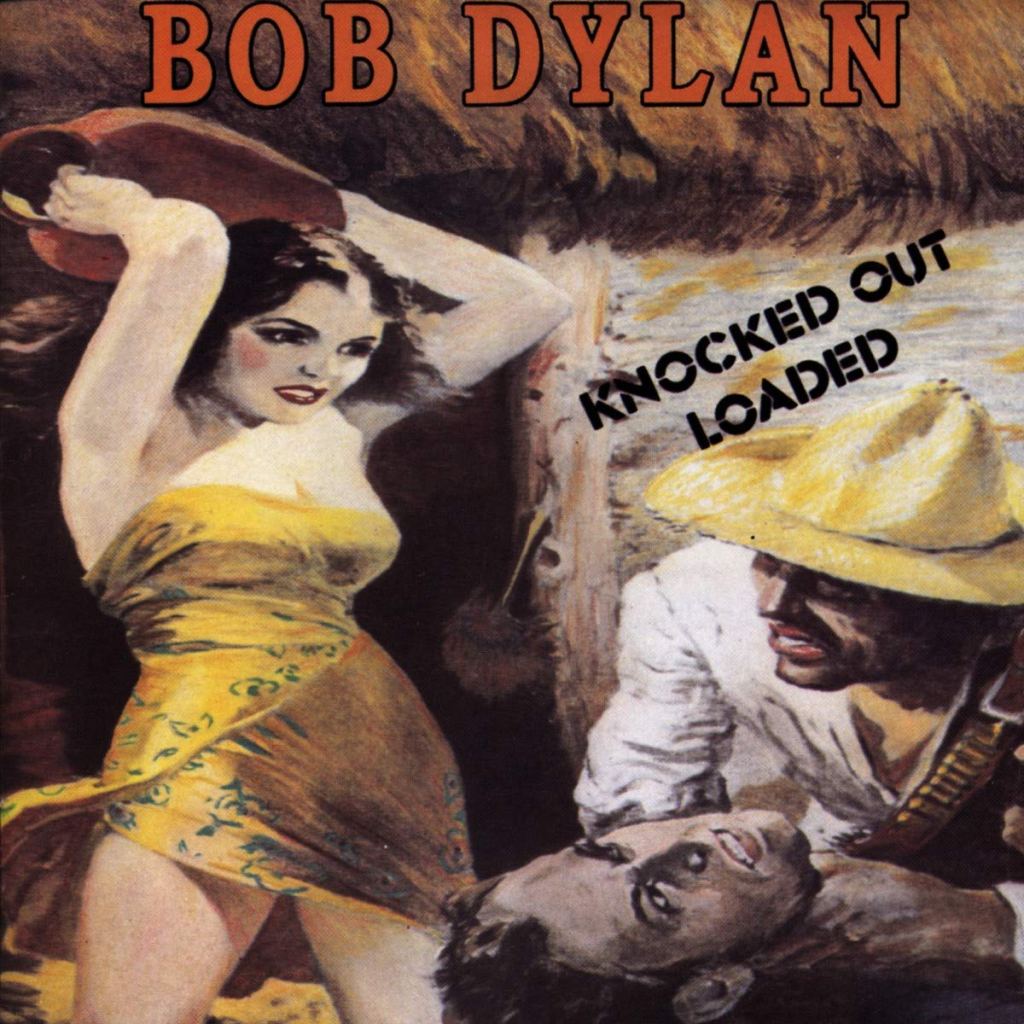
This brings us to Knocked Out Loaded. Essentially a tossed-together collection of rejects from the previous year’s (already mediocre) Empire Burlesque released in time to support his tour with Tom Petty, I doubt this album won Dylan many new fans at the time of its release and its negative reception is no mystery. One problem often cited in reviews of this record is the production. Bob is quoted around this time as saying, “I’m not too experienced at having records sound good. I don’t know how to go about doing that.” You can hear the results especially on “Driftin’ Too Far from Shore”: the drums sound like crap; the synths and background singers do not gel with the rest of the mix at all.
That said, I do like about half the songs on here. And that’s most of the album, considering one of those is the 11-minute fan favorite “Brownsville Girl”, which Dylan noted as one of his most under-appreciated songs in a great 2017 interview. It’s a classic, rambling Dylan epic. One could probably criticize it as overlong, but the melody in the verses is just too damn good.
“Precious Memories” is a return to the reggae-Dylan (or as I like to call it, Robert “Nesta” Zimmerman) of Infidels, but I like it. It’s not hard to find a bridge between this one and the gospel-like classic “I Shall Be Released” (of which reggae legend Keith Hudson recorded a sick cover on one of his best albums). “Got My Mind Made Up” is a decent blues-rock track, and the closer “Under Your Spell” is a successful ballad.
It’s probably a good thing that Knocked Out Loaded only lasts a half hour, but I don’t think it’s as bad as many make it out to be. For my money it’s a step above Empire Burlesque, which Robert Christgau called “his best album since Blood on the Tracks” (had this guy heard Desire??). Ultimately, it’s a record that shows an equal share of the good, the bad, and the (unmistakably, indisputably) Dylan.
Spring is a time for Spring things. Things returning, birth, rebirth, growing, flowers, trees, strings and stings. A small picnic in a big park. A nice time in the great outdoors. Plants and fruit. Passover arrived and we ate eggs (which are the most Spring food). Today is Easter. I walked off a bus down ten blocks east to my apartment where my new cat sat waiting. His eyes widened at “The Lamb Ran Away with the Crown”.
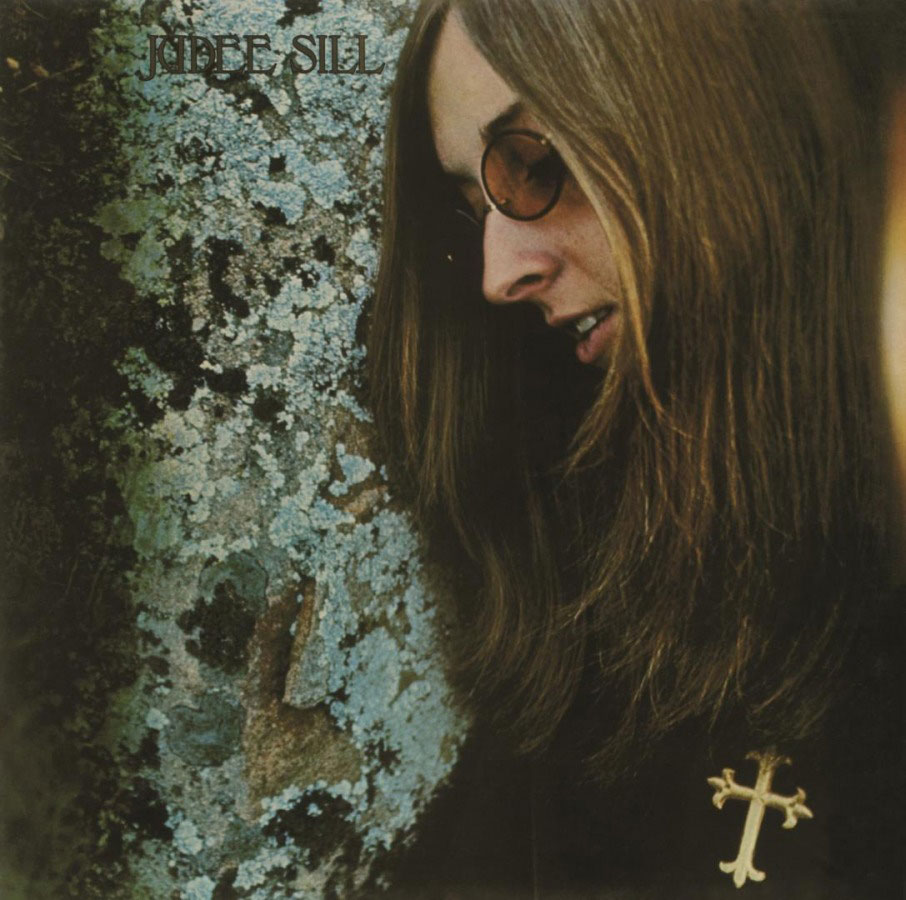
Judee Sill’s self-titled debut is as Californian and psychedelic as the Grateful Dead’s American Beauty (1970). Since I’ve mostly been playing the Dead lately, it’s an easy jump to Sill, whose harmonious hippie-folk is an unbeatable soundtrack for ringing in the springtime. Breezy and bright, her songs can stand up to just about anyone who was doing the folk singer thing in the early 70s – and there were many! Her style is soft but steady, imbued with the kind of intimate Christian philosophy that only a sinner can possess. The characters in her tales turn away from darkness and enter the light. And you can feel the light, the warmth.
It seems Sill was not successful in her time. Though she died at a young age, her music is not forgotten at all. I’m sure she has more fans today than ever before, and you can count myself and maybe yourself in that group of those who have been touched by her celestial voice and cosmic music.
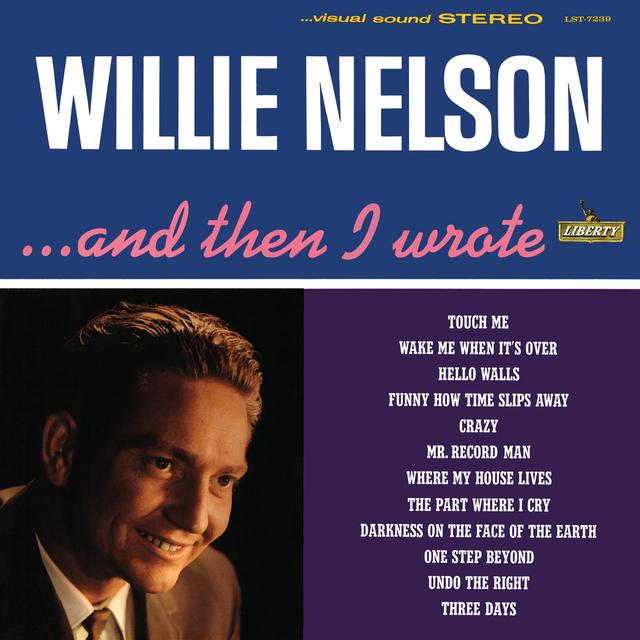
Willie Nelson has been around the block. By the time he finished writing and recording his 1962 debut album …And Then I Wrote, he was almost 30. It boggles the mind today that Nelson had been making music for years without success or interest from labels. With a reflective lens, we can easily say that Nelson’s smoky-voice and knack for writing made him a talent that was overlooked for a long time. But back then, things didn’t work the way they did today. A 2020 New Yorker profile notes that “Before he moved to Nashville, in 1960, he worked as a radio d.j., pumped gas, did heavy stitching at a saddle factory, worked at a grain elevator, and had a brief gig as a laborer for a carpet-removal service.” The young Texan Willie Nelson spent years doing just about everything besides being the country superstar he is today.
According to one of his autobiographies, Nelson wrote many songs while still living in Texas. Among these is “Crazy”, which became a big hit for superstar Patsy Cline, helping to jumpstart Willie’s career. I knew the Cline version before I knew that Nelson wrote it, and there are marked differences in delivery between the two recordings. Patsy Cline’s is melodic and whimsical, while Nelson’s near-spoken-word vocal in his version reveals more personal pain. He actually sounds kind of crazy, or at least hurt and lost. It’s incredible.
…And Then I Wrote‘s title reflects the fact that Nelson was a hit songwriter long before he was a solo star. And as a showcase of songwriting talent, the album is both an unheralded country classic and an excellent precursor to more expansive and well-known Nelson releases like Red-Headed Stranger. These songs are stark expressions of heartbreak. “If you can’t say you love me, say you hate me,” Nelson sings on “Undo the Right”, desperate to feel something. “Three Days” is darkly comic: “Three days I dread to be alive: today, yesterday and tomorrow.” “The Part Where I Cry” and “Where My House Lives” are brilliantly coded expressions of grief. In the former, Nelson describes his life as a movie (or “picture”) and sells it to the listener-turned-viewer (“I was great in the part where she found someone new”). “Where My House Lives” is a heartbreaking closer: “Here’s where my house lives… I never go there / ‘Cause it holds too many memories” Nelson tells the listener, removing himself from the picture of domestic happiness and accepting the role of lonesome cowboy-drifter that would come to define his future.
Musically, …And Then I Wrote is Willie Nelson at his simplest, but don’t let that fool you. This seemingly effortless collection of hits (it’s one of those studio albums that plays like a best-of compilation) was borne from years of toil, failure and heartbreak. It wasn’t a huge success upon its release and still seems relatively unknown today, but thankfully, we know ol’ Willie got his due. If you’ve any interest in hearing how it started, I highly recommend a listen to this album.
Laura Nyro is one of my favorite artists ever, and one of the more underrated singer-songwriters of the fruitful 60s and 70s period when such musicians were found in abundance. More deeply rooted in R&B than the Laurel Canyon artists like Joni Mitchell, yet jazzier and more expansive than the great Carole King, New York’s Nyro imbued pure emotion into her music from a young age.
As a teen, she enjoyed tripping on cough syrup and listening to John Coltrane records – and if you don’t believe me, consult Michele Kort’s biography Soul Picnic. I would venture to assume that some of this mind-altered consumption to jazz influenced her masterpiece New York Tendaberry (1969). But that would come later.
The First Songs, however, are exactly that. A reissue of Nyro’s debut More Than a New Discovery (1967), all 12 of these songs were recorded in 1966 (by an 18/19 year old Nyro!). I highlight this reissue for several reasons: it’s more ubiquitous (it’s the version you’ll find on streaming services), it’s the one I own on LP, and it has a better tracklist.
The songs themselves are fairly straightforward: breezy, classic piano pop and R&B, all penned by the brilliant young Nyro. My favorites are the ballad “He’s a Runner,” with its catchy chorus and Stevie-esque harmonica accompaniment, and the sublime “Buy and Sell”. “Lazy Susan” is perhaps the best indicator of what was to become Nyro’s signature style: a lush song with several unexpected changes in rhythm and structure, as well as an emotive vocal performance (hear her almost gutturally bellow “black-eyed Sue” in the middle of the track).
Not unlike Carole King, Nyro initially made it in the industry via the success of her songs being performed by other artists. The 5th Dimension went number 1 with “Wedding Bell Blues” in 1968, and Blood, Sweat & Tears made it to number 2 on the charts a year later with their cover of “And When I Die”. Here you’ll find the original compositions in all their tender glory. As I mentioned above, Nyro would go on to make even greater music, but The First Songs holds a special place in my collection and my heart.
The great Joni Mitchell has a number of classic albums under her belt, and is perhaps best known for her melancholy masterpiece Blue (1971), surely one of the best singer-songwriter albums in an era chock full of them. But a year later, she wrote and recorded the underrated For the Roses, an intimate and poetic look into the demise of a celebrity couple, decades before the internet made the ups and downs of such relationships so transparent.
Nearly every song on For the Roses concerns the fallout of her romance with James Taylor. As Laurel Canyon mainstays, the fact of Mitchell and Taylor’s relationship in the early 70s is unsurprising. They sang, recorded and loved together, and Mitchell even accompanied Taylor for some of the filming of Two-Lane Blacktop (1971), the seminal road movie in which he starred. But it was not to last. As Taylor’s stardom increased, so did his roving eye, and his infidelities eventually brought an end to their affair. Fed-up and heartsick, Mitchell abandoned LA for a cabin in the wilds of northern British Columbia:
At a certain point, I actually tried to move back to Canada, into the bush. My idea was to follow my advice and get back to nature. I built a house that I thought would function with or without electricity. I was going to grow gardens and everything. Most of For the Roses was written there.
-Mitchell, 1989 interview with Rolling Stone
Living in solitude and wrapped up in books on philosophy and the nature of human existence (Thus Spoke Zarathustra was never far from reach), it makes sense that “Banquet”, the first track on For the Roses, addresses inequality and the search for meaning among people. Using a banquet as a metaphor for what is divvied up among the social classes, she sings “Some get the gravy / Some get the gristle / Some get nothing / Though there’s plenty to spare”. “Some turn to Jesus / And some turn to heroin,” she adds. This is her first dig at Taylor, who picked up the habit early on in their relationship.
“Cold Blue Steel and Sweet Fire” continues this theme, telling an ominous tale of James trying to score smack. “Let the Wind Carry Me”, on the other hand, sounds like freedom. One can sense the openness Joni explored in the wilds of Canada in the song’s jazzy strides into the sublime. It’s similar to what Laura Nyro had accomplished a couple years earlier on tracks like “Upstairs By a Chinese Lamp”. Lyrically, Mitchell analyzes both her mother’s disapproval of her youthful ways, and her own internal desire to raise a child. But this feeling “passes like December / I’m a wild seed again / Let the wind carry me”. Despite internal and external constraints, her own freedom is paramount.
I can’t quote every line that touches upon her relationship with Taylor, but it is remarkable to hear how stark she is about it. “See You Sometime” is heartbreaking: “Why do you have to be so jive? / OK, hang up the phone / It hurts / But something survives / Though it’s undermined / I’d still like to see you sometime.” The pain of a broken love is sustained in the sound. “Blonde in the Bleachers” examines Taylor’s inability to stay monogamous from his perspective, while “Woman of Heart and Mind” is biting:
You come to me like a little boy And I give you my scorn and my praise You think I’m like your mother Or another lover or your sister Or the queen of your dreams Or just another silly girl When love makes a fool of me After the rush when you come back down You’re always disappointed Nothing seems to keep you high Drive your bargains Push your papers Win your medals Fuck your strangers Don’t it leave you on the empty side?
According to Mark Bego’s biography Joni Mitchell, Rolling Stone took a deep dig at her in their year-end 1972 issue, bestowing her the “Old Lady of the Year Award”. Bego writes, “It included a chart intimating that she had slept with half of the music business. Mitchell was represented as a pair of lips pursed in a kiss. Lines were drawn to the names of Graham Nash (identified as a broken heart), David Crosby (broken heart), and gay David Geffen (erroneously identified with kisses). Also on the list were supposed lovers like her band member Russ Kunkel and her buddy Stephen Stills.”
The double-standard in rock, where men became legendary for their exploits with groupies, and women were chastised for sleeping with multiple people, was extremely apparent. The sexist distinction hurt Mitchell and severed her ties to Rolling Stone for many years. To me, it also shows how strong she was in making an album about her side of the story in a time where this was the press’s response. Almost 40 years later, I can only thank her for doing so. Transmuting all of her pain and heartbreak into a cathartic and profound collection of songs, Mitchell gave us an all-timer in For the Roses.
In a 1987 interview for Musician, speaking on her retreat from fame, the interviewer asks, “Could you find a place in yourself where you could sort things out?” Joni replies:
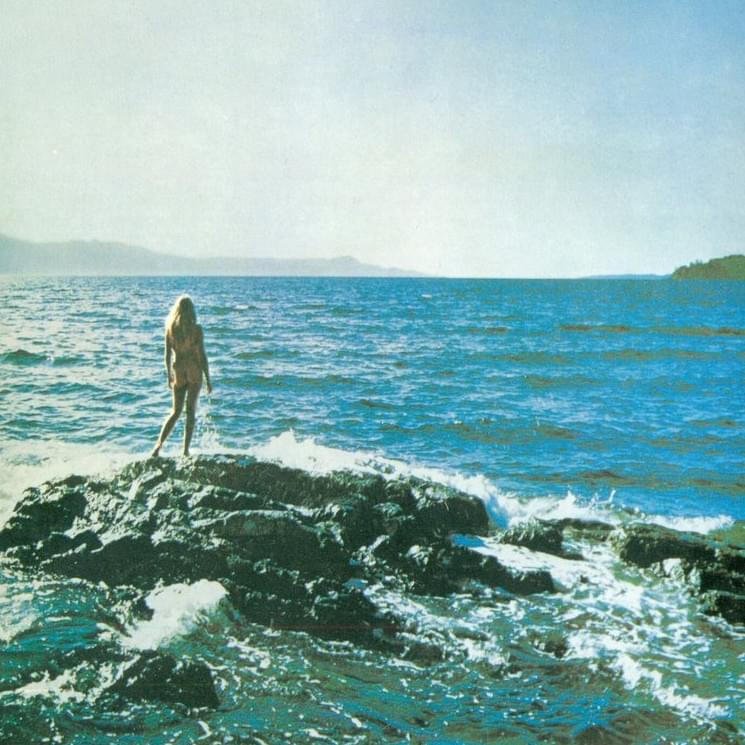
One day about a year after I started my retreat in Canada I went out swimming. I jumped off a rock and into this dark emerald green water with yellow kelp in it and purple starfish at the bottom. It was very beautiful, and as I broke up to the surface of the water, which was black and reflective, I started laughing. Joy had suddenly come over me, you know? And I remember that as a turning point. First feeling like a loony because I was out there laughing all by myself in this beautiful environment. And then, right on top of that was the realization that whatever my social burdens were, my inner happiness was still intact.





 good singing gum