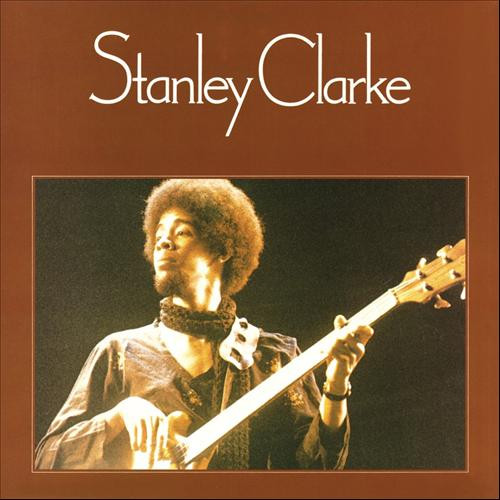
Album of the Week: Stanley Clarke (1974)

I’ve written about a few jazz albums, but I’m not sure if we’ve covered one with Tony Williams, my GOAT jazz drummer (big ups to Elvin Jones too). Williams was in Miles Davis’s second great quintet, which released a few of my all-time favorites. And on this, bassist Stanley Clarke’s eponymous second (or debut if you don’t count Children of Forever) album, he really comes out swinging.

The first 3 tracks here act as something of a unified suite, with a funky rocking intro and Clarke’s calm vocal/piano turn on “Yesterday Princess”, before the band gets hella jammy on “Lopsy Lu”. I could’ve sworn that was Chick Corea (Clarke’s Return to Forever bandmate) on keys wigging out based on the similarity to Corea’s playing on my one RTF record Where Have I Known You Before, but nope, it’s Jan Hammer. Legendary mf that he is.

“Power” begins with a Williams drum solo, and then the band builds up a groove for Bill Connors (also RTF) to really rip on guitar (this would make a great theme song to the 50 Cent-produced Starz show, btw). Clarke’s bass is very slap-funky, the type of shit that nerdy music guys like and many others understandably despise. It’s sick.

The second side begins with this band’s own sort-of “Spanish Jam”, “Spanish Phases for Strings & Bass”. As the title suggests, there are no drums, so you might consider this one of the album’s weaker cuts. But Clarke’s thumb-blistering effort on the Spanish theme is endearing. Then the “Life Suite” commences, with highlights including Williams and Clarke’s driving rhythm on Pt. 2, featuring climactic horns. Pt. 4 allows Connors to shine once more on guitar, doing the kind of jammy shredding that anticipates Trey Anastasio. Overall, a great group effort from the man Stan.

Listen to Stanley Clarke here.
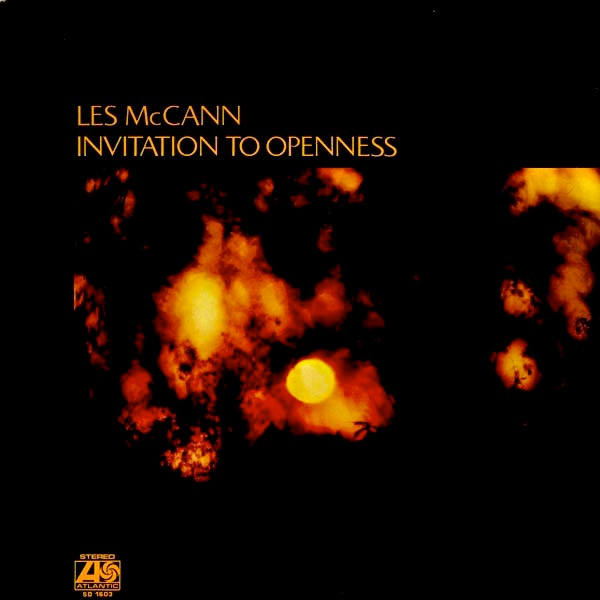
Album of the Week: Les McCann’s Invitation to Openness (1972)

If Miles Davis opened the floodgates of fusion with In a Silent Way (1969), we can regard the ensuing years of the early 70s as jazz-fusion’s most fruitful era, with many outstanding records from musicians in Miles’ cadre and otherwise.

By 1971, Les McCann had been recording for just over 10 years as a jazz and soul pianist, but his largest achievement came in 1969 with Swiss Movement, a defining soul jazz performance with saxophonist Eddie Harris recorded live at the Montreux Jazz Festival in Switzerland. On Invitation to Openness, a 3-song album with a range of talent involved, he sets the mood with a dreamy Rhodes-like tone to open the side-long “The Lovers”.

I’ve written before about Yusef Lateef, who mastered many wind and horn instruments, including relatively esoteric Asian instruments. Lateef takes center stage about 5 minutes into Invitation to Openness as a stone groove complete with psychedelic electric guitar allows him to take over. It’s ecstatic, and the overall sound is not dissimilar to Ray Manzarek’s extended solo on “Light My Fire”. “The Lovers” isn’t as interested in restraint or trailblazing ingenuity as the work of Miles with Zawinul, but then again, what is?

Percussion takes on an essential role in fusion, and the lineup here is suitably up to the task. We have Donald Dean, who played the kit with McCann on the aforementioned Swiss Movement (1969), as well as two renaissance men in Alphonse Mouzon (Weather Report) and Bernard Purdie, who played with everyone from Nina Simone to Steely Dan. The second half of “The Lovers” in particular allows these men to shine in all their polyrhythmic glory.

“Beaux J. Poo Poo” (how’s that for a song title?) is similarly groovy and allows McCann to flex his muscle on the keys a bit more. Lateef’s flute sounds wonderful here, but only appears for a fraction of the track.

The closer “Poo Pye McGoochie (and His Friends)” is the standout song and my favorite thing Les McCann has ever done. Its recurring theme is played on a futuristic Moog synth that sounds like being zapped through space, but the tone isn’t overly cartoonish, it’s just super-charged and incredibly fun. You can practically hear the smile radiate from McCann’s face as he plays the melody, like a secret weapon he’d been saving for the album’s finale. The tension of McCann’s resonant keys in the drum-less intro and ambient middle section is delightful. I love driving to this song.

As of this writing, Les McCann is 86 years old and has performed live as recently as in the 2010s.

Listen to Invitation to Openness here.