Album of the Week: Air’s Air Song (1975)

Henry Threadgill has an immense and under-appreciated discography, with a particularly magic run of recordings in the 90s. Digging back into an earlier era, though, reveals gems that may be the best entry point for a jazz fan unaccustomed to his distinct style. As a founding member of the trio Air, originally convening in 1972 and then performing and touring as Reflections (before changing that name), he focused on playing as part of a collective. Still, Threadgill wrote the music for the trio’s first record, Air Song, produced and recorded by the Japanese label Whynot.

I’ve lost count of how many times I’ve listened to this album, but I still find new things in it. In a way, Threadgill’s music defies categorization (let alone written commentary), circling around post-bop, military march, free jazz, ragtime and other modes without being pigeonholed into a style. Air Song begins in a fairly straightforward manner, but Fred Hopkins’ nearly 3-minute bass solo on opener “Untitled Song” pushes the track toward the sublime. This may be Threadgill’s first great recorded opus. “Great Body of the Riddle” then explores a much looser and more avant-garde rhythm, this time with a Steve McCall drum solo that clears up some space for Threadgill’s sax to rip it apart.

On the B-side are “Dance of the Beast” and “Air Song”. “Dance of the Beast” comes out swinging with the most intense sax playing on the album, but makes for a great boost at work. Threadgill’s flute opens “Air Song”, deftly navigating hollow space. Hopkins’ bowed bass then adds a sweetness to the sonic dimension. Bells are eventually added to the percussive mix before things round out, resulting in the album’s quietest and, for lack of a better word, airy track. Air would continue touring and recording for another decade or so before disbanding. More information can be found in Threadgill’s wonderful memoir “Easily Slip Into Another World”.

Listen to Air Song here.
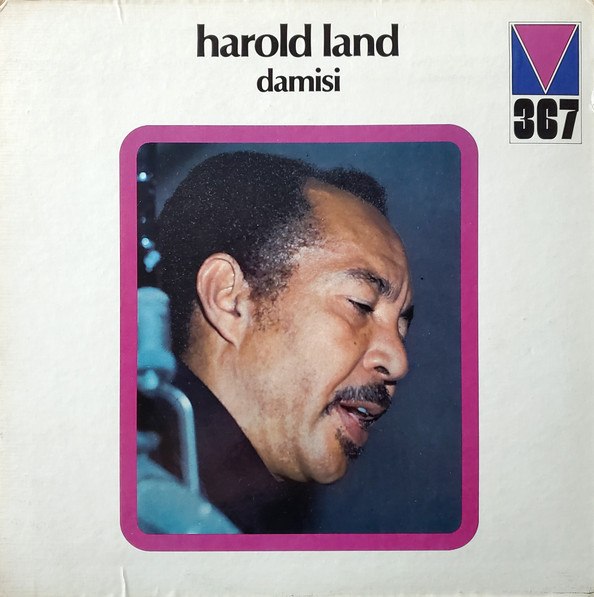
Album of the Week: Harold Land’s Damisi (1972)

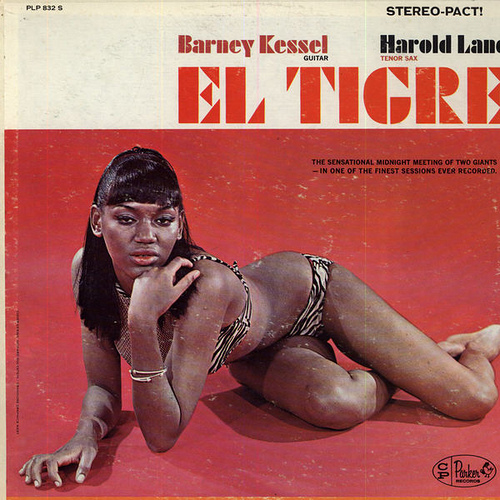
Every day or two at work I close myself in a giant freezer and put on some music while I move boxes around. I like to play jazz when I do this, because it helps me feel active and happy. One album that’s been really doing it for me in this situation is Harold Land’s Damisi. Land was a stalwart sax player who played on numerous classics such as Clifford Brown & Max Roach (1954), and later many Bobby Hutcherson records including personal favorites Now! (1969) and San Francisco (1970). Take a look at one of Land’s first album covers, El Tigre (1958), which is an almost unbelievably 50s-jazz-LP cover (“STEREO-PACT!”):

Needless to say, the guy was doing his thing for years, and around the time of his involvement with Hutcherson’s band in the early 70s he began recording LPs as a bandleader for Mainstream Records. I’m currently interested in Mainstream’s 300-series records, which have a distinct pattern in their album covers. I call this the Shapes Series, and you can view the covers on jazzlists. Scroll down to 350+ and note the similarities; Damisi is #367.

Damisi features a fantastic lineup including bassist Buster Williams of Herbie Hancock’s Mwandishi band (responsible for some of my all-time favorite albums). Oscar Brashear plays trumpet and flugelhorn and William Henderson plays piano – both recorded alongside Land for Bobby Hutcherson’s Head On (1971). Rounding out the quintet is drummer Ndugu, who also played on Mwandishi as well as two of my favorite George Duke albums. So this is a tight group!

Damisi is a deep session that verges on fusion with some chunky tracks (most stretch beyond the six-minute mark). Most songs have a groovy theme with both horns playing the melody before Land or another band member solos. “Pakistan” stands out with Land’s fantastic oboe playing, a relative rarity in the saxophonist’s discography. Ndugu’s composition “Chocolate Mess” (all other tracks are credited to Land) captures a magic that Miles Davis’s second great quintet had discovered a few years earlier on Miles in the Sky. The electric piano work, soaring bass and frenetic drumming lay the rhythm for excellent solos from Land and Brashear in that order. A stellar track, it’s one of two on Damisi‘s original second side, along with the title track. “Damisi” begins with fanfare before a mellow, multi-part theme begins. Then Land gives perhaps his best solo of the album, really blowing. A piano solo toward the end of the track suggests a delicate resolve to this album.

The reissued version of Damisi released in 1991 is the one on streaming services. Though its new cover doesn’t fit in with the Shapes Series, two bonus tracks from other recording dates are added, and both feature Bobby Hutcherson! “Dark Mood” is from the A New Shade of Blue sessions and has Billy Hart (Mwandishi, On the Corner) ripping on drums. “Up and Down” is from Land’s previous Mainstream release, Choma (Burn), which includes two drummers as well as Harold Land’s son Jr. on piano. At nearly 11 minutes and with extra percussive elements, this track feels like a lot to tack-on to the original Damisi, but I suppose CD buyers in the 90s could claim their moneys-worth.

Listen to Damisi here.

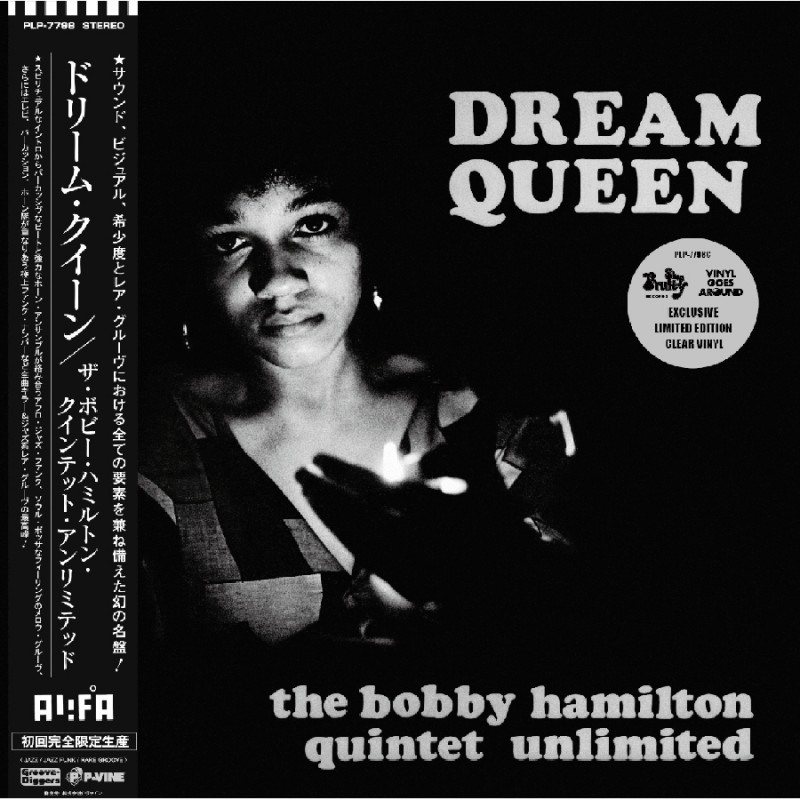
Album of the Week: The Bobby Hamilton Quintet Unlimited’s Dream Queen (1972)

This gem is from a Syracuse-based group who played shows with spiritual jazz luminaries like Alice Coltrane and Rahsaan Roland Kirk. Prior to this recording, Bobby Hamilton (not to be confused with jazz vibraphonist Bobby Hutcherson) played drums on several classic Nina Simone albums such as Pastel Blues and Wild Is the Wind. He then recorded the soul-jazz song “Ecology” with his group Anubis.

“Ecology” is a simple jam with funky guitars and vocal harmonies. But his first and only full-length recording would be Dream Queen, a jazzier, deeper undertaking. Despite the name Bobby Hamilton Quintet, seven musicians are credited on Dream Queen, including Mike Gipson on Musser electric vibes (amplified vibraphone) and Abram Brown on tenor sax. No guitars are present, but Pete Manning plays a funky bass.

The first two tracks of Dream Queen are fairly straightforward, with opener “Pearl (Among the Swine)” presenting a jazz-funk rave-up and “Priscilla” highlighting Hamilton’s mellow electric piano tone. “In the Mouth of the Beast” features a spoken rap over disorienting percussion, recalling Gary Bartz’s Harlem Bush Music – Uhuru album from 1971. After a couple of minutes the track settles into a great drum solo with multiple percussionists before unfolding into a full-out jam. The last 3-4 minutes in particular highlight the strength and intensity of the players (killer congas!).

The second side begins with the funky “Roll Your Own” before the title track, which is by far my favorite part of the album. “Dream Queen” is a ghostly, almost drumless meditation with shimmering vibraphone and a floating vocal melody. The sound is pure magic. When the horns enter, they just complete the vibe. I would recommend this track in particular to any fan of jazz-fusion or meditative music. With this monumental track, plus other gems and a striking cover, Dream Queen is something of an overlooked classic.

Listen to Dream Queen here.

Album of the Week – Michael Naura’s Vanessa (1975)

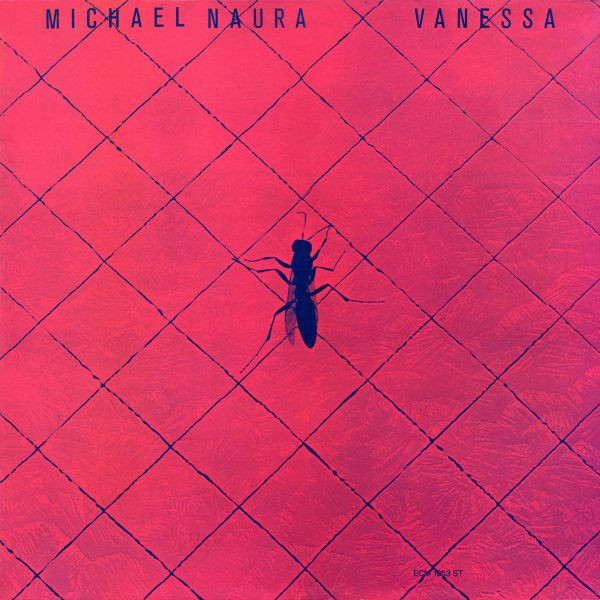
Recently I discovered Michael Naura Quartet’s Call (1973) and fell in love. Born in Lithuania, the pianist Naura moved to Germany and released music on the German label MPS. Call featured longtime bandmates Wolfgang Schlüter on vibraphone and Joe Nay on drums, as well as upright bass extraordinaire Eberhard Weber. For Vanessa, his ECM debut, Naura’s band is augmented to a quintet with a bassoonist in Klaus Thunemann.

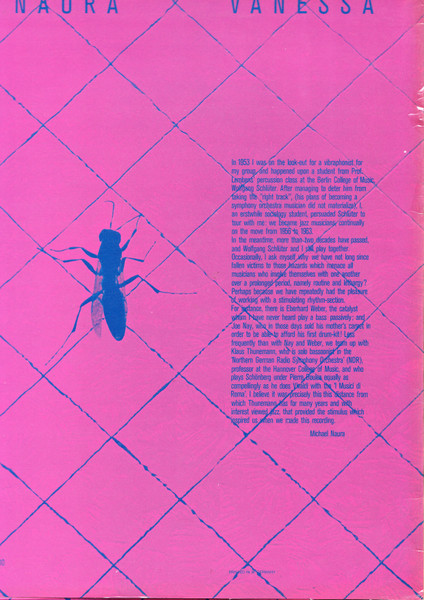
As Naura notes on the album’s back cover, he had by 1975 been playing jazz with Wolfgang Schlüter for two decades, and listening to several of their albums it is hard to understate the presence of Schlüter’s vibes, which seem to highlight Naura’s recordings more than even Naura’s own instrument. Still, Naura’s writing, presence as bandleader, and ability to establish the mood of his tracks is palpable. It is the element of this core duo, with Naura’s calm rhythms and Schlüter’s colorful leads, that makes Naura’s albums so compelling. Weber, the biggest name in the group, and Joe Nay, who according to Naura’s liner notes “[once] sold his mother’s carpet in order to be able to afford his first drum-kit,” fill out the rhythm section.

All that said, the first thing you really notice on Vanessa is a bassoon. Klaus Thunemann was a classical soloist and a Vivaldi specialist who really knew his way around the woodwind (and still does, I’m sure). His bassoon vamp over a murky groove on “Salvatore” makes the song a level-up from the band’s (bassoon-less) sound on Call. Around 8 minutes in, the drums drop out, and then Thunemann plays notes that sound like feedback. It’s amazing! After this nearly 12-minute opener, Weber, himself an ECM mainstay, spends most of the brief “Hills” just absolutely getting it in. “Vanessa” itself is a beautiful track – consisting mostly of just piano and vibraphone, it’s a reverie. Naura and Schlüter’s dynamic partnership is especially present on “Listen to Me”, where they really push each other. Thunemann’s track, the closer “Black Pigeon”, finds him rounding out the last 2 minutes of the record with eye-popping skill.

I believe this is the only recording of Naura or Schlüter with Thunemann, which is a shame, because he added another dimension to Naura’s band that makes Vanessa really superb. You can find some of Thunemann’s classical work here, and I also recommend the Naura Quartet’s spacier outing Rainbow Runner (1972).

Listen to Vanessa here.

Album of the Week: John Coltrane’s My Favorite Things: Coltrane at Newport (2007)

My latest musical obsession is John Coltrane playing “My Favorite Things”, something he did fairly often from the recording of the My Favorite Things album in 1960 up until his death in 1967. Coltrane breathed new life into the Sound of Music classic every time he touched it. This Public Radio Broadcast from 2010 outlines the history of Coltrane and “My Favorite Things” – in 1960 someone in a Lower East Side club gave Coltrane sheet music for the song (The Sound of Music was a hit Broadway play at the time and the movie version would not appear until 1965), and he brought it to his band. There are at least 18 commercially released versions of Coltrane playing the song, from the roughly 3-minute single to the mammoth 34+ minute recording on The Olatunji Concert: The Last Live Recording.

My *ahem* favorite version so far comes from the Newport Jazz Festival in 1963, one of two Newport sets (the other from ’65) featured on this album. A compilation of sorts, this particular disc features tracks that were largely previously released. Whether that picture of Coltrane ripping soprano sax on the cover is from one of these dates or not, it gives you a pretty good idea of what’s inside. The 1963 set eases in with Eckstine’s “I Want to Talk About You”. Expressive and warm, McCoy Tyner plays the perfect piano accompaniment to Coltrane, who solos with great confidence in the back half of the track. Then “My Favorite Things” clocks in around 17 minutes. Coltrane just punches the shit out of this thing. He’s fluttering, carrying the melody to new heights and pulverizing the theme. Around 16 minutes the exploration resolves into the theme in a turn that’s as brilliant as that of any jam band (I’m thinking of 2 in particular) might play decades later.

In some ways the gem of this disc is the inspired 23-minute “Impressions” following the title track, having only been previously released at a truncated 15 minutes. This track was good enough to warrant its own Coltrane album while he lived, and this take features a riled-up Roy Haynes on drums and cooks hard enough to earn its runtime.

You can tell, at the end of the 1965 take on “My Favorite Things”, that the crowd is loving it and has to be reminded of curfew by the announcer, who notes that “it’s the witching hour and time for all of you to go home” (maybe the band was cutoff?). I don’t think this version is quite as great, though it may at times stretch out a little further. To me it just doesn’t match the strength and aplomb of the 1963 version. Still, it’s one of the Greats doing what he does best, and tracking down Coltrane’s takes on this song is proving to be a rewarding past-time.

Listen to My Favorite Things here.

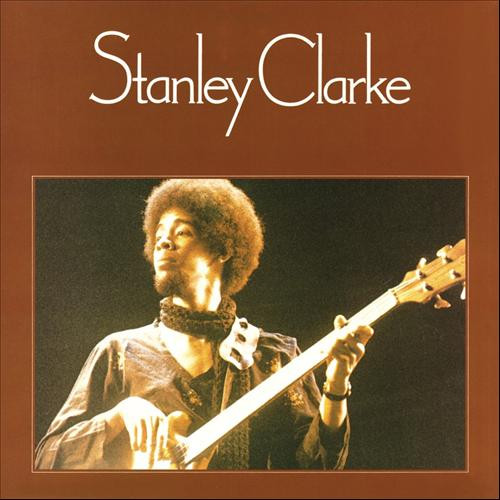
Album of the Week: Stanley Clarke (1974)

I’ve written about a few jazz albums, but I’m not sure if we’ve covered one with Tony Williams, my GOAT jazz drummer (big ups to Elvin Jones too). Williams was in Miles Davis’s second great quintet, which released a few of my all-time favorites. And on this, bassist Stanley Clarke’s eponymous second (or debut if you don’t count Children of Forever) album, he really comes out swinging.

The first 3 tracks here act as something of a unified suite, with a funky rocking intro and Clarke’s calm vocal/piano turn on “Yesterday Princess”, before the band gets hella jammy on “Lopsy Lu”. I could’ve sworn that was Chick Corea (Clarke’s Return to Forever bandmate) on keys wigging out based on the similarity to Corea’s playing on my one RTF record Where Have I Known You Before, but nope, it’s Jan Hammer. Legendary mf that he is.

“Power” begins with a Williams drum solo, and then the band builds up a groove for Bill Connors (also RTF) to really rip on guitar (this would make a great theme song to the 50 Cent-produced Starz show, btw). Clarke’s bass is very slap-funky, the type of shit that nerdy music guys like and many others understandably despise. It’s sick.

The second side begins with this band’s own sort-of “Spanish Jam”, “Spanish Phases for Strings & Bass”. As the title suggests, there are no drums, so you might consider this one of the album’s weaker cuts. But Clarke’s thumb-blistering effort on the Spanish theme is endearing. Then the “Life Suite” commences, with highlights including Williams and Clarke’s driving rhythm on Pt. 2, featuring climactic horns. Pt. 4 allows Connors to shine once more on guitar, doing the kind of jammy shredding that anticipates Trey Anastasio. Overall, a great group effort from the man Stan.

Listen to Stanley Clarke here.

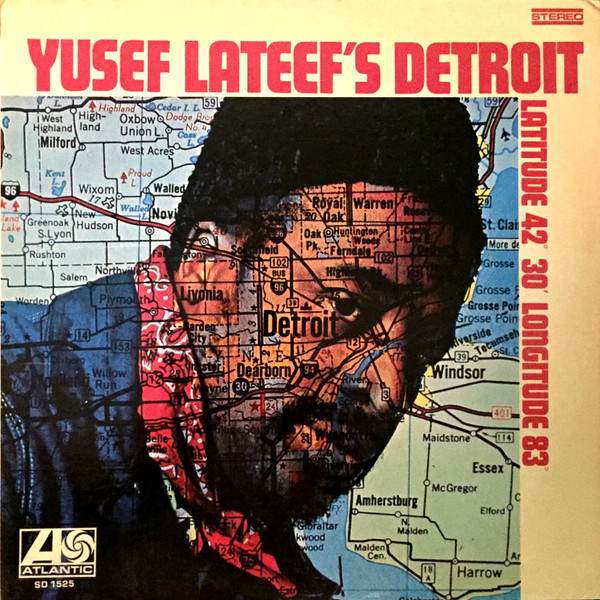
Album of the Week: Yusef Lateef’s Detroit (1969)

Detroit. Automobiles. G.M., C.M., A.M. Mark of Excellence! Factories, foundries, gases, grease, grime, smoke, black out, shake out, lay pipe, cement, mixer, mixing. Metal. Black sand. Sweet sweat. Dig ditch, fill hole, carry hod. Step back! Carry hod.

I previously covered Yusef Lateef’s popular Eastern Sounds from 1962, but this week’s entry is an altogether different beast, an album that is both a propulsive funk travelouge and an inward-looking journal. Lateef moved to Detroit in 1925 when he was 4 or 5 years old, and also recorded there in the late 50s. In 1969 he recorded Detroit while living in New York City, revisiting the tableau of sights and sounds experienced in his youth.

The opening “Bishop School” is a rhythmic blast that reflects the recording’s stellar lineup including Bernard Purdie and Ray Barretto. You may recognize “Eastern Market” from its sample on MF DOOM’s “Who You Think I Am”. Late in the track Lateef can be heard portraying a market vendor: “Sweet potaytas! Getcha greens!” he yells. “Russel and Eliot” has a slower, kind of grinding funk feel – just awesome. “Raymond Winchester”, which was released as a b-side to the “Bishop School” single features almost terrifying playing from Lateef – his instrument sounds like a howling baby.

The album closes with its only non-original, a take on “That Lucky Old Sun” (which Jerry Garcia Band would later cover) that was also recorded 2 years before the rest of the album’s sessions. A notable change in tempo, it’s a supremely relaxed cut on an otherwise peppy release, and a great example of Lateef’s versatility.

Listen to Detroit here.

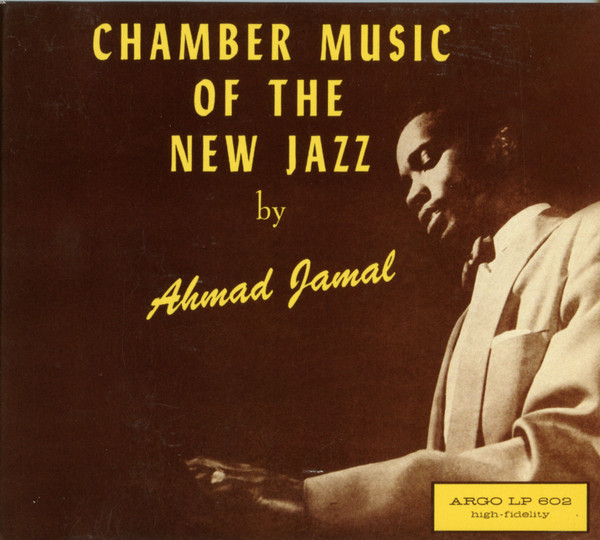
Album of the Week: Ahmad Jamal’s Chamber Music of the New Jazz (1956)

Ahmad Jamal had a long and lucrative career in jazz piano, and it started off with the smooth Chamber Music of the New Jazz. Recorded in 1955 and originally released as Ahmad Jamal Plays, the album was re-released a year later (with every successive reissue known as Chamber Music). Jamal would score a hit in 1958 with his live trio album At the Pershing, recorded with bassist Israel Crosby and drummer Vernel Fournier. Chamber Music is also a trio album but without drums, instead featuring guitarist Ray Crawford (a Pittsburgh native like Jamal).

Crawford’s guitar is notable, as he plays around with little pops on “All of You” and “I Don’t Wanna Be Kissed”. Crawford’s own composition “Jeff” has always been my favorite track here, and it’s opening call-and-response between guitar and piano sticks in my head. The rest of the album is largely standards, with Jamal’s opener “New Rhumba” the exception. That track is mellow, whereas Jamal and company play with a lively flair on “I Get a Kick Out of You” (both modes are great).

The lack of drums makes for a nice late-night listen and really allows Jamal’s piano playing to stand out in all its beauty. Short and sweet, Chamber Music of the New Jazz is an easy record that nevertheless captures a magic exercise in jazz collaboration.

Listen to Chamber Music of the New Jazz here.

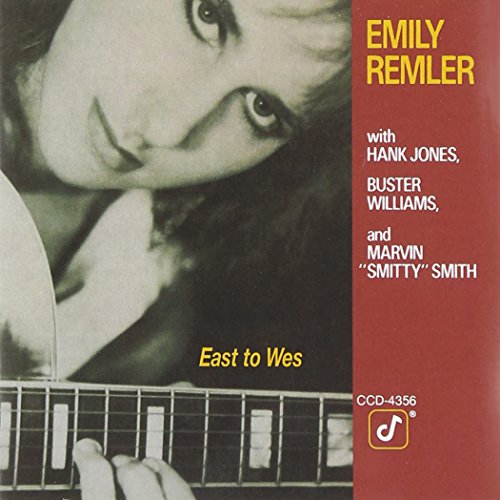
Album of the Week: Emily Remler’s East to Wes (1988)

Welcome to 1988, the CD era! George Michael and Rick Astley ruled the charts, and Kenny G’s Silhouette would go 4x Platinum. Miles Davis was recording the glossy Amandla with the help of writer and bassist Marcus Miller, who had just written and produced the hit “Da Butt” for D.C. go-go group Experience Unlimited (chorus: “she was doin’ the butt”). Wayne Shorter’s Joy Ryder, a synth-filled foray into adult contemporary, was described as “grossly overproduced middle-brow funk”. Jazz wasn’t what it used to be.

Emily Remler, then, might as well have been living in the 50s. The 30 year old Berklee alum was devoted to bebop and swing, her greatest idol the jazz guitar giant Wes Montgomery. “I was so obsessed with Wes Montgomery that I had a picture of him on my wall,” Remler shared in a 1986 interview. “And for two years, I learned a new Wes song every day.” Hence the title of her sixth album East to Wes.

Though the album itself features no Montgomery compositions, East to Wes is largely composed of Remler’s take on other songs. “Daahoud”, from the classic Clifford Brown and Max Roach, starts things off with pep. Marvin Smith on drums provides a hopping rhythm allowing Remler to take off. Hank Jones, who played piano with Cannonball Adderley among many others, works as a melodic counterpoint.

“Snowfall” aptly begins gently and rhythmically before Remler takes things up a notch on acoustic guitar. You can watch her performing the song with her eyes closed, deeply focused. Smith’s drumming accentuates the speed of Remler’s playing while Buster Williams provides the perfect backbone. Remler’s original composition “Ballad From a Music Box”, by contrast, is 7 minutes of mellow, an easy highlight for me. Later in the album, the standard “Softly, As in a Morning Sunrise” gets the centerpiece treatment as the longest track. Remler draws it out nice and easy, waiting at least 4 minutes to really let it rip with the fingering before Hank Jones takes over. Williams even gets a tight solo in.

Emily Remler died just 2 years after the release of East to Wes, a tragic loss for a young musician who was steadily improving. Listening to the album today, it feels like neither a product of the 80s or a bebop-era time capsule, but an ageless testament to Remler’s skill.

Listen to East to Wes here.

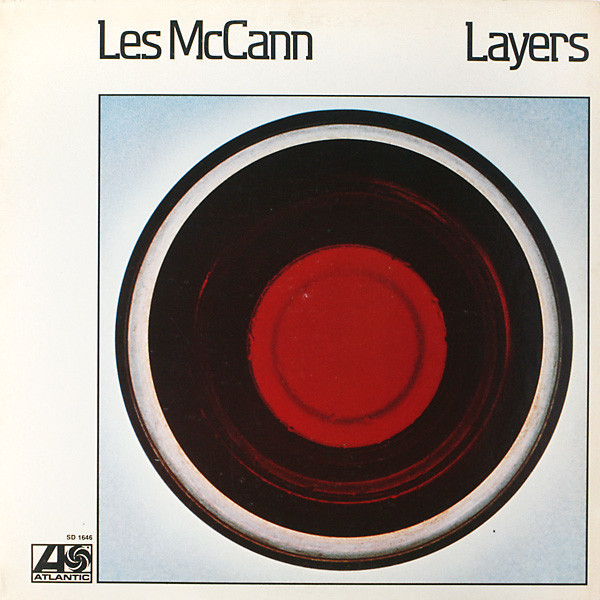
Album of the Week: Les McCann’s Layers (1973)

Another winner from Les McCann! In March, I covered Invitation to Openness, a standout fusion record. Where Invitation was a showcase of swirling, dreamy fusion with extended jams, Layers is often more upbeat. Recorded a year after Invitation, Layers is nothing short of a percussive triumph. Buck Clarke, Ralph McDonald, and Donald Dean join once again on percussion, this time with the addition of Jimmy Rowser on electric bass, bass violin and percussion. The beat on opener “Sometimes I Cry” is so legendary as to provide the backing track for Massive Attack’s “Teardrop”.

“Sometimes I Cry” is a good indicator of the unique sound you get on Layers: McCann’s ARP synth takes center stage in what is essentially an extended vamp (with glorious results). Along with his Clavinet and electric piano, McCann carries the melodies with his synth sounds, still a new frontier back in the early 70s. Anyone who’s heard Marvin Gaye’s I Want You and knows “After the Dance (Instrumental)” will recognize that ARP sound, bright as the midday sky and free as a bird (“Let’s Play” is especially portentous of “After the Dance”).

Layers really kicks up the groove on “Dunbar High School Marching Band” (in which McCann imitates a marching band’s horn section with synths!) and “Harlem Buck Dance Strut”. But I don’t think Layers can be categorized as straight jazz-funk. Its uniqueness lies in tracks like “Soaring”, again evocative of flight, the multi-layered synth/clav sounds creating an atmosphere that is both freeing and a bit melancholy. Layers is a versatile record that is relaxing enough for a Sunday morning and deep enough to avoid any sort of dated cheese.

Listen to Layers here.