Album of the Week: Jerry Garcia Band’s GarciaLive Volume Seven: November 8th 1976, Sophie’s, Palo Alto (2016)

A converted supermarket that still bore the signs of its former occupation, Sophie’s was [in 1976] a mainstay of the Garcia Band, a comfortable, funky venue that welcomed the band four times that year… And for Garcia, it was also familiar turf, a return to the town where he had first made his commitment to music.

-Nicholas G. Meriwether, liner notes

Today marks two years since I moved to Northern California, and what better way to celebrate than with a Jerry show? This recording of the Jerry Garcia Band in 1976 in Palo Alto was largely forgotten until the tapes were found in Donna Jean Godchaux’s storage in the 2010s. This lineup of JGB featured Donna on vocals, Keith Godchaux on piano, John Kahn on bass and Ron Tutt on drums. A familiar and winning quintet, they strike a nice contrast to later JGB lineups, which generally featured non-GD related keyboardists.

In 2021 I covered the slowness of ’76 Dead for my post on their 6/18 and 6/21 shows, and that rings true for most of this set as well. You can hear the “Row Jimmy” reggae tempo in “Knockin’ on Heaven’s Door” early on. The Godchaux’s presence is felt strongly (as it was with their tenure in the Grateful Dead) – Keith complements the expansive Garcia workouts on his piano and Donna adds another dimension to the vocals. She even takes lead, as on the highlight “Stir It Up”, a Marley classic that she does proud service to.

“Who Was John?” is a super bluesy turn from Jerry, and a jammer’s delight at over fourteen minutes. Speaking of which, this “Don’t Let Go” is a twenty-two minute beast. Jerry is given that floor around four minutes in, and what follows is the most deliberate, unhurried and collective improvisation of the night. Kahn has a bass solo around fourteen minutes that Jerry and Keith gently push up against before the whole group comes together at full volume. Rounding things out is a smoking “Mighty High”. This release is one of my absolute favorites of the GarciaLive series and an easy recommendation for a Garcia fan of any level.

Listen to GarciaLive Volume Seven here.
Album of the Week: Freddie King’s Getting Ready… (1971)

Freddie King was known as one of the “Three Kings of the Blues Guitar” – I’ve covered B.B. King’s Live in Cook County Jail, and Albert King’s Born Under a Bad Sign (released on Stax!) is another one of my favorite blues albums. Recorded and released in the latter half of a fruitful career, Getting Ready… provides a great argument as to why Freddie is placed among good company in the blues pantheon.

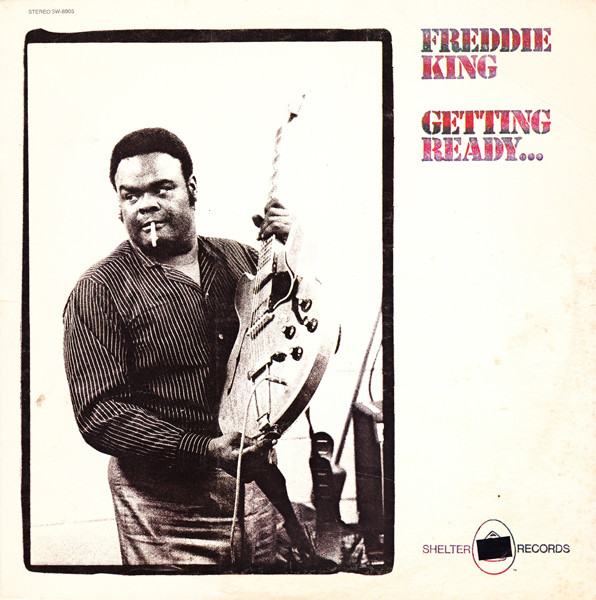
King’s acoustic pickings on “Dust My Broom” provide an early highlight – this song is a favorite of mine because it’s so simple. Elsewhere we hear mostly electric guitar, and King rips it on “Five Long Years” – an Elmore James classic. “Going Down” begins side 2 with what may be King’s single biggest hit. Leon Russell’s signature honky-tonk piano provide an uptempo accompaniment – Russell recorded Getting Ready… for his own Shelter Records label, which put a black mark over its logo (see above) for its litigious resemblance of the Superman logo.

“Walking by Myself”, with its string accompaniment and acoustic guitar is perhaps the most beautiful track here, also showcasing King as a strong vocalist. “(I’m) Tore Down” is notable for being the sole song here written by King, whose poor health and habits led to his untimely death of ulcers and pancreatitis at age 42.

Listen to Getting Ready… here.

Album of the Week: Bruce Langhorne’s The Hired Hand (1971)

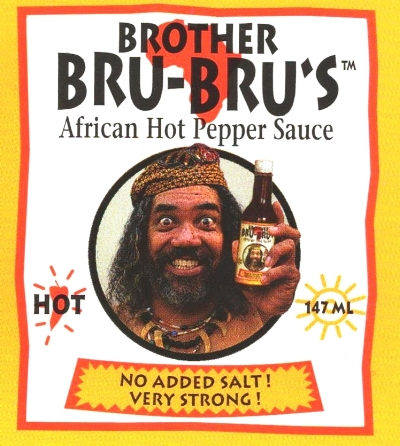
In 1971, the actor Peter Fonda, to whom [Bruce] Langhorne was introduced by [Hugh] Masekela, invited Mr. Langhorne to compose the music for his movie “The Hired Hand,” an austere soundtrack that featured banjo, fiddle and acoustic guitar… Not suited to the pace of Hollywood, to which he relocated from New York in the late ’60s, Mr. Langhorne moved to Hawaii in 1980 to farm macadamia nuts. He returned to Los Angeles in 1985 and, in 1992, learned that he had Type 2 diabetes. His diagnosis inspired him to create Brother Bru-Bru’s Hot Sauce, an organic, low-sodium salsa. -New York Times obituary, 2017

Two years before his directorial debut The Hired Hand, Peter Fonda starred in the classic road-trip film Easy Rider (Fonda was also credited as a screenwriter). Easy Rider looked to the future with its psychedelic narrative, unconventional style and countercultural themes. I haven’t seen The Hired Hand, but its soundtrack by Bruce Langhorne is similarly forward-thinking.

Though the obit above suggests that he was a man of many talents, Langhorne is probably best known as a session player for Bob Dylan, appearing on multiple classic Dylan albums. However, The Hired Hand soundtrack bears little resemblance to Dylan’s music. Langhorne’s guitar on “Opening” is repetitive and hypnotic, as violins provide a cheery accompaniment. Percussion is quite sparse on this track, including a very lightly played dulcimer, lending the song an ambient quality. “Riding Thru the Rain” is ominous, with a piano that sounds as dusty as the untamed West depicted in Fonda’s cowboy movie.

The sound on the recording as a whole has an old-school reel-to-reel quality that is gorgeous, yet the music is not dissimilar to what 21st century artists in the cross-section of ambient and country (Scott Tuma and William Tyler come to mind) make. According to boomkat, “Langhorne assembled each piece alongside his girlfriend Natalie Mucyn, who with no prior mixing or editing experience multitracked the recording via some distinctly lo-fi tape dubbing.”

“Ending”, the album’s longest track, has a middle-section with flutes that is stunning. It’s a lovely finish to a strange, moving and all too brief album from an unheralded artist.

Listen to The Hired Hand here.

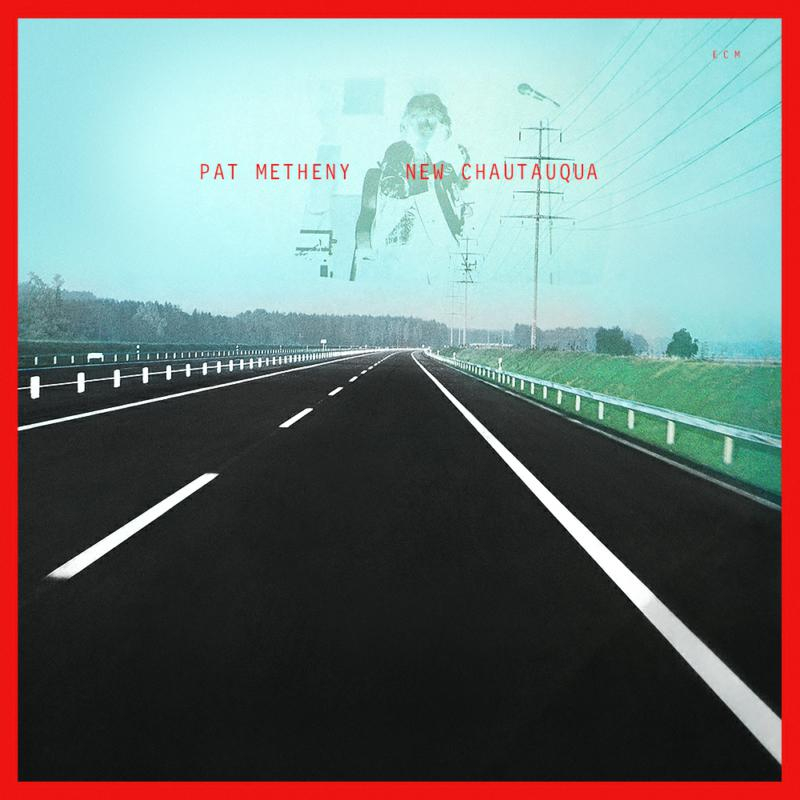
Album of the Week: Pat Metheny’s New Chautauqua (1979)

Here’s an idea: what if Pat Metheny fans were referred to as Meth-heads? Eh? No, sorry, not sure about that one. But the guy does have a devoted fan base. When I saw Metheny in concert (2021), an older couple in line joked to security, “Metal detectors?? But we love Pat Metheny! We would never do anything to hurt him!”

There’s a reason people seek to protect Pat Metheny at all costs. He controls an active legacy dating back almost 50 years to a 1974 recording with Jaco Pastorius, Bruce Ditmas and Paul Bley. Metheny was 19 at the time of the recording, and the album was released in 1976, the same year as Metheny’s proper ECM debut, the trio recording Bright Size Life. Metheny would continue to release strong records for ECM for almost a decade, but his only true solo effort in this bunch is his fourth album, New Chautauqua.

By layering tracks of acoustic and electric guitars, Metheny achieves a strikingly full sound on New Chautauqua by himself. Though the title track is upbeat, the album’s sound as a whole is weightlessly drifting, most notably on the 10 minute “Long Ago Child / Fallen Star”, which reaches a mesmerizing conclusion. It takes almost 7 minutes to get there, but “Fallen Star” is a brilliant oasis, a background of shimmering echoes with soft strings plucking away at the fore.

Chautauqua was a kind of rural educational fair that spread in popularity throughout the U.S. in the late 19th century. What Metheny’s music has to do with it I’m not sure, but I have read somewhere that the album is based on his impressions of New Mexico as a child. After “Fallen Star”, “Hermitage” provides another one of those “oh shit” moments, when the melody drops about a minute in. It’s an easy song to treasure. “Daybreak” rounds things out in a manner fitting its title, as it starts off a slow crawl and rises to a gleaming resolution.

Listen to New Chautauqua here.

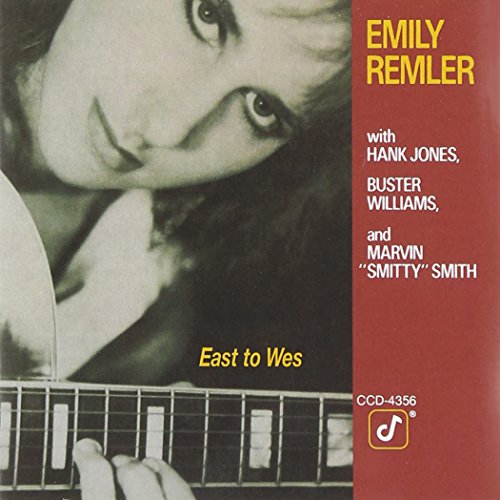
Album of the Week: Emily Remler’s East to Wes (1988)

Welcome to 1988, the CD era! George Michael and Rick Astley ruled the charts, and Kenny G’s Silhouette would go 4x Platinum. Miles Davis was recording the glossy Amandla with the help of writer and bassist Marcus Miller, who had just written and produced the hit “Da Butt” for D.C. go-go group Experience Unlimited (chorus: “she was doin’ the butt”). Wayne Shorter’s Joy Ryder, a synth-filled foray into adult contemporary, was described as “grossly overproduced middle-brow funk”. Jazz wasn’t what it used to be.

Emily Remler, then, might as well have been living in the 50s. The 30 year old Berklee alum was devoted to bebop and swing, her greatest idol the jazz guitar giant Wes Montgomery. “I was so obsessed with Wes Montgomery that I had a picture of him on my wall,” Remler shared in a 1986 interview. “And for two years, I learned a new Wes song every day.” Hence the title of her sixth album East to Wes.

Though the album itself features no Montgomery compositions, East to Wes is largely composed of Remler’s take on other songs. “Daahoud”, from the classic Clifford Brown and Max Roach, starts things off with pep. Marvin Smith on drums provides a hopping rhythm allowing Remler to take off. Hank Jones, who played piano with Cannonball Adderley among many others, works as a melodic counterpoint.

“Snowfall” aptly begins gently and rhythmically before Remler takes things up a notch on acoustic guitar. You can watch her performing the song with her eyes closed, deeply focused. Smith’s drumming accentuates the speed of Remler’s playing while Buster Williams provides the perfect backbone. Remler’s original composition “Ballad From a Music Box”, by contrast, is 7 minutes of mellow, an easy highlight for me. Later in the album, the standard “Softly, As in a Morning Sunrise” gets the centerpiece treatment as the longest track. Remler draws it out nice and easy, waiting at least 4 minutes to really let it rip with the fingering before Hank Jones takes over. Williams even gets a tight solo in.

Emily Remler died just 2 years after the release of East to Wes, a tragic loss for a young musician who was steadily improving. Listening to the album today, it feels like neither a product of the 80s or a bebop-era time capsule, but an ageless testament to Remler’s skill.

Listen to East to Wes here.

Album of the Week: Luiz Bonfa’s Introspection (1972)

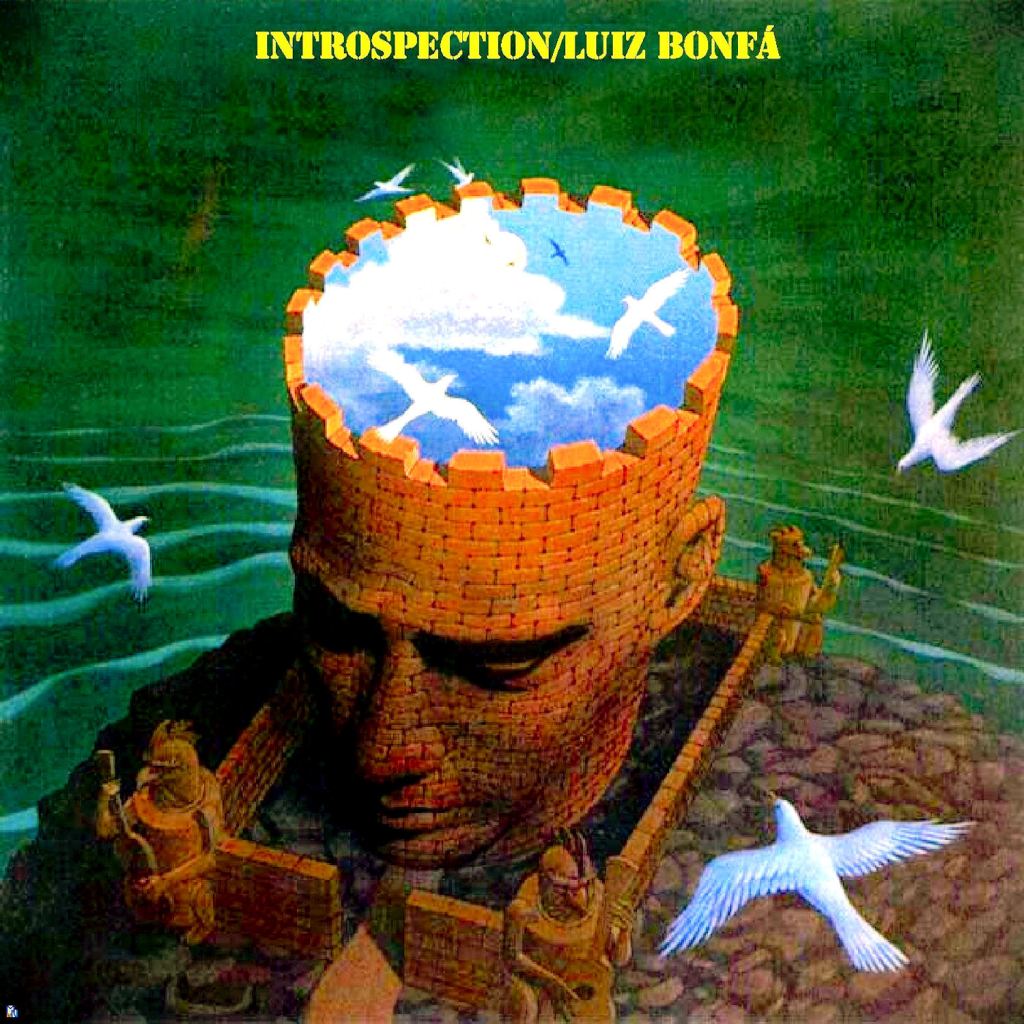
Introspection – How It Feels to Chew 5 Gum! Our head is a castle, our mind a sky. And what better way to journey through the clouds than on the wings of an acoustic guitar?

Rio de Janeiro’s Luiz Bonfa had a lucrative career as part of the samba scene of the 50s and 60s, notably writing some of the music for the brilliant film Black Orpheus (1959), including “Manha de Carnaval”, which has been covered by many including Astrud Gilberto. His collaboration with Stan Getz, Jazz Samba Encore! (1963), was a hit that includes Bonfa’s “Saudade Vem Correndo”, which was sampled by J Dilla on the Pharcyde classic “Runnin’”. The guy could write a good song.

Introspection feels more improvisational, but it’s short and sweet at just over 26 minutes. This works to the album’s advantage as the songs are quite similar. No vocals or accompanying instruments, just that airy guitar, slowing in tempo and then picking up again like a classical movement (hence, “Concerto for Guitar”). “Missal (Estudo)” stands out for having what sounds like two guitars in the mix (although I am almost certain there is only one) for a wonderful harmonic effect.

Listen to Introspection here.

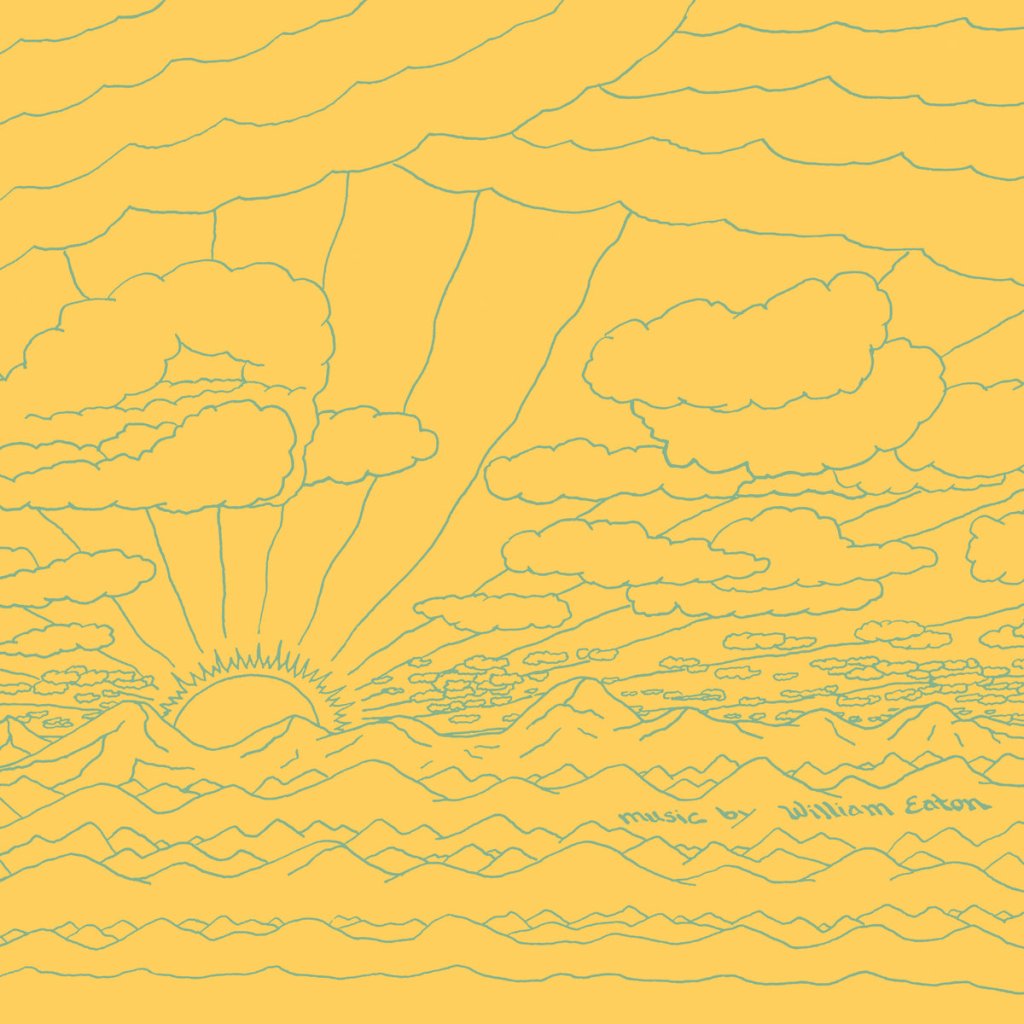
Album of the Week: Music by William Eaton (1978)

Driving drifting through the lonesome sandstone canyons as the sun slanted away, west. You, too, were on your way.

YouTube comment

Private press albums can be hidden gems or unremarkable projects. William Eaton’s debut of improvised instrumental guitar passages definitely falls into the former category. As soon as I heard the first track here I knew this was absolutely golden. After a bit of a warmup, Eaton reaches a brilliant harmonic theme that recalls the storied greatness of John Fahey – who was, I suppose, a contemporary of Eaton’s!

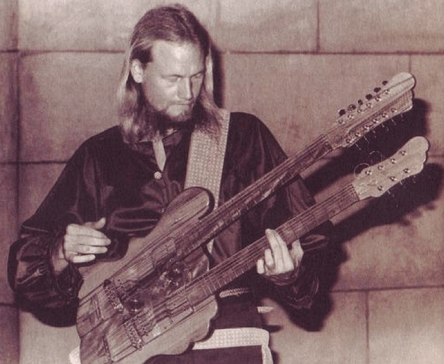
Eaton came from a family of bankers in Lincoln, Nebraska, but after attending Stanford headed to Arizona and ended up, according to Ultravillage, “living out of his car, roaming the desert and eating mesquite pods and cactus fruit.” He began designing his own guitars, including a 26 string and double neck quadraphonic electric guitar.

Given the open and wandering, almost ascetic lifestyle Eaton led, it’s not surprising that this album is full of ambient space and warm, gentle tones. It’s become my recent comfort album, and resonates as a night-time listening companion the way Scott Tuma’s Hard Again (2001) did for me in 2020 (when, god knows, I needed it).

Track 7B was sampled to great effect by DJ Shadow on 2002’s “Fixed Income”, so props to him for knowing about this one 20 years ago, before it was even reissued. I mean, the guy made Endtroducing after all, so that checks out. Eaton continued to record and release music, though I haven’t yet heard other work of his that captures the same subtle beauty as Music. He co-founded a luthiery (guitar construction) school in Phoenix, Arizona that he now directs.

Listen to Music of William Eaton on Bandcamp or Spotify.

You can see some of Eaton’s incredible self-designed guitars here.