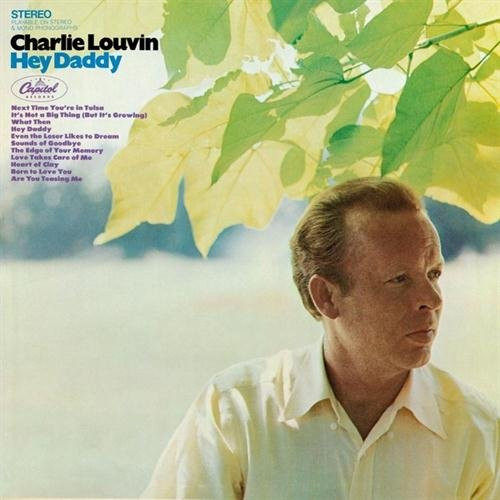
Album of the Week: Charlie Louvin’s Hey Daddy (1968)

The Louvin Brothers, Ira & Charlie, were successful gospel and country singers from the 1940s-60s. I know them from their 1959 album Satan Is Real, with its bonkers cover and excellent gospel harmony songs. Despite the heavy-handed preaching of the album’s lyrics, Ira was known as a womanizer and alcoholic, traits that led to the brothers’ break-up in 1963 (Ira died in a car crash 2 years later).

Hey Daddy, Charlie Louvin’s 7th solo album, follows a trend of eschewing the Louvin’s religious content, but it is no less wholesome. The title track finds the singer trading in the “bars and blondes” for fatherhood. Less wistful than the album cover might imply, “Hey Daddy” is instead a precious meditation on the simple joys children provide (though written by one Gene Chrysler, Louvin’s own son would have been about 13 at the time). The Louvins’ “Are You Teasing Me” rounds out side 1, a classic honky-tonk number.

Louvin’s voice is strong throughout the album – despite the lack of Ira, there are some great harmonies with the background vocals (I don’t have album credits for this one, unfortunately). He finishes with the Cindy Walker ballad “Born to Love You”. Charlie Louvin would continue to record and perform up to his death in 2011.

Listen to Hey Daddy here.
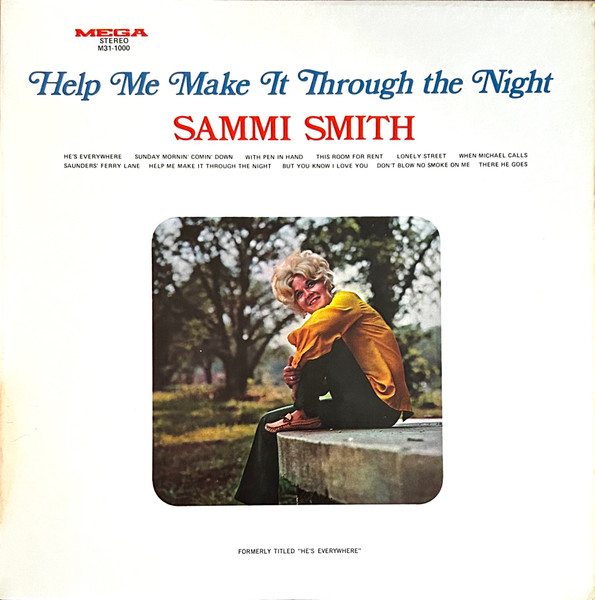
Album of the Week: Sammi Smith’s He’s Everywhere (AKA Help Me Make It Through the Night) (1970)

Country music has increased in popularity over the past few years, and so has my own interest in it. What used to be an appreciation for the hipster-approved Townes Van Zandt and Gram Parsons has extended to digging on Linda Ronstadt, Tanya Tucker, Nanci Griffith, Lyle Lovett etc. Safe to say I love me some Country! Sammi Smith was a name I didn’t know until recently, but her debut album He’s Everywhere blows me away.

Born in California, Smith once said of her childhood, “I moved around more than dust,” living in Oklahoma and Arizona. A friend of Waylon Jennings and Kris Kristofferson, Smith covers Kristofferson’s “Sunday Mornin’ Comin’ Down” and “Help Me Make It Through the Night” on He’s Everywhere, released on the short-lived Mega Records out of Nashville. He’s Everywhere, re-released as Help Me Make It Through the Night was Mega’s biggest hit, with the title track topping the Billboard Country charts.

The strings on opener “Saunders Ferry Lane”, paired with Smith’s smoky voice, create a cinematic atmosphere. The vibe is perhaps more torch song than classic Country. “There He Goes”, then, could be a Patsy Cline track. With vibraphones, steel guitar and a strong vocal take, it’s simply gorgeous. Kristofferson’s storytelling brilliance (not unlike that of Mickey Newbury, a favorite of Smith’s) shines through on “Sunday Mornin’ Comin’ Down”. This track captures the sort of Lonesome Country Blues vibe that the album succeeds in owning throughout. “He’s Everywhere” is a great and sorrowful song about not being able to get someone out of your head. “But You Know I Love You” and “Don’t Blow No Smoke on Me” are more straightforward Country tracks (the latter in the honky tonk vein), but the record is no worse off for that. He’s Everywhere ends abruptly during “This Room For Rent”, with an out-of-nowhere cut after the line “She’s heard no word from God, and nothing seems to matter anymore”.

After Mega folded, Smith signed to Elektra but was not well-promoted and seems to have never really gotten her due. She passed away in 2005 and is survived by her children, including her son Waylon Payne, a Country singer.

Listen to He’s Everywhere here.

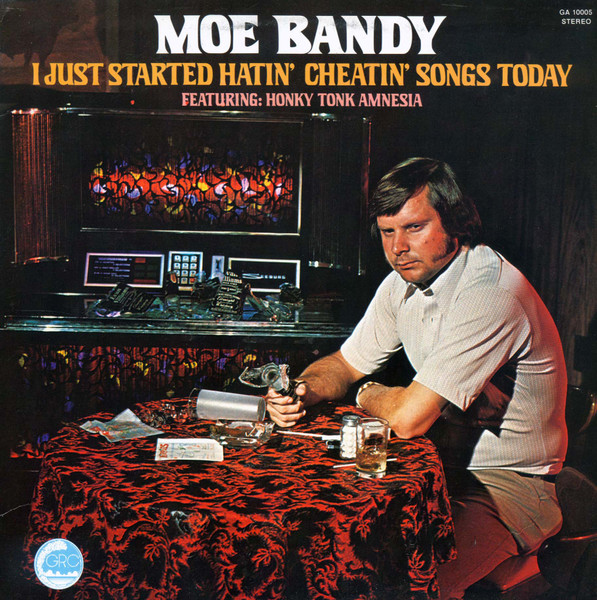
Album of the Week: Moe Bandy’s I Just Started Hatin’ Cheatin’ Songs Today (1974)

Moe Bandy has a love/hate relationship with cheating. Dressed like an aging sports commentator, his bemused look on the album cover says it all: he’s hurt by his cheating lover, but he knows he’s no better. This is to say nothing of the broken bottle in hand and the smashed jukebox.

Moe Bandy spent time in San Antonio as a sheet metal worker before making it in country music. The title track here allowed him to quit his day job, and it’s an instant classic. The first verse depicts Bandy’s realization of infidelity poetically: “If my backdoor could talk, it would tell me / That my borrowed angel’s been this far before.” Concluding that “my woman is the devil,” he swears off cheating songs, a sort of fourth-wall moment in acknowledging the country trope.

That’s until “This Time I Won’t Cheat on Her Again” (sure, Moe). We’ve also got “I Wouldn’t Cheat on Her if She Was Mine”, which is not the most impressive statement. Both are catchy songs though. “Smoke Filled Bar” is actually devastating: he’s crushed by the loss of his wife, drinking heavily to fill the void and lamenting the state his kids will have to find him in. Heavy shit.

Cheatin’ Songs ends with its most addictive cut, “Honky Tonk Amnesia”. Bandy blames it on the alcohol here: “She knows how [drinking] messes up my thinkin’ / How it makes me look for someone else to love.” The chorus is a soaring achievement in honky-tonk – pain fused with euphoria as Bandy hits “sometimes it lasts all night long!” This debut from Moe Bandy is short and sweet, and recommended to any fan of classic country.

Listen to I Just Started Hatin’ Cheatin’ Songs Today here.

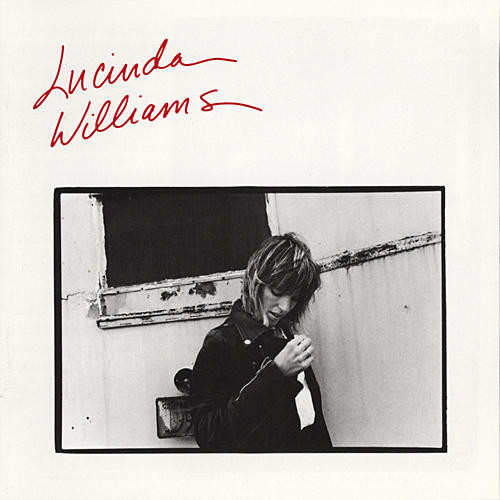
Album of the Week: Lucinda Williams’ s/t (1988)

After recording for Folkways in 1979, Lucinda Williams spent several years playing shows around LA before finding commercial success. At one point, Williams was close to cutting a deal with Columbia, but “Ron Oberman and his colleagues in the L.A. offices of Columbia listened to [my demo] and… said it was too country for rock. They sent the tape to the Columbia executives in Nashville, who said it was too rock for country… I’ve always enjoyed saying that it took a British punk label to give me a chance to make a commercial record.” Punk or not, it was Rough Trade who finally took on Lucinda, and allowed her to self-produce and record the album organically in country engineer Dusty Wakeman’s Venice Beach studio.

I already loved Lucinda Williams by the time I finally heard this record, but it seems like a great entry point to the uninitiated. It’s a remarkably consistent set, and the songs are poppier than her breakout Car Wheels On a Gravel Road (1998), as heard right away on “I Just Wanted to See You So Bad”. This song dates back to the 70s, and is about the poet Bruce Weigl, who Williams “had a deep crush on” in 79-80.

Where Williams really shines is on the tender tracks. “Am I Too Blue” is a moving exercise in vulnerability, and “Crescent City” mentions Mandeville, a mental hospital outside of New Orleans where her mother spent time.

The production on here is somewhat dated, as it naturally has an 80s country feel that may not appeal to everyone. Yet I bet it would sound fantastic on cassette, and the album is all-killer, no-filler regardless of medium.

Listen to Lucinda Williams here.

Quotes excerpted from Lucinda’s great memoir, Don’t Tell Anyone the Secrets I Told You.

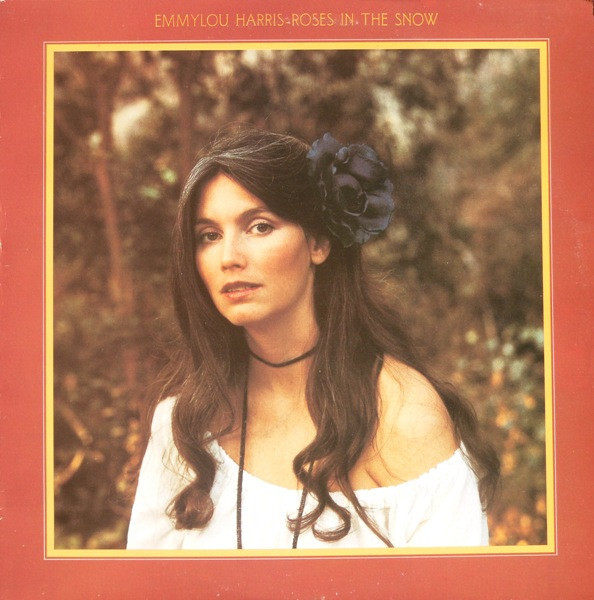
Album of the Week: Emmylou Harris’s Roses in the Snow (1980)

Emmylou Harris cut her teeth recording with the late Gram Parsons in the early 70s before breaking out as a solo star. Her output was eclectic, with records ranging from country rock, to Beatles covers, to folk music and other styles. In 1979, she changed direction yet again, hitting the studio with multi-instrumentalist Ricky Scaggs for a bluegrass album.

“Only at one point was I told that what I was going to do was an absolute mistake, was going to end my career, was going to become a commercial disaster—that was when I wanted to do Roses in the Snow,” she told Lucinda Williams in 1997. “And I just said, ‘Well it’s my career.’ I knew I had to make that record… Everybody I knew wanted to do a Bluegrass record and everybody was talking about it, and I wanted to be the first.”

Roses in the Snow, then, wasn’t a mistake at all. It peaked at 26 on the Billboard charts and collects a rich assortment of recordings, beginning with the esoteric title track written by Ruth Franks and originally performed by Bill Grant and Delia Bell. Finding some lyrical parallels with Gram Parsons’ “We’ll Sweep Out the Ashes in the Morning” (on which Harris sang), it’s an upbeat start to a short and sweet album. Always with a trick up her sleeve, track 4 of the album is Emmylou’s cover of Paul Simon’s “The Boxer”, eschewing the traditional country/bluegrass songbook.

Acoustic guitar legend Tony Rice, who died in 2020, plays a key role on this album. Rice, whose proficiency in soloing found him collaborating with virtuosos like Jerry Garcia and Béla Fleck, appears on 6 of the album’s 10 tracks. His solo on the folk classic “Wayfaring Stranger” is beautiful and lithe. He also provides fast guitar accompaniment on “I’ll Go Stepping Too” and delicate picking on “You’re Learning”. Probably the biggest accomplishment on side B is “Miss the Mississippi (and You)”, which sparkles with a kind of classic Hollywood sweetness.

Among other guests, Johnny Cash can be heard singing on “[Cold] Jordan”. The album’s streaming version (a rerelease from 2002) features 2 bonus tracks, including a great take on Hank Williams’ “You’re Gonna Change”. Below, see Harris play the title track from “Roses in the Snow” in 1993.

Listen to Roses in the Snow here.

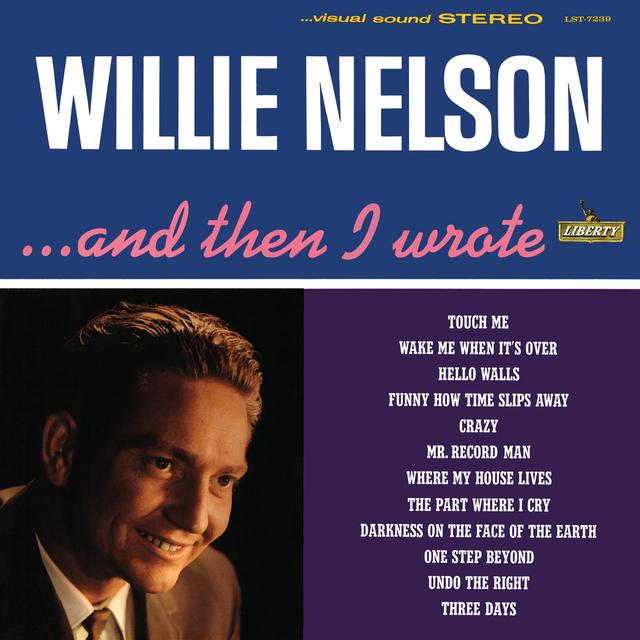
Album of the Week: Willie Nelson’s …And Then I Wrote (1962)

Willie Nelson has been around the block. By the time he finished writing and recording his 1962 debut album …And Then I Wrote, he was almost 30. It boggles the mind today that Nelson had been making music for years without success or interest from labels. With a reflective lens, we can easily say that Nelson’s smoky-voice and knack for writing made him a talent that was overlooked for a long time. But back then, things didn’t work the way they did today. A 2020 New Yorker profile notes that “Before he moved to Nashville, in 1960, he worked as a radio d.j., pumped gas, did heavy stitching at a saddle factory, worked at a grain elevator, and had a brief gig as a laborer for a carpet-removal service.” The young Texan Willie Nelson spent years doing just about everything besides being the country superstar he is today.

According to one of his autobiographies, Nelson wrote many songs while still living in Texas. Among these is “Crazy”, which became a big hit for superstar Patsy Cline, helping to jumpstart Willie’s career. I knew the Cline version before I knew that Nelson wrote it, and there are marked differences in delivery between the two recordings. Patsy Cline’s is melodic and whimsical, while Nelson’s near-spoken-word vocal in his version reveals more personal pain. He actually sounds kind of crazy, or at least hurt and lost. It’s incredible.

…And Then I Wrote‘s title reflects the fact that Nelson was a hit songwriter long before he was a solo star. And as a showcase of songwriting talent, the album is both an unheralded country classic and an excellent precursor to more expansive and well-known Nelson releases like Red-Headed Stranger. These songs are stark expressions of heartbreak. “If you can’t say you love me, say you hate me,” Nelson sings on “Undo the Right”, desperate to feel something. “Three Days” is darkly comic: “Three days I dread to be alive: today, yesterday and tomorrow.” “The Part Where I Cry” and “Where My House Lives” are brilliantly coded expressions of grief. In the former, Nelson describes his life as a movie (or “picture”) and sells it to the listener-turned-viewer (“I was great in the part where she found someone new”). “Where My House Lives” is a heartbreaking closer: “Here’s where my house lives… I never go there / ‘Cause it holds too many memories” Nelson tells the listener, removing himself from the picture of domestic happiness and accepting the role of lonesome cowboy-drifter that would come to define his future.

Musically, …And Then I Wrote is Willie Nelson at his simplest, but don’t let that fool you. This seemingly effortless collection of hits (it’s one of those studio albums that plays like a best-of compilation) was borne from years of toil, failure and heartbreak. It wasn’t a huge success upon its release and still seems relatively unknown today, but thankfully, we know ol’ Willie got his due. If you’ve any interest in hearing how it started, I highly recommend a listen to this album.

Listen to …And Then I Wrote on Spotify.

Album of the Week: Linda Ronstadt’s Silk Purse (1970)

Linda Ronstadt - Silk Purse
via PC_Music on rateyourmusic

Not knowing much about Linda Ronstadt outside of some big hits, I stumbled upon Silk Purse last year while looking for cover versions of “Will You (Still) Love Me Tomorrow?”, as made famous by The Shirelles. I loved Linda’s take on the song and this quickly became one of my favorite country albums.

Recorded in Nashville at age 23, Rondstadt’s second album Silk Purse is a mostly breezy record, as evidenced by its adorable album cover and short runtime (just under 30 minutes). The brevity makes it easier to love. There’s an undeniable Soul imbued in the aforementioned Shirelles cover as well as “Are My Thoughts With You?” (written by the great Mickey Newbury,), and the traditional singalong closer “Life is Like a Mountain Railway”.

Elsewhere, “Long Long Time” is a wrenching ballad with the album’s best vocal performance, and according to an admin on a Linda Ronstadt fan forum, “Linda was so exhausted after doing that take that she fell asleep in the control room.” The single earned her a Grammy nomination for Best Contemporary Vocal Performance, and was the only semblance of a hit from the album, peaking at #25 on the Billboard Hot 100.

A few years later in 1974, Ronstadt would reach superstar status with Heart Like a Wheel. That’s an excellent album in its own right, but Silk Purse is simply an underrated gem that deserves more love. See a couple great related photos below and a link to stream the album today.

1970 LA billboard via simpledreamin-blog on tumblr, photo by Anthony Fawcett
Album cover outtake via rockcellarmagazine.com

Listen on Spotify