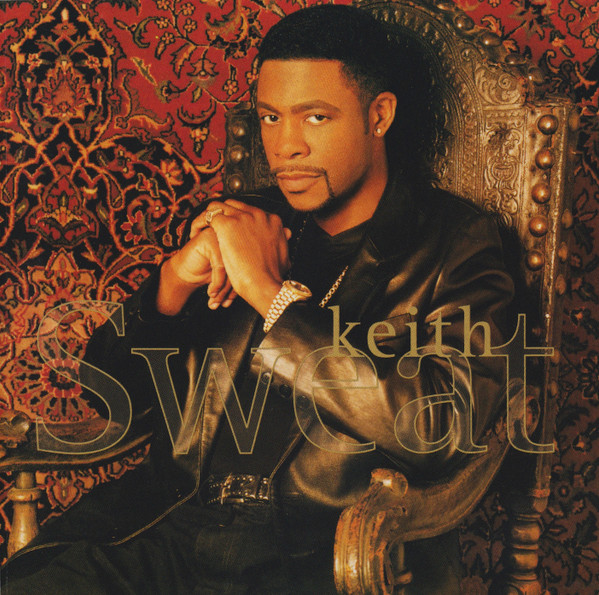
Album of the Week: Keith Sweat’s s/t (1996)

I worked on the album on and off for more than a year. I heard each of the songs probably a hundred times before I was completely happy with them.

Did you know Keith Sweat’s real name is Keith Sweat?

Nine years and three albums after his debut Make It Last Forever, a landmark release in new jack swing, Mr. Sweat dropped a bomb with “Twisted”. Enlisting the help of his group Kut Klose, the hopping single reached #2 on the Billboard Hot 100, and it leads off the fantastic Keith Sweat album. Keith is absolutely in his bag here, delivering a succinct and supreme collection of 90s R&B.

Sweat is the king of “begging”, a style of adlib runs that he pioneered on his debut. “Yumi” is already a silky smooth groove, but the vocals added in-between lines are masterful touches. Sweat does his begging like a great jazz artist solos, switching between lower and higher registers, moaning, ooh-ing, absolutely catching a vibe. “Freak With Me” has some extremely 90s rap verses while interpolating “(Not Just) Knee Deep”. The legendary Ronald Isley provides the assist on “Come With Me” – did you think it could get any more sensual? Just listen to this. Absolute liquid sex.

The last three songs here are a veritable triple threat. “Show Me the Way”, the lone track here produced by Sweat, is a simple and effective track that also acts as a prelude for “Nobody”, the album’s climax. “Twisted” is great, but “Nobody” is a masterpiece. Sweat and Athena from Kut Klose duet over a deep slow jam with a knockout refrain. The verses show some restraint, but the begging intensifies gradually as both artists build to a vocal showcase in the final minute. “Chocolate Girl”, then, acts as a sort of comedown to close things out. The pace is slow as molasses (chocolate syrup?), but it could be a minute or two longer and I wouldn’t mind. I adore this album.

Listen to Keith Sweat here.
Album of the Week: Moe Bandy’s I Just Started Hatin’ Cheatin’ Songs Today (1974)

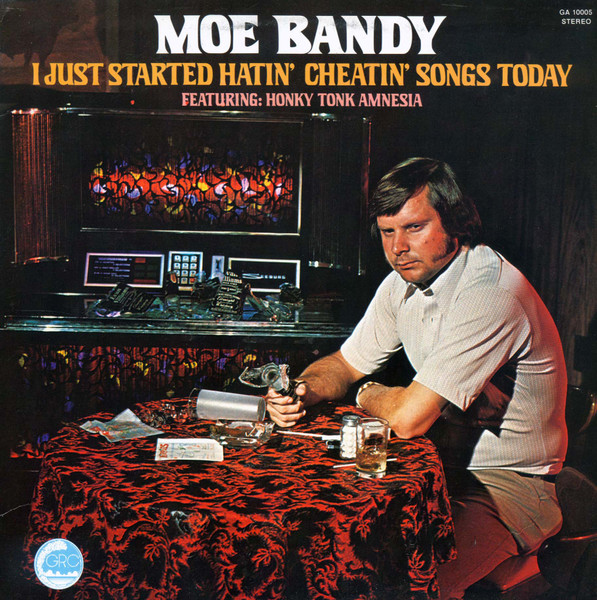
Moe Bandy has a love/hate relationship with cheating. Dressed like an aging sports commentator, his bemused look on the album cover says it all: he’s hurt by his cheating lover, but he knows he’s no better. This is to say nothing of the broken bottle in hand and the smashed jukebox.

Moe Bandy spent time in San Antonio as a sheet metal worker before making it in country music. The title track here allowed him to quit his day job, and it’s an instant classic. The first verse depicts Bandy’s realization of infidelity poetically: “If my backdoor could talk, it would tell me / That my borrowed angel’s been this far before.” Concluding that “my woman is the devil,” he swears off cheating songs, a sort of fourth-wall moment in acknowledging the country trope.

That’s until “This Time I Won’t Cheat on Her Again” (sure, Moe). We’ve also got “I Wouldn’t Cheat on Her if She Was Mine”, which is not the most impressive statement. Both are catchy songs though. “Smoke Filled Bar” is actually devastating: he’s crushed by the loss of his wife, drinking heavily to fill the void and lamenting the state his kids will have to find him in. Heavy shit.

Cheatin’ Songs ends with its most addictive cut, “Honky Tonk Amnesia”. Bandy blames it on the alcohol here: “She knows how [drinking] messes up my thinkin’ / How it makes me look for someone else to love.” The chorus is a soaring achievement in honky-tonk – pain fused with euphoria as Bandy hits “sometimes it lasts all night long!” This debut from Moe Bandy is short and sweet, and recommended to any fan of classic country.

Listen to I Just Started Hatin’ Cheatin’ Songs Today here.

Album of the Week: The Sylvers II (1973)

Some soul groups live in relative obscurity despite their fantastic music. Enter The Sylvers: supremely 70s, afros so large on this album cover that it becomes hard to tell where one ends and the next begins. Leon Sylvers III, up there in the top-right corner, was the brainchild of this Watts (LA) family act, writing most of their songs. Their early albums have provided legendary sample fodder and are killer soul LPs in their own right.

The small-time MGM subsidiary label Pride, who also released the probably unauthorized The History of the Grateful Dead album, signed The Sylvers in the early 70s for a string of soul records. By the time Pride folded in 1975, The Sylvers were recording for Capitol and had moved in the disco direction (their biggest hit, “Boogie Fever”, was released the same year).

Sylvers II features outstanding arrangements from David Crawford. The ballad “I’ll Never Let You Go” is both groovy and spooky. The string and horn arrangements on “Cry of a Dreamer” are beautiful and vault the song from good to great territory. B-side opener “Stay Away From Me” is bold and biting, and was sampled prominently on Ghostface Killah’s “Be Easy”. This song was also (perhaps strangely, since album-opener “We Can Make It If We Try” has more pop potential) released as a single by both Pride and MGM, with a contrasting B-side of the chill The Sylvers (1972) cut “I’ll Never Be Ashamed”, a harpsichord-laden groove.

“I remember when it was yesterday,” goes the chorus of the wistful “I Remember”, before the album closes, appropriately, with a cover of The Beatles’ “Yesterday”. This a capella cover is the most unique track on the album, showcasing the group’s full vocal range and plumbing the depths of the oft-covered song’s sorrowful melody. Though the “I Remember (Yesterday)” > “Yesterday” combo closes the chapter on The Sylvers II, The Sylvers would remain recording consistently until disbanding in the mid-80s. While they reunited for a live performance in 2017, it is unclear to me what the future holds for this overlooked group.

Listen to The Sylvers II here.

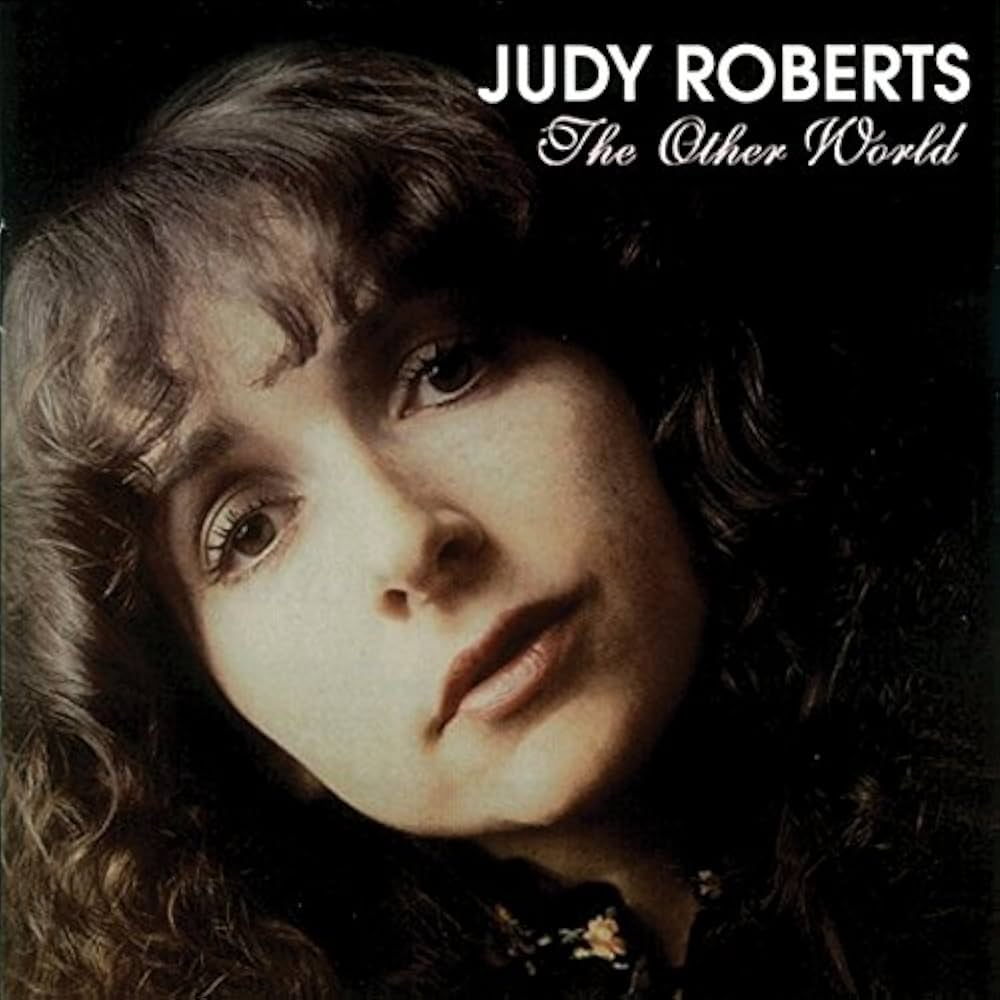
Album of the Week: Judy Roberts’ The Other World (1980)

Schmaltzy groove, thy name is Judy. One of those scrappy used vinyl bin records that blows you away, The Other World has a dated quality. From the scat-singing, to the cursed funk bass (check out “The Roadrunner”), to the old-school synths, The Other World is, like peak Steely Dan or Weather Report, a product of the late 70s through and through. Playing frequently in jazz clubs around Chicago since the 70s, Judy Roberts arranged these tracks, sang, and played piano and synths on this, her second album.

As I mentioned, there is a fair amount of dodo-dada scatting on The Other World, which may filter out the squeamish. This works best on the incredible title-track, which hits somewhere between disco and The Hissing of Summer Lawns. Roberts’ high-pitched ba-be-das are the perfect ending for this banger of a song (one heck of a guitar solo in here as well). Later, “It’s Always 4 A.M.” may be The Other World‘s sweetest moment, a soft ballad that allows Roberts to lean into her lounge singer act with great results. Leon Russell’s “Rainbow in Your Eyes” is given the hyper-samba treatment. After sing-talking in her Yapanese, Roberts bobbles the keys around like a hot potato. It’s sick.

The record ends in true jazz-nerd fashion with a take on “Round Midnight”. A straightforward cover, it puts a classy touch on the end of an occasionally silly record. Still, I happen to be the kind of person that The Other World‘s mix of vocal jazz and yacht rock was made for, so I love it.

Listen to The Other World here.

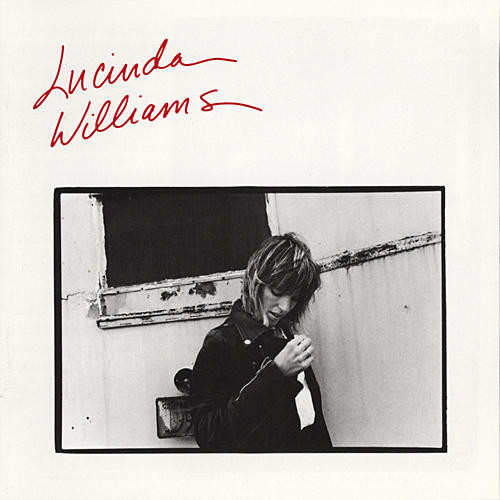
Album of the Week: Lucinda Williams’ s/t (1988)

After recording for Folkways in 1979, Lucinda Williams spent several years playing shows around LA before finding commercial success. At one point, Williams was close to cutting a deal with Columbia, but “Ron Oberman and his colleagues in the L.A. offices of Columbia listened to [my demo] and… said it was too country for rock. They sent the tape to the Columbia executives in Nashville, who said it was too rock for country… I’ve always enjoyed saying that it took a British punk label to give me a chance to make a commercial record.” Punk or not, it was Rough Trade who finally took on Lucinda, and allowed her to self-produce and record the album organically in country engineer Dusty Wakeman’s Venice Beach studio.

I already loved Lucinda Williams by the time I finally heard this record, but it seems like a great entry point to the uninitiated. It’s a remarkably consistent set, and the songs are poppier than her breakout Car Wheels On a Gravel Road (1998), as heard right away on “I Just Wanted to See You So Bad”. This song dates back to the 70s, and is about the poet Bruce Weigl, who Williams “had a deep crush on” in 79-80.

Where Williams really shines is on the tender tracks. “Am I Too Blue” is a moving exercise in vulnerability, and “Crescent City” mentions Mandeville, a mental hospital outside of New Orleans where her mother spent time.

The production on here is somewhat dated, as it naturally has an 80s country feel that may not appeal to everyone. Yet I bet it would sound fantastic on cassette, and the album is all-killer, no-filler regardless of medium.

Listen to Lucinda Williams here.

Quotes excerpted from Lucinda’s great memoir, Don’t Tell Anyone the Secrets I Told You.

Album of the Week: Roedelius’ Selbstportrait (1979)

89-year-old electronic music pioneer Hans-Joachim Roedelius broke ground in several different 70’s outfits. As a member of Cluster and Harmonia, two German groups at the nexus of krautrock and ambient, Roedelius made several classic albums, among them Cluster’s masterstrokes Zuckerzeit (1974) and Sowiesoso (1976). Recorded between 73-77, the early solo album Selbstportrait (Self-Portrait) is a series of intimate vignettes that showcase Roedelius’ meditative talent.

Subtitled Teil 1 Sanfte Musik (“Part 1 – Gentle Music”), Self-Portrait was recorded on the Farfisa VIP 600 (seen above). It is indeed gentle, starting with the descending melodies of “In Liebe den”.

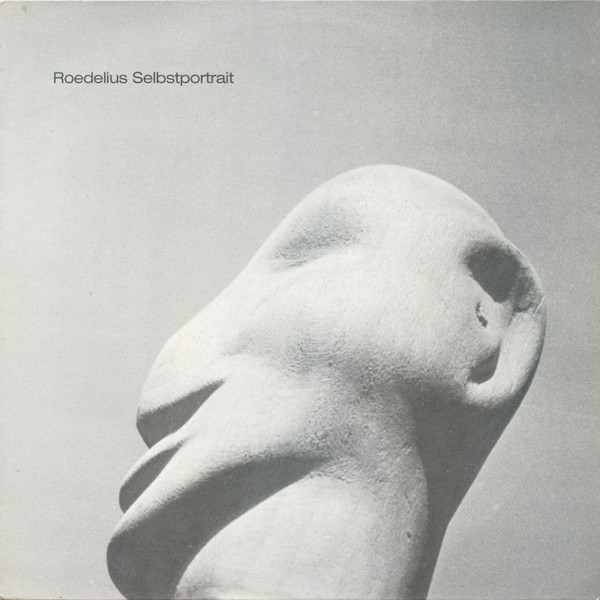
Recording for Sky Records while living in Lower Saxony, Roedelius once called it “the most beautiful place I’ve ever been to in my whole life”. There, he carved the sculpture that can be seen on the album cover.

These were authentically spontaneous musics, compositional studies influenced by the mellifluous landscape outside the window on balmy summer evenings – horses whinnying on the pasture by the river, nightingales singing, frogs croaking…

“Prinzregent” stands out with a darker undertone, and “Herold” pops along with a ticking percussion. Overall, the pieces on Self-Portrait hold a resounding forest-inspire beauty that can be explored for days. And thankfully, there are two more volumes.

Listen to Selbstportrait here.

Album of the Week: Lana Del Rey’s Ultraviolence (2014)

In June of 2014 I was 19, home from my freshman year of college. I was unemployed and spent many nights staying up past 3 or 4am listening to music in my mom’s basement. This was a great time for rap and the typical basement jamming involved Main Attrakionz and Young Thug, but I was also listening to artists like Beach House, Mazzy Star, Galaxie 500, and my perennial favorite Cocteau Twins. I mention this because the dream-pop adoration really set me up to enjoy Ultraviolence.

Not following Lana Del Rey closely before this album, it was a surprising and awesome experience how much it grabbed me. I also found Lana’s publicized depression surrounding the Born to Die (2012) backlash grounded and relatable. This was a really unique era in the first decade of social media when artists were subjected to a newer, overwhelming way of receiving unfiltered criticism, and the Guardian interview accompanying this album’s release on June 13, 2014 revealed Lana as someone who didn’t “enjoy being a pop star, [felt] constantly targeted by critics,” and, most alarmingly, “[didn’t] want to be alive at all.” Ultraviolence, then, was a dramatic turn in every sense of the word: a theatrical display of intense sadness, an abandonment of the hip-hop pop of Born to Die and Paradise, and a uniformly striking collection of dark rock songs.

The Black Keys aren’t too similar to the bands I mentioned in the first paragraph, but when you marry the rich, slow guitar atmosphere of Dan Auerbach’s production with Lana’s velvety voice, you get something of a scarred dream-pop revival, featuring classic pop references. “West Coast” rotates with tension before breaking into a slow-motion interpolation of Stevie Nicks’ “Edge of Seventeen”. “Ultraviolence” reworks The Crystals’ “He Hit Me (and It Felt Like a Kiss)” into twisted Kubrick worship. And fittingly, the album is cinematic in scope. Where Honeymoon (2015) and later albums portray a more chilled-out woman in her thirties, Ultraviolence is a stylized portrayal of youthful sadness. Her Americana-obsessed mythos, though it contains genuine roots, is thematically stretched out for show. This is how you end up with lyrics like “They think I don’t understand the freedom land of the seventies… I’m churning out novels like beat poetry on amphetamines,” (“Brooklyn Baby”) or the (seemingly!) vapid “Sad Girl”. But the results are ultimately bold, inventive and and personal songs that don’t (or didn’t) pander to any formula of commercial success (some of 2014’s top hits: “Happy” by Pharrell; “Talk Dirty” by Jason Derulo; “All About That Bass” by Meghan Trainor).

Whereas newer LDR albums are (imo) overstuffed with stark ballads, Ultraviolence has a solid flow with elements that enhance the strength of her songwriting and singing instead of leaving them repetitively unadorned. The barest ballad here, the penultimate “Old Money”, is gorgeous and welcomed after the hazy atmosphere of the preceeding tracks. Closing with a cover of “The Other Woman” is the album’s final and most gracious nod to classic pop, and Lana’s vocal performance on the song is stunning. Even the leftovers are worth seeking out: bonus track “Black Beauty” is a soaring torch song, and iTunes bonus track “Is This Happiness?” absolutely wrecks me (I wish this were on Spotify!).

In 2019, critical praise of Lana’s music reached a high with the success of Norman Fucking Rockwell!, but Born to Die and Ultraviolence still strike me as her greatest albums. If you can’t dig her, these albums likely won’t change your mind more than anything else she’s done since. But by leaning into her pain, Lana shone on Ultraviolence, and it stands as a unique peak in her career.

Listen to Ultraviolence here.

Album of the Week: Jerry Garcia Band’s GarciaLive Volume Seven: November 8th 1976, Sophie’s, Palo Alto (2016)

A converted supermarket that still bore the signs of its former occupation, Sophie’s was [in 1976] a mainstay of the Garcia Band, a comfortable, funky venue that welcomed the band four times that year… And for Garcia, it was also familiar turf, a return to the town where he had first made his commitment to music.

-Nicholas G. Meriwether, liner notes

Today marks two years since I moved to Northern California, and what better way to celebrate than with a Jerry show? This recording of the Jerry Garcia Band in 1976 in Palo Alto was largely forgotten until the tapes were found in Donna Jean Godchaux’s storage in the 2010s. This lineup of JGB featured Donna on vocals, Keith Godchaux on piano, John Kahn on bass and Ron Tutt on drums. A familiar and winning quintet, they strike a nice contrast to later JGB lineups, which generally featured non-GD related keyboardists.

In 2021 I covered the slowness of ’76 Dead for my post on their 6/18 and 6/21 shows, and that rings true for most of this set as well. You can hear the “Row Jimmy” reggae tempo in “Knockin’ on Heaven’s Door” early on. The Godchaux’s presence is felt strongly (as it was with their tenure in the Grateful Dead) – Keith complements the expansive Garcia workouts on his piano and Donna adds another dimension to the vocals. She even takes lead, as on the highlight “Stir It Up”, a Marley classic that she does proud service to.

“Who Was John?” is a super bluesy turn from Jerry, and a jammer’s delight at over fourteen minutes. Speaking of which, this “Don’t Let Go” is a twenty-two minute beast. Jerry is given that floor around four minutes in, and what follows is the most deliberate, unhurried and collective improvisation of the night. Kahn has a bass solo around fourteen minutes that Jerry and Keith gently push up against before the whole group comes together at full volume. Rounding things out is a smoking “Mighty High”. This release is one of my absolute favorites of the GarciaLive series and an easy recommendation for a Garcia fan of any level.

Listen to GarciaLive Volume Seven here.

Album of the Week: Batry Powr’s Un1ty Flute (2021)

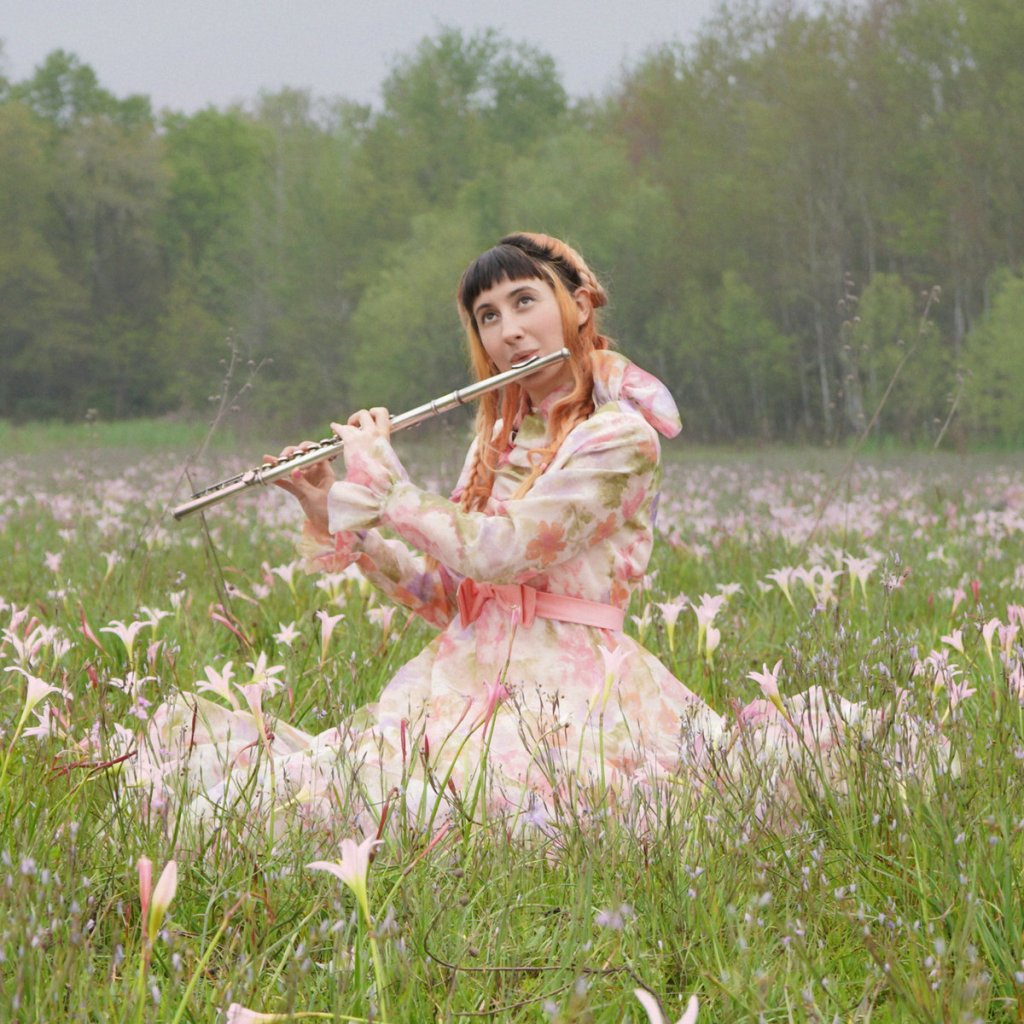
Nicole Miglis recently released her single “All I Can See Is You”, which blew me away. It got me to revisit her solo album as Batry Power, Un1ty Flute, a Leaving Records tape of longform flute recordings. After a spontaneous recording of what became “Un1ty Flute” fell into Leaving founder Matthewdavid’s hands via a mutual friend, Leaving released the project along with a video for the title track. The description of the YouTube clip notes, “Batry Powr is the experimental ambient side-project of Hundred Waters frontwoman Nicole Miglis primarily recording acoustic or battery-powered instruments in public spaces & nature.

The visual, with Miglis playing flute and plenty of skaters, complements the slow-motion, nature-loving ambience of this music. It’s not surprising that this project was released by Matthewdavid, whose own Trust the Guide and Glide (2016) leaned into these and other New Agey devices.

Track one is a pure flute session accented by the field music of chirping birds. Miglis’s playing is both relaxing and mesmerizing. “ii” is the night to “Un1ty Flute”‘s day, the flute traded in for sleepy piano and the bird noise for wordless vocal harmonies. It is, like “Un1ty Flute”, also unhurried and excellent. Track three on the digital version is a Kodak to Graph remix of “Un1ty Flute” with added zither – it’s heavenly! I haven’t listened to much Hundred Waters, but I’ll start soon.

Listen to Un1ty Flute here.

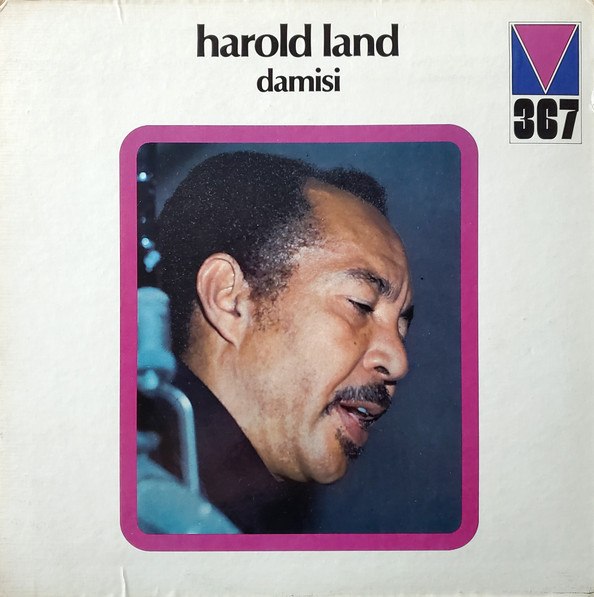
Album of the Week: Harold Land’s Damisi (1972)

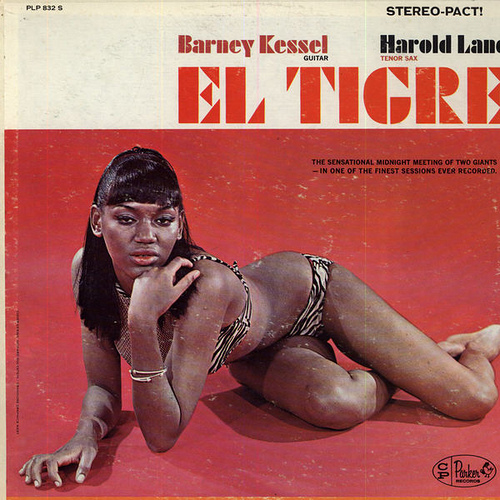
Every day or two at work I close myself in a giant freezer and put on some music while I move boxes around. I like to play jazz when I do this, because it helps me feel active and happy. One album that’s been really doing it for me in this situation is Harold Land’s Damisi. Land was a stalwart sax player who played on numerous classics such as Clifford Brown & Max Roach (1954), and later many Bobby Hutcherson records including personal favorites Now! (1969) and San Francisco (1970). Take a look at one of Land’s first album covers, El Tigre (1958), which is an almost unbelievably 50s-jazz-LP cover (“STEREO-PACT!”):

Needless to say, the guy was doing his thing for years, and around the time of his involvement with Hutcherson’s band in the early 70s he began recording LPs as a bandleader for Mainstream Records. I’m currently interested in Mainstream’s 300-series records, which have a distinct pattern in their album covers. I call this the Shapes Series, and you can view the covers on jazzlists. Scroll down to 350+ and note the similarities; Damisi is #367.

Damisi features a fantastic lineup including bassist Buster Williams of Herbie Hancock’s Mwandishi band (responsible for some of my all-time favorite albums). Oscar Brashear plays trumpet and flugelhorn and William Henderson plays piano – both recorded alongside Land for Bobby Hutcherson’s Head On (1971). Rounding out the quintet is drummer Ndugu, who also played on Mwandishi as well as two of my favorite George Duke albums. So this is a tight group!

Damisi is a deep session that verges on fusion with some chunky tracks (most stretch beyond the six-minute mark). Most songs have a groovy theme with both horns playing the melody before Land or another band member solos. “Pakistan” stands out with Land’s fantastic oboe playing, a relative rarity in the saxophonist’s discography. Ndugu’s composition “Chocolate Mess” (all other tracks are credited to Land) captures a magic that Miles Davis’s second great quintet had discovered a few years earlier on Miles in the Sky. The electric piano work, soaring bass and frenetic drumming lay the rhythm for excellent solos from Land and Brashear in that order. A stellar track, it’s one of two on Damisi‘s original second side, along with the title track. “Damisi” begins with fanfare before a mellow, multi-part theme begins. Then Land gives perhaps his best solo of the album, really blowing. A piano solo toward the end of the track suggests a delicate resolve to this album.

The reissued version of Damisi released in 1991 is the one on streaming services. Though its new cover doesn’t fit in with the Shapes Series, two bonus tracks from other recording dates are added, and both feature Bobby Hutcherson! “Dark Mood” is from the A New Shade of Blue sessions and has Billy Hart (Mwandishi, On the Corner) ripping on drums. “Up and Down” is from Land’s previous Mainstream release, Choma (Burn), which includes two drummers as well as Harold Land’s son Jr. on piano. At nearly 11 minutes and with extra percussive elements, this track feels like a lot to tack-on to the original Damisi, but I suppose CD buyers in the 90s could claim their moneys-worth.

Listen to Damisi here.