Album of the Week: Batry Powr’s Un1ty Flute (2021)

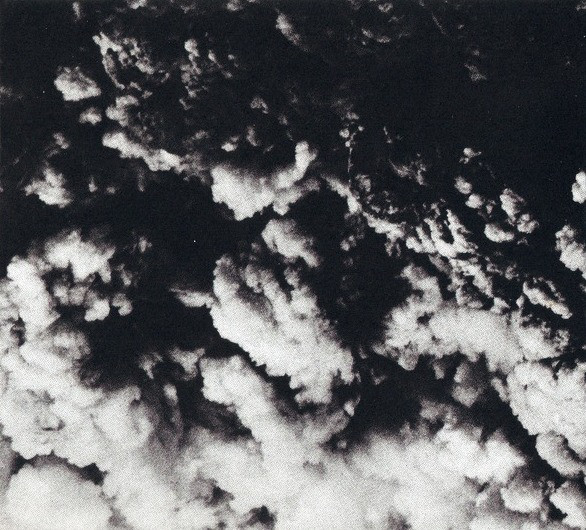
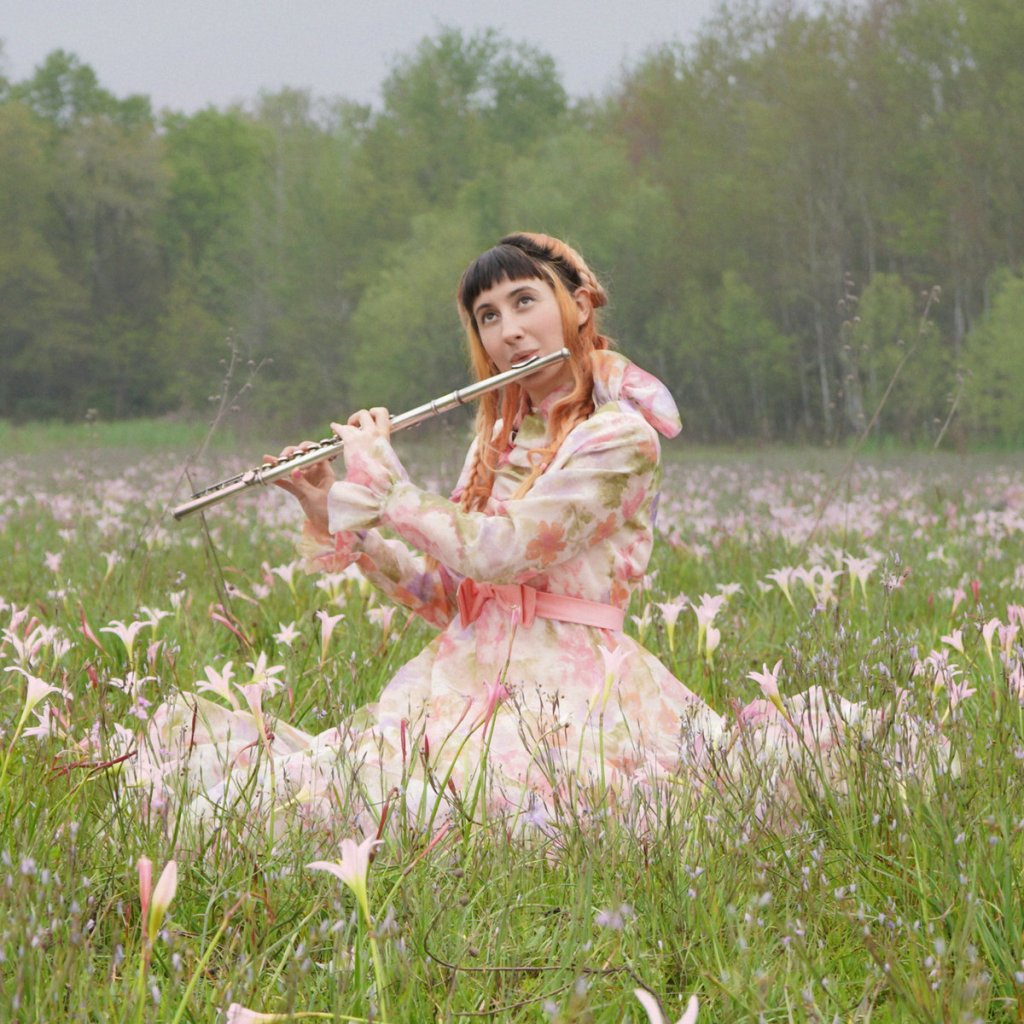
Nicole Miglis recently released her single “All I Can See Is You”, which blew me away. It got me to revisit her solo album as Batry Power, Un1ty Flute, a Leaving Records tape of longform flute recordings. After a spontaneous recording of what became “Un1ty Flute” fell into Leaving founder Matthewdavid’s hands via a mutual friend, Leaving released the project along with a video for the title track. The description of the YouTube clip notes, “Batry Powr is the experimental ambient side-project of Hundred Waters frontwoman Nicole Miglis primarily recording acoustic or battery-powered instruments in public spaces & nature.

The visual, with Miglis playing flute and plenty of skaters, complements the slow-motion, nature-loving ambience of this music. It’s not surprising that this project was released by Matthewdavid, whose own Trust the Guide and Glide (2016) leaned into these and other New Agey devices.

Track one is a pure flute session accented by the field music of chirping birds. Miglis’s playing is both relaxing and mesmerizing. “ii” is the night to “Un1ty Flute”‘s day, the flute traded in for sleepy piano and the bird noise for wordless vocal harmonies. It is, like “Un1ty Flute”, also unhurried and excellent. Track three on the digital version is a Kodak to Graph remix of “Un1ty Flute” with added zither – it’s heavenly! I haven’t listened to much Hundred Waters, but I’ll start soon.

Listen to Un1ty Flute here.
Album of the Week: Mirrorring’s Foreign Body (2012)

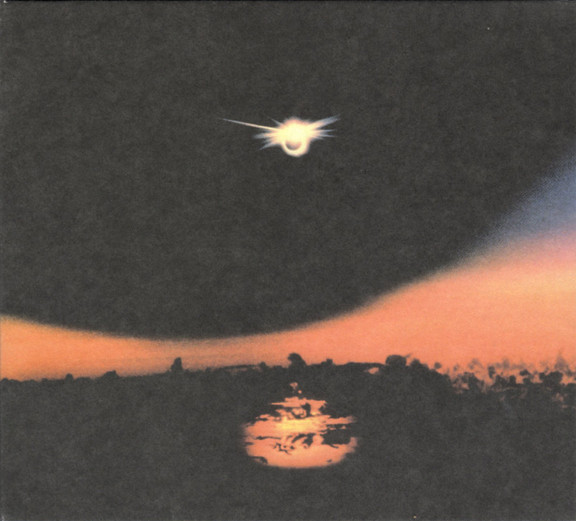
In reviewing Grouper’s split release with Roy Montgomery from 2009 I described her “hazy, delicate and touching” sound, one that would carry into the 2010s successfully – including on this sole album from Mirrorring, the duo of Liz (Grouper) and Jesy (Tiny Vipers). This is, I believe, Grouper’s first release for Kranky (unless you count the digital premiere of “Fell Sound” a month earlier). At the time of its release Grouper’s output seemed like an embarrassment of riches (the double album AIA and the astounding “Water People” / “Moving Machine” 12″ had both been out less than a year) and I didn’t think too much of Foreign Body. Now I approach it like a Champion Sound of the contemporary ambient or folk scene: two greats in collaboration, switching off on lead vocals.

Truly, the Internet has broken my brain because the first word that comes to mind with this album is “goated”. I’ve yet to listen to it on good speakers, but I fear my mind and body might be transported to some far-away desert dimension and never return. In my taste for music that is unhurried, it seems the collaboration of Grouper and Tiny Vipers is the perfect recipe. Heavenly to start, Grouper takes vocals over a massive expanse of drone. It’s a bit surprising, though, that this was released as the album’s advance track and not “Silent From Above”. This is not a judgement of value, but Jesy’s vocals are far less murky than Liz’s, and her words much easier to parse. This suits the tighter “Silent From Above”, its bittersweet and blue guitars and vocals sounding like they were recorded outside by the campfire. “Cliffs”, the longest track here, is also the sleepiest, but it picks up a bit past the 5-minute mark.

Later, “Mine” proves the album’s climax – a huge drone with Jesy’s strong, melodic vocals. Boy if this doesn’t make you feel something. Towards the end the track appears to be eating itself, but then the monster reverb itself fades out, leaving little but space, with “Mirror of Our Sleeping” as a post-script.

Grouper followed Mirrorring with the Dragging a Dead Deer-era compilation The Man Who Died in His Boat (2013) and the sparse Ruins (2014). Tiny Vipers would later release an album of ambient excursions, Laughter, in 2017, which I find under-rated and is for some reason not on streaming services.

Listen to Foreign Body here.

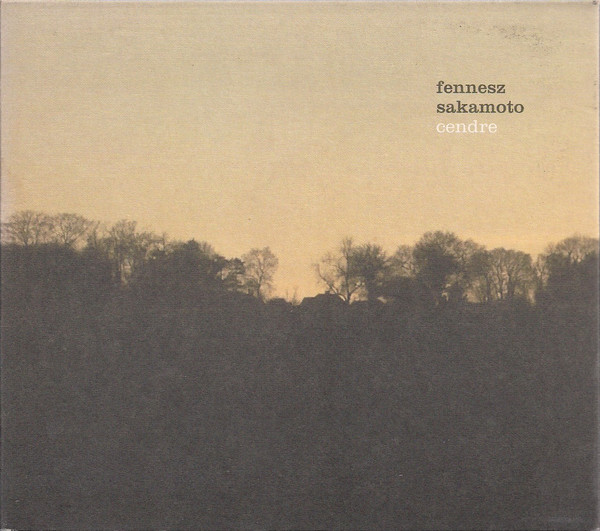
Album of the Week: Fennesz & Ryuichi Sakamoto’s Cendre (2007)

The great Ryuichi Sakamoto passed away recently, and while he has a lifetime of musical achievements under his belt, the work of his I’ve listened to the most is probably this collaboration with Christian Fennesz. The duo had previously collaborated at a live show in Rome, yielding the 2005 EP Sala Santa Cecilia, consisting of one 19-minute track.

If Sala Santa Cecilia is a journey (and an often-brilliant one), Cendre feels a bit more homey. Indeed, opener “Oto” hits like a fresh cup of tea, bright and mellow. Fennesz, whose guitar music occasionally commands with its intensity, steps back as Sakamoto’s piano playing takes center stage.

Sakamoto had the talent of imbuing his playing with emotion, whether that be on a stunning track like “Merry Christmas Mr. Lawrence” or a subdued release like Async. Cendre is no different. “Haru” (sunshine or springtime) radiates with calm satisfaction. “Trace” finds Sakamoto expertly navigating some minor-key dissonance beneath a film of laptop hiss in the record’s first unsettling moment.

Things slow down even more in the album’s back half, with the penultimate “Glow” moving at a crawl. A glitchy duet, it reveals beauty in empty space. Last up is “Abyss”, with Sakamoto’s circular piano melody broken up by a brief respite in the middle of the track. The album ends in 30 seconds of near silence, the curtain closing on an outstanding meeting of two giants.

Listen to Cendre here.

Album of the Week: Bruce Langhorne’s The Hired Hand (1971)

In 1971, the actor Peter Fonda, to whom [Bruce] Langhorne was introduced by [Hugh] Masekela, invited Mr. Langhorne to compose the music for his movie “The Hired Hand,” an austere soundtrack that featured banjo, fiddle and acoustic guitar… Not suited to the pace of Hollywood, to which he relocated from New York in the late ’60s, Mr. Langhorne moved to Hawaii in 1980 to farm macadamia nuts. He returned to Los Angeles in 1985 and, in 1992, learned that he had Type 2 diabetes. His diagnosis inspired him to create Brother Bru-Bru’s Hot Sauce, an organic, low-sodium salsa. -New York Times obituary, 2017

Two years before his directorial debut The Hired Hand, Peter Fonda starred in the classic road-trip film Easy Rider (Fonda was also credited as a screenwriter). Easy Rider looked to the future with its psychedelic narrative, unconventional style and countercultural themes. I haven’t seen The Hired Hand, but its soundtrack by Bruce Langhorne is similarly forward-thinking.

Though the obit above suggests that he was a man of many talents, Langhorne is probably best known as a session player for Bob Dylan, appearing on multiple classic Dylan albums. However, The Hired Hand soundtrack bears little resemblance to Dylan’s music. Langhorne’s guitar on “Opening” is repetitive and hypnotic, as violins provide a cheery accompaniment. Percussion is quite sparse on this track, including a very lightly played dulcimer, lending the song an ambient quality. “Riding Thru the Rain” is ominous, with a piano that sounds as dusty as the untamed West depicted in Fonda’s cowboy movie.

The sound on the recording as a whole has an old-school reel-to-reel quality that is gorgeous, yet the music is not dissimilar to what 21st century artists in the cross-section of ambient and country (Scott Tuma and William Tyler come to mind) make. According to boomkat, “Langhorne assembled each piece alongside his girlfriend Natalie Mucyn, who with no prior mixing or editing experience multitracked the recording via some distinctly lo-fi tape dubbing.”

“Ending”, the album’s longest track, has a middle-section with flutes that is stunning. It’s a lovely finish to a strange, moving and all too brief album from an unheralded artist.

Listen to The Hired Hand here.

Album of the Week: Burial’s Young Death / Nightmarket (2016)

So, like most things Burial, this isn’t actually an album. By my count, Burial has released 20 singles and EPs since 2007’s full-length Untrue. Some of these releases are collaborative, most are solo. Some are one track, most are 2-4. There’s a lot of gems in the group, but this one stands out to me.

Side A’s “Young Death” has a heartbeat and ghostly vocal samples, at least for its first 3-and-a-half minutes (this section would fit well on Untrue). After that, things slow down to a crawl as thunder, breathing and a perfectly placed Skull Kid laugh create the track’s atmosphere. This section feels to me like a precursor to the B-side.

On “Nightmarket”, Burial flips an esoteric Mike Oldfield sample, and the result is like a rave frozen in time, or the biggest moment in trance suspended in amber. To me, it’s sort of like the spacey portion of “Born Slippy” in its epic reach. This sample recurs several times in the first 3 minutes of the track, and I spent countless nights in college with this addictive moment soundtracking nighttime wanderings about campus. The rest of “Nightmarket” (outside of its open space and vinyl hiss) diverges with a slew of video game-y prog-electro. Unlike “Young Death”, there is no backbeat on the track. Its Burial at his most mysterious.

Listen to “Young Death / Nightmarket” here.

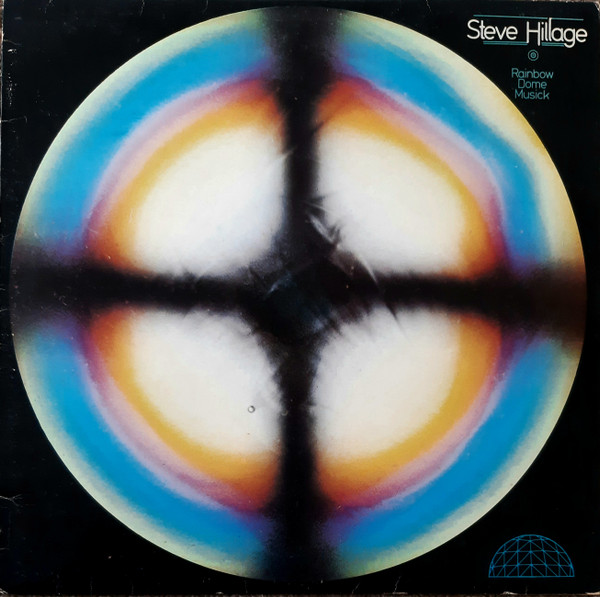
Album of the Week: Steve Hillage’s Rainbow Dome Musick (1979)

Yer tellin’ me you never heard of rainbow dome musick?? Well, big Steve Hillage was quite productive between the years of 1969-1979. At 17, he played lead guitar in Arzachel (previously Uriel, later known as Egg) and joined Gong shortly thereafter. By 1979 he had released 4 studio albums with Gong and 4 solo albums. Most of these fall in the psychedelic rock/Canterbury scene category, but Rainbow Dome Musick exists in its own ambient plane.

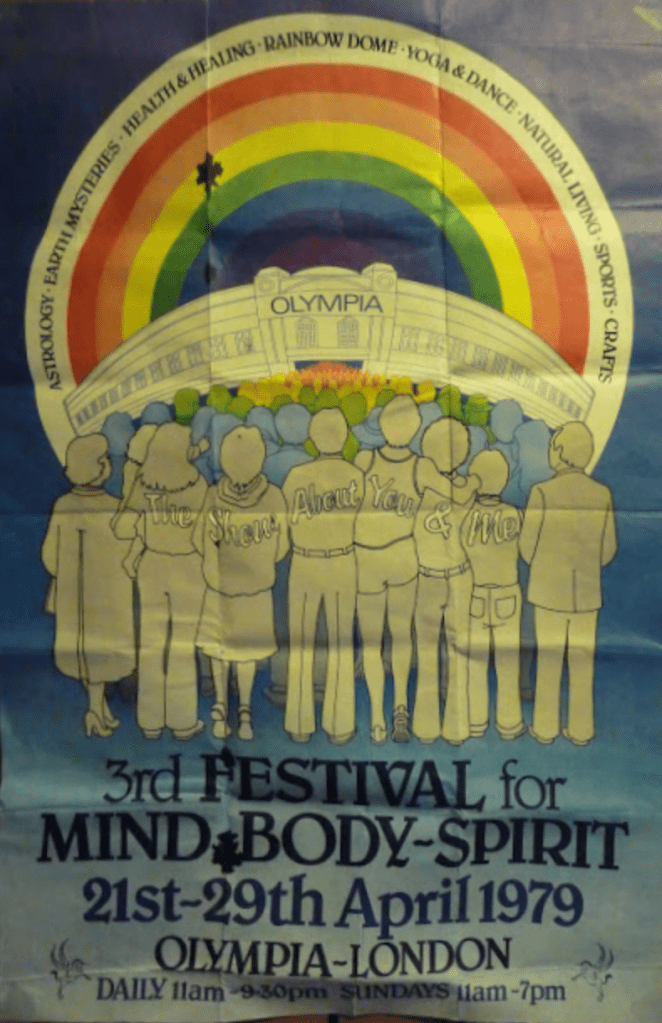
I found some info about the Rainbow Dome on this website, which includes the poster I repasted below. As you can see, the dome was advertised as part of the 3rd Festival for Mind Body + Spirit, which took place at London’s Olympia exhibition space/music venue in ’79. Billed as “The show about you & me”, the festival featured such new age-y attractions as astrology, “Earth mysteries”, and “sports”. Hillage and his wife, the musician Miquette Giraudy, made the music for the Rainbow Dome. I’m guessing this was some sort of psychedelic 3D art piece you could venture inside and space out in, like a Turrell space.

If you’re familiar with Mario Party 3, there’s some sparkly SFX that you hear for about 10 seconds when the players first enter a level (you can hear this at the 6:55 mark here). About 5 minutes into Rainbow Dome Musick, a very similar sequencer sound appears, creating the background for the rest of the track. Shit gets super gnarly about 12 minutes in when Hillage, gently at first, starts ripping on guitar. By 15 minutes in the music has become transcendent.

That’s “Garden of Paradise”, which takes up the A side. The other half is “Four Ever Rainbow”, which to me is somewhat evocative of Ashra’s New Age of Earth meditations. Less ecstatic than “Garden of Paradise”, but quite mellow. The guitar here is more rhythmic, and the synth sounds great.

I really like this comment on the above blog from one Julian Guffogg – “I went then – and met Steve Hillage in the dome!” It appears the event founder Graham Wilson commented as well.

Listen to Rainbow Dome Musick here.

Album of the Week: Music by William Eaton (1978)

Driving drifting through the lonesome sandstone canyons as the sun slanted away, west. You, too, were on your way.

YouTube comment

Private press albums can be hidden gems or unremarkable projects. William Eaton’s debut of improvised instrumental guitar passages definitely falls into the former category. As soon as I heard the first track here I knew this was absolutely golden. After a bit of a warmup, Eaton reaches a brilliant harmonic theme that recalls the storied greatness of John Fahey – who was, I suppose, a contemporary of Eaton’s!

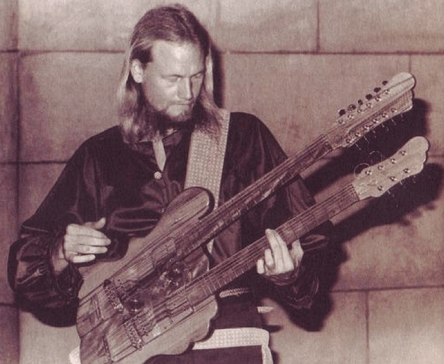
Eaton came from a family of bankers in Lincoln, Nebraska, but after attending Stanford headed to Arizona and ended up, according to Ultravillage, “living out of his car, roaming the desert and eating mesquite pods and cactus fruit.” He began designing his own guitars, including a 26 string and double neck quadraphonic electric guitar.

Given the open and wandering, almost ascetic lifestyle Eaton led, it’s not surprising that this album is full of ambient space and warm, gentle tones. It’s become my recent comfort album, and resonates as a night-time listening companion the way Scott Tuma’s Hard Again (2001) did for me in 2020 (when, god knows, I needed it).

Track 7B was sampled to great effect by DJ Shadow on 2002’s “Fixed Income”, so props to him for knowing about this one 20 years ago, before it was even reissued. I mean, the guy made Endtroducing after all, so that checks out. Eaton continued to record and release music, though I haven’t yet heard other work of his that captures the same subtle beauty as Music. He co-founded a luthiery (guitar construction) school in Phoenix, Arizona that he now directs.

Listen to Music of William Eaton on Bandcamp or Spotify.

You can see some of Eaton’s incredible self-designed guitars here.

Album of the Week: Clear Horizon (2003)

I’ve not delved into much music by the British band Flying Saucer Attack, but I tend to trust anything released by Kranky, the superb American label that delivered masterpieces by Stars of the Lid, Labradford, Windy & Carl and so on.

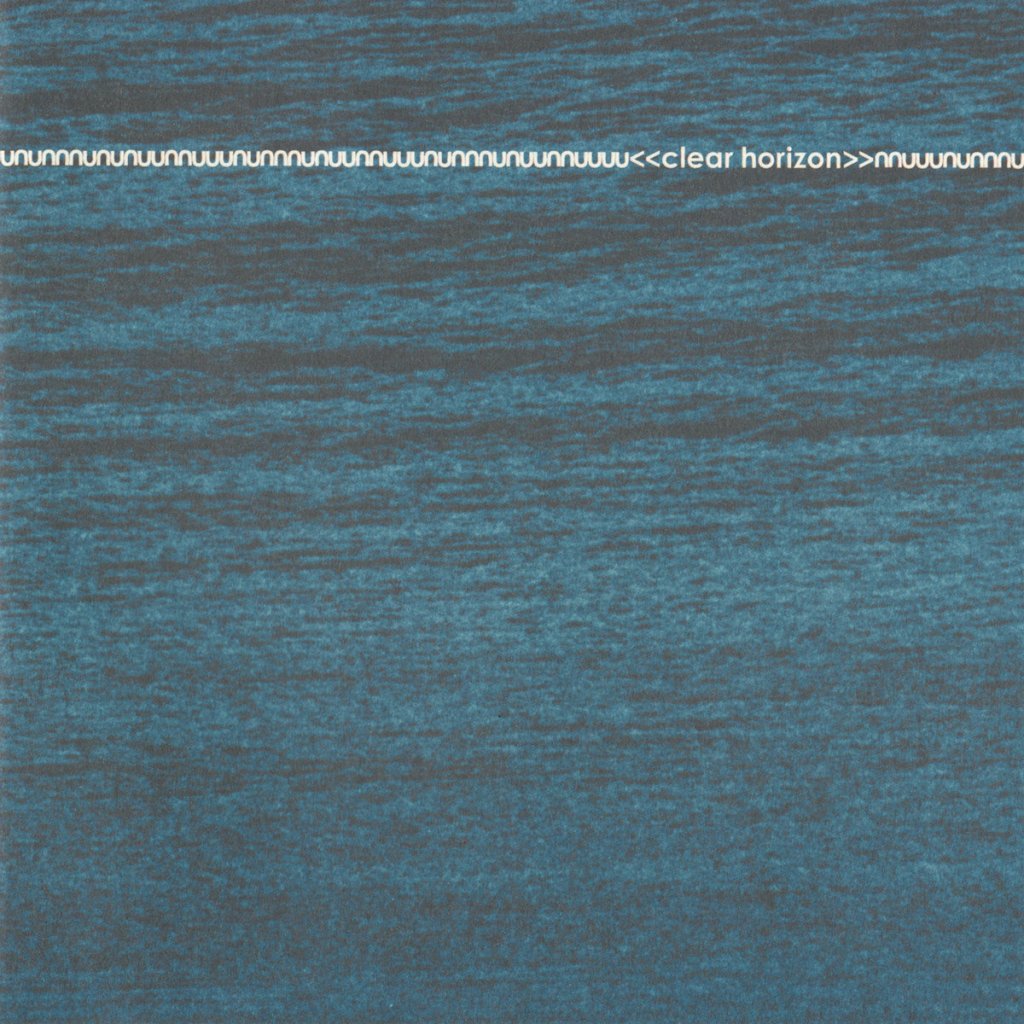
Clear Horizon was the collaborative project of Flying Saucer Attack’s David Pearce and Kranky recording artist Jessica Bailiff. By all accounts, the artists created the project by sending each other tapes across the Atlantic in the early 2000s, without recording in the same room.

For me, this is one of those albums where the first track is the best. “Watching the Sea” is some ascension type shit, all blissed-out guitar and sweet singing. I love this song.

“I wonder why you haven’t seen the light for days,” Bailiff sings on “For Days”. And there is a hermitic vibe to this album, everything cavernous, moving at a slow pace. The song structure fades into feedback, transitioning into ambient washes that sound more like Fennesz than any singer-songwriter project.

“Sunrise Drift” is the first song to float along with no rhythmic guitar strumming, just vocals and chimes in an ether of white noise. It’s meditative music. This stuff requires patience to be appreciated, and a more critical ear might deride this album for lack of direction. And it’s not all brilliant, of course. “Death’s Dance” in particular seems more unpleasant than enjoyable. But mostly, Clear Horizon is gorgeous and relaxing, and a forgotten gem.

Listen to Clear Horizon here.

Album of the Week: Julianna Barwick’s The Magic Place (2011)

“I feel big, you know what I mean? Like, not big in the sense of weight, like, gaining weight or nothin’ like that. Like colossal.”

***

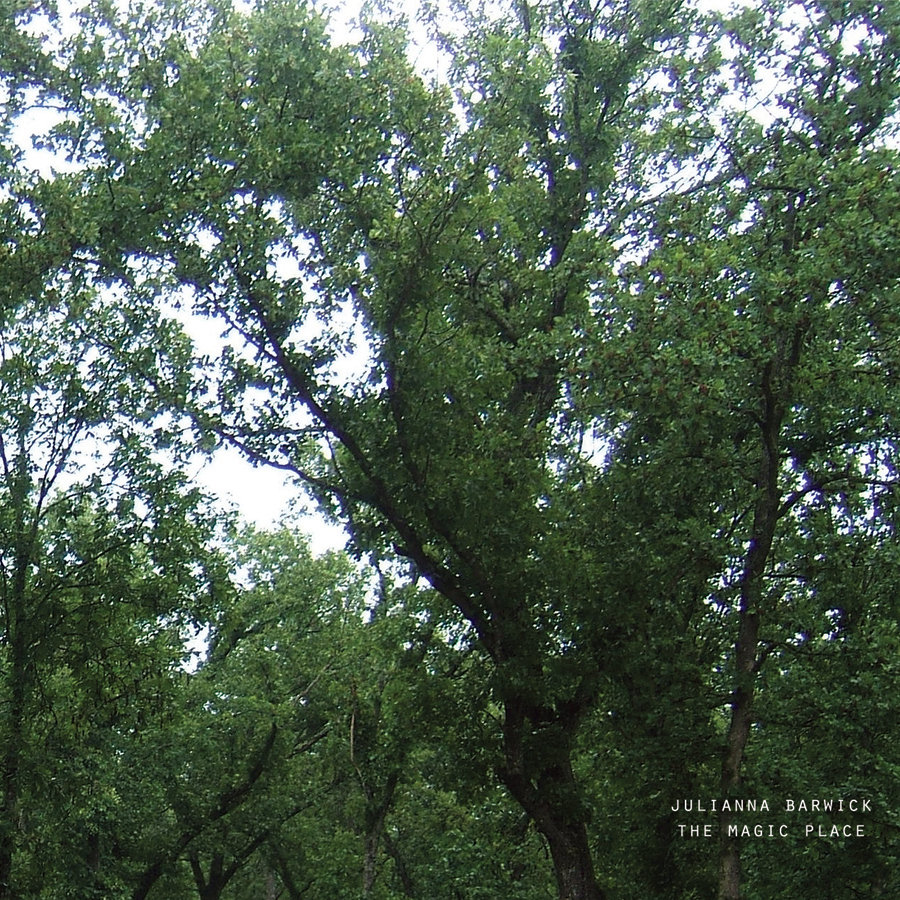
I guess I can believe it’s been 10 years, especially because the last one has felt so long. Still, Julianna Barwick’s debut feels big, which is all the more impressive considering how little equipment went into its recording. Here, it’s just her multi-tracked vocals and one or two instruments added in.

With hardly any discernible lyrics and a consistent, tried-and-true approach, Barwick’s music can be difficult to write about. Wyndham Wallace of The Quietus admitted as much, writing that “Critics have fallen over themselves to conjure up grand metaphors that encapsulate the experience” of her music. There have been comparisons to Enya, Eno, Cocteau Twins, and any other classic music so often described as “ethereal”. But really, it’s not that deep. Barwick described herself as “a pretty happy, easy-going person who is really excited about life.”

By her own account, Barwick always loved to sing. And so, by simply improvising vocal lines and layering the .wav files in GarageBand, she made her breakthrough album. There’s a good video from the Magic Place era that shows her doing it:

It’s not hard to reason why Barwick has named her albums The Magic Place, Nepenthe (“that which chases away sorrow”), or Healing Is a Miracle. There is peace in her music. “White Flag” was always my favorite, and it’s kind of hard to describe without sounding corny (like the gates of heaven opening?) I will say that early 2011 was not a particularly great time in my life and this was music like I’d never heard before, simultaneously calming and exhilarating. Back then, Asthmatic Kitty wrote that “Bob in Your Gait” “sounds the way humans should treat one another.” In a much more recent interview, Julianna said, “I’ve heard from a lot of people that The Magic Place in particular has gotten a lot of people through some dark times in their life, so I’m really glad for that. That makes me feel really good…” You can add me to that list!

I like everything she’s done, and the extended versions of Healing Is a Miracle from last year really blew me away. But it’s hard for me to find any faults in The Magic Place. Even its sequencing is flawless. “Envelop” starts the record off by doing just that, drawing the listener in. “Flown” is a perfect conclusion, like lying down in bed at the end of a gratifying day. I’ve been a fan since this release and Julianna Barwick’s music is a treasure. Hopefully someday I’ll be able to see her perform live.

Check out The Magic Place on Spotify.

Album of the Week: Roy Montgomery & Grouper’s Split EP (AKA Vessel) (2009)

In 2009, veteran New Zealand psych-guitarist Roy Montgomery (of Dadamah and Hash Jar Tempo, among other things) and Liz Harris’ Grouper released this magnificent split 12″ on Harris’ Yellow Electric label as well as ambient artist Jefre Cantu-Ledesma’s now defunct Root Strata label.

Montgomery’s side is dedicated to Sandy Bull. Bull was a groundbreaking folk-guitarist who became a staple performer in the Greenwich Village scene of the early 60s and pushed boundaries on his albums, mixing international instruments, sounds and genres. His “Blend” is presumably the inspiration for Montgomery’s “Fantasia on a Theme by Sandy Bull (Slight Return)”. Like “Blend”, “Fantasia” is a roughly 20-minute piece of marvelous acoustic guitar work, with multiple changes in tempo and melody. A significant difference is that on “Blend”, Bull was accompanied by jazz drummer Billy Higgins (of Ornette Coleman’s band, among others), where Montgomery’s “Fantasia” has no drums. This is made up for by the reverb on Montgomery’s guitar, which gives the effect of the artist accompanying himself. It’s a brilliant psychedelic piece to get lost in.

Grouper’s side comes from one of the strongest periods of her consistent career: between the releases of Dragging a Dead Deer Up a Hill and AIA, arguably her two best full-lengths. If you’re a fan of Grouper you know what to expect: music that is hazy, delicate and touching. There are four songs, the standout being “Vessel”, which recalls (to me) the melody of “The Star-Spangled Banner”. “Pulse”, the instrumental closer, features some prominent dog-barking (presumably from the one pictured here).

Harris and Cantu-Ledesma would later collaborate as Raum on 2013’s Event of Your Leaving, and Harris featured on Roy Montgomery’s 2018 album Suffuse.

This split is not on Spotify. Check out Grouper’s side on Youtube, below.