Album of the Week: Bebe & Cece Winans’ Heaven (1988)

The existence of God is a question that has been pondered by humans for millennia, and there is no definitive answer. It is a matter of personal belief and faith...

Ultimately, the question of whether God exists is one that each individual must answer for themselves.

-Google’s AI chatbot Gemini, in response to “is God real?”

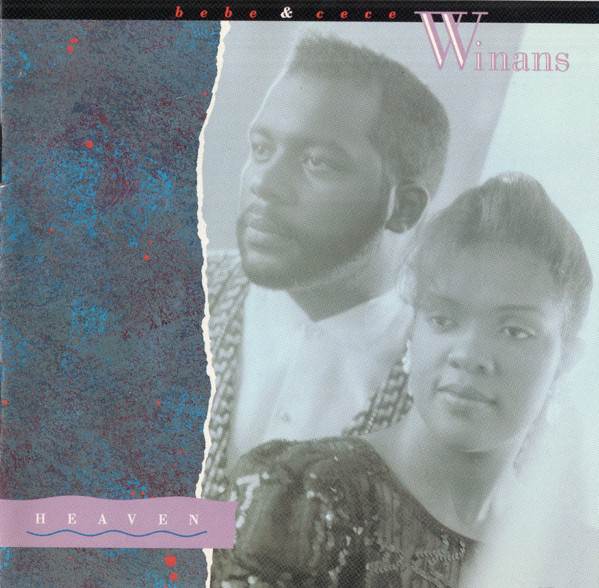
Well, jury’s out on whether or not God is real. But Heaven definitely is! And its leadoff title-track is certainly heavenly. As “The White Cliffs of Dover” envisioned a post-WWII world of peace, Bebe Winans’ “Heaven” anticipates the celestial realm as a place where “there’s no more use for guns and war.” Over a beat that melds disco, processed Brazilian percussion, funky bass, and glass synth stabs, the brother-sister duo sing their gospel. It’s a masterstroke of pop-R&B and an ultimate 80s time capsule.

Keith Thomas, who later co-wrote Usher’s “Love in This Club”, takes the helm on the music side here, and not all of his tracks are as successful as “Heaven”. “Celebrate New Life” bores in comparison. “Lost Without You”, though, retains the synth magic. Winans’ lyrical odes to God are thinly veiled, but veiled enough that the choosy agnostic can enjoy this as a ballad of lost love. The Whitney Houston-featuring “Hold Up the Light” is another banger, with Bebe quoting the Pledge of Allegiance toward the end (probably the only song you can say that about).

The back half of Heaven is a little less interesting, but things close well with a cover of “Bridge Over Troubled Water” followed (on the CD/streaming version) by a 6-minute extended dub of “Heaven”. The Simon & Garfunkel cover is delightfully ethereal, and the “Heaven” remix is fun, if a bit of a mess. Overall, Heaven rides on the strength of its title track, with some other worthy tracks here and there.

Listen to Heaven here.
Album of the Week: Judy Roberts’ The Other World (1980)

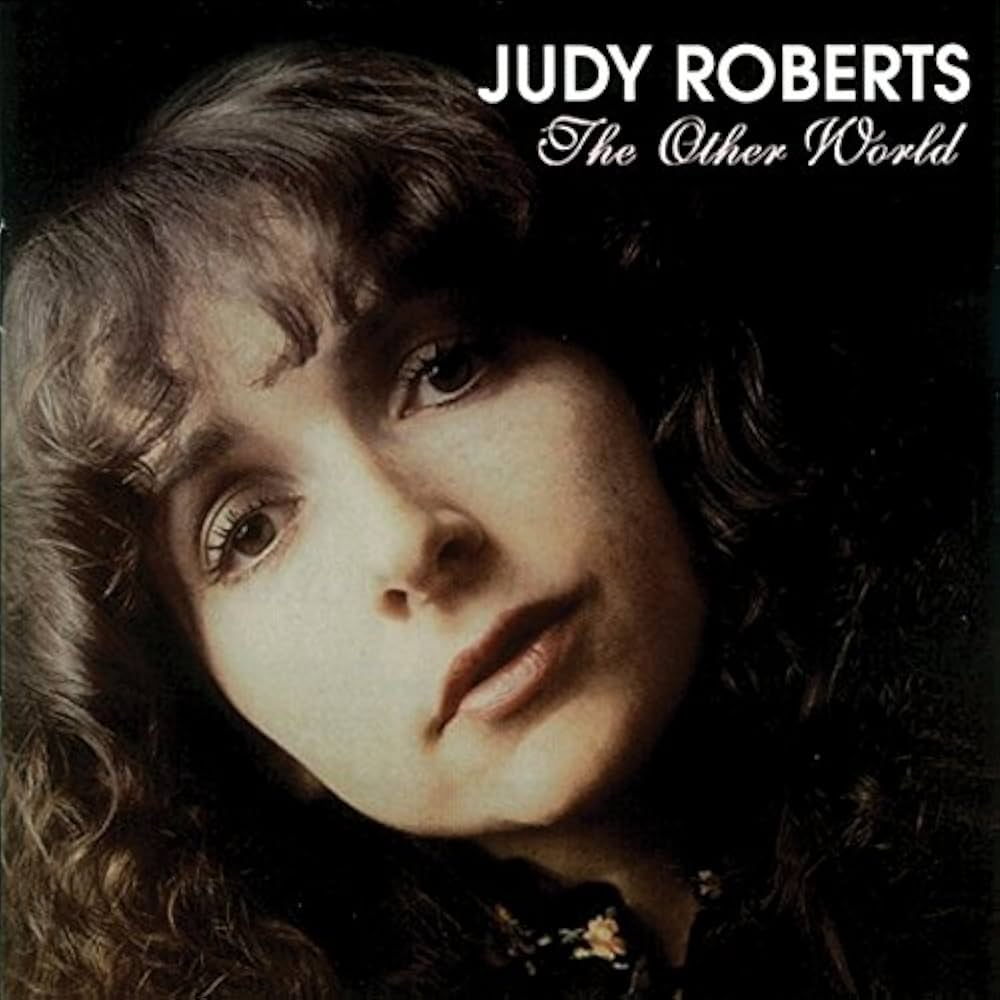
Schmaltzy groove, thy name is Judy. One of those scrappy used vinyl bin records that blows you away, The Other World has a dated quality. From the scat-singing, to the cursed funk bass (check out “The Roadrunner”), to the old-school synths, The Other World is, like peak Steely Dan or Weather Report, a product of the late 70s through and through. Playing frequently in jazz clubs around Chicago since the 70s, Judy Roberts arranged these tracks, sang, and played piano and synths on this, her second album.

As I mentioned, there is a fair amount of dodo-dada scatting on The Other World, which may filter out the squeamish. This works best on the incredible title-track, which hits somewhere between disco and The Hissing of Summer Lawns. Roberts’ high-pitched ba-be-das are the perfect ending for this banger of a song (one heck of a guitar solo in here as well). Later, “It’s Always 4 A.M.” may be The Other World‘s sweetest moment, a soft ballad that allows Roberts to lean into her lounge singer act with great results. Leon Russell’s “Rainbow in Your Eyes” is given the hyper-samba treatment. After sing-talking in her Yapanese, Roberts bobbles the keys around like a hot potato. It’s sick.

The record ends in true jazz-nerd fashion with a take on “Round Midnight”. A straightforward cover, it puts a classy touch on the end of an occasionally silly record. Still, I happen to be the kind of person that The Other World‘s mix of vocal jazz and yacht rock was made for, so I love it.

Listen to The Other World here.

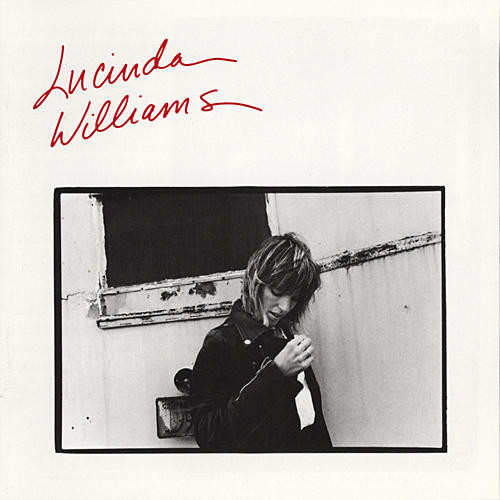
Album of the Week: Lucinda Williams’ s/t (1988)

After recording for Folkways in 1979, Lucinda Williams spent several years playing shows around LA before finding commercial success. At one point, Williams was close to cutting a deal with Columbia, but “Ron Oberman and his colleagues in the L.A. offices of Columbia listened to [my demo] and… said it was too country for rock. They sent the tape to the Columbia executives in Nashville, who said it was too rock for country… I’ve always enjoyed saying that it took a British punk label to give me a chance to make a commercial record.” Punk or not, it was Rough Trade who finally took on Lucinda, and allowed her to self-produce and record the album organically in country engineer Dusty Wakeman’s Venice Beach studio.

I already loved Lucinda Williams by the time I finally heard this record, but it seems like a great entry point to the uninitiated. It’s a remarkably consistent set, and the songs are poppier than her breakout Car Wheels On a Gravel Road (1998), as heard right away on “I Just Wanted to See You So Bad”. This song dates back to the 70s, and is about the poet Bruce Weigl, who Williams “had a deep crush on” in 79-80.

Where Williams really shines is on the tender tracks. “Am I Too Blue” is a moving exercise in vulnerability, and “Crescent City” mentions Mandeville, a mental hospital outside of New Orleans where her mother spent time.

The production on here is somewhat dated, as it naturally has an 80s country feel that may not appeal to everyone. Yet I bet it would sound fantastic on cassette, and the album is all-killer, no-filler regardless of medium.

Listen to Lucinda Williams here.

Quotes excerpted from Lucinda’s great memoir, Don’t Tell Anyone the Secrets I Told You.

Album of the Week: Willie Colón & Héctor Lavoe’s Vigilante (1983)

Two legends of Puerto Rican music, Willie Colón and Héctor Lavoe collaborated many times in the 15+ years before they recorded Vigilante. The trombonist Colón was recording albums in New York as early as 1967, when Lavoe first joined him as a vocalist at the recommendation of Johnny Pacheco, leader of the influential Fania Records label.

Though their collaborations were successful, Colón and Lavoe did not record together in the mid-to-late 70s and Vigilante was a sort of reunion, as well as their last album together. Recording began in 1982 as a soundtrack for the Robert Forster film Vigilante, which Colón also played a minor acting role in. Though the music was not used as the film soundtrack, it was completed and stands as a remarkable album.

Covering roughly 38 minutes in just 4 tracks, Vigilante is an example of musicians successfully stretching out and jamming, something Lavoe had previously done on albums like Comedia (1978), with its 10-and-a-half minute opener “El Cantante”. “Vigilante”, the second track here, is even more ambitious at over 12 minutes, with orchestral ambience, electric guitar solos, and Colón on vocals. While it sort of abandons the salsa format, “Vigilante” is the kind of stirring, high-concept track befitting an action movie, as was intended.

On the second side, the tale of one “Juanito Alimaña” unfolds to a hip-shaking beat. Lavoe belts as a chorus repeats,

En su mundo mujeres, fumada, y caña
Atracando vive Juanito Alimaña

The closer “Pasé la noche fumando” (“Spent the Night Smoking”) is my favorite track, with beautiful lyrics. No matter how much he smokes or drinks, Lavoe can’t forget his lost love. As he sings it,

Y a voy a fumar de nuevo
Y a pedir bebida
Al saber que luego
Por mas que trate, sin ti no sirve mi vida

This is accompanied by a horn-filled instrumental that just oozes romance and pain. There is some choice guitar picking about 6-minutes into this incredible track.

This album is a bright spot in the otherwise tragic final decade of Hector Lavoe’s life. Lavoe suffered the loss of a family members, a suicide attempt, and complications from AIDS, passing away at age 46 in 1993. Willie Colón has recorded since and performed live as recently as 2023.

Listen to Vigilante here.

Album of the Week: Weekend’s The ’81 Demos (1995)

As a high schooler reading Kurt Cobain’s Journals, I found out about one of his favorite bands, Young Marble Giants. YMG had only one album, 1980’s Colossal Youth: a genre-defying collection of bare-bones tracks. As a teenager, I didn’t understand it, and it wouldn’t make sense to me for years. When it finally clicked, it became something of a revelation.

Young Marble Giants singer Alison Statton led the band Weekend somewhat immediately after Colossal Youth. Other than her, Weekend shares no members with YMG, but their spirit of minimalism is intact on The ’81 Demos, a collection of tracks recorded in 1981 but not released until 1995 by Vinyl Japan.

“Drumbeat” begins the EP with a kind of twee magic in its cute lyrics and chiming bells. Led by a soft drum machine, the 9-minute “Red Planes” is a brilliant example of a song greater than the sum of its parts. Strings and bass form the melody, and Statton’s voice enters after an appropriate length of time, allowing the track to breathe. The result is an ambient pop fan’s dream jam, a track that could easily last another 2 or 3 minutes, but winds down to a halt. “Nostalgia” acts as a blueprint for the kind of music Beach House would make 30 years later, and “Summerdays (Instrumental)” rounds out the demos with a Durutti Column-esque pep.

Weekend did release an album, 1982’s La varieté, but it only captures so much of The ’81 Demos‘ magic. While all 4 songs from the ’81 Demos are on La varieté, they were re-recorded with cleaner production. “Drumbeat for Baby” has some unnecessary horns and “Red Planes” appears as a truncated 5-minute version. In my humble opinion, the songs simply sound much better as their original demos. Thankfully, they were re-issued by Vinyl Japan and the UK label Blackest Ever Black, and are easy to find on streaming services.

Listen to The ’81 Demos here.

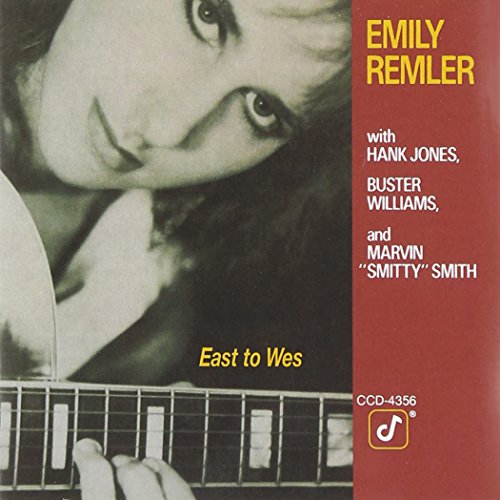
Album of the Week: Emily Remler’s East to Wes (1988)

Welcome to 1988, the CD era! George Michael and Rick Astley ruled the charts, and Kenny G’s Silhouette would go 4x Platinum. Miles Davis was recording the glossy Amandla with the help of writer and bassist Marcus Miller, who had just written and produced the hit “Da Butt” for D.C. go-go group Experience Unlimited (chorus: “she was doin’ the butt”). Wayne Shorter’s Joy Ryder, a synth-filled foray into adult contemporary, was described as “grossly overproduced middle-brow funk”. Jazz wasn’t what it used to be.

Emily Remler, then, might as well have been living in the 50s. The 30 year old Berklee alum was devoted to bebop and swing, her greatest idol the jazz guitar giant Wes Montgomery. “I was so obsessed with Wes Montgomery that I had a picture of him on my wall,” Remler shared in a 1986 interview. “And for two years, I learned a new Wes song every day.” Hence the title of her sixth album East to Wes.

Though the album itself features no Montgomery compositions, East to Wes is largely composed of Remler’s take on other songs. “Daahoud”, from the classic Clifford Brown and Max Roach, starts things off with pep. Marvin Smith on drums provides a hopping rhythm allowing Remler to take off. Hank Jones, who played piano with Cannonball Adderley among many others, works as a melodic counterpoint.

“Snowfall” aptly begins gently and rhythmically before Remler takes things up a notch on acoustic guitar. You can watch her performing the song with her eyes closed, deeply focused. Smith’s drumming accentuates the speed of Remler’s playing while Buster Williams provides the perfect backbone. Remler’s original composition “Ballad From a Music Box”, by contrast, is 7 minutes of mellow, an easy highlight for me. Later in the album, the standard “Softly, As in a Morning Sunrise” gets the centerpiece treatment as the longest track. Remler draws it out nice and easy, waiting at least 4 minutes to really let it rip with the fingering before Hank Jones takes over. Williams even gets a tight solo in.

Emily Remler died just 2 years after the release of East to Wes, a tragic loss for a young musician who was steadily improving. Listening to the album today, it feels like neither a product of the 80s or a bebop-era time capsule, but an ageless testament to Remler’s skill.

Listen to East to Wes here.

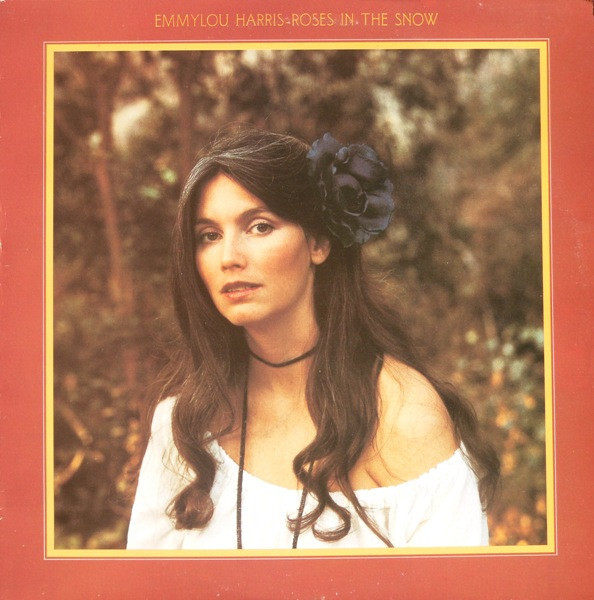
Album of the Week: Emmylou Harris’s Roses in the Snow (1980)

Emmylou Harris cut her teeth recording with the late Gram Parsons in the early 70s before breaking out as a solo star. Her output was eclectic, with records ranging from country rock, to Beatles covers, to folk music and other styles. In 1979, she changed direction yet again, hitting the studio with multi-instrumentalist Ricky Scaggs for a bluegrass album.

“Only at one point was I told that what I was going to do was an absolute mistake, was going to end my career, was going to become a commercial disaster—that was when I wanted to do Roses in the Snow,” she told Lucinda Williams in 1997. “And I just said, ‘Well it’s my career.’ I knew I had to make that record… Everybody I knew wanted to do a Bluegrass record and everybody was talking about it, and I wanted to be the first.”

Roses in the Snow, then, wasn’t a mistake at all. It peaked at 26 on the Billboard charts and collects a rich assortment of recordings, beginning with the esoteric title track written by Ruth Franks and originally performed by Bill Grant and Delia Bell. Finding some lyrical parallels with Gram Parsons’ “We’ll Sweep Out the Ashes in the Morning” (on which Harris sang), it’s an upbeat start to a short and sweet album. Always with a trick up her sleeve, track 4 of the album is Emmylou’s cover of Paul Simon’s “The Boxer”, eschewing the traditional country/bluegrass songbook.

Acoustic guitar legend Tony Rice, who died in 2020, plays a key role on this album. Rice, whose proficiency in soloing found him collaborating with virtuosos like Jerry Garcia and Béla Fleck, appears on 6 of the album’s 10 tracks. His solo on the folk classic “Wayfaring Stranger” is beautiful and lithe. He also provides fast guitar accompaniment on “I’ll Go Stepping Too” and delicate picking on “You’re Learning”. Probably the biggest accomplishment on side B is “Miss the Mississippi (and You)”, which sparkles with a kind of classic Hollywood sweetness.

Among other guests, Johnny Cash can be heard singing on “[Cold] Jordan”. The album’s streaming version (a rerelease from 2002) features 2 bonus tracks, including a great take on Hank Williams’ “You’re Gonna Change”. Below, see Harris play the title track from “Roses in the Snow” in 1993.

Listen to Roses in the Snow here.

Album of the Week: Steel Pulse’s Earth Crisis (1984)

Forgive me if this one reads weird because I’m in the midst of a 4-days-and-running cold that is probably not Covid (but could be) but still kicking me around, and I’m under the influence of cold medicine and a weird sleep schedule. That said…

This album has one of the best opening lines ever, which is: “Open sesame / Here comes Rastaman!” Dudes were coming out the gate lit, and “Steppin’ Out” might feel almost too cheery an opener when you look at this album’s cover art. Interesting collage that features such evils as the KKK, napalm bombing, Reagan, and the uh… Pope? I don’t really know enough about history to know what Cold War England was like in the early 80s, but maybe the vibes were shaky. “Tightrope” and the title track embody this unease lyrically.

Reggae was not averse to the squeaky clean sheen of 80s production, and it shows here. While the smooth sax (“Throne of Gold”) and synthetic sounds might be a horrorshow to some, I love it. Plus, Steel Pulse have the songs to back it up. Their style isn’t for those who stick to early roots or obscure dub sounds, but they’ve certainly built up a legacy over some decades. The first time I heard them was playing Tony Hawk’s Underground 2, which featured “Born Fe Rebel”. Fantastic song, and I was later turned onto this album’s centerpiece “Rollerskates” (AKA “Life Without Music”) via DJ Screw’s legendary June 27 tape (whaaaat). The normal tempo version rules, too, and is one of Steel Pulse’s best known songs. Once again, Steel Pulse manage to take a dark subject (getting your radio jacked [smh]) and make it sound like sunshine.

I’ll let Wikipedia’s description of “Wild Goose Chase” take the lead here: “This song laments the misguided use of technology for purposes which the song’s author, David Hinds, views as unnatural, such as in vitro fertilization.” This one also calls out contraception and calls abortion “legal murder”. Bro are you an ally or what? It’s 2022. No but ending the album with an anti-abortion jam is pretty weird. Still kinda bops tho. Smh.

Overall, this album is fire and makes me want to listen to more Steel Pulse. If they have any better albums let me know.

Listen to Earth Crisis here.

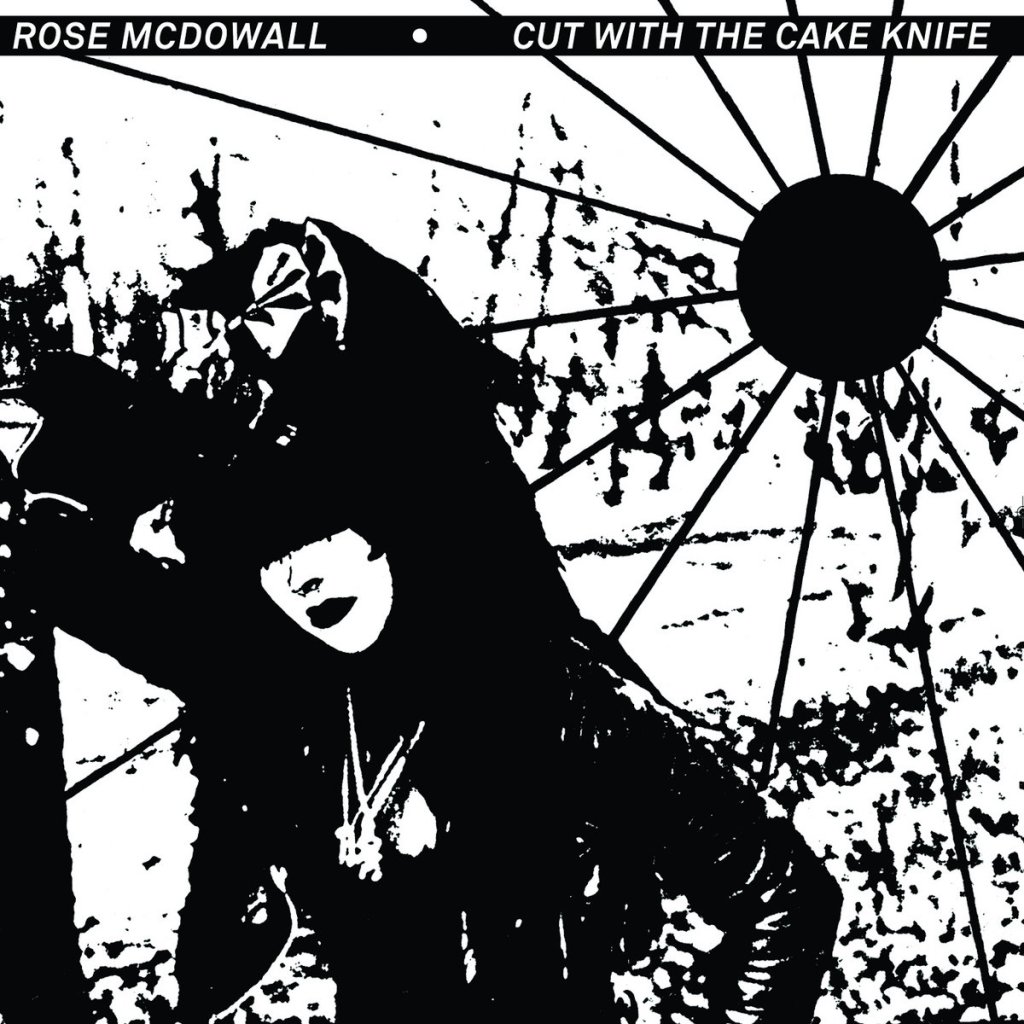
Album of the Week: Rose McDowall’s Cut With the Cake Knife (2004)

First off, if you haven’t listened to Strawberry Switchblade, do yourself a favor! The Scottish new wave group’s self-titled album from 1985 was a major revelation to me 4 years ago, and it still rules. As a major fan of Cocteau Twins and Kate Bush, I was amazed at how long it took me to hear Strawberry Switchblade, a record filled with great songs and effervescent charm.

Although the group wrote songs for a second album, they broke up before it materialized. The band’s Rose McDowall then recorded Cut With the Cake Knife in 1988 and 1989, featuring some of the songs she wrote for this fabled follow-up (including the title-track).

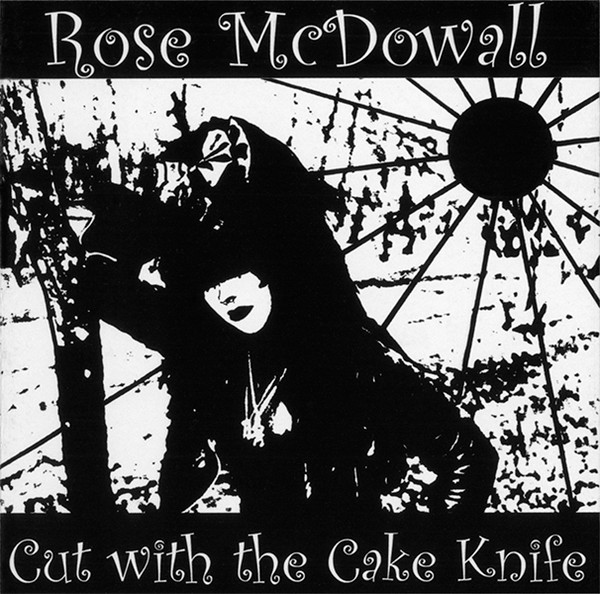
Cake Knife, it would seem, met a similar fate as the unreleased Strawberry Switchblade album, given that it went unreleased until 2004. The original cover’s goofy Microsoft Word font was changed to the image above when re-released by Sacred Bones in 2015. Funny enough, I actually discovered this album recently from a thread of worst album cover fonts.

Onto the music: “Tibet” is a killer opener, a track that ranks among the best Switchblade material. “Sunboy”‘s drum machines are more dancey, backing a glimmering guitar melody and sparkly synths. “Darkness is my home,” McDowall sings, owning the emo-goth vibe that tows the line so brilliantly with the sugary goodness of her music.

Other than a decent, if unnecessary, cover of “Don’t Fear the Reaper”, Cut With the Cake Knife is a great slice of 80s pop that suggests Strawberry Switchblade had more to give than their short career allowed them to. McDowall recorded with several other acts, including SPELL with industrial weirdo Boyd Rice (NON). Thankfully, Cake Knife exists to extend the legacy of Strawberry Switchblade’s inimitable music and style.

Listen to Cut With the Cake Knife here.

Album of the Week: The Field Mice’s Snowball (1989)

Takin’ it back to ’89! Well, back to 2011 for me, the year I first heard this classic album by The Field Mice. I think I was looking for more stuff like Magnetic Fields, the ultimate Field band (shoutout to The Field and Field Music though), which led me down the “twee” rabbit hole.

When you talk about twee pop you talk about the UK’s Sarah Records. The Bristol imprint founded in 1987 thrived on pressing cute, catchy indie pop. The Field Mice’s debut single “Emma’s House” remains a staple in the subgenre, and even its cover art is twee. Less than a year later, the band released their debut album Snowball on Sarah in all its twee glory. “Couldn’t Feel Safer” is, indeed, about feeling completely secure in the arms of a lover.

Snowball isn’t all overly cutesy, though. I think the 3 minute instrumental opening to the album really draws the listener in, and there’s some ambiguity there. Like, is this some kind of Durrutti Column type shit, or “Alternative Dance” or something? Nope, The Field Mice have lyrics, and they’re precious. But not overkill. And I think what helps with that is the laid-back vocal delivery. Robert Wratten doesn’t have the range or emotional delivery of someone like Morrissey, but the songs and the sound make up for that.

“End of the Affair” always had me in my feelings with those lil MIDI horns (I think that’s what they are), “This Love is Not Wrong” makes me want to dance. “Everything About You”‘s guitars ring out like “I Want to Hold Your Hand”, which makes sense – is there a more twee Beatles song? And for a twee pop album it ends on a fairly dark note with the frigid “Letting Go”. Perfect!

It isn’t the most complex record ever made, but it is potent. And to me, it’s very innocent. I’ve listened to some other music from The Field Mice and related side projects, but nothing has struck me quite like this one. It’s one that takes me back to being 16, but is not at all difficult to appreciate in the present.

Listen to Snowball here.