Album of the Week: Catherine Howe’s What a Beautiful Place (1971)

Now that Joni Mitchell’s music has been removed from Spotify, you might find yourself yearning for some lovely 70s female folk singer-songwriter type beats. Well, you’re in luck if you’ve never heard of Catherine Howe. The British Howe made a brilliant debut that may have been more well known had the ill-fated record label Reflection not shuttered about a month after their release of the album.

What a Beautiful Place, produced by Bobby Scott, who wrote “A Taste of Honey” (most famously known as the opener to that evergreen bargain-bin classic, Whipped Cream & Other Delights) and produced Roland Kirk’s superb I Talk With the Spirits (1965). Two very different styles, no doubt, but they show the range that Scott was capable of. He plays keys on What a Beautiful Place, adding a delicate (or, as on the title track, jaunty) touch.

If you listen to “Up North”, you will know peace. This is the first real song on the album and a true standout. The London Symphony Orchestra brings a lush and moody accompaniment to “On a Misty Morning”, and they’re also responsible for the “Also sprach Zarathustra”-like prologue, interlude and epilogue to the album that give it a distinct Romantic flavor. “It’s Not Likely” has an epic melody similar to that of Gene Clark’s “Strength of Strings”, always a good thing. “My heart’s in a hundred places,” she sings on “Words Through a Locked Door”, “Part of it’s under a tree / Part of it by a singing brook / And part I kept for me”. Lovely stuff.

According to Howe, the album was recorded in four days and with no overdubs. The brilliant folks at Numero Group saved What a Beautiful Place from obscurity by rereleasing it in 2007. All props to them, and to Howe, who has released music as recently as 2015. We here at GSG Enterprises also stan the sexy bonus track “Let’s Keep It Quiet Now”.

Listen to What a Beautiful Place here, and you’ll think “What a beautiful place.”
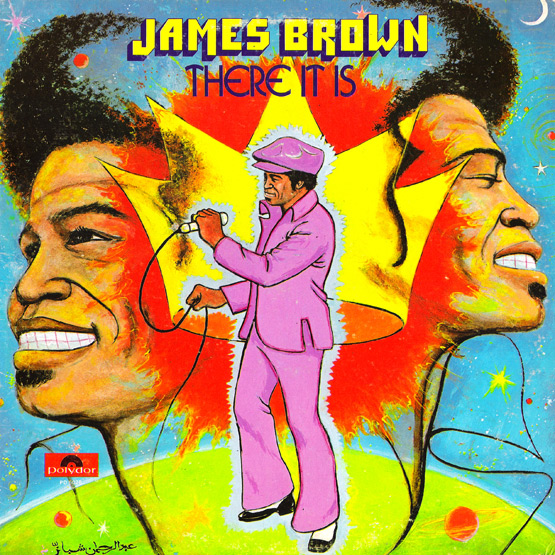
Album of the Week: James Brown’s There It Is (1972)

The Godfather of Soul has an overwhelmingly huge discography, and I’ve heard relatively few of his studio albums, live albums or compilations. The guy basically invented funk music, and many fans point to records like Sex Machine and The Payback as essential collections of his energetic funk mastery.

There It Is is a bit different. It contains some tracks that are outside the sound of James Brown’s typical oeuvre. “King Heroin” is amazingly surreal: over a laconic groove, Brown describes a dream about a “strange weird object” talking to people. Turns out it’s heroin, and Brown (as the anthropomorphic heroin) recites the dangers of the deadly drug. This one must be heard to be believed! Ultimately, James Brown’s anti-drug PSAs feel hypocritical, as he would go on to abuse PCP and other drugs for years. “Public Enemy #1” follows the example of “King Heroin”, but packs less of a punch.

There are a few classic funk cuts here, most notably “Talkin’ Loud and Saying Nothin'”, “I’m a Greedy Man” and the title track. “Who Am I” is a rare James Brown ballad, and his voice isn’t exactly tailor-made for the style. Nevertheless, I like it. The closer “Never Can Say Goodbye” has a laid-back beat similar to “King Heroin”, but there’s no proselytizing on this song. It’s a nice way to end a strong outing from the prolific James Brown.

Listen to There It Is here.

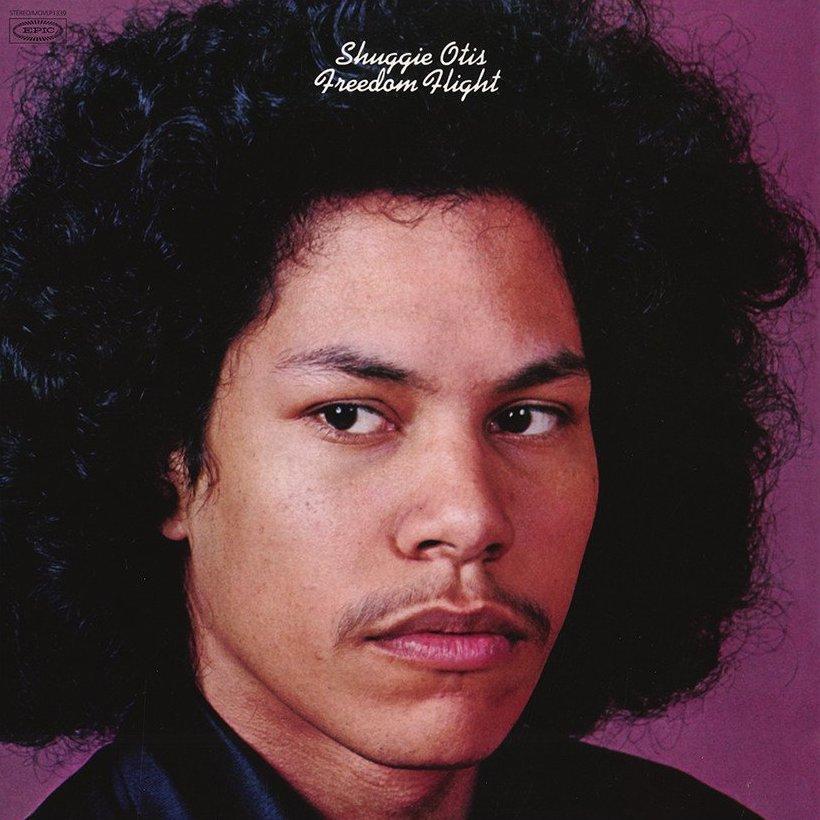
Album of the Week: Shuggie Otis’ Freedom Flight (1971)

17. How’s that for writing “Strawberry Letter #23”? Yes, Shuggie Otis was 17 when he sported that cool mustache and wrote and recorded Freedom Flight, the predecessor to his masterpiece Inspiration Information and an excellent album in its own right. It’s one of his only records, as he essentially disappeared after 1975.

According to a 2016 profile in The Guardian, the guitarist “admits he enjoyed being out of the spotlight, away from the pressures of being Shuggie Otis, the erstwhile teen prodigy who never quite managed to capitalise on all the acclaim”. It is not often that an artist takes over 40 years to release their next album, but that is exactly what happened with Shuggie Otis. 2018’s Inter-fusion proves that he never lost his guitar-playing chops (or, you know, died or anything), but the songs aren’t there. The only track with vocals is “Ice Cold Daydream” a pale remake of the first track on Freedom Flight.

The Freedom Flight version of “Ice Cold Daydream” starts things off with pep. Then we have the classic “Strawberry Letter #23”, an all-time love song that became a hit for the Brothers Johnson several years later. Shuggie plays “Me & My Woman” with a blues expertise that would make B.B. King proud. “Purple” is a bit formless, but it still rips. Then there’s the title-track. “Freedom Flight” is a stoned 70s classic, a peaceful psychedelic odyssey. None other than George Duke plays keys here, and his assistance gives the track some rhythm after a few minutes.

As a listener, you can’t help but feel a little frustrated that there isn’t more to Shuggie Otis’s discography. Maybe his youthful spark didn’t last. Maybe he was too hard-headed about playing solo, or the alcohol got in the way. Whatever the case may be, Shuggie is a living legend, and Freedom Flight is a standout album of the rich 70s.

Listen to Freedom Flight here.

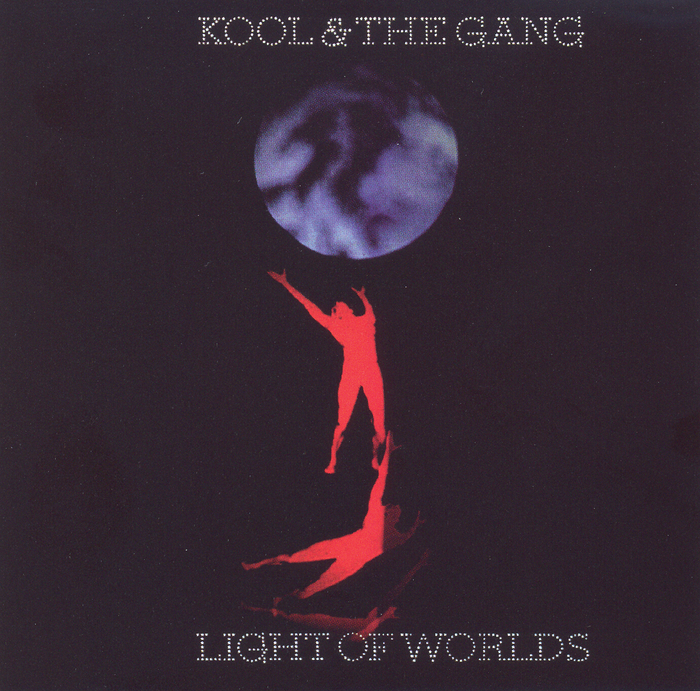
Album of the Week: Kool & The Gang’s Light of Worlds (1974)

wrrrrrrrrrrrrrWRRRrrrrrrrrrrrrrrrrWRRRRRRAAAAAAWRRRAAAAAAAAAAAAAAWEEEEEEEEEEEEEEEEEEEE

Is there any song quite like “Summer Madness”? Those rising synth notes (presented in my best written attempt above) are jolting; they raise the hair on your arms. The track is iconic enough that it’s been sampled hundreds of times (I heard it years ago in Digable Planets “Jimmi Diggin Cats”), and remains a highlight on Light of Worlds, the fifth album from Kool & The Gang.

Yes, it’s Kool & The Gang, of “Celebration” and “Ladies Night” fame. Light of Worlds finds them pre-Chart Toppers, but post-“Jungle Boogie”. In other words, they weren’t yet a total sensation but they knew how to make a hit. Light of Worlds, then, bubbles with under-the-radar jazz-funk flavor. As an ensemble, they rival Earth, Wind & Fire in their ability to blend funk and pop.

Fans of J Dilla’s Donuts will instantly recognize “Fruitman” from “The Diff’rence”. It’s a groovy, horn-filled jam and an early highlight. The rhythm section is super tight throughout the album, but the title track especially feels like the Gang in top form. The late Ronald Bell, who fronted the group, whips out his fat ARP synth on the second side, and oh boy does this thing rip. Listen to “Whiting H. & G.” and tell me you don’t feel like you’re cruising down the coast with shades on in a convertible. The seagull sounds at the end don’t hurt either.

I’m kind of surprised “You Don’t Have to Change” wasn’t released as a single: it’s as mellow and accessible as most anything else released in ’74. The melody in the verses to me recalls The Spinners’ “It’s a Shame”, which is another classic. “Higher Plane” was the album’s biggest hit on the R&B charts, and its tight funk guitar reminds me of another “Higher” song by one Stevie Wonder. “Here After” closes things on a stellar note, with a great voice-over and a spiritual-jazz leaning instrumental, complete with kalimba! I wouldn’t hesitate to recommend this album to any fan of 70s soul music, whether pop, funk or jazz is your thing. Light of Worlds does it all and does it well.

Listen to Light of Worlds here.

***

BONUS ROUND: YouTube comments on this live “Summer Madness”

“this version sounds clean and smooth like the album version, i love to smoke weed to this song” (from user masterbate23)

“i am seriously High and im loving this live version!” (from user DontPanic2008)

“Kool and the Gang are definitely cool.” (from user Shanedango32)

Album of the Week: Grateful Dead’s Download Series Volume 4: 6/18/76 & 6/21/76 (2005)

After nearly a decade of touring that only became bigger and bigger, the Grateful Dead took a then-indefinite hiatus in late 1974 that lasted approximately a year and a half. Their 1976 June tour was something of a low-key comeback. Instead of playing massive arenas, they sold mail-order tickets for shows at smaller theaters in only 7 cities. Thanks to the Download Series, which is easily streamed, you can hear great recordings of a couple of these shows. Volume 4 presents the 6/18/76 show at Passaic, New Jersey’s Capitol Theatre (which is now a Pizza Hut), as well as the show three days later at the Tower Theatre west of Philadelphia (which is still standing, about 25 blocks from my current apartment).

The 6/18 show is not their tightest night, but it has its highlights. The sound described in one word? Sloooowwww. The band seemed to be in reggae mode, which may be the reason AllMusic described it as a “low-energy… lazy stroll through a fairly familiar set list.” It sounds like they’re zonked off the honey slides that Neil Young cooked up a couple years earlier for On the Beach (and guessing they’re very, very stoned is not a bad bet). “Crazy Fingers” moves at a turtle’s pace, but it’s like, beautiful, man. I love this song, it’s a gem lyrically and musically. “Row Jimmy” is another total vibe.

The big highlight for the Capitol Theatre show is the super-rare Jerry tune “Mission in the Rain,” which was played by the Dead only 5 times! I find this version fantastic. This trifecta of slow-burners has made the show something of a go-to “mellow” Dead set for me. Later, a nice, jazzy “Eyes” with a long intro jam, and an almost nonexistent “Drums” (yay!) lead into “The Wheel”. Apparently “Tennessee Jed” was left off this reissue due to technical problems, although one Archive.org reviewer surmised it was just not a very good performance and thus cut.

I get the criticisms. They would improve on many of these performances (notably “St. Stephen” > “NFA” which sounds a little lackluster here) in 77. Mickey had joined the band on percussion for his first tour in 5 years, and the rhythm section sounds sluggish. I think the Dead were finding their sea legs again.

The Tower Theatre set, played 45 years ago on this very date, is tighter. The “Candyman” sparkles, and the “Playin'” jam is an exploratory treat. To round out the excerpt of this show we get a great version of “High Time”, one of my favorite Jerry ballads.

With 1000+ shows, millions of fans and an uncountable number of memories forged and formed over the past 56 years, there is sure to be an endless variation of interpretations on what the Dead did best, where they faltered, and everything in-between. I just like to, y’know, chill and jam out, man. This snapshot of June 1976 is nice for the Heads in no hurry.

Check out Download Series 4 on Spotify.

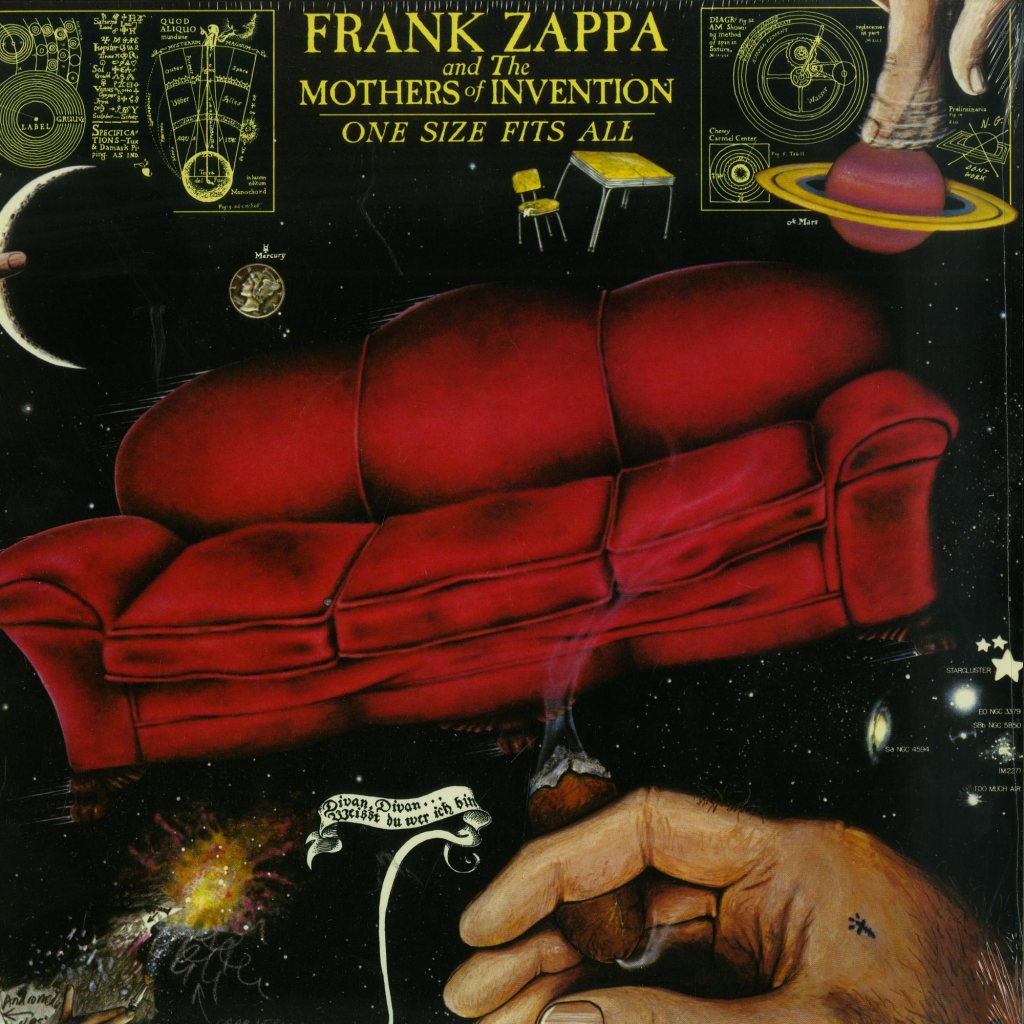
Album of the Week: Frank Zappa and the Mothers of Inventions’ One Size Fits All (1975)

The prolific Frank Zappa did enough musically to accumulate the kind of cult following that sees continued interest decades after his death – It’s only been half a year since the release of the Zappa feature-length documentary. While I haven’t seen it yet, I do consider myself a fan, albeit more selective than the kind of superfans who can rank 25+ Zappa releases.

Rather than the breakout Mothers of Invention records of the 60s (like Freak Out! or We’re Only in It for the Money), I am partial to Zappa’s 70s output. One Size Fits All is a particular favorite, and this is largely because of two words: George Duke.

George Duke was a pioneer in jazz-fusion, disco, pop, and whatever the hell kind of music Zappa made (occasionally a mix of all three). While his solo albums are incredible in their own right, Duke repeatedly excelled as a session musician and sideman. He played keys on such classic records as disparate as Tom Waits’ Blue Valentine and Michael Jackson’s Off the Wall. Duke collaborated with Zappa throughout the 70s, and One Size Fits All represents a peak in their musical union.

For better or for worse, this is one of those albums that starts off with its best song. Duke’s lead vocals and Farfisa get “Inca Roads” off to a rollicking start, and then two minutes in the song transmutes itself into a Zappa guitar jam as groovy as the work of Jerry Garcia. The late Duke once told an interviewer that he didn’t even want to sing, but he did so at Zappa’s request. That’s a good band member! He further described the recording process: “Well, One Size Fits All and Apostrophe, those albums were basically me and Frank in the studio for hours! I mean, it was just us, and the engineer carrying the amp. We would be there at Paramount Recording Studios, or wherever, just recording like from 1 or 2 in the afternoon, until 5 or 6 in the morning.”

“Po-Jama People” is another showcase for Zappa’s guitar work. I don’t know what he’s talking about in the vocal verses, but that guy sure could rip. Zappa had this ability to make these stupid fucking lyrics that are really fun to sing along to: “She lives in Movaje in a winnebagoooo!” The ridiculous “Florentine Pogen” is as much about a cookie as it is a person.

Johnny “Guitar” Watson (Mr. “Superman Lover”) adds another dimension to a couple of tracks in the back half here. He assists on the rocking “San Ber’dino” and croons on “Andy”, which along with “Inca Roads” is the other mini-masterpiece of the album. Once again, Duke does his thing and Zappa shreds. Those Duke vocals just get me every time (see also – “Sofa No. 2”).

For my money, One Size Fits All is about as good and concise a Zappa album as you’ll get. If you can handle the trademark silliness and cartoonish marimba rolls, you’ll be jammin’ like it’s 1975.

Listen to One Size Fits All here.

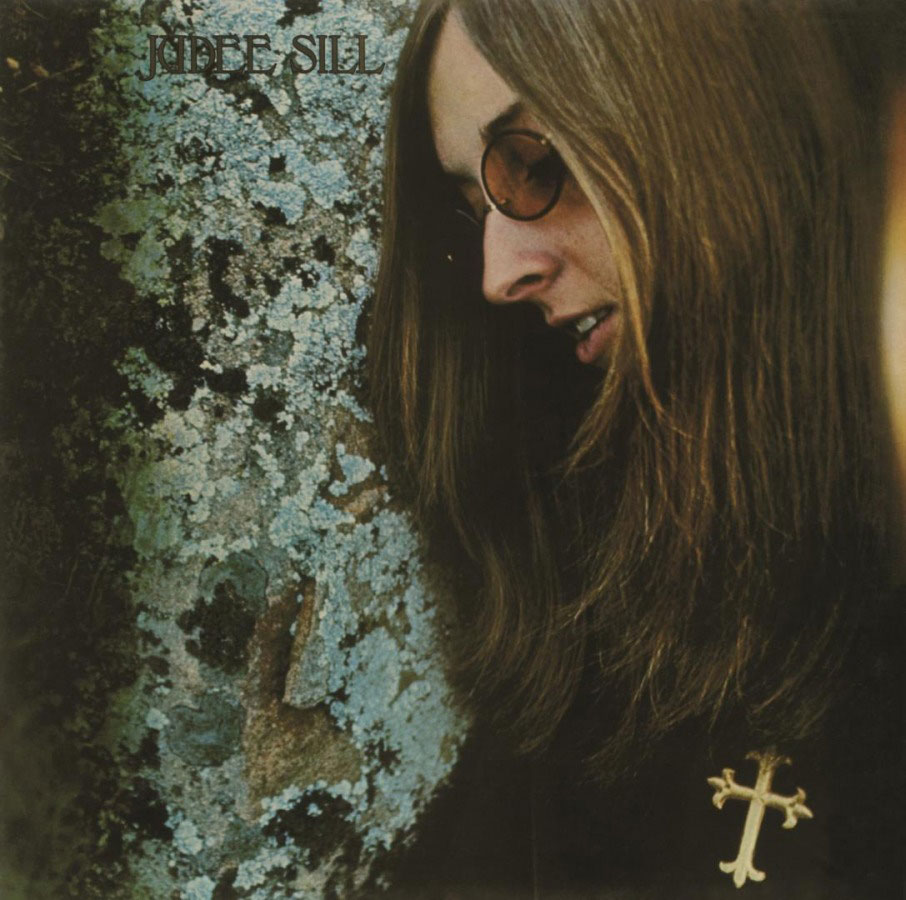
Album of the Week: Judee Sill (1971)

Spring is a time for Spring things. Things returning, birth, rebirth, growing, flowers, trees, strings and stings. A small picnic in a big park. A nice time in the great outdoors. Plants and fruit. Passover arrived and we ate eggs (which are the most Spring food). Today is Easter. I walked off a bus down ten blocks east to my apartment where my new cat sat waiting. His eyes widened at “The Lamb Ran Away with the Crown”.

Judee Sill’s self-titled debut is as Californian and psychedelic as the Grateful Dead’s American Beauty (1970). Since I’ve mostly been playing the Dead lately, it’s an easy jump to Sill, whose harmonious hippie-folk is an unbeatable soundtrack for ringing in the springtime. Breezy and bright, her songs can stand up to just about anyone who was doing the folk singer thing in the early 70s – and there were many! Her style is soft but steady, imbued with the kind of intimate Christian philosophy that only a sinner can possess. The characters in her tales turn away from darkness and enter the light. And you can feel the light, the warmth.

It seems Sill was not successful in her time. Though she died at a young age, her music is not forgotten at all. I’m sure she has more fans today than ever before, and you can count myself and maybe yourself in that group of those who have been touched by her celestial voice and cosmic music.

Listen to Judee Sill here.

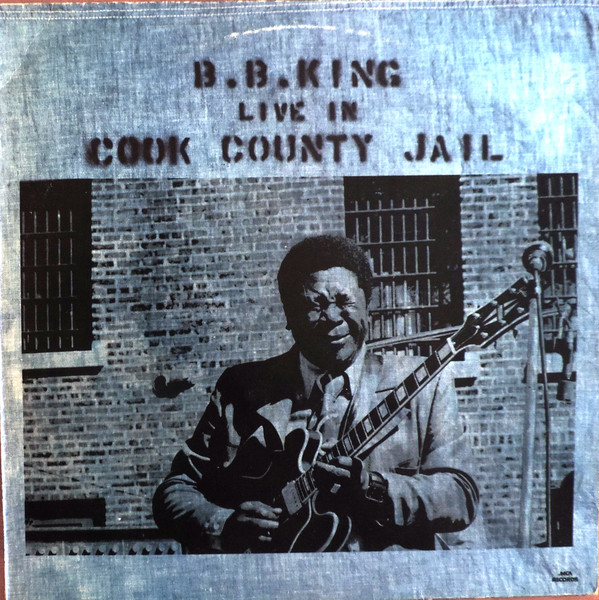
Album of the Week: B.B. King’s Live in Cook County Jail (1971)

I was a pretentious music nerd as a young age, collecting records and correcting those who got their facts wrong by the start of high school. This got me in the most trouble when my French teacher made an aside about “Stand By Me” being a great song by B.B. King. I quickly corrected her – “Stand By Me” is, of course, by Ben E. King – so rudely that she kicked me out into the hallway in front of the entire class.

Hopefully my behavior is less contemptible now, but for years this was my only real knowledge of B.B. King – he was the guy who didn’t make “Stand By Me”. Well, what did he do? Blues, presumably. But the only CD of his I frequently saw in stores and my stepdad’s collection was 2000’s Riding with the King, an album whose cover art practically screams “We, the makers of this album, are over 50 years old, and to enjoy it you should be too.” Riding with the King is probably his most successful album, but if this were that Drake meme format I would wave it away with one hand and then point happily to Live in Cook County Jail. This shit is smokin’ hot.

Yes, Johnny Cash did it first, with At Folsom Prison for Columbia almost three years earlier. That album was a hit, and presumably encouraged ABC to get excited about the opportunity to record King doing the very same. As the story goes, one (or more) of the wardens at Cook County Jail in Chicago reached out to King in 1970 and the performance was arranged in September. Cook County was not the place you wanted to be and I’m sure it still isn’t. Today it has one of the largest inmate populations in America at about 10,000 (In 1970 the inmate population was closer to 2000) and it has a nasty history of racism, violence and injustice. You couldn’t get me do a week’s time there if I knew Frank Ocean and the ghost of Jerry Garcia were playing a double-header for the inmates. Before his performance King walked around the site before the show and, according to The Independent, “his experience at the jail affected him profoundly.” I’m sure his empathy for the inmates inspired him to give them a damn good show, and today it remains a treat for us listeners.

After a staff member’s introduction in which the wardens are hilariously booed by the inmates, King starts off with the uptempo “Everyday I Have the Blues”. He was reportedly nervous, which may explain why this track is so fast. Thankfully, things slow down after that and we get into the best run of the album. “How Blue Can You Get?” and “Worry, Worry, Worry” are both absolute show-stoppers. King somehow manages to play the role of tortured blues singer, electric guitar god and standup comedian all at once. Listen to the pain in his voice when he cries “I gave you seven children / And now you wanna give ’em back!” That’s the blues, baby! On both tracks, he shreds his Gibson “Lucille” for a few minutes and then switches into master storyteller mode. The encouragement of the crowd’s hollers, laughter and applause really fuels both King and the backing band. It’s pure magic.

On the second side King slides into a more relaxed groove where he plays some older hits because, in his words, “I think a lot of the things we let go sometimes are the things we cherish most later on.” You might not want to cover “Sweet Sixteen” today, but it’s a crowd favorite here and a late highlight of the set. He gets cookin’ towards the end of his big hit “The Thrill Is Gone” as well. The last track, “Please Accept My Love”, cuts quickly to an end-of-set fanfare, and I have to imagine that some of the set was edited for album release. It would be fun if we could get an unabridged version like At Folsom Prison got in 2008. As it stands though, Live at Cook County Jail is a concise and remarkable recording.

Listen to Live at Cook County Jail here.

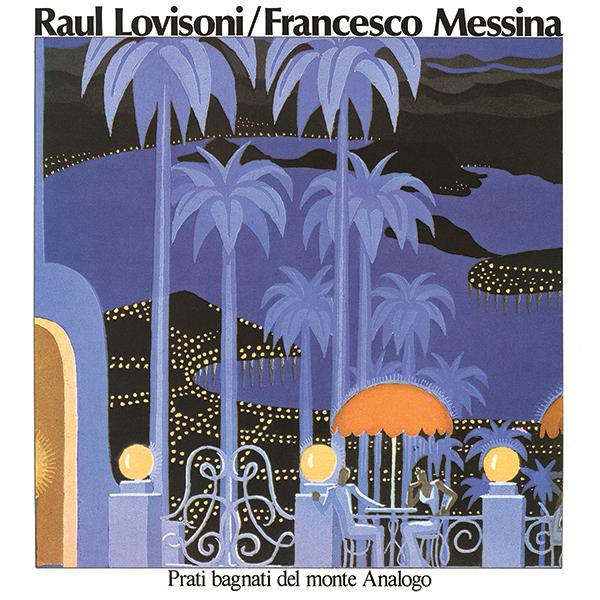
Album of the Week: Raul Lovisoni & Francesco Messina’s Prati bagnati del monte Analogo (1979)

Whew, that title is a mouthful. Okay, ever seen Jodorowsky’s Holy Mountain? Well, it’s partially inspired by French writer René Daumal’s surrealist novel Mount Analogue, in which the titular mountain is either imaginary or inaccessible. Daumal died before the book was finished, and the first track of this album acts as a sort of companion piece envisioning what the mountain contains – the title translating to Wet Meadows of Mount Analogue. I’m using some conjecture here – the album contains no lyrics and I cannot find an English translation to the Italian LP insert. The music, though, is sure to please fans of ambient and minimalist music.

Prati bagnati is composed of three tracks, the title track taking up the album’s first side and most of its running time. This is Messina’s side, and he adds synths to the piano playing of Michele Fedrigotti. The piano is delicate as a lullaby. At about the 14:45 mark, a synth melody slowly enters the mix – it sounds like what an ambulance siren would sound like if ambulances were calming instead of alarming. Then at 18 minutes we hear a couple stronger synth swaths that make me think of OPN’s maximalist soundtrack work.

Lovisoni’s b-side begins with “Hula Om”, a solo piece performed on harp, and ends with “Amon Ra”. “Amon Ra” features vocals by Juri Camisasca, who has appeared on several albums by Franco Battiato, who produced this record. Lots of Italian names, I know, but don’t worry I won’t quiz you. Both tracks continue the meditative vibe of the a-side, albeit to slightly less hypnotizing effect. But if you’re down with the 23-minute jam that opens the album, you’ll be into the rest. As a package, Prati bagnati is a heavenly slice of Milanese minimalism.

Listen to Prati bagnati del monte Analogo on Spotify.

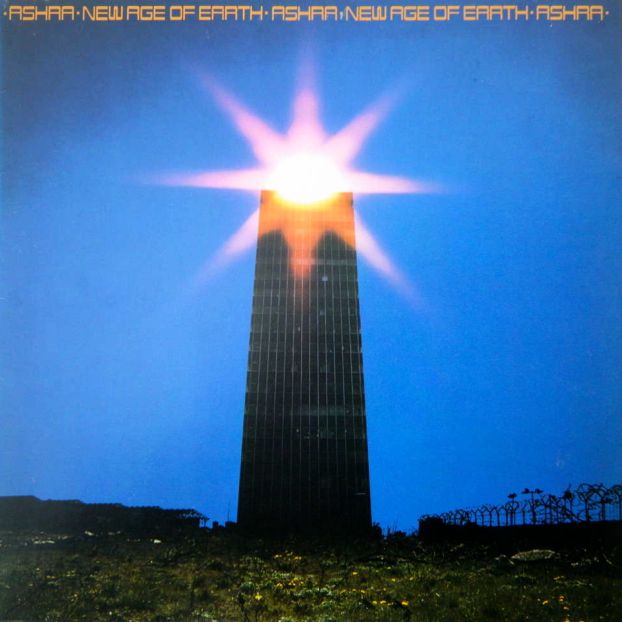
Album of the Week: Ashra’s New Age of Earth (1976)

Look at the ARP Odyssey. It looks like 1976. At 23(!), Manuel Göttsching used it and an array of other synth equipment to create New Age of Earth. By ’76, the Ash Ra Tempel veteran had spent over 5 years with that group as a young guitarist and vocalist. Despite the Ashra moniker here, New Age of Earth is essentially Göttsching’s solo debut. Göttsching’s official website bio hilariously characterizes him as “Modest, quiet, [and] bad with self-promotion and with answering the phone”. He made all the music himself, and in falling with his modest and quiet character, there are no vocals to be found here, just 4 instrumental pieces.

“Sunrain” is propulsive, perhaps the least “ambient” piece here. It makes me want to sing along like the guy on Pat Metheny’s Still Life who goes “dadadada de DAdoo dayah” (maybe check that album out if you don’t know what I’m talking about).

“Ocean of Tenderness” is, as its title suggests, calm and soothing. Göttsching whips out the Gibson SG on the last 5 minutes for some dank noodling. “Deep Distance” is a whistling jam that some have likened to a proto-Aphex Twin track.

“Nightdust” takes up the whole B side, and it’s the trippiest piece on the record as well as my favorite. It fans out like a bellows before settling, appropriately, like cosmic dust. Along with the ambient pieces on NEU! 75, this is about as good as it gets for spacey Krautrock music. I recommend it to any fan of ambient or atmospheric synth and guitar work.

Listen to New Age of Earth on Spotify.