Album of the Week: Les McCann’s Layers (1973)

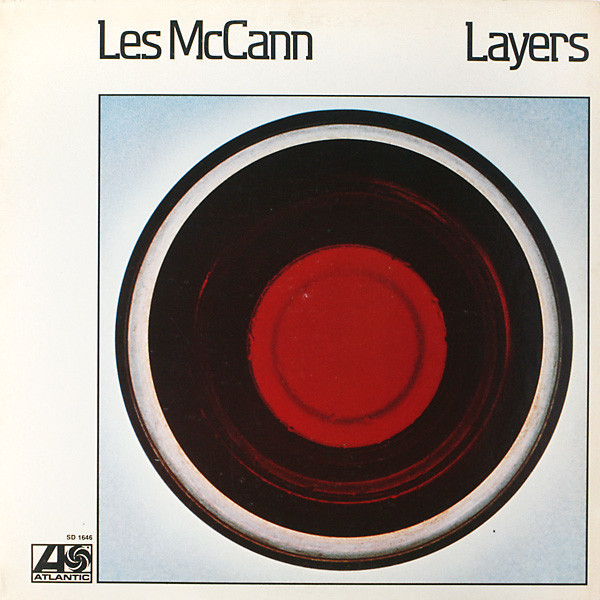
Another winner from Les McCann! In March, I covered Invitation to Openness, a standout fusion record. Where Invitation was a showcase of swirling, dreamy fusion with extended jams, Layers is often more upbeat. Recorded a year after Invitation, Layers is nothing short of a percussive triumph. Buck Clarke, Ralph McDonald, and Donald Dean join once again on percussion, this time with the addition of Jimmy Rowser on electric bass, bass violin and percussion. The beat on opener “Sometimes I Cry” is so legendary as to provide the backing track for Massive Attack’s “Teardrop”.

“Sometimes I Cry” is a good indicator of the unique sound you get on Layers: McCann’s ARP synth takes center stage in what is essentially an extended vamp (with glorious results). Along with his Clavinet and electric piano, McCann carries the melodies with his synth sounds, still a new frontier back in the early 70s. Anyone who’s heard Marvin Gaye’s I Want You and knows “After the Dance (Instrumental)” will recognize that ARP sound, bright as the midday sky and free as a bird (“Let’s Play” is especially portentous of “After the Dance”).

Layers really kicks up the groove on “Dunbar High School Marching Band” (in which McCann imitates a marching band’s horn section with synths!) and “Harlem Buck Dance Strut”. But I don’t think Layers can be categorized as straight jazz-funk. Its uniqueness lies in tracks like “Soaring”, again evocative of flight, the multi-layered synth/clav sounds creating an atmosphere that is both freeing and a bit melancholy. Layers is a versatile record that is relaxing enough for a Sunday morning and deep enough to avoid any sort of dated cheese.

Listen to Layers here.
Album of the Week: Valerie Carter’s Wild Child (1978)

At a party a few months ago, I was enjoying a very 2022-sounding playlist of Charli XCX and rap stuff when someone threw on Steely Dan’s “Hey Nineteen”. I was flabbergasted. WHO had the cojones to throw on this cut from Gaucho, my favorite Dan album, and interrupt the frenetic hyper-pop with this smooth whiteboy funk? And why was it so GOOD?

Okay, so alcohol was involved, but I’ll never forget how (probably embarrassingly) excited this made me. That late 70s LA sound is so special, so fine and mellow, with slick session musicians who cut classic records in the place where it never rains. Chuck Rainey is here, who played bass on most Steely Dan albums, as is Victor Feldman, who also played (percussion/keys) on most Steely Dan albums. Jay Graydon, who plays guitar on Aja‘s “Peg”, provides a sick solo here on standout “What’s Become of Us”. Multiple horn players here also recorded with Steely Dan.

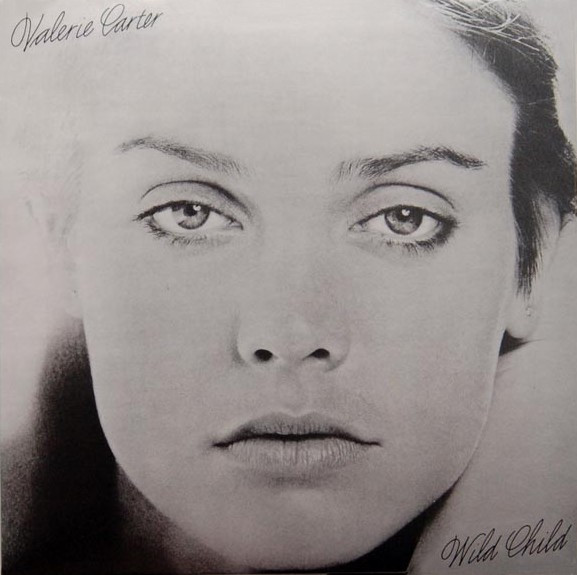
It makes sense then, that I think of the Dan when I pop on Wild Child, its opener “Crazy” just dripping with that disco-era production, all soulful and sexy. Admittedly, I don’t know much about Valerie Carter, other than that she was a singer-songwriter who worked with James Taylor and similar artists. She passed away in 2017, and her relative anonymity in the pop world today has me approaching this album almost as more of a Columbia Records group project than a solo album.

Wild Child doesn’t really separate Carter from her contemporaries (Jackson Browne, Phoebe Snow etc.) in that it is lyrical content is all love songs, and musically it’s pure Yacht Rock. This album’s strength is in its consistent quality. “Taking the Long Way Home” is sappy, but builds to a tight climax. “The Blue Side” rolls in like a Pacific breeze. “Wild Child” closes the set on an extremely strong note, with Feldman’s jazzy atmosphere and Carter’s most arresting vocal performance. Though it lacks that X factor found in stone-cold classic albums, Wild Child doesn’t deserve to be a forgotten, bargain-bin mainstay. It’s an excellent record with lasting music, and a defining piece of the late-70s LA sound.

Listen to Wild Child here.

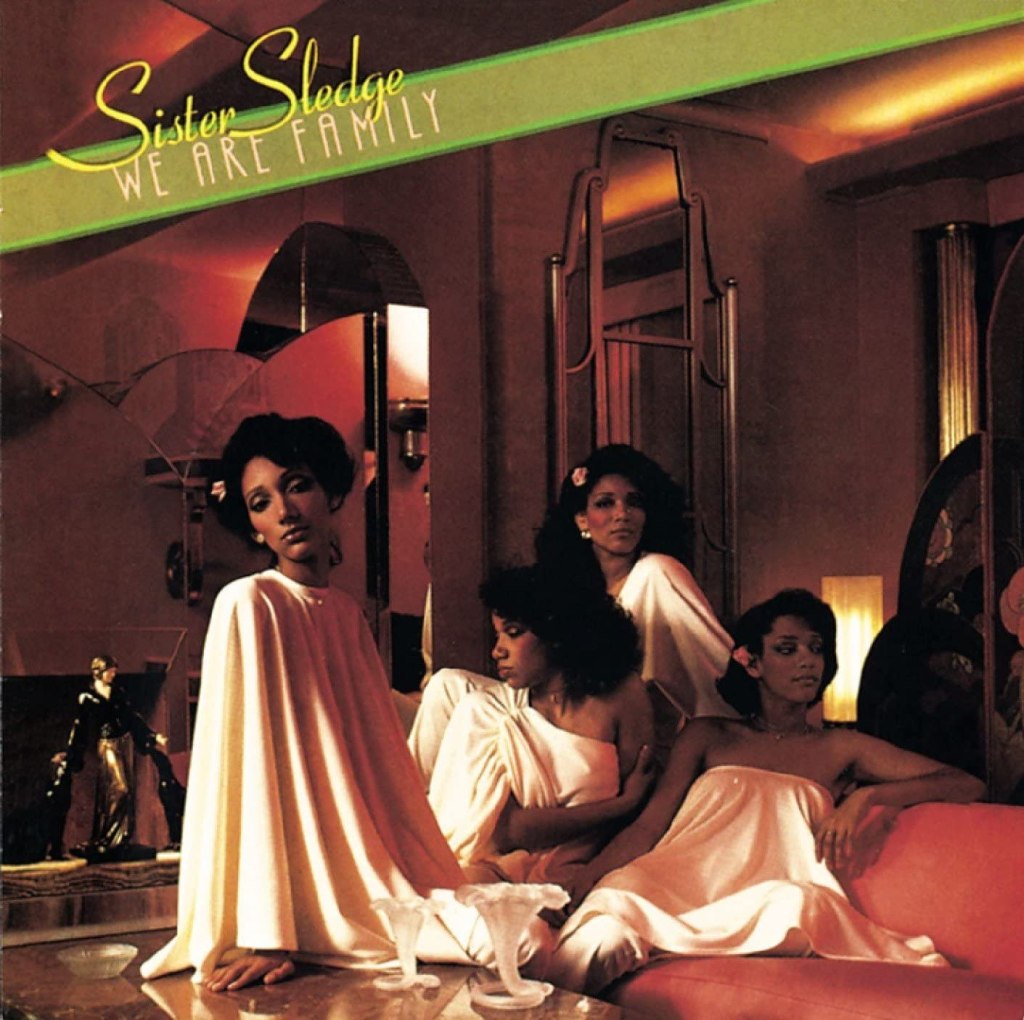
Album of the Week: Sister Sledge’s We Are Family (1979)

Yes, this is Sister Sledge’s We Are Family, featuring the hit Sister Sledge song “We Are Family”. However, this classic disco LP has a lot more to offer! The incomparable Nile Rodgers is in the house, as is his Chic bandmate and bassist Bernard Edwards. The duo produced and wrote the entire album, but it couldn’t be complete without the satin-clad singers you see above.

The sisters Sledge – that’s Debbie, Joni, Kim, and Kathy Sledge – hail from Philadelphia and graduated from Olney High School. I never knew they were actually sisters with the last name Sledge, but that explains “We Are Family”, for one thing. It’s one of those songs that’s so strongly burned into my childhood brain from radio play, family gatherings, sporting events, birthday parties etc. that I wouldn’t really go out of my way to listen to it now. But hearing “Thinking of You” for the first time recently, I was blown away. Here’s a downright amazing song, peak Nile Rodgers. Here’s what Kathy Sledge told PopMatters of the track:

“I remember they would always show us the song that we were going to record, not even the day of, but when it was time to record it… When they first played ‘Thinking of You’, I loved it instantly. I like all the songs that I got the opportunity to sing with Nile and Bernard, but ‘Thinking of You’ always stuck out to me.”

Opener “He’s the Greatest Dancer” went to #9 on Billboard’s Hot 100 – disco was really a thing, huh? If you’re a 90s baby like me, you probably know this guitar line from Will Smith’s “Gettin’ Jiggy Wit It”. Needless to say, the Sister Sledge song knocks it out of the park. This is rock-solid album where the non-hits are great as well: the last minute of “Somebody Loves Me” is heavenly. We Are Family is a laid back slab of grooves from one of the masters, and this album has actually changed the way I think of pop disco. Dig it.

Listen to We Are Family here… ooh- er, that’s actually a video of Phish covering “Gettin’ Jiggy Wit It”. Listen to We Are Family here.

Album of the Week: The Lyman Woodard Organization’s Saturday Night Special (1975)

Sheeeeeeeit.

I got into a lot of organ jazz over the past year, and next to Moon Rappin’ my greatest single discovery in that time may be The Lyman Woodard Organization’s Saturday Night Special. Woodard was a keyboardist in Detroit who was apparently inspired to play the Hammond B3 after hearing Jimmy Smith on the radio. Perhaps the premiere jazz organist of all-time, Smith’s influence could only be positive. And so it was that Woodard eventually came to create a classic album of his own under the Organization moniker.

The “saturday night special”, as you may know, is a cheap handgun, like the one seen on this album cover. However, there’s nothing cheap or particularly violent about this album. Most of Saturday Night Special is relaxing as hell, guided by L.W.’s swirling B3. “Joy Road” is smooth as silk, an early standout. “Belle Island Daze” transitions into a percussion-filled jam before Woodward brings it back home with a winning organ melody. “Cheeba” features some rippin’ guitar vamping before “the bongo boys” (a name I made up) storm the track in the album’s most chaotic moment.

“Creative Musicians” is arguably the record’s one misfire, a schmaltzy vocal tune that doesn’t quite fit. At under 3 minutes, though, it isn’t really much to complain about. As is often the case, the first side of this record outdoes the second, but “Help Me Get Away” ends things on a high note with Metheny-like licks and more bongos. The streaming version of Saturday Night Special also contains some added bonuses, including a “Lost Alternative Mix” of the title track that squeezes itself in at about half the length of the original cut with a bit more punch in its drums. This album’s highly recommended for all fans of organ music or funky jazz.

Click here to listen to Saturday Night Special.

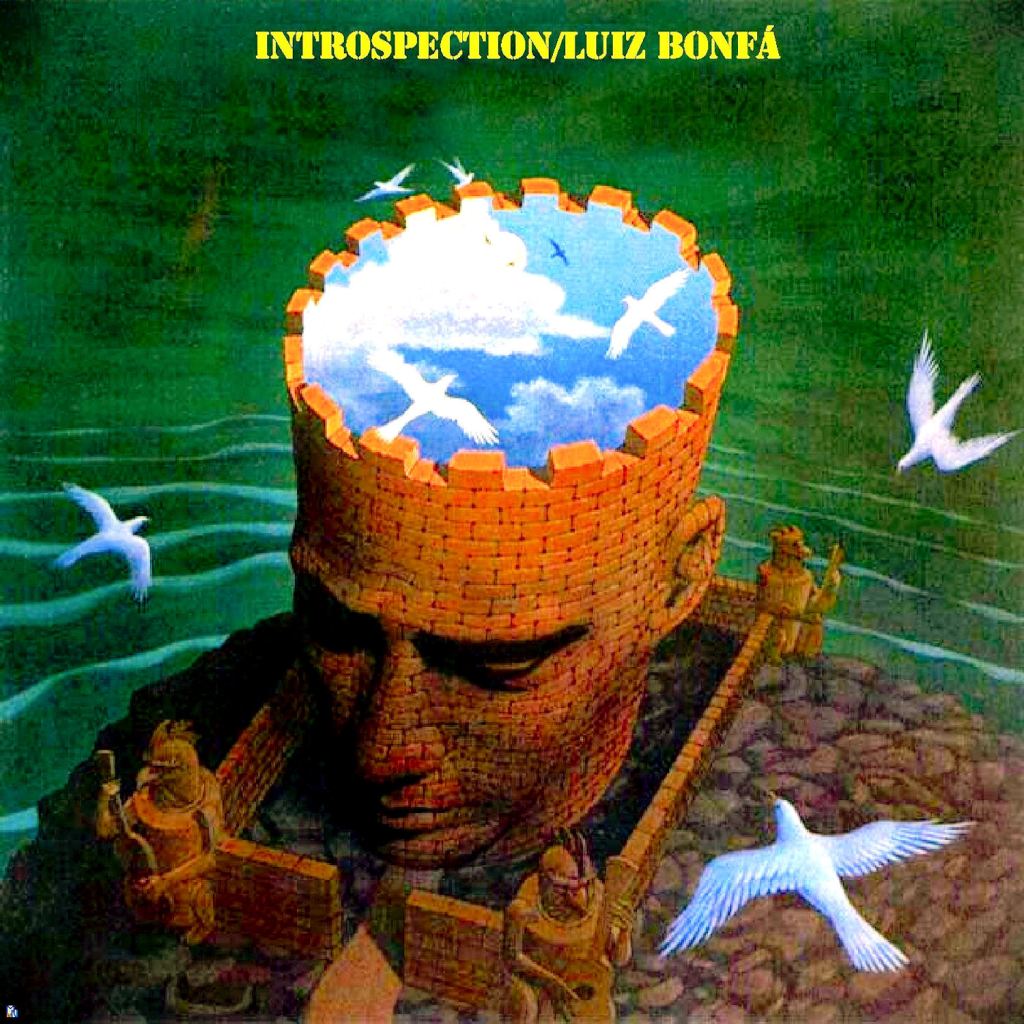
Album of the Week: Luiz Bonfa’s Introspection (1972)

Introspection – How It Feels to Chew 5 Gum! Our head is a castle, our mind a sky. And what better way to journey through the clouds than on the wings of an acoustic guitar?

Rio de Janeiro’s Luiz Bonfa had a lucrative career as part of the samba scene of the 50s and 60s, notably writing some of the music for the brilliant film Black Orpheus (1959), including “Manha de Carnaval”, which has been covered by many including Astrud Gilberto. His collaboration with Stan Getz, Jazz Samba Encore! (1963), was a hit that includes Bonfa’s “Saudade Vem Correndo”, which was sampled by J Dilla on the Pharcyde classic “Runnin’”. The guy could write a good song.

Introspection feels more improvisational, but it’s short and sweet at just over 26 minutes. This works to the album’s advantage as the songs are quite similar. No vocals or accompanying instruments, just that airy guitar, slowing in tempo and then picking up again like a classical movement (hence, “Concerto for Guitar”). “Missal (Estudo)” stands out for having what sounds like two guitars in the mix (although I am almost certain there is only one) for a wonderful harmonic effect.

Listen to Introspection here.

Album of the Week: Curtis Mayfield’s Sweet Exorcist (1974)

We love Curtis Mayfield over here at GSG. Curtis, Roots, Superfly – all stone-cold classics, not to mention There’s No Place Like America Today, my personal favorite of his. A few of his albums slipped through the cracks though, including Sweet Exorcist.

A 1974 review in Rolling Stone complains that the album “sounds hastily conceived and then competently executed to meet some contractual deadline.” Christgau gave the album a C and wrote that “To Be Invisible” is “its only interesting song.” Was Sweet Exorcist deserving of its lukewarm reception?

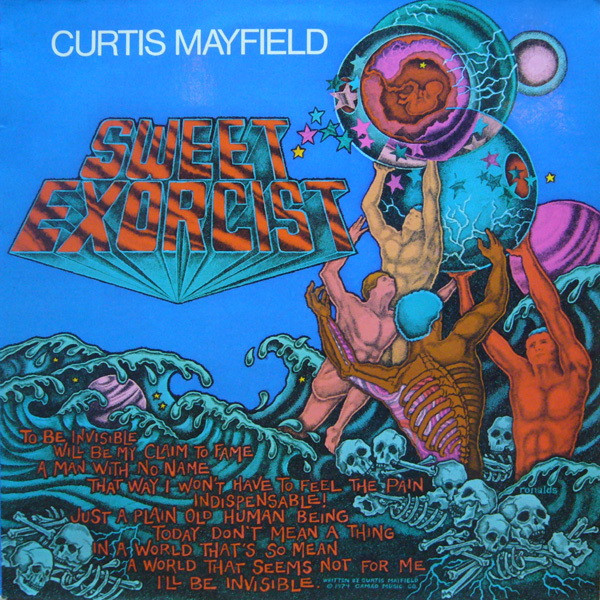
Well, yes and no. Compared to earlier outings from Mayfield, it’s a step down. But once you’ve listened to those records innumerable times, this one comes as something of a fresh discovery. It’s certainly not as weird as the cover would suggest – and seriously, what is going on here? Naked blue-haired men rising from a skeleton sea to lift up the planets and an electrified embryo? I’m not sure if this cover helped or hurt sales.

But the contents are, for the most part, classic Curtis. The title track grooves and “To Be Invisible” is a damn good ballad. While “Power to the People” is a bit rote and “Kung Fu” is lyrically silly, the rest are solid tracks. “Suffer” has a co-writing credit from Donny Hathaway and is accordingly heartfelt. “Make Me Believe in You” ends things on a strong note with a driving beat.

At just over half an hour, Exorcist feels a little slim. Who knows, maybe it was indeed executed to meet some contractual deadline. Nevertheless, we have in 2022 the convenient ability to instantly stream this music instead of going out and buying the record, weird-ass cover and all.

Listen to Sweet Exorcist here.

Album of the Week: Popol Vuh’s Das Hohelied Salomos (1975)

Popol Vuh have a few classics under their belt, but this is the jammiest. This is the one to smoke to. I mean, it literally starts out with a boom. Full of reverb and cymbal splashes, the atmosphere is so thick, the guitars so damn psychedelic, you might catch a contact high just listening to it.

The title translates to The Song of Solomon, and according to Light in the Attic, “the theme of the album is taken from biblical passages, using verses from King Salomon’s [sic] tales on The Old Testament.” I don’t understand singer Djong Yun’s lyrics any better than that of their high-water mark Hosianna Mantra (1972), but her voice is as lovely as ever. And just like on that album, she again sings “Hosianna”.

The second track “Du schönste der Weiber” starts off quite mellow, but builds up to a crescendo of Fichelscher’s positively face-stealing guitar. I only wish this track didn’t fade out so quickly. The fade-outs are probably my biggest gripe with an otherwise fantastic record.

On the second side, beginning with “Der Winter ist vorbei” (“The winter is over”), we have an added treat of sitar and tabla. To me, the tabla especially adds to the psychedelic groove that puts this band in an upper echelon of all-time rock groups. Sheesh. Spend an afternoon living in this one…

Listen to Das Hohelied Salomos here.

Album of the Week: Paul Bley’s Open, to Love (1973)

So check this out right… sometimes all you need is a piano. From Debussy to Monk to Ethiopia’s Emahoy Tsegué-Maryam Guèbrou, there are lots of artists in different styles who made incredible albums out of solely playing the piano. This one from Paul Bley, his third for German jazz giant ECM, is one of my favorites.

My man Paul got the assist from his ex-wife and brilliant artist in her own right Carla Bley, who wrote tracks 1, 2, and 6 on here. Opener “Closer” (heh) is a bit unsettling in its use of empty space, but it serves to make “Ida Lupino” that much more gratifying. This second track is almost jaunty in comparison, with a memorable melody that Bley rolls into with passion. “Started” also has a certain warmth to it.

What I really love about this album is the way that space is used. The compositions could certainly be played a lot faster, but Bley interprets them with a patience that alternately suggests contemplation, serenity, and occasionally something darker. These qualities are all present on the long title track (credited to Annette Peacock), after which Paul Bley’s “Harlem” enters with a bluesy familiarity, not unlike the aforementioned effect of the second track after the first.

The last two tracks are romantic at turns, with an air of mystery. I think Ms. Peacock wins the outré award here for the eerie, airy “Nothing Ever Was, Anyway”, which is nonetheless a beautiful way to close things out. Dig it.

Open to love? Stream it here.

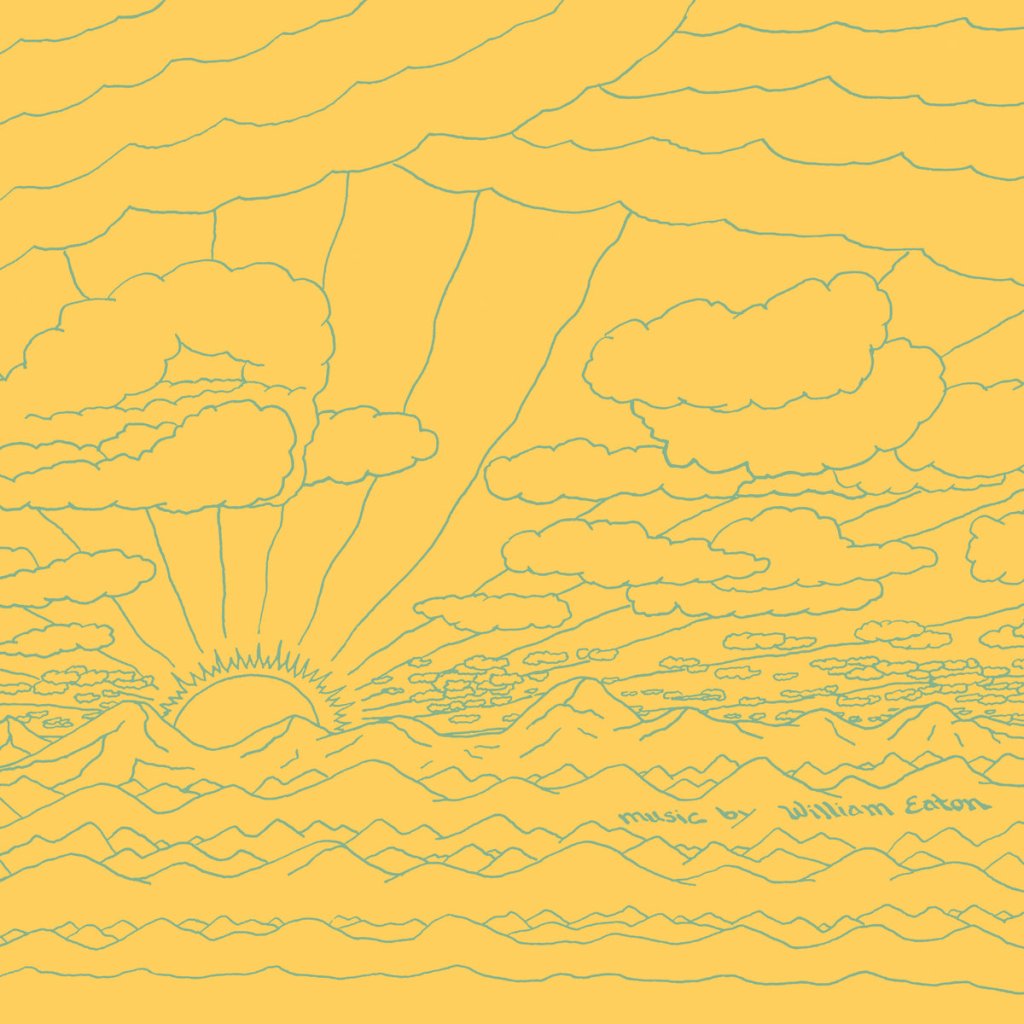
Album of the Week: Music by William Eaton (1978)

Driving drifting through the lonesome sandstone canyons as the sun slanted away, west. You, too, were on your way.

YouTube comment

Private press albums can be hidden gems or unremarkable projects. William Eaton’s debut of improvised instrumental guitar passages definitely falls into the former category. As soon as I heard the first track here I knew this was absolutely golden. After a bit of a warmup, Eaton reaches a brilliant harmonic theme that recalls the storied greatness of John Fahey – who was, I suppose, a contemporary of Eaton’s!

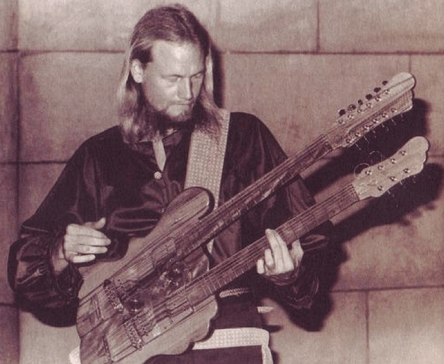
Eaton came from a family of bankers in Lincoln, Nebraska, but after attending Stanford headed to Arizona and ended up, according to Ultravillage, “living out of his car, roaming the desert and eating mesquite pods and cactus fruit.” He began designing his own guitars, including a 26 string and double neck quadraphonic electric guitar.

Given the open and wandering, almost ascetic lifestyle Eaton led, it’s not surprising that this album is full of ambient space and warm, gentle tones. It’s become my recent comfort album, and resonates as a night-time listening companion the way Scott Tuma’s Hard Again (2001) did for me in 2020 (when, god knows, I needed it).

Track 7B was sampled to great effect by DJ Shadow on 2002’s “Fixed Income”, so props to him for knowing about this one 20 years ago, before it was even reissued. I mean, the guy made Endtroducing after all, so that checks out. Eaton continued to record and release music, though I haven’t yet heard other work of his that captures the same subtle beauty as Music. He co-founded a luthiery (guitar construction) school in Phoenix, Arizona that he now directs.

Listen to Music of William Eaton on Bandcamp or Spotify.

You can see some of Eaton’s incredible self-designed guitars here.

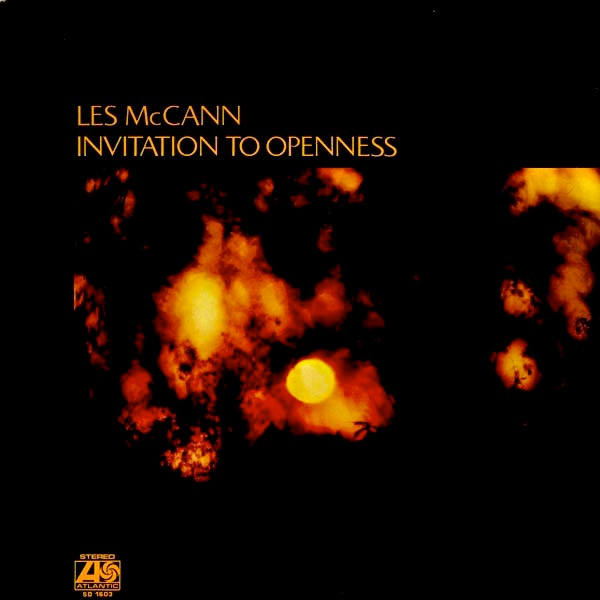
Album of the Week: Les McCann’s Invitation to Openness (1972)

If Miles Davis opened the floodgates of fusion with In a Silent Way (1969), we can regard the ensuing years of the early 70s as jazz-fusion’s most fruitful era, with many outstanding records from musicians in Miles’ cadre and otherwise.

By 1971, Les McCann had been recording for just over 10 years as a jazz and soul pianist, but his largest achievement came in 1969 with Swiss Movement, a defining soul jazz performance with saxophonist Eddie Harris recorded live at the Montreux Jazz Festival in Switzerland. On Invitation to Openness, a 3-song album with a range of talent involved, he sets the mood with a dreamy Rhodes-like tone to open the side-long “The Lovers”.

I’ve written before about Yusef Lateef, who mastered many wind and horn instruments, including relatively esoteric Asian instruments. Lateef takes center stage about 5 minutes into Invitation to Openness as a stone groove complete with psychedelic electric guitar allows him to take over. It’s ecstatic, and the overall sound is not dissimilar to Ray Manzarek’s extended solo on “Light My Fire”. “The Lovers” isn’t as interested in restraint or trailblazing ingenuity as the work of Miles with Zawinul, but then again, what is?

Percussion takes on an essential role in fusion, and the lineup here is suitably up to the task. We have Donald Dean, who played the kit with McCann on the aforementioned Swiss Movement (1969), as well as two renaissance men in Alphonse Mouzon (Weather Report) and Bernard Purdie, who played with everyone from Nina Simone to Steely Dan. The second half of “The Lovers” in particular allows these men to shine in all their polyrhythmic glory.

“Beaux J. Poo Poo” (how’s that for a song title?) is similarly groovy and allows McCann to flex his muscle on the keys a bit more. Lateef’s flute sounds wonderful here, but only appears for a fraction of the track.

The closer “Poo Pye McGoochie (and His Friends)” is the standout song and my favorite thing Les McCann has ever done. Its recurring theme is played on a futuristic Moog synth that sounds like being zapped through space, but the tone isn’t overly cartoonish, it’s just super-charged and incredibly fun. You can practically hear the smile radiate from McCann’s face as he plays the melody, like a secret weapon he’d been saving for the album’s finale. The tension of McCann’s resonant keys in the drum-less intro and ambient middle section is delightful. I love driving to this song.

As of this writing, Les McCann is 86 years old and has performed live as recently as in the 2010s.

Listen to Invitation to Openness here.