Album of the Week: Rob’s Make It Fast, Make It Slow (1978)

Play that funky music, Rob!

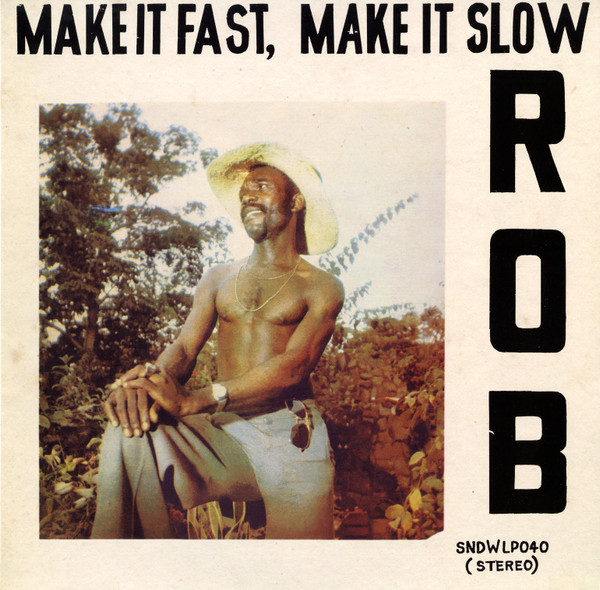
Rob Reindorf is a native of Accra, Ghana, who recorded 3 albums in the late 70s-early 80s before disappearing into obscurity for decades. Thanks to the people at Soundway, this second album of his was reissued in 2012 and is available to stream everywhere.

Beginning with four notes on an organ-sounding keyboard, Make It Fast, Make It Slow quickly gets into funk mode, with its propulsive rhythmic big band and call-and-response choruses recalling Fela Kuti, the godfather of African funk. Horns supplied by a Ghanian army band give these songs an added bite. The sexually charged title-track is counterbalanced by the religious stretch in the middle of the album – “Speak up, to Jesus, and he shall live in you!” tells Rob on “He Shall Live in You”. This track and “Back On You” are truncated, ending unexpectedly, presumably due to an issue in remastering the original recordings.

Rob’s English is imperfect, but it’s the language used on this album, leading to a unique semi-slurred performance that can take multiple listens to decipher. Take a track like “Bargain”, where he is speaking in repeated phrases – it’s a cool twist of language that gives the album an edge.

As of 2023, Rob was back on the music scene, touring Europe due to a resurgence in popularity. Aged into his 70s, Rob is apparently still recording and crushing stages. Go Rob!

Listen to Make It Fast, Make It Slow here.

Album of the Week – Michael Naura’s Vanessa (1975)

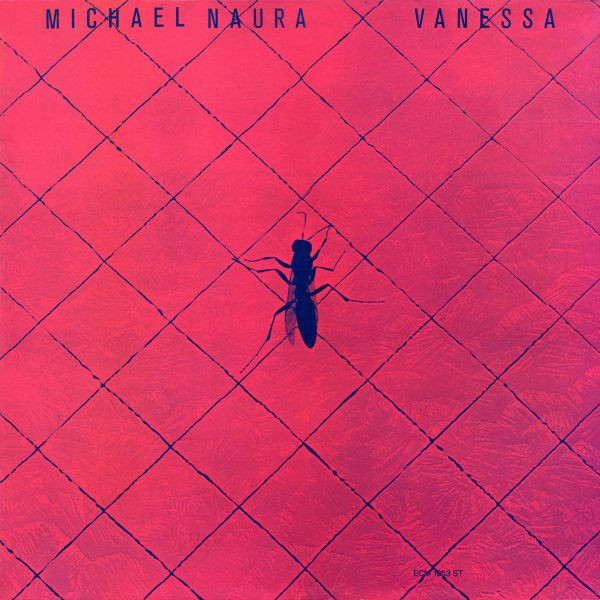
Recently I discovered Michael Naura Quartet’s Call (1973) and fell in love. Born in Lithuania, the pianist Naura moved to Germany and released music on the German label MPS. Call featured longtime bandmates Wolfgang Schlüter on vibraphone and Joe Nay on drums, as well as upright bass extraordinaire Eberhard Weber. For Vanessa, his ECM debut, Naura’s band is augmented to a quintet with a bassoonist in Klaus Thunemann.

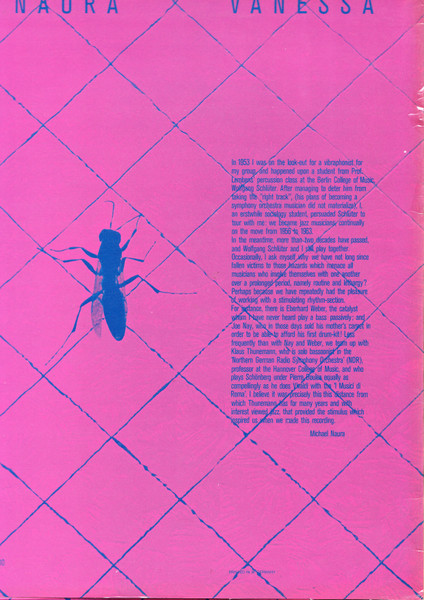
As Naura notes on the album’s back cover, he had by 1975 been playing jazz with Wolfgang Schlüter for two decades, and listening to several of their albums it is hard to understate the presence of Schlüter’s vibes, which seem to highlight Naura’s recordings more than even Naura’s own instrument. Still, Naura’s writing, presence as bandleader, and ability to establish the mood of his tracks is palpable. It is the element of this core duo, with Naura’s calm rhythms and Schlüter’s colorful leads, that makes Naura’s albums so compelling. Weber, the biggest name in the group, and Joe Nay, who according to Naura’s liner notes “[once] sold his mother’s carpet in order to be able to afford his first drum-kit,” fill out the rhythm section.

All that said, the first thing you really notice on Vanessa is a bassoon. Klaus Thunemann was a classical soloist and a Vivaldi specialist who really knew his way around the woodwind (and still does, I’m sure). His bassoon vamp over a murky groove on “Salvatore” makes the song a level-up from the band’s (bassoon-less) sound on Call. Around 8 minutes in, the drums drop out, and then Thunemann plays notes that sound like feedback. It’s amazing! After this nearly 12-minute opener, Weber, himself an ECM mainstay, spends most of the brief “Hills” just absolutely getting it in. “Vanessa” itself is a beautiful track – consisting mostly of just piano and vibraphone, it’s a reverie. Naura and Schlüter’s dynamic partnership is especially present on “Listen to Me”, where they really push each other. Thunemann’s track, the closer “Black Pigeon”, finds him rounding out the last 2 minutes of the record with eye-popping skill.

I believe this is the only recording of Naura or Schlüter with Thunemann, which is a shame, because he added another dimension to Naura’s band that makes Vanessa really superb. You can find some of Thunemann’s classical work here, and I also recommend the Naura Quartet’s spacier outing Rainbow Runner (1972).

Listen to Vanessa here.

Album of the Week: Roberta Flack’s Chapter Two (1970)

An artist must be relaxed and free of tension in order to record properly. -Roberta Flack, back cover of Chapter Two

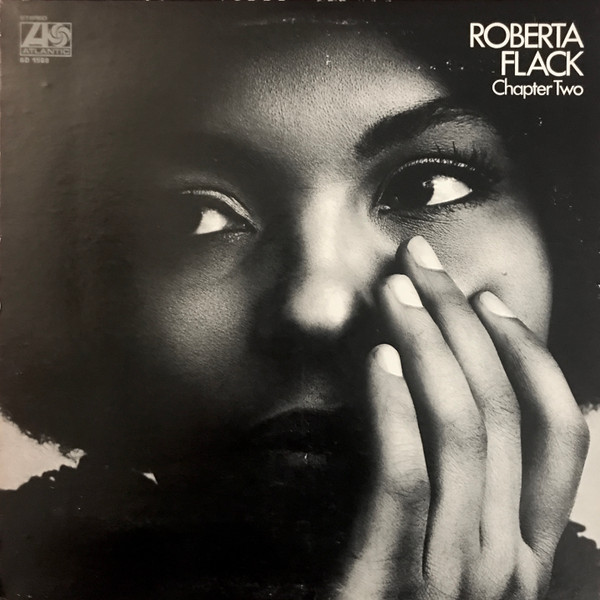
My first ever AOTW post (over three years ago now) covered Flack’s Feel Like Makin’ Love, a 1975 album that diverted from her earlier piano ballad style in favor of keyboards. But on Chapter Two, her sound was still relatively spare. Though not as popular as her debut First Take, Chapter Two is far from a sophomore slump.

We begin with “Reverend Lee”, a great tale of lust and faith. “Do What You Gotta Do” will sound familiar to fans of Kanye’s “Famous”, in which Rihanna sings the vocal part (West originally sampled Nina Simone’s version). “Let It Be Me” is so tender, it’s like The Everly Brothers’ version in slo-mo.

T.I.’s mammoth single “What You Know” samples this version of “Gone Away”, and listening to this album illustrates how brilliant Toomp’s sample is: he turned something wistful, almost mournful into an absolutely triumphant beat. Flack’s track itself wows in its graceful, beautiful buildup and release. The album should seemingly end with the climactic “The Impossible Dream”, but instead it finishes with the ominous war commentary “Business Goes on as Usual”. “Business Goes on as Usual” reminds me of Nico’s best work: its military march has an unsettling quality to it, and the spare arrangement allows the voice to take center stage. You can hear Flack breathing.

Chapter Two is ultimately a great showcase in Flack’s taste and form. She takes pop and folk songs (boy, Dylan was everywhere at this time) and makes them her own.

Listen to Chapter Two here.

Album of the Week: Hatfield and the North’s The Rotters’ Club (1975)

rotter:

noun [ C ]

mainly UK old-fashioned

US  /ˈrɑː.t̬ɚ/ UK  /ˈrɒt.ər/

someone who is very unpleasant or does very unpleasant things

Synonyms

lowlife (informal disapproving)

stinker (old-fashioned informal)

-Cambridge Dictionary

A regular lot of rotters, these Brits! Hatfield and the North, hailing from Canterbury, were a sort of supergroup that released only two albums before disbanding. This one is a banger which I’ve been digging for a while, kind of a mix of British rock and jazzy prog. This release features Dave Stewart, who played organ on Arzachel (1969), which has one of my favorite songs ever, the organ-heavy “Queen St. Gang”. Various other members played in groups such as Caravan, Gong and Matching Mole (the outfit for drummer Pip Pyle, who wrote the two deep 7-minute pieces on side A of The Rotters’ Club).

The cover of Hatfield & The North, the band’s debut, depicts a serene photograph of Reykjavik, Iceland merged with a fresco of Dante’s Inferno. The implied combination of serenity and chaos is a good indicator of the band’s music, which will usually either stay light or else go in unpredictable directions. “Share It” provides an easy start to The Rotters’ Club with a nice pop vocal melody. Phil Miller flexes his muscle on the instrumental “Lounging There Trying” before the album really takes off. At about 2 minutes into “The Yes No Interlude” we get a gnarly Miller solo, the guitarist cleaning house before a quieter, spacey middle section. This space is mined even deeper towards the end of “Fitter Stoke Has a Bath”, a wacky venture.

The 22-minute suite “Mumps” accounts for the back half of this album, and it’s a deliciously jammy venture. At around 5 minutes the instruments meld together in a harmonious, guitar-led mix that, dare I say it, anticipates Phish by a decade or two. Then, the “Northettes” add some wordless vocals, before Stewart goes hardcore on his Minimoog, Miller providing some tasty psychedelic guitar licks. Sinclair’s vocal section is searching and a bit melancholy. There’s even some flute toward the end of this magnificent track, which finishes in triumph.

The back cover of The Rotters’ Club thanks “Heinz and The Tornados – For Musical Inspiration”. The Tornados’ output is certainly inspiring, as no instrumental group atop of the Billboard charts sounded quite like them then (check out 1962’s “Telstar”) or has since. Some 30 years after The Rotters’ Club, the Tornados’ music would also inspire Panda Bear, who sampled them on Person Pitch.

The reissue/streaming version of this album contains about 13 minutes of bonus material (including 2 live tracks!) that is worth your time. Put it up there with your favorite Soft Machine venture, it’s that good!

Listen to The Rotters Club here.

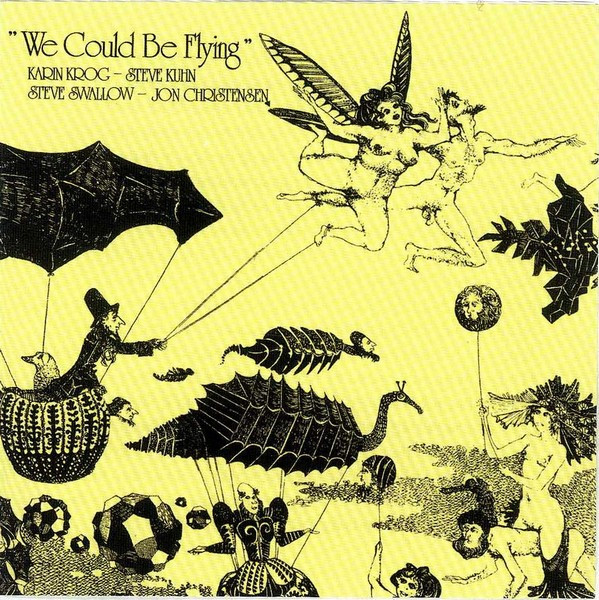
Album of the Week: Karin Krog’s We Could Be Flying (1974)

Oslo’s Karin Krog studied singing under Anne Brown, an American expat for whom George Gershwin wrote the music of Bess in Porgy and Bess. In 1964 she released her debut By Myself, which is the first female Norwegian vocal jazz record. Krog’s singing is lounge in presentation, but she has a masterful control of voice. When she really opens up two-and-a-half minutes into We Could Be Flying, you start to get a feel for her strength. And this is immediately followed by an instrumental vamp which speaks to the collaborative effort of this album.

Steve Kuhn, the American pianist who appeared on Pete La Roca’s classic Blue Note album Basra (1965), was living in Sweden at the time of this recording. He joins Krog here along with bassist Steve Swallow (also featured on Basra) and drummer Jon Christensen, who frequently recorded for the ECM label. Christensen really shines on “The Meaning of Love”, an early standout. This track has all the right kinds of space to it. Once again, Krog takes some pauses between her lines and the rest of the band stretches out.

The band does justice to Joni Mitchell’s “All I Want”, Krog’s delivery with more of a sly grin than Joni’s cracking despair. “Sing Me Softly of the Blues” (co-written by Carla Bley) has that old rainy Sunday in NYC vibe, mellow and jazzy – just the way I like it! The album closes with two Kuhn originals, the bass-driven “Hold Out Your Hand” and “Time to Go”.

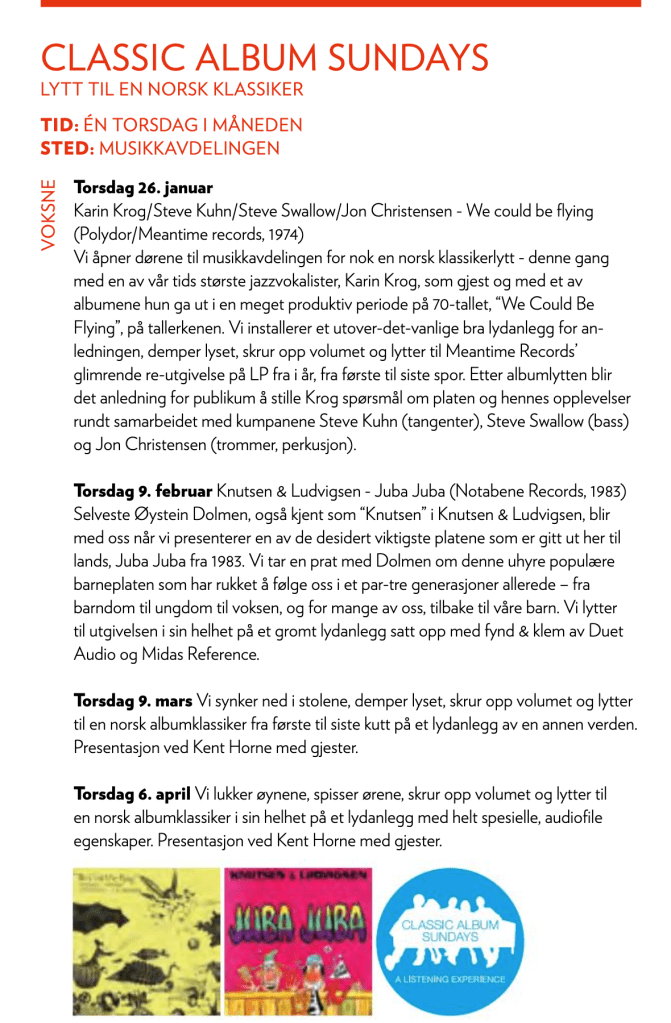
Also, in 2017, a library in Oslo played the album on audiophile equipment and Krog and Christensen were present to take audience questions. I wonder how that went! See the program flyer below – you may note that Knutsen & Ludvigsen’s Juba Juba (1983) was presented in this format 2 weeks later.

Listen to We Could Be Flying here.

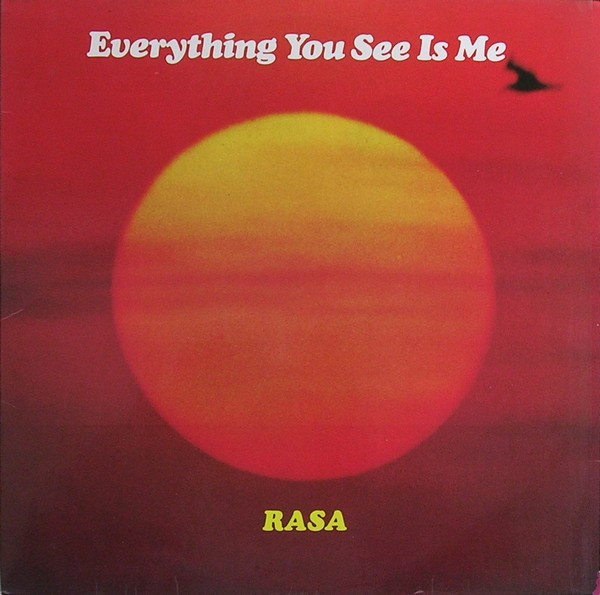
Album of the Week: Rasa’s Everything You See Is Me (1978)

One of my first posts on this blog was Roberta Flack’s Feel Like Makin’ Love, featuring the classic title-track penned by Eugene McDaniels. McDaniels’ own album Headless Heroes of the Apocalypse (1971) is superb and worth checking out. 7 years after Headless Heroes, McDaniels’ sons fronted Rasa, a Krishna Consciousness-informed funk/soul band. I touched a bit on the popularity of Vedic religions in the 70s and their influence in music in my review of Alice Coltrane’s Kirtan: Turiya Sings. Coltrane, then known as Swamini Turiyasangitananda, is thanked on the liner notes of Everything You See Is Me.

According to the folks at In Sheep’s Clothing, “Chris and London McDaniels wandered into a Krishna Consciousness event one fateful afternoon and met leaders of the Krishna movement, who soon found out that the brothers made music, and asked the pair to produce an album of catchy pop music to promote the ideas to English speaking audiences,” leading to the Rasa album, seemingly a one-time thing. ISKCON (International Society for Krishna Consciousness) Inc. released the album in 1978 along with another funk/soul outing, J.O.B. Orquestra’s Open The Doors to Your Heart. Most of that album is also on streaming – check out the psyche-delic closer “Govinda”.

The Iskcon-sponsored Krishna-promotion in these lyrics can get a little preachy/annoying, but the songs make up for it. The first couple of tracks have a kind of Cheryl Lynn/Patrice Rushen feel: total sunshine, bouncy pop-soul. “A Perfect Love” slows things down and is supremely mellow. I’ve got something on my miiind – love this one. On the B-side, “Within the Sound” is an instant highlight given its smooth piano groove (sampled on Black Rob’s “Can I Live?”) and tasty sax from George Young, who worked as a session player with Laura Nyro, James Taylor and others. “The Dream Is Over” wraps things up with a disco kick. I haven’t listened to anything else from the McDaniels brothers yet, but keeping Rasa in rotation is convincing me they had talent.

Listen to Everything You See Is Me here.

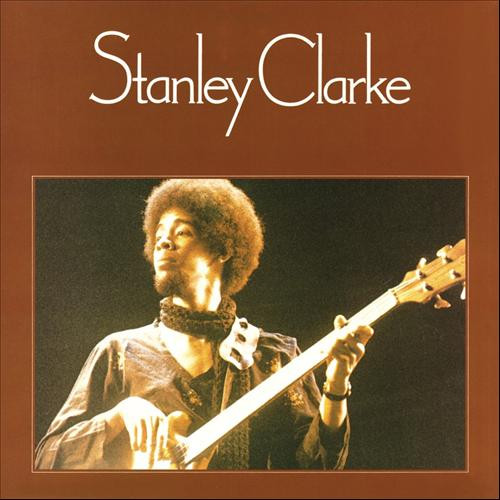
Album of the Week: Stanley Clarke (1974)

I’ve written about a few jazz albums, but I’m not sure if we’ve covered one with Tony Williams, my GOAT jazz drummer (big ups to Elvin Jones too). Williams was in Miles Davis’s second great quintet, which released a few of my all-time favorites. And on this, bassist Stanley Clarke’s eponymous second (or debut if you don’t count Children of Forever) album, he really comes out swinging.

The first 3 tracks here act as something of a unified suite, with a funky rocking intro and Clarke’s calm vocal/piano turn on “Yesterday Princess”, before the band gets hella jammy on “Lopsy Lu”. I could’ve sworn that was Chick Corea (Clarke’s Return to Forever bandmate) on keys wigging out based on the similarity to Corea’s playing on my one RTF record Where Have I Known You Before, but nope, it’s Jan Hammer. Legendary mf that he is.

“Power” begins with a Williams drum solo, and then the band builds up a groove for Bill Connors (also RTF) to really rip on guitar (this would make a great theme song to the 50 Cent-produced Starz show, btw). Clarke’s bass is very slap-funky, the type of shit that nerdy music guys like and many others understandably despise. It’s sick.

The second side begins with this band’s own sort-of “Spanish Jam”, “Spanish Phases for Strings & Bass”. As the title suggests, there are no drums, so you might consider this one of the album’s weaker cuts. But Clarke’s thumb-blistering effort on the Spanish theme is endearing. Then the “Life Suite” commences, with highlights including Williams and Clarke’s driving rhythm on Pt. 2, featuring climactic horns. Pt. 4 allows Connors to shine once more on guitar, doing the kind of jammy shredding that anticipates Trey Anastasio. Overall, a great group effort from the man Stan.

Listen to Stanley Clarke here.

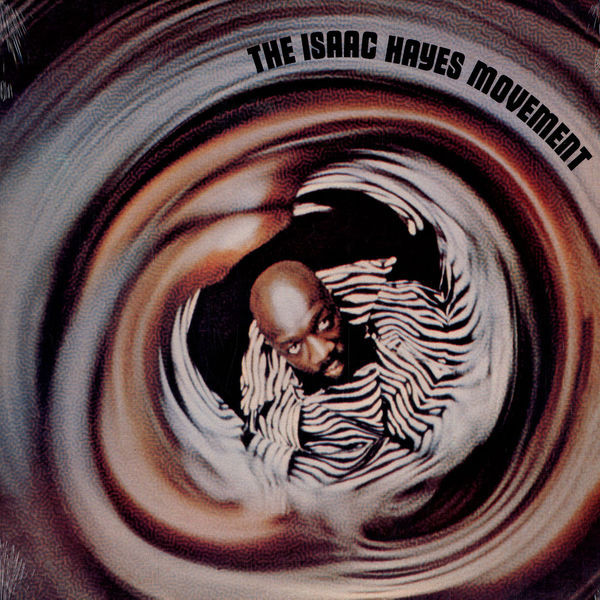
Album of the Week: The Isaac Hayes Movement (1970)

Isaac Hayes released a whopping 6 albums between the 4 years of 1968-1971, including the double-albums Black Moses and Shaft. All the albums are worth seeking out, and I’ve previously covered his excellent debut from 1968. The young artist followed that up with Hot Buttered Soul, his magnum opus, and in 1970 released his third LP, The Isaac Hayes Movement.

Hot Buttered Soul standout “By the Time I Get to Phoenix” is echoed here on Movement‘s opener “I Stand Accused”. The grand narrative buildup, the orchestral accompaniment and the arresting performance of the song make this track nearly as good at nearly 12 minutes. The epic buildup pays off as ol’ Ike, brimming with emotion, rattles off “I love you”s to his unrequited love. Similar in length is the closer “Something”, a take on George Harrison’s classic contribution to Abbey Road, though it fails to beat the Beatles version. The album is filled out with “One Big Unhappy Family”, as bitter in lyrics as it is sweet in sound, and the downbeat “I Just Don’t Know What to Do with Myself”.

I was walking to work in Philly one day, about 2 years ago, when I found a stack of records abandoned on the sidewalk. Among them were gems like Superfly and this Hayes album (which has a sick insert that hangs on my wall). Though it seems to get overshadowed by some of his other work, Isaac Hayes Movement is classic material from the artist at his peak.

Listen to The Isaac Hayes Movement here.

Album of the Week: Bruce Langhorne’s The Hired Hand (1971)

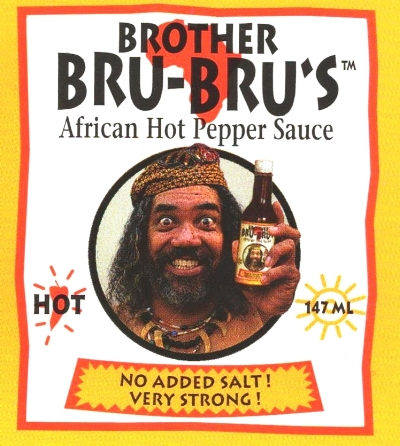
In 1971, the actor Peter Fonda, to whom [Bruce] Langhorne was introduced by [Hugh] Masekela, invited Mr. Langhorne to compose the music for his movie “The Hired Hand,” an austere soundtrack that featured banjo, fiddle and acoustic guitar… Not suited to the pace of Hollywood, to which he relocated from New York in the late ’60s, Mr. Langhorne moved to Hawaii in 1980 to farm macadamia nuts. He returned to Los Angeles in 1985 and, in 1992, learned that he had Type 2 diabetes. His diagnosis inspired him to create Brother Bru-Bru’s Hot Sauce, an organic, low-sodium salsa. -New York Times obituary, 2017

Two years before his directorial debut The Hired Hand, Peter Fonda starred in the classic road-trip film Easy Rider (Fonda was also credited as a screenwriter). Easy Rider looked to the future with its psychedelic narrative, unconventional style and countercultural themes. I haven’t seen The Hired Hand, but its soundtrack by Bruce Langhorne is similarly forward-thinking.

Though the obit above suggests that he was a man of many talents, Langhorne is probably best known as a session player for Bob Dylan, appearing on multiple classic Dylan albums. However, The Hired Hand soundtrack bears little resemblance to Dylan’s music. Langhorne’s guitar on “Opening” is repetitive and hypnotic, as violins provide a cheery accompaniment. Percussion is quite sparse on this track, including a very lightly played dulcimer, lending the song an ambient quality. “Riding Thru the Rain” is ominous, with a piano that sounds as dusty as the untamed West depicted in Fonda’s cowboy movie.

The sound on the recording as a whole has an old-school reel-to-reel quality that is gorgeous, yet the music is not dissimilar to what 21st century artists in the cross-section of ambient and country (Scott Tuma and William Tyler come to mind) make. According to boomkat, “Langhorne assembled each piece alongside his girlfriend Natalie Mucyn, who with no prior mixing or editing experience multitracked the recording via some distinctly lo-fi tape dubbing.”

“Ending”, the album’s longest track, has a middle-section with flutes that is stunning. It’s a lovely finish to a strange, moving and all too brief album from an unheralded artist.

Listen to The Hired Hand here.

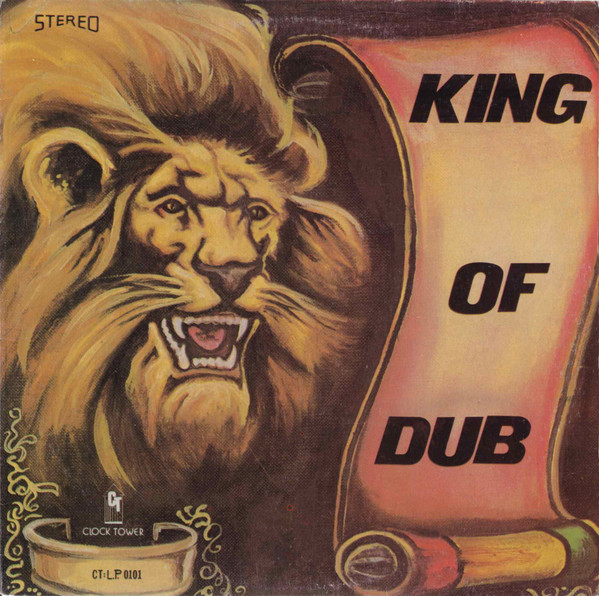
Album of the Week: Bunny Lee & Brad Osborne’s King of Dub (1978)

Bunny “Striker” Lee was one of reggae’s premier producers. Discogs credits him with production on over 2000 recordings, as well as writing credits for legends such as John Holt, Max Romeo, Dennis Brown and more. His Jamaican reggae productions form the backbone of King of Dub, a Jamaican-Bronx record of unassailable dub music.

This album is erroneously attributed to King Tubby on Spotify, which is somewhat understandable. The LP cover suggests that the artist is simply “King of Dub”, and the back cover’s notes from Clocktower Records founder Brad Osborne read in part, “For the right sound and effect, KING TUBBYS ‘the dubmaster’ is a must, knowing when to bring in the Rhythm and leggo the Bass and Drum”. The album was also mixed partially at King Tubby’s studio in Jamaica, and what with Tubby being a prominent King of the dub genre, the confusion is almost inevitable.

Little is written online about Brad Osborne, but this blog post from 2015 gives some insight. Osborne imported records from Jamaica to his shop in the Bronx based on the personal connections he had with Jamaican producers like Bunny Lee and King Tubby. According to the post, Osborne was given exclusive music on tape from these producers and often overdubbed them with flutes and pressed them to vinyl for Clocktower.

King of Dub, then, is a compilation of Bunny Lee productions for reggae artists that Osborne selected and released. With Sly & Robbie holding down the rhythm section you can’t go wrong (this is a general rule in reggae releases): the thing bangs. Like all dub, it’s best heard on loud speakers rather than an iPhone (the LP sounds particularly tight). Horns, organ, echoing vocals and dubby beeps abound on the opener “King Zion Dub”.

Much of the joy in this dub collection comes from tracking the many instruments or lack thereof (and as with any dub, the mixing board becomes an instrument): you’ll hear a horn appear out of nowhere, then fade out, leaving only bass and drums, then a guitar will enter, then echo away. The hi-hats will change in timbre and then drop. At times the music might come to a complete halt altogether. “Rubba Dunza”‘s ominous bass-heavy track is complimented by occasional drum splashes.

The final track “Stalac 80 Dubwise”, a scorching dub of “Stalag 17” by Ansell Collins (better known as the riddim used by Sister Nancy in “Bam Bam” as well as Chaka Demus & Pliers “Murder She Wrote”), is not listed on Spotify. Whether this is due to some sample clearance issue or the title’s similarity to the Nazi POW camp Stalag 18 is unclear. I believe that the track listed as “Fancy Up a Dub” is actually an edit of “Stalac 80 Dubwise”, but I would have to relisten to my record to be sure. Nevertheless, the final track here is a true ranking dub that tops off what is one of the greatest dub albums I’ve had the pleasure of hearing.

Listen to King of Dub here.