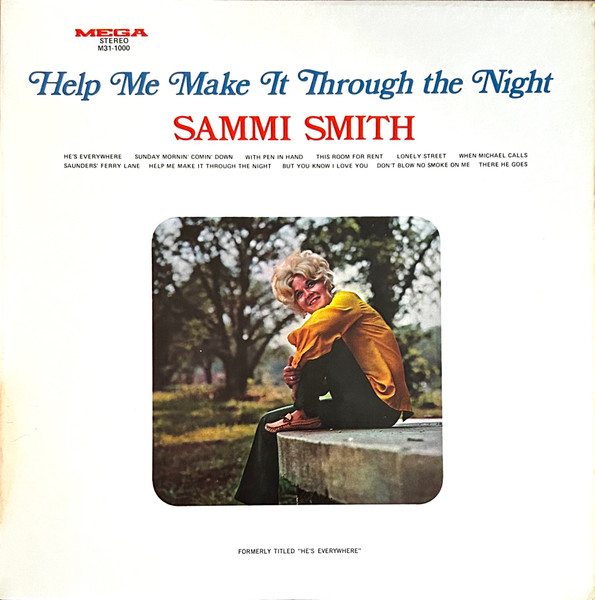
Album of the Week: Sammi Smith’s He’s Everywhere (AKA Help Me Make It Through the Night) (1970)

Country music has increased in popularity over the past few years, and so has my own interest in it. What used to be an appreciation for the hipster-approved Townes Van Zandt and Gram Parsons has extended to digging on Linda Ronstadt, Tanya Tucker, Nanci Griffith, Lyle Lovett etc. Safe to say I love me some Country! Sammi Smith was a name I didn’t know until recently, but her debut album He’s Everywhere blows me away.

Born in California, Smith once said of her childhood, “I moved around more than dust,” living in Oklahoma and Arizona. A friend of Waylon Jennings and Kris Kristofferson, Smith covers Kristofferson’s “Sunday Mornin’ Comin’ Down” and “Help Me Make It Through the Night” on He’s Everywhere, released on the short-lived Mega Records out of Nashville. He’s Everywhere, re-released as Help Me Make It Through the Night was Mega’s biggest hit, with the title track topping the Billboard Country charts.

The strings on opener “Saunders Ferry Lane”, paired with Smith’s smoky voice, create a cinematic atmosphere. The vibe is perhaps more torch song than classic Country. “There He Goes”, then, could be a Patsy Cline track. With vibraphones, steel guitar and a strong vocal take, it’s simply gorgeous. Kristofferson’s storytelling brilliance (not unlike that of Mickey Newbury, a favorite of Smith’s) shines through on “Sunday Mornin’ Comin’ Down”. This track captures the sort of Lonesome Country Blues vibe that the album succeeds in owning throughout. “He’s Everywhere” is a great and sorrowful song about not being able to get someone out of your head. “But You Know I Love You” and “Don’t Blow No Smoke on Me” are more straightforward Country tracks (the latter in the honky tonk vein), but the record is no worse off for that. He’s Everywhere ends abruptly during “This Room For Rent”, with an out-of-nowhere cut after the line “She’s heard no word from God, and nothing seems to matter anymore”.

After Mega folded, Smith signed to Elektra but was not well-promoted and seems to have never really gotten her due. She passed away in 2005 and is survived by her children, including her son Waylon Payne, a Country singer.

Listen to He’s Everywhere here.

Album of the Week: Ijahman’s Haile I Hymn (1978)

There are a few classic reggae albums that stand out for their deep atmosphere, song lengths, and spirituality. Dadawah’s Peace and Love (1974) comes to mind as a towering example. Another is Ijahman (Levi)’s debut Haile I Hymn, an inspiring record that is useful in turbulent times, no matter your religion.

Ijahman was born in Jamaica but released his first solo recordings in England in the late 60s as The Youth. These singles were a mix of R&B covers and Christian tunes that only hint at what he was capable of. After a prison stint in the early 70s, the man born Trevor Sutherland adapted Rastafarianism and released the single “Jah Heavy Load” as I. Jahman in 1976.

This and “I Am a Levi” caught the attention of Island Records with their deep grooves and Ijahman’s strong voice. The two tracks were reworked for his Island debut Haile I Hymn, and while roots purists might prefer the originals, the instrumental flourishes in the re-recordings add an all-star cast and a depth of feeling previously unattained. Rhythm stalwarts Sly & Robbie are here, as is Steve Winwood on organ. Guitarist “Bo Pe” Bowen (Three Piece Suit, Scientist Rids the World of the Evil Curse of the Vampires) plays a psychedelic lead, and is supported by rhythm guitar legends including Willie Lindo, who played on the aforementioned Peace and Love.

At just 4 tracks, Haile I Hymn begins with “Jah Heavy Load” in its reworked form. “I’ve got to carry Jah heavy load” goes the chorus, and it rings true today as everyone has their proverbial cross to bear. “I carry Jah heavy load / personally,” continues Ijahman on “Jah Is No Secret”, my favorite track here. The impassioned and melodic delivery of “personally” is incredible, as the band brings the track to an epic length. “Zion Hut” hits notes more saccharine than the rest of the album, but the organ’s church-like swells propel it toward transcendence early on. An extended vamp brings the track length to over 12 minutes. And the redone “I’m a Levi” has a new intro, and amazing singing.

Even with its extended tracks, Haile I Hymn never overstays its welcome. It’s both a touching work of devotion as a Rastafarian text and a chillout opus that will please any classic reggae fan or toking hippie.

Listen to Haile I Hymn here.

Album of the Week: Air’s Air Song (1975)

Henry Threadgill has an immense and under-appreciated discography, with a particularly magic run of recordings in the 90s. Digging back into an earlier era, though, reveals gems that may be the best entry point for a jazz fan unaccustomed to his distinct style. As a founding member of the trio Air, originally convening in 1972 and then performing and touring as Reflections (before changing that name), he focused on playing as part of a collective. Still, Threadgill wrote the music for the trio’s first record, Air Song, produced and recorded by the Japanese label Whynot.

I’ve lost count of how many times I’ve listened to this album, but I still find new things in it. In a way, Threadgill’s music defies categorization (let alone written commentary), circling around post-bop, military march, free jazz, ragtime and other modes without being pigeonholed into a style. Air Song begins in a fairly straightforward manner, but Fred Hopkins’ nearly 3-minute bass solo on opener “Untitled Song” pushes the track toward the sublime. This may be Threadgill’s first great recorded opus. “Great Body of the Riddle” then explores a much looser and more avant-garde rhythm, this time with a Steve McCall drum solo that clears up some space for Threadgill’s sax to rip it apart.

On the B-side are “Dance of the Beast” and “Air Song”. “Dance of the Beast” comes out swinging with the most intense sax playing on the album, but makes for a great boost at work. Threadgill’s flute opens “Air Song”, deftly navigating hollow space. Hopkins’ bowed bass then adds a sweetness to the sonic dimension. Bells are eventually added to the percussive mix before things round out, resulting in the album’s quietest and, for lack of a better word, airy track. Air would continue touring and recording for another decade or so before disbanding. More information can be found in Threadgill’s wonderful memoir “Easily Slip Into Another World”.

Listen to Air Song here.

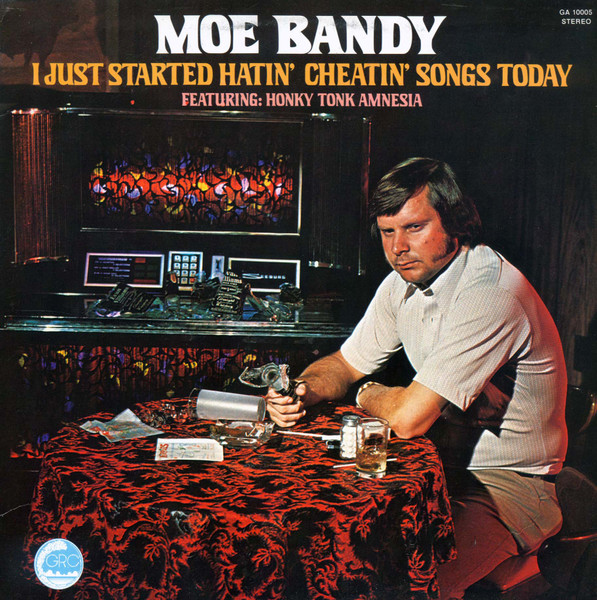
Album of the Week: Moe Bandy’s I Just Started Hatin’ Cheatin’ Songs Today (1974)

Moe Bandy has a love/hate relationship with cheating. Dressed like an aging sports commentator, his bemused look on the album cover says it all: he’s hurt by his cheating lover, but he knows he’s no better. This is to say nothing of the broken bottle in hand and the smashed jukebox.

Moe Bandy spent time in San Antonio as a sheet metal worker before making it in country music. The title track here allowed him to quit his day job, and it’s an instant classic. The first verse depicts Bandy’s realization of infidelity poetically: “If my backdoor could talk, it would tell me / That my borrowed angel’s been this far before.” Concluding that “my woman is the devil,” he swears off cheating songs, a sort of fourth-wall moment in acknowledging the country trope.

That’s until “This Time I Won’t Cheat on Her Again” (sure, Moe). We’ve also got “I Wouldn’t Cheat on Her if She Was Mine”, which is not the most impressive statement. Both are catchy songs though. “Smoke Filled Bar” is actually devastating: he’s crushed by the loss of his wife, drinking heavily to fill the void and lamenting the state his kids will have to find him in. Heavy shit.

Cheatin’ Songs ends with its most addictive cut, “Honky Tonk Amnesia”. Bandy blames it on the alcohol here: “She knows how [drinking] messes up my thinkin’ / How it makes me look for someone else to love.” The chorus is a soaring achievement in honky-tonk – pain fused with euphoria as Bandy hits “sometimes it lasts all night long!” This debut from Moe Bandy is short and sweet, and recommended to any fan of classic country.

Listen to I Just Started Hatin’ Cheatin’ Songs Today here.

Album of the Week: The Sylvers II (1973)

Some soul groups live in relative obscurity despite their fantastic music. Enter The Sylvers: supremely 70s, afros so large on this album cover that it becomes hard to tell where one ends and the next begins. Leon Sylvers III, up there in the top-right corner, was the brainchild of this Watts (LA) family act, writing most of their songs. Their early albums have provided legendary sample fodder and are killer soul LPs in their own right.

The small-time MGM subsidiary label Pride, who also released the probably unauthorized The History of the Grateful Dead album, signed The Sylvers in the early 70s for a string of soul records. By the time Pride folded in 1975, The Sylvers were recording for Capitol and had moved in the disco direction (their biggest hit, “Boogie Fever”, was released the same year).

Sylvers II features outstanding arrangements from David Crawford. The ballad “I’ll Never Let You Go” is both groovy and spooky. The string and horn arrangements on “Cry of a Dreamer” are beautiful and vault the song from good to great territory. B-side opener “Stay Away From Me” is bold and biting, and was sampled prominently on Ghostface Killah’s “Be Easy”. This song was also (perhaps strangely, since album-opener “We Can Make It If We Try” has more pop potential) released as a single by both Pride and MGM, with a contrasting B-side of the chill The Sylvers (1972) cut “I’ll Never Be Ashamed”, a harpsichord-laden groove.

“I remember when it was yesterday,” goes the chorus of the wistful “I Remember”, before the album closes, appropriately, with a cover of The Beatles’ “Yesterday”. This a capella cover is the most unique track on the album, showcasing the group’s full vocal range and plumbing the depths of the oft-covered song’s sorrowful melody. Though the “I Remember (Yesterday)” > “Yesterday” combo closes the chapter on The Sylvers II, The Sylvers would remain recording consistently until disbanding in the mid-80s. While they reunited for a live performance in 2017, it is unclear to me what the future holds for this overlooked group.

Listen to The Sylvers II here.

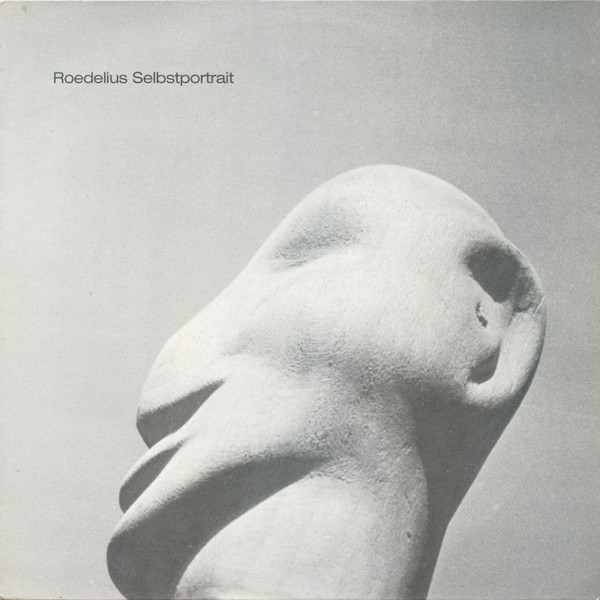
Album of the Week: Roedelius’ Selbstportrait (1979)

89-year-old electronic music pioneer Hans-Joachim Roedelius broke ground in several different 70’s outfits. As a member of Cluster and Harmonia, two German groups at the nexus of krautrock and ambient, Roedelius made several classic albums, among them Cluster’s masterstrokes Zuckerzeit (1974) and Sowiesoso (1976). Recorded between 73-77, the early solo album Selbstportrait (Self-Portrait) is a series of intimate vignettes that showcase Roedelius’ meditative talent.

Subtitled Teil 1 Sanfte Musik (“Part 1 – Gentle Music”), Self-Portrait was recorded on the Farfisa VIP 600 (seen above). It is indeed gentle, starting with the descending melodies of “In Liebe den”.

Recording for Sky Records while living in Lower Saxony, Roedelius once called it “the most beautiful place I’ve ever been to in my whole life”. There, he carved the sculpture that can be seen on the album cover.

These were authentically spontaneous musics, compositional studies influenced by the mellifluous landscape outside the window on balmy summer evenings – horses whinnying on the pasture by the river, nightingales singing, frogs croaking…

“Prinzregent” stands out with a darker undertone, and “Herold” pops along with a ticking percussion. Overall, the pieces on Self-Portrait hold a resounding forest-inspire beauty that can be explored for days. And thankfully, there are two more volumes.

Listen to Selbstportrait here.

Album of the Week: Jerry Garcia Band’s GarciaLive Volume Seven: November 8th 1976, Sophie’s, Palo Alto (2016)

A converted supermarket that still bore the signs of its former occupation, Sophie’s was [in 1976] a mainstay of the Garcia Band, a comfortable, funky venue that welcomed the band four times that year… And for Garcia, it was also familiar turf, a return to the town where he had first made his commitment to music.

-Nicholas G. Meriwether, liner notes

Today marks two years since I moved to Northern California, and what better way to celebrate than with a Jerry show? This recording of the Jerry Garcia Band in 1976 in Palo Alto was largely forgotten until the tapes were found in Donna Jean Godchaux’s storage in the 2010s. This lineup of JGB featured Donna on vocals, Keith Godchaux on piano, John Kahn on bass and Ron Tutt on drums. A familiar and winning quintet, they strike a nice contrast to later JGB lineups, which generally featured non-GD related keyboardists.

In 2021 I covered the slowness of ’76 Dead for my post on their 6/18 and 6/21 shows, and that rings true for most of this set as well. You can hear the “Row Jimmy” reggae tempo in “Knockin’ on Heaven’s Door” early on. The Godchaux’s presence is felt strongly (as it was with their tenure in the Grateful Dead) – Keith complements the expansive Garcia workouts on his piano and Donna adds another dimension to the vocals. She even takes lead, as on the highlight “Stir It Up”, a Marley classic that she does proud service to.

“Who Was John?” is a super bluesy turn from Jerry, and a jammer’s delight at over fourteen minutes. Speaking of which, this “Don’t Let Go” is a twenty-two minute beast. Jerry is given that floor around four minutes in, and what follows is the most deliberate, unhurried and collective improvisation of the night. Kahn has a bass solo around fourteen minutes that Jerry and Keith gently push up against before the whole group comes together at full volume. Rounding things out is a smoking “Mighty High”. This release is one of my absolute favorites of the GarciaLive series and an easy recommendation for a Garcia fan of any level.

Listen to GarciaLive Volume Seven here.

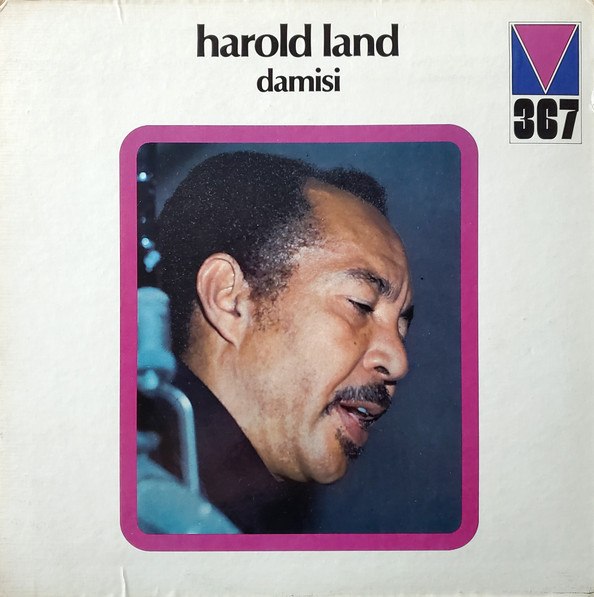
Album of the Week: Harold Land’s Damisi (1972)

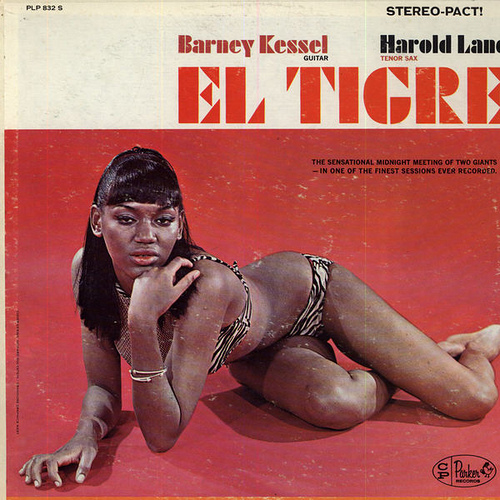
Every day or two at work I close myself in a giant freezer and put on some music while I move boxes around. I like to play jazz when I do this, because it helps me feel active and happy. One album that’s been really doing it for me in this situation is Harold Land’s Damisi. Land was a stalwart sax player who played on numerous classics such as Clifford Brown & Max Roach (1954), and later many Bobby Hutcherson records including personal favorites Now! (1969) and San Francisco (1970). Take a look at one of Land’s first album covers, El Tigre (1958), which is an almost unbelievably 50s-jazz-LP cover (“STEREO-PACT!”):

Needless to say, the guy was doing his thing for years, and around the time of his involvement with Hutcherson’s band in the early 70s he began recording LPs as a bandleader for Mainstream Records. I’m currently interested in Mainstream’s 300-series records, which have a distinct pattern in their album covers. I call this the Shapes Series, and you can view the covers on jazzlists. Scroll down to 350+ and note the similarities; Damisi is #367.

Damisi features a fantastic lineup including bassist Buster Williams of Herbie Hancock’s Mwandishi band (responsible for some of my all-time favorite albums). Oscar Brashear plays trumpet and flugelhorn and William Henderson plays piano – both recorded alongside Land for Bobby Hutcherson’s Head On (1971). Rounding out the quintet is drummer Ndugu, who also played on Mwandishi as well as two of my favorite George Duke albums. So this is a tight group!

Damisi is a deep session that verges on fusion with some chunky tracks (most stretch beyond the six-minute mark). Most songs have a groovy theme with both horns playing the melody before Land or another band member solos. “Pakistan” stands out with Land’s fantastic oboe playing, a relative rarity in the saxophonist’s discography. Ndugu’s composition “Chocolate Mess” (all other tracks are credited to Land) captures a magic that Miles Davis’s second great quintet had discovered a few years earlier on Miles in the Sky. The electric piano work, soaring bass and frenetic drumming lay the rhythm for excellent solos from Land and Brashear in that order. A stellar track, it’s one of two on Damisi‘s original second side, along with the title track. “Damisi” begins with fanfare before a mellow, multi-part theme begins. Then Land gives perhaps his best solo of the album, really blowing. A piano solo toward the end of the track suggests a delicate resolve to this album.

The reissued version of Damisi released in 1991 is the one on streaming services. Though its new cover doesn’t fit in with the Shapes Series, two bonus tracks from other recording dates are added, and both feature Bobby Hutcherson! “Dark Mood” is from the A New Shade of Blue sessions and has Billy Hart (Mwandishi, On the Corner) ripping on drums. “Up and Down” is from Land’s previous Mainstream release, Choma (Burn), which includes two drummers as well as Harold Land’s son Jr. on piano. At nearly 11 minutes and with extra percussive elements, this track feels like a lot to tack-on to the original Damisi, but I suppose CD buyers in the 90s could claim their moneys-worth.

Listen to Damisi here.

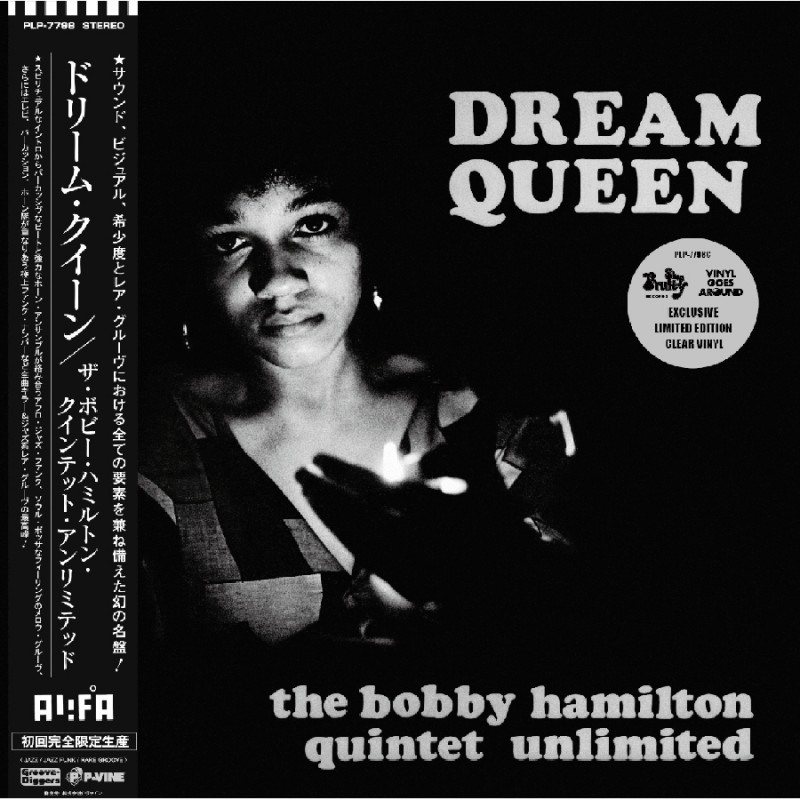
Album of the Week: The Bobby Hamilton Quintet Unlimited’s Dream Queen (1972)

This gem is from a Syracuse-based group who played shows with spiritual jazz luminaries like Alice Coltrane and Rahsaan Roland Kirk. Prior to this recording, Bobby Hamilton (not to be confused with jazz vibraphonist Bobby Hutcherson) played drums on several classic Nina Simone albums such as Pastel Blues and Wild Is the Wind. He then recorded the soul-jazz song “Ecology” with his group Anubis.

“Ecology” is a simple jam with funky guitars and vocal harmonies. But his first and only full-length recording would be Dream Queen, a jazzier, deeper undertaking. Despite the name Bobby Hamilton Quintet, seven musicians are credited on Dream Queen, including Mike Gipson on Musser electric vibes (amplified vibraphone) and Abram Brown on tenor sax. No guitars are present, but Pete Manning plays a funky bass.

The first two tracks of Dream Queen are fairly straightforward, with opener “Pearl (Among the Swine)” presenting a jazz-funk rave-up and “Priscilla” highlighting Hamilton’s mellow electric piano tone. “In the Mouth of the Beast” features a spoken rap over disorienting percussion, recalling Gary Bartz’s Harlem Bush Music – Uhuru album from 1971. After a couple of minutes the track settles into a great drum solo with multiple percussionists before unfolding into a full-out jam. The last 3-4 minutes in particular highlight the strength and intensity of the players (killer congas!).

The second side begins with the funky “Roll Your Own” before the title track, which is by far my favorite part of the album. “Dream Queen” is a ghostly, almost drumless meditation with shimmering vibraphone and a floating vocal melody. The sound is pure magic. When the horns enter, they just complete the vibe. I would recommend this track in particular to any fan of jazz-fusion or meditative music. With this monumental track, plus other gems and a striking cover, Dream Queen is something of an overlooked classic.

Listen to Dream Queen here.

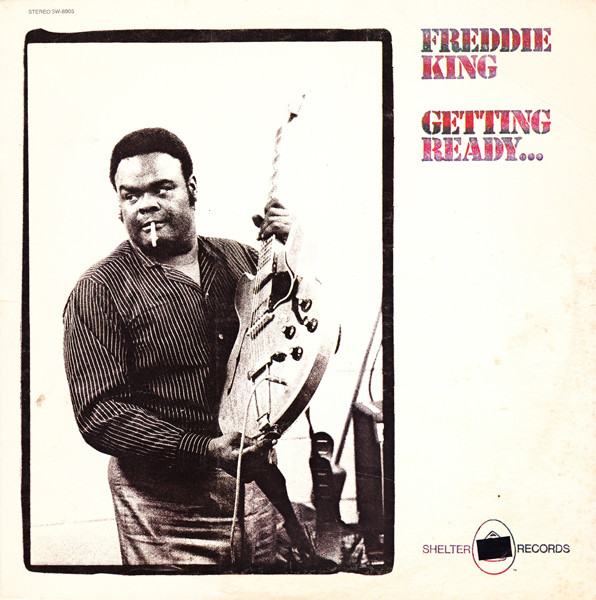
Album of the Week: Freddie King’s Getting Ready… (1971)

Freddie King was known as one of the “Three Kings of the Blues Guitar” – I’ve covered B.B. King’s Live in Cook County Jail, and Albert King’s Born Under a Bad Sign (released on Stax!) is another one of my favorite blues albums. Recorded and released in the latter half of a fruitful career, Getting Ready… provides a great argument as to why Freddie is placed among good company in the blues pantheon.

King’s acoustic pickings on “Dust My Broom” provide an early highlight – this song is a favorite of mine because it’s so simple. Elsewhere we hear mostly electric guitar, and King rips it on “Five Long Years” – an Elmore James classic. “Going Down” begins side 2 with what may be King’s single biggest hit. Leon Russell’s signature honky-tonk piano provide an uptempo accompaniment – Russell recorded Getting Ready… for his own Shelter Records label, which put a black mark over its logo (see above) for its litigious resemblance of the Superman logo.

“Walking by Myself”, with its string accompaniment and acoustic guitar is perhaps the most beautiful track here, also showcasing King as a strong vocalist. “(I’m) Tore Down” is notable for being the sole song here written by King, whose poor health and habits led to his untimely death of ulcers and pancreatitis at age 42.

Listen to Getting Ready… here.