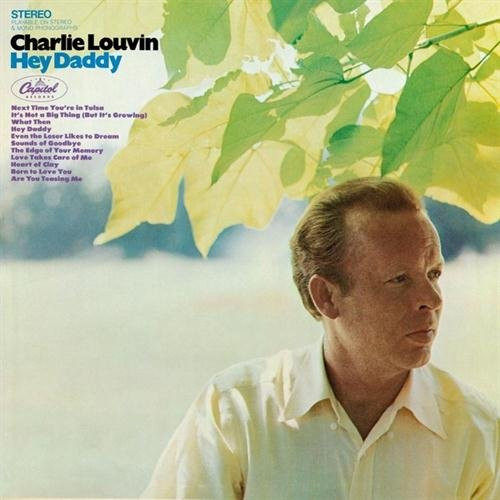
Album of the Week: Charlie Louvin’s Hey Daddy (1968)

The Louvin Brothers, Ira & Charlie, were successful gospel and country singers from the 1940s-60s. I know them from their 1959 album Satan Is Real, with its bonkers cover and excellent gospel harmony songs. Despite the heavy-handed preaching of the album’s lyrics, Ira was known as a womanizer and alcoholic, traits that led to the brothers’ break-up in 1963 (Ira died in a car crash 2 years later).

Hey Daddy, Charlie Louvin’s 7th solo album, follows a trend of eschewing the Louvin’s religious content, but it is no less wholesome. The title track finds the singer trading in the “bars and blondes” for fatherhood. Less wistful than the album cover might imply, “Hey Daddy” is instead a precious meditation on the simple joys children provide (though written by one Gene Chrysler, Louvin’s own son would have been about 13 at the time). The Louvins’ “Are You Teasing Me” rounds out side 1, a classic honky-tonk number.

Louvin’s voice is strong throughout the album – despite the lack of Ira, there are some great harmonies with the background vocals (I don’t have album credits for this one, unfortunately). He finishes with the Cindy Walker ballad “Born to Love You”. Charlie Louvin would continue to record and perform up to his death in 2011.

Listen to Hey Daddy here.

Album of the Week: John Coltrane’s My Favorite Things: Coltrane at Newport (2007)

My latest musical obsession is John Coltrane playing “My Favorite Things”, something he did fairly often from the recording of the My Favorite Things album in 1960 up until his death in 1967. Coltrane breathed new life into the Sound of Music classic every time he touched it. This Public Radio Broadcast from 2010 outlines the history of Coltrane and “My Favorite Things” – in 1960 someone in a Lower East Side club gave Coltrane sheet music for the song (The Sound of Music was a hit Broadway play at the time and the movie version would not appear until 1965), and he brought it to his band. There are at least 18 commercially released versions of Coltrane playing the song, from the roughly 3-minute single to the mammoth 34+ minute recording on The Olatunji Concert: The Last Live Recording.

My *ahem* favorite version so far comes from the Newport Jazz Festival in 1963, one of two Newport sets (the other from ’65) featured on this album. A compilation of sorts, this particular disc features tracks that were largely previously released. Whether that picture of Coltrane ripping soprano sax on the cover is from one of these dates or not, it gives you a pretty good idea of what’s inside. The 1963 set eases in with Eckstine’s “I Want to Talk About You”. Expressive and warm, McCoy Tyner plays the perfect piano accompaniment to Coltrane, who solos with great confidence in the back half of the track. Then “My Favorite Things” clocks in around 17 minutes. Coltrane just punches the shit out of this thing. He’s fluttering, carrying the melody to new heights and pulverizing the theme. Around 16 minutes the exploration resolves into the theme in a turn that’s as brilliant as that of any jam band (I’m thinking of 2 in particular) might play decades later.

In some ways the gem of this disc is the inspired 23-minute “Impressions” following the title track, having only been previously released at a truncated 15 minutes. This track was good enough to warrant its own Coltrane album while he lived, and this take features a riled-up Roy Haynes on drums and cooks hard enough to earn its runtime.

You can tell, at the end of the 1965 take on “My Favorite Things”, that the crowd is loving it and has to be reminded of curfew by the announcer, who notes that “it’s the witching hour and time for all of you to go home” (maybe the band was cutoff?). I don’t think this version is quite as great, though it may at times stretch out a little further. To me it just doesn’t match the strength and aplomb of the 1963 version. Still, it’s one of the Greats doing what he does best, and tracking down Coltrane’s takes on this song is proving to be a rewarding past-time.

Listen to My Favorite Things here.

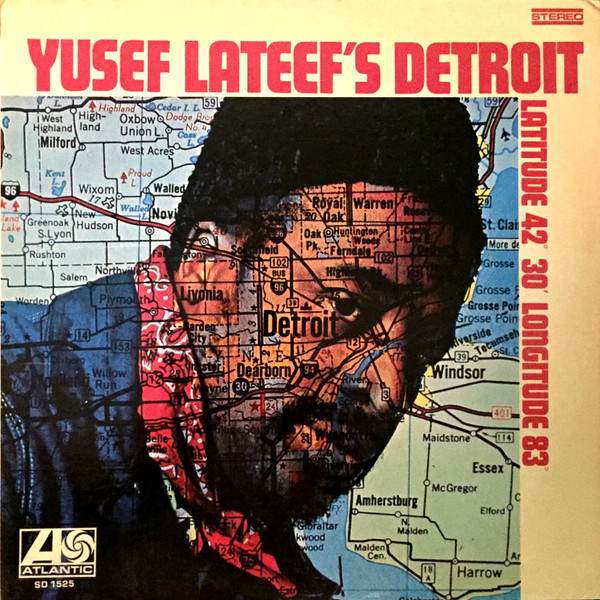
Album of the Week: Yusef Lateef’s Detroit (1969)

Detroit. Automobiles. G.M., C.M., A.M. Mark of Excellence! Factories, foundries, gases, grease, grime, smoke, black out, shake out, lay pipe, cement, mixer, mixing. Metal. Black sand. Sweet sweat. Dig ditch, fill hole, carry hod. Step back! Carry hod.

I previously covered Yusef Lateef’s popular Eastern Sounds from 1962, but this week’s entry is an altogether different beast, an album that is both a propulsive funk travelouge and an inward-looking journal. Lateef moved to Detroit in 1925 when he was 4 or 5 years old, and also recorded there in the late 50s. In 1969 he recorded Detroit while living in New York City, revisiting the tableau of sights and sounds experienced in his youth.

The opening “Bishop School” is a rhythmic blast that reflects the recording’s stellar lineup including Bernard Purdie and Ray Barretto. You may recognize “Eastern Market” from its sample on MF DOOM’s “Who You Think I Am”. Late in the track Lateef can be heard portraying a market vendor: “Sweet potaytas! Getcha greens!” he yells. “Russel and Eliot” has a slower, kind of grinding funk feel – just awesome. “Raymond Winchester”, which was released as a b-side to the “Bishop School” single features almost terrifying playing from Lateef – his instrument sounds like a howling baby.

The album closes with its only non-original, a take on “That Lucky Old Sun” (which Jerry Garcia Band would later cover) that was also recorded 2 years before the rest of the album’s sessions. A notable change in tempo, it’s a supremely relaxed cut on an otherwise peppy release, and a great example of Lateef’s versatility.

Listen to Detroit here.

Album of the Week: A Date with the Everly Brothers (1960)

Who wants a date with The Everly Brothers?? Look, these guys were pretty charming. At the time of A Date‘s release, Don and Phil Everly were 23 and 21 respectively, and writing much of their own material, not to mention playing and singing it.

I checked out their fourth album, A Date with the Everly Brothers, on the strength of the final track, “Cathy’s Clown”, their biggest hit at the time of its release. This one got stuck in my head with its catchy chorus and emo vibe (“I die each time…”). The other well-known track on here is “Love Hurts”, which was actually not released as a single, but became a huge hit 14 years later for Nazareth. It might be corny, but it’s a great song.

I like all the tracks here except for “Donna, Donna”. To me, the Everlys actually sound best on their own songs, such as the aforementioned “Cathy’s Clown” and the tender “That’s Just Too Much”. Another thing that impresses me about the Everlys is the uniqueness of their sound. They got their start in Tennessee, but they’re not exactly country. They’re “pop”, but the Jimmy Reed song here is a blues track. Opener “Made to Love” and other tracks suggest the playful surf-rock of the early Beach Boys, but the Everlys predate them.

Oh, and the cover’s promised “Candid photos of the Everly Brothers with Hollywood stars” includes pictures of them with Roger Moore and Jack Kelly, among others.

Listen to A Date with the Everly Brothers here.

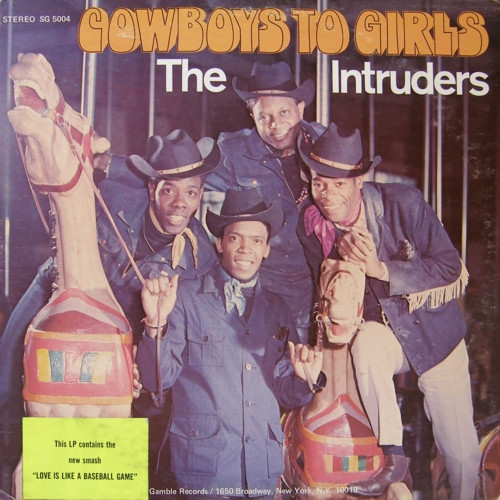
Album of the Week: The Intruders’ Cowboys to Girls (1968)

Remember as a kid when you used to chase girls and beat ‘em up? What? You don’t? Well, me neither actually. But this is a strange memory of the narrator in “Cowboys to Girls”, a lush dream of a track from The Intruders, an R&B group and early musical project for Philadelphians Gamble & Huff.

Though they would go on to write and produce bigger and better tracks, like “Love Train” and “Me and Mrs. Jones”, Gamble & Huff’s work on Cowboys to Girls has its own breezy charm. Reportedly from North Philly and led (originally) by the smoky voice of Sam “Little Sonny” Brown, The Intruders straddle the line between the harmony-heavy doo-wop of the early 60s and the smooth soul of the early 70s.

“Turn the Hands of Time” recalls The Supremes or Jackson 5 in its ecstatic chorus. Clocking in at under 2 minutes, “Sad Girl” is (perhaps too) short and sweet, rounding out the first side. In the second half we have the quite corny, yet cute “(Love Is Like A) Baseball Game”. Not really as great a metaphor/song as “Heat Wave”, but they can’t all be classics. I do like this brief version of “By the Time I Get to Phoenix”, which, although originally performed by Glen Campbell, I most associate with Isaac Hayes’ mammoth 18 minute version.

The Intruders would go on to release several more albums, which I have not yet heard at the time of this rating. But I recommend Cowboys to Girls to any soul/R&B fan looking for something slightly obscure (it is difficult even to find a high-res upload of the album cover) yet very smooth.

Listen to Cowboys to Girls here.

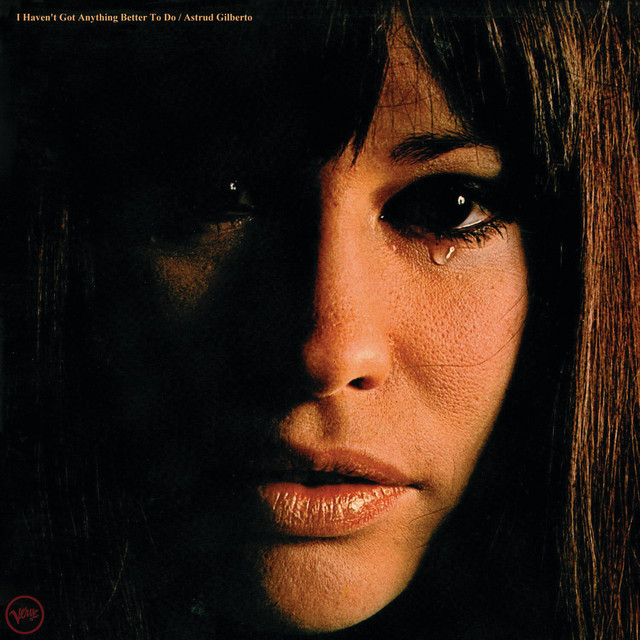
Album of the Week: Astrud Gilberto’s I Haven’t Got Anything Better to Do (1969)

How’s that for a striking cover? I’m not sure if Astrud splashed some water on her face during the shoot, did the acting thing of conjuring up some bad memories, or what. Maybe she was just really that bummed out. In any case, the cover and title drew me to this one. It was actually long before my Sinatra kick, but it would be up any jazz-pop fan’s alley.

Gilberto rejected the “jazz singer” label, and it’s fairly clear why. Her vocals are not complex or improvisational. In fact, they might even be too simple for some, fading into the background at times. Astrud (née Weinert) met João Gilberto through friend and (amazing) singer Nara Leão. João and Astrud married, and she is most known for their smash hit “The Girl from Ipanema” (1963), which they recorded when she was about 23 years old. But it seems she was a bit pigeonholed by this collaboration, and the press referred to her as a housewife.

I like I Haven’t Got Anything Better to Do in part because she is doing her own thing (the couple had by now divorced). Richard Davis, who has perhaps the greatest CV of any bassist ever, is on here. He sounds damn good on “Wailing of the Willow” – one of two Nilsson covers on this album. At under 30 minutes, it’s short and sweet. This album is truly breezy. “The Sea Is My Soil” really comes to life about halfway through in a beautiful moment.

“Without Him”, the other Nilsson cover, is another big highlight. It’s melancholy, yet full of the pep that only that Brazilian-style percussion provides. And as far as tearjerker moments go, I’d rate the saxophone coming in after “if I had wings I could fly” on the closer “If” pretty highly. The fact that this is the last track on the album only adds to its desolate feeling. That’s it! It’s over. What’s left? Nothing!

Astrud Gilberto loves animals and has a very cute old-school website that you should visit.

Listen to I Haven’t Got Anything Better to Do here.

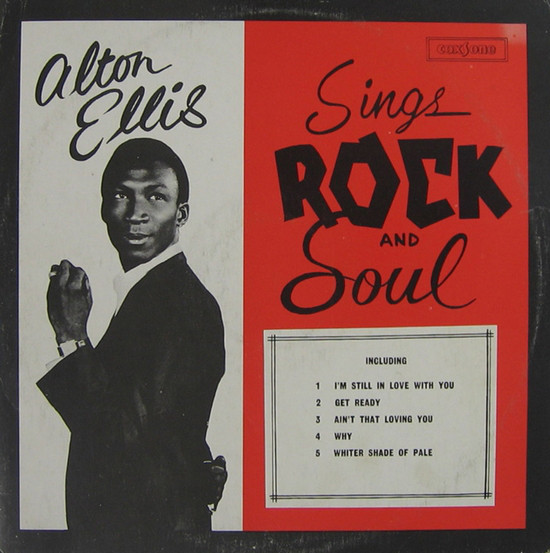
Album of the Week: Alton Ellis Sings Rock and Soul (1967)

“Mr. Rocksteady”. “Godfather of Rocksteady”. If you Google Alton Ellis, these are the sobriquets you will see again and again. The rocksteady subgenre of reggae lit a fire in the heart of a million lovers, and the late Ellis is certainly one to thank for this. Recording at producer Coxsone Dodd’s legendary Studio One in Kingston in the 1960s, Ellis was at the forefront of the rocksteady movement, and his first album Sings Rock and Soul is all killer, no filler.

A mix of Jamaican originals and (as the title implies) rock covers, “I’m Still in Love With You” is the album’s most recognizable classic, having been later covered by Marcia Aitken and (much later) Sean Paul. This riddim also served as the backing track for Althea & Donna’s “Uptown Top Ranking” and Trinity’s “Three Piece Suit”. Ellis sings the track with confidence and ease. The Beegees ballad “Massachusettes” is given a chill spin, and “Baby Now That I Found You” might be impossible to not sing along to. Later, “Opression” finds Ellis rocking a killer falsetto.

These are all winners, but Ellis’s take on Procol Harum’s signature song “Whiter Shade of Pale” is my favorite track here. The song’s nautical lyrics are well-suited to a Jamaican interpretation, and the organ as filtered through the relatively lo-fi Studio One production sounds so damn good. The track also fades out unexpectedly, which fits the surreal vibe of the song overall. Gold star goes to whoever decided on this cover.

In a late interview, Ellis had this to say on Coxsone Dodd: “He reminds me a lot of Moses. He was doing so much good things but at the end of his days he blasphemed against God… The sin that he committed was getting so carried away with the money aspect of it all. At the end he was completely blinded and mesmerized by the amount of money he was earning and he became a very hard and greedy person.” Jamaican singers were often exploited by producers in this era (as you can see dramatized in the classic movie The Harder They Come), and Ellis was no exception. But Ellis’s success lasted beyond his early years, as he moved to England and found success among a number of Jamaican expats living there. He passed away of cancer in London in 2008. While I haven’t heard other albums by Alton Ellis, this debut is an outstanding collection of rocksteady classics and recommended to anyone with an interest in the genre.

Listen to Sings Rock and Soul here.

Album of the Week: Presenting Isaac Hayes (1968)

Isaac Hayes was the man before he was the man. At 22, the Tennessee native was playing keys on Otis Redding records and writing songs for Sam & Dave. Fast forward a few years and we arrive at his breakout Hot Buttered Soul (1969), one of those records to end all records, a consummate soul masterpiece. Stand it up next to What’s Goin’ On, Innervisions, what have you. Hot Buttered Soul is a monolith.

But it wasn’t Hayes’ debut. That would be the previous year’s Presenting Isaac Hayes, a surprisingly unknown soul-jazz session that deserves more props. The back-cover details the story of a typical 60s night in Memphis with Big Ike: “A few years back, Isaac strolled into Currie’s Tropicana Club in Memphis and sat in with the group, which included drummer Al Jackson, Jr. He sat down at the piano and began rambling over the keyboard. His offerings were an instant crowd success.” This was the Stax/Volt Records house band, essentially Booker T. & The M.G.s augmented with Isaac Hayes instead of Booker, who was in school at the time.

Presenting finds Hayes on piano and vocals, with the aforementioned Jackson Jr. on drums and Donald “Duck” Dunn on bass guitar. The trio’s Stax sessions for the album were improvised with no additional musicians. I’d love to hear more from these sessions, since the original album with 5 tracks is only half an hour long.

Once you’ve heard the full version of “Precious, Precious”, the album edit doesn’t really work. It’s sort of like if you took a 20-minute Coltrane session and cut it down to 3 minutes. Like its perfect follow-up Hot Buttered Soul, Presenting Isaac Hayes works best outside the confines of radio-friendly time constraints. The longform tracks here are just excellent – “I Just Want to Make Love to You” is raw: the sound is live and intimate, like you’re in the studio with the three players. With alcohol on his breath, Ike has a vocal swagger that pushes the track to the next level. It’s blues, as blue as Willie Dixon’s original, but Hayes’ chops on piano take it to the ever-transcendent realm of soul-jazz.

The “Going to Chicago Blues” track is another rambling wonder, with a fantastic vocal from Hayes at the end of the conjoined “Misty”. The closer “You Don’t Know Like I Know” is one of two Ike originals (though he makes every song his own), and the instrumental piece wouldn’t sound out of place on an Ahmad Jamal Trio record. There’s something in the timbre of the drums here, they’re just so warm and organic. While I wouldn’t mind vocals, it’s a great cut nonetheless.

And then, on streaming and reissue versions, we conclude with the long version of “Precious, Precious”. Wow! Big Ike is feelin’ it here! It’s no wonder he has that top hat and baton on the cover, because this is 20 minutes of magic. Sorry for the corny line, but listen! The man mumbles and wonders, the band carries the driving theme and the music just flows and flows. I love Isaac Hayes wordless vocals, it sounds like he’s making love to the music. Or, as Lil Wayne would say 45 years later, “I just fucked this piano”. Probably another reason they cut it for the first release.

If you like jazzy R&B, soulful jazz, soul-jazz, improvised blues jams or otherwise groovy tunes, don’t hesitate to give this one a spin. It’s an overlooked debut by an underrated master.

Listen to Presenting Isaac Hayes on Spotify.
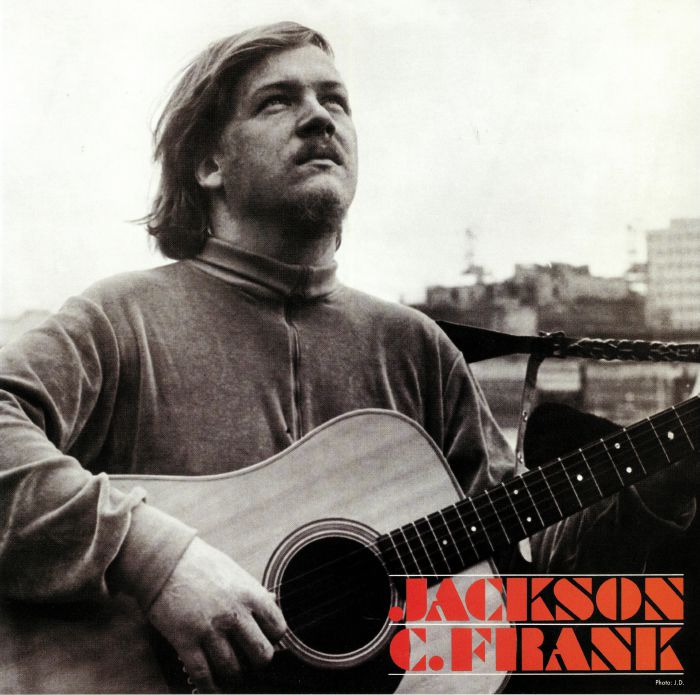
Album of the Week: Jackson C. Frank’s S/T (AKA Blues Run the Game) (1965)

When times are tough, you can be thankful that you’re not Jackson C. Frank. I think I found out about the late folk-singer’s story in a RYM thread titled something like “Which musician had the worst life?”

Here’s a rundown: As a child in suburban Buffalo, NY, the young Frank survived a school explosion in which his friends and girlfriend died and he himself suffered severe burns that would cause lifelong injuries. After modest success from his debut, his mental health began to unravel. He married and his young son died of cystic fibrosis. He later became destitute and sick, occasionally sleeping on the streets of New York City. Sitting on a bench in Queens, he was shot in the eye by kids with a pellet gun and blinded. In 1999, he died of pneumonia in Massachusetts at the age of 56, poor, alone and unknown.

Fortunately for us, Frank’s only studio album is not quite as depressing as his life story. The blues are present, sure, but from the opener “Blues Run the Game” you can hear a sweetness in his voice, melodies and strumming. The talent is palpable. Apparently Frank was quite shy about singing around anyone, including his producer Paul Simon (yes, that Paul Simon). It’s not difficult to assume he was traumatized by his childhood. Which is a shame, not just for obvious psychological reasons, but because he had a great range and was more than able to carry a tune. “Here Come the Blues” is as righteous a blues song as one written by the great masters of the American south.

The second half of Frank’s album is even stronger than the A-side. The fingerpicking of “Milk and Honey” was atmospheric enough to be sampled on rapper Nas’s appropriately depressing “Undying Love”. This ballad was also covered by such folk luminaries as Bonnie Dobson, Sandy Denny (who dated Frank for a time) and Nick Drake (who recorded several Frank songs before his own death). “My Name is Carnival” has the mystical folk vibe of a group like Pentangle. “You Never Wanted Me” is a bittersweet closer, perhaps more upbeat than you might expect from the title.

On the reissue/streaming version we get some interesting bonus tracks. “Marlene”, a tribute to his childhood girlfriend who died in their school fire, is achingly beautiful and personal. One need only listen to the lyrics to get an idea of the singer’s pain. Some of the other songs are poorly recorded or preserved, as you can hear the tape messing up in “The Visit” and “Prima Donna of Swans”, but for me this is an endearing quality. It is unclear to me when the songs were recorded, but what is clear is that Jackson C. Frank could have made another great album with the proper variables permitting.

A French documentary film, Blues Run the Game – The Strange Tale of Jackson C. Frank, is currently in post-production. You can see an excerpt of it on Youtube here (it is quite sad).

Listen to Jackson C. Frank here.

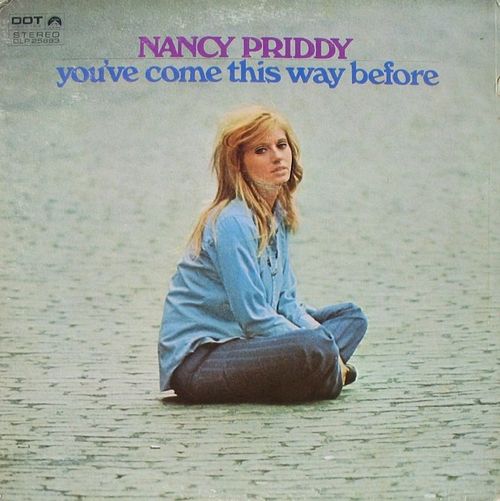
Album of the Week: Nancy Priddy’s You’ve Come This Way Before (1968)

“Feelin’ strange sensations / Familiar old vibrations” – so begins the trippy odyssey of renaissance woman Nancy Priddy’s You’ve Come This Way Before, released on the relatively unknown Dot Records label. Priddy was involved in the Greenwich Village folk scene of the 60s and sang back-up vocals on Leonard Cohen’s classic debut (you can hear her on the timeless songs “Suzanne” and “So Long, Marianne”). She also dated Stephen Stills, and eventually turned to acting, often starring alongside her daughter Christina Applegate. You’ve Come This Way Before, then, works as something of a successful one-time experiment for the talented Priddy.

At its best, Priddy’s music achieves a blend of Margo Guryan’s comfy psych-pop and Nico’s more doom-and-gloom baroque songs. “Ebony Glass” employs some eerie harpsichord and strings as well as a child singing “This is the way the world ends”. The rhythm section is tight (courtesy of jazz veteran Bernard Purdie), and the vibe is pure lava-lamp psychedelia. The album peaks early with the frankly incredible “Mystic Lady”, which is everything great about the album and the genres it includes in one track. A shifting opus not unlike “A Day in the Life”, it is in one section an orchestral ballad, another a festive merry-go-round, and finally a jaunty soul show-stopper in the vein of Laura Nyro.

Part of the album’s classic sound is attributable to co-producer and arranger John Simon, who worked with Leonard Cohen, The Band, Janis Joplin and Margo Guryan among others. “We Could Have It All” could be a Mamas & The Papas song. “Christina’s World” is apparently inspired by the painting of the same name, though it works doubly as a tribute to Applegate, who was curiously not yet born when the song was made.

My biggest complaint with this album is that it’s too short. There are 10 mostly brief songs and it barely clocks in at half an hour, with the longest track displaying the most brilliance. It ends on a curious note with the weird “Epitaph”, which leaves me wanting more. I will be seeking out more of Priddy’s music, but she didn’t release another album for decades, and I’m currently listening to 2007’s “Y2k Drinking Song”, which sounds like Jimmy Buffett (read: terrible). However, You’ve Come This Way Before is nothing less than a true hidden gem.

Listen to You’ve Come This Way Before on Spotify.