Album of the Week: Pure X’s Angel (2014)

Did you forget me?

I had (a thankfully pretty minor case of) covid this week, so there wasn’t much to do but sit around and get stoned, which led me to revisiting some of Gorilla Vs. Bear’s old AOTY lists. The GvB peeps specialize in indie stoner music, and I found a familiar name I hadn’t thought about in a while – Pure X! The dudes from Austin have 4 full-length albums, with 2014’s Angel – their first and only LP on Fat Possum – being my favorite.

This week we say RIP Gary Wright, whose iconic 70s soft-pop smash “Dream Weaver” is echoed here in “Fly Away with Me Woman” – silky smooth! It’s no secret by now that I like chill music. And holy shit! Angel makes Phish sound like Iron Maiden. From the jump the vibe is gentle and relaxing, “Starlight” is just a real mellow jam. “Livin’ the Dream” dips a bit deeper into psych-rock, but it’s still exceptionally chill. (Stuck in my room with covid… now that’s what I call livin’ the dream!) “Rain”, with its slo-mo fuzz buildup, also produces a bit of a different vibe.

A huge highlight comes during the synth and strings in the back half of “Every Tomorrow”, one of the best and sweetest songs here. There’s also a nice turn of phrase in “White Roses” – “Turn the music up / Let the flowers bloom”. Kinda sounds like a Grateful Dead lyric! Hell yeah. They should consider playing this album at my dentist’s office. It would be way more relaxing than the John Fogerty covers or whatever the hell’s going on there.

Listen to Angel here.

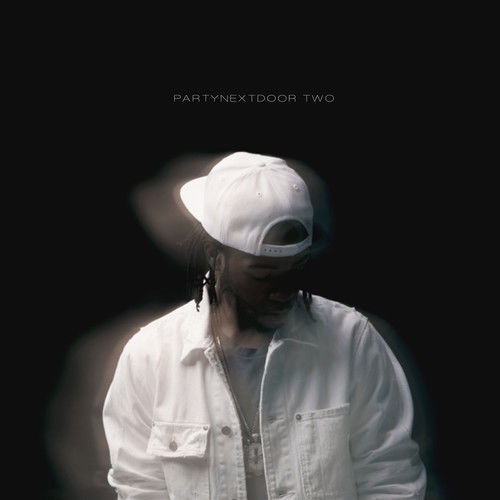
Album of the Week: Partynextdoor’s Partynextdoor Two (2014)

Critics haven’t always been kind to my guy PND over the years, and while he does have some duds (2020’s limp Partymobile comes to mind), I think he’s an outstanding artist. Writing, producing and singing his own songs as a teenager, he came into the game with his own style and sound. I love a lot of his songs but PND 2 is probably the one project I’ve spent the most time with.

PND’s career is forever linked to Drake, and their stylistic similarities are evident from the jump here. “East Liberty”‘s opening line “The summer’s over…” recalls “The summer’s mine…” from Drake’s “Good Ones Go” (Take Care). Like Drake, Party’s songs revolve around the flashy lifestyle of a young star in Toronto, and his production echoes Drake producer 40’s muted beauty. Raps themselves take more of a backseat in PND’s work, and by leaning into the chill R&B thing his work is less memorable but for me more comfortable than Drake’s. It’s so easy for me to revisit – I just pop on these hazy beats and get in the zone.

The collection here is full of classics, with PND producing or co-producing all but one track. “SLS” is so well-constructed in its buildup of drums and vocal samples, and all the shit-talking he does (dude was 20 when he made this album) is convincing wrapped up in the music. The drum production on a track like this or “Her Way” feels really good. It’s difficult for me to describe, or maybe I just have a nostalgia for it, but I feel like drums in this era hit better than what’s in hip-hop and R&B today.

I think “Sex On the Beach”‘s Disclosure sample has aged well. At the time it almost felt like a mistake given how huge “Latch” was, but ultimately it turns a pop smash into a kind of underground banger (surprised this one wasn’t a single). I think I listened to “Bout It” every day in college for a while, just walking around campus getting that in-between-classes dopamine rush from the first 5 seconds. Listening to Drake’s verse on “Recognize” today, I’m surprised at how different his voice sounds and not surprised that he’s totally in his bag. The beat would go on to repeatedly soundtrack the legendary Nileseyy Niles “disappearing” meme, and samples some patois-laden deejay type vocals.

“Muse” ends things in stellar fashion. I think of this as a Kehlani tribute (“bad bitch is from Oakland…”), and all the little production quirks, the little piano notes, the “Lemme-Lemme get that A”, and the reconstruction of the Ginuwine sample really make it a song she’s deserving of. Plus dude is talking about getting flustered and dropping his weed, which is funny. PND would go on to release more good stuff including PND 3, Colours 2, and Seven Days, which all got a lot of play from me. I like some of his newer songs too and given his increased output I would guess a new album is on the way soon.

Listen to Partynextdoor Two here.

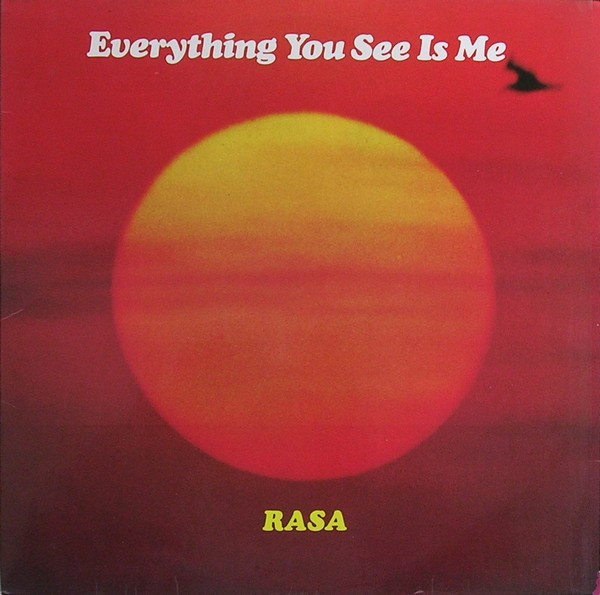
Album of the Week: Rasa’s Everything You See Is Me (1978)

One of my first posts on this blog was Roberta Flack’s Feel Like Makin’ Love, featuring the classic title-track penned by Eugene McDaniels. McDaniels’ own album Headless Heroes of the Apocalypse (1971) is superb and worth checking out. 7 years after Headless Heroes, McDaniels’ sons fronted Rasa, a Krishna Consciousness-informed funk/soul band. I touched a bit on the popularity of Vedic religions in the 70s and their influence in music in my review of Alice Coltrane’s Kirtan: Turiya Sings. Coltrane, then known as Swamini Turiyasangitananda, is thanked on the liner notes of Everything You See Is Me.

According to the folks at In Sheep’s Clothing, “Chris and London McDaniels wandered into a Krishna Consciousness event one fateful afternoon and met leaders of the Krishna movement, who soon found out that the brothers made music, and asked the pair to produce an album of catchy pop music to promote the ideas to English speaking audiences,” leading to the Rasa album, seemingly a one-time thing. ISKCON (International Society for Krishna Consciousness) Inc. released the album in 1978 along with another funk/soul outing, J.O.B. Orquestra’s Open The Doors to Your Heart. Most of that album is also on streaming – check out the psyche-delic closer “Govinda”.

The Iskcon-sponsored Krishna-promotion in these lyrics can get a little preachy/annoying, but the songs make up for it. The first couple of tracks have a kind of Cheryl Lynn/Patrice Rushen feel: total sunshine, bouncy pop-soul. “A Perfect Love” slows things down and is supremely mellow. I’ve got something on my miiind – love this one. On the B-side, “Within the Sound” is an instant highlight given its smooth piano groove (sampled on Black Rob’s “Can I Live?”) and tasty sax from George Young, who worked as a session player with Laura Nyro, James Taylor and others. “The Dream Is Over” wraps things up with a disco kick. I haven’t listened to anything else from the McDaniels brothers yet, but keeping Rasa in rotation is convincing me they had talent.

Listen to Everything You See Is Me here.

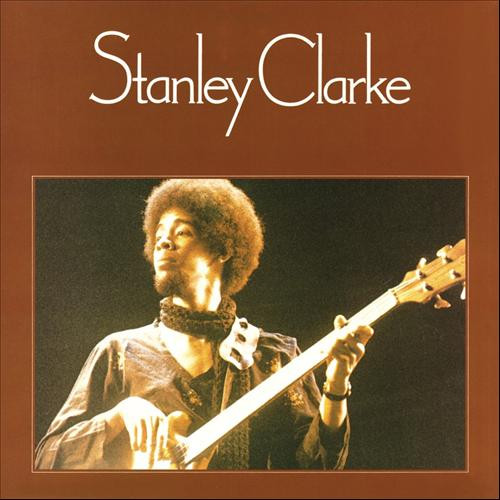
Album of the Week: Stanley Clarke (1974)

I’ve written about a few jazz albums, but I’m not sure if we’ve covered one with Tony Williams, my GOAT jazz drummer (big ups to Elvin Jones too). Williams was in Miles Davis’s second great quintet, which released a few of my all-time favorites. And on this, bassist Stanley Clarke’s eponymous second (or debut if you don’t count Children of Forever) album, he really comes out swinging.

The first 3 tracks here act as something of a unified suite, with a funky rocking intro and Clarke’s calm vocal/piano turn on “Yesterday Princess”, before the band gets hella jammy on “Lopsy Lu”. I could’ve sworn that was Chick Corea (Clarke’s Return to Forever bandmate) on keys wigging out based on the similarity to Corea’s playing on my one RTF record Where Have I Known You Before, but nope, it’s Jan Hammer. Legendary mf that he is.

“Power” begins with a Williams drum solo, and then the band builds up a groove for Bill Connors (also RTF) to really rip on guitar (this would make a great theme song to the 50 Cent-produced Starz show, btw). Clarke’s bass is very slap-funky, the type of shit that nerdy music guys like and many others understandably despise. It’s sick.

The second side begins with this band’s own sort-of “Spanish Jam”, “Spanish Phases for Strings & Bass”. As the title suggests, there are no drums, so you might consider this one of the album’s weaker cuts. But Clarke’s thumb-blistering effort on the Spanish theme is endearing. Then the “Life Suite” commences, with highlights including Williams and Clarke’s driving rhythm on Pt. 2, featuring climactic horns. Pt. 4 allows Connors to shine once more on guitar, doing the kind of jammy shredding that anticipates Trey Anastasio. Overall, a great group effort from the man Stan.

Listen to Stanley Clarke here.

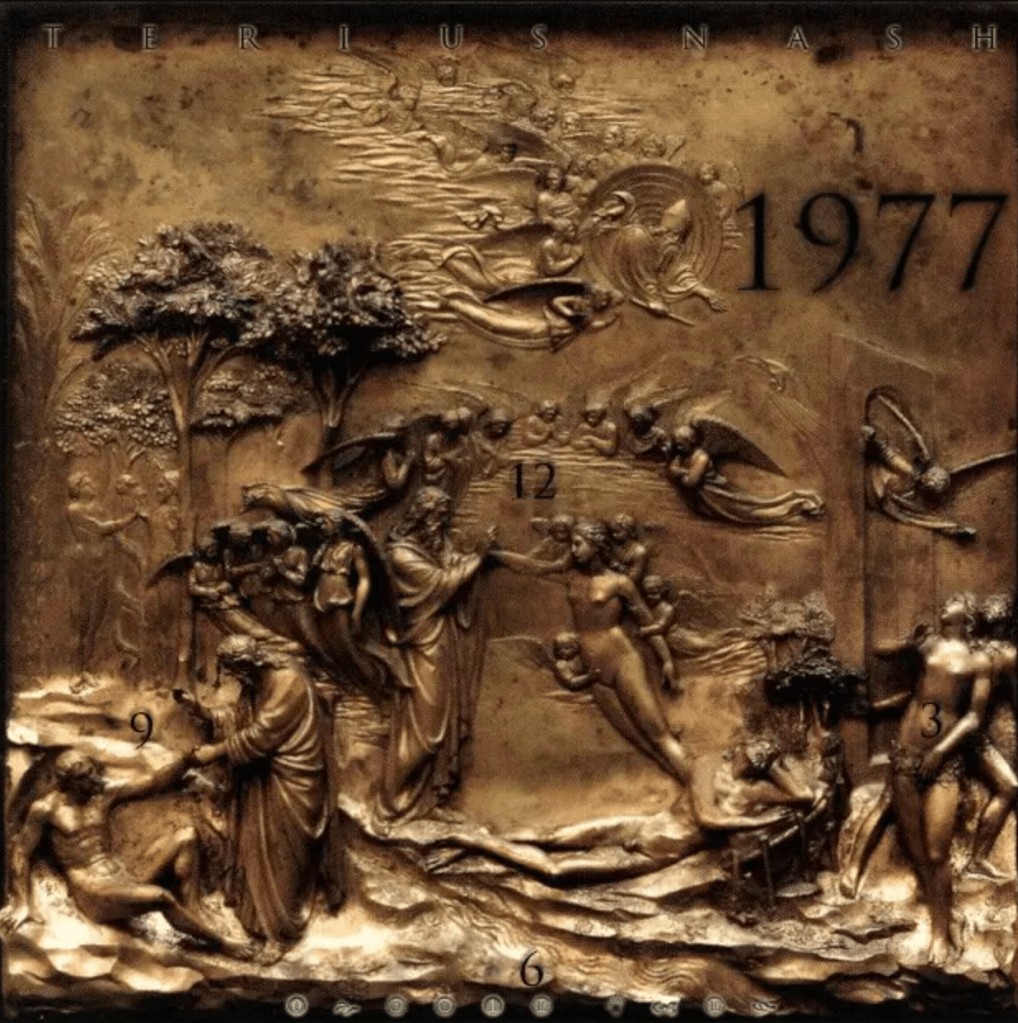
Album Review: Terius Nash’s (AKA The-Dream) 1977 (2011)

I think 1977‘s “Ghetto” is my most listened-to The-Dream song, and it doesn’t have much of a right to be. It’s got a phoned-in Big Sean verse, a slightly-too-long outro, and it’s about sex, the most common topic in Dream’s oeuvre. So why have I spend damn near ten years playing this track over and over again? It’s the melodies. They’re so good. Those first two minutes of “Ghetto” go by in a flash every time, and when I hear them I just want to listen to it again.

A master at his craft, The-Dream spent the mid-to-late 2000s carving out a new peak in pop-R&B with his Love trilogy: three albums loaded with brilliant melodies and immaculately constructed, flowing freely from one track to the next. How would he follow this trilogy up?

On Love King‘s (2010) “Sex Intelligent Remix”, he prescribed his next step: on 6/7/2011 he would release Love Affair. That never happened, presumably due to label issues, but at the peak of his might Dream was reluctant to go a whole summer without delivering. He would tweet the following: “The “TERIUS NASH EST. 1977″ is very personal and to my Fans! BTW NO ONE AT DEFJAM IS HAPPY ABOUT A FREE ALBUM LOL…. they are trying to stop it!” 1977 was released for free on the internet on August 31 under Dream’s birth name, Terius Nash.

Though rare, the Love trilogy’s darker tracks like “Nikki” and “Abyss” were highlights of their respective albums. On 1977, this mode is the standard rather than the exception. Unquestionably informed by his then-recent divorce, many of 1977‘s tracks are bleak and beautiful. “Used to Be” is acerbic, and “Long Gone” is a nothing-to-lose confessional: “I’ve forgotten how to fuck you / Now when you say my name it don’t feel the same way”.

Mid-album, things lighten up a bit with the aforementioned “Ghetto” and the Rick Ross-like “Rolex”. But the rich flexing doesn’t last: the title-track (Dream’s birth year) is brutal: “It hurts me just to see your name / And that tattoo runs through my veins”. “Form of Flattery”, which closed the original album, is the closest thing to The-Dream’s “Fast Car”: a simple acoustic guitar loop underlies a spare track over which Nash demurs over his ex’s words: “I’m not better than that / But I appreciate the form of flattery.”

1977 was re-released in 2012 on CD with a slightly altered tracklist, removing the mellow “Kill the Lights” and the Casha (presumably a Dream protégé) solo “Silly” (sidebar: when I saw Dream perform live around this time, he brought out Casha mid-show to sing some solo tracks, which weren’t particularly well-received). However, the 1977 re-release (the version on streaming) adds “Long Gone” as well as two great bonus tracks: the flat-out incredible “AK-47”, and the downcast, self-criticizing “Tender Tendencies”.

In an era when Drake was at his peak and Kanye was still making amazing music, 1977 got lost in the cracks and is still under-rated, and The-Dream hasn’t made an album as good since. If you’re looking for an R&B gem, or a strong album borne of personal pain, check this one out.

Listen to 1977 here.

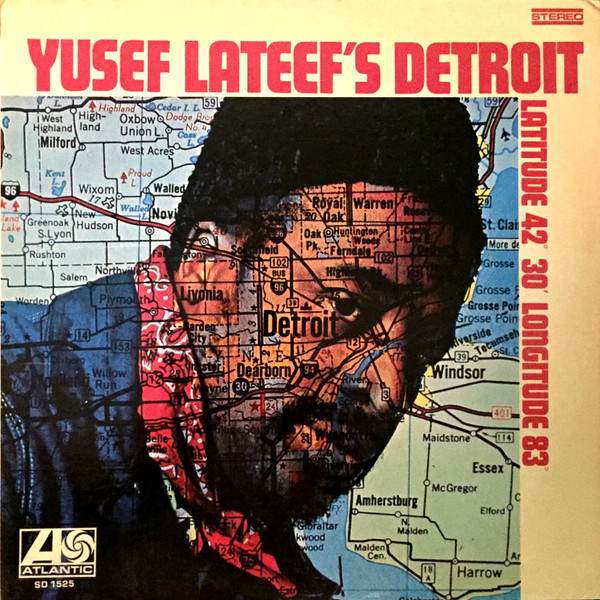
Album of the Week: Yusef Lateef’s Detroit (1969)

Detroit. Automobiles. G.M., C.M., A.M. Mark of Excellence! Factories, foundries, gases, grease, grime, smoke, black out, shake out, lay pipe, cement, mixer, mixing. Metal. Black sand. Sweet sweat. Dig ditch, fill hole, carry hod. Step back! Carry hod.

I previously covered Yusef Lateef’s popular Eastern Sounds from 1962, but this week’s entry is an altogether different beast, an album that is both a propulsive funk travelouge and an inward-looking journal. Lateef moved to Detroit in 1925 when he was 4 or 5 years old, and also recorded there in the late 50s. In 1969 he recorded Detroit while living in New York City, revisiting the tableau of sights and sounds experienced in his youth.

The opening “Bishop School” is a rhythmic blast that reflects the recording’s stellar lineup including Bernard Purdie and Ray Barretto. You may recognize “Eastern Market” from its sample on MF DOOM’s “Who You Think I Am”. Late in the track Lateef can be heard portraying a market vendor: “Sweet potaytas! Getcha greens!” he yells. “Russel and Eliot” has a slower, kind of grinding funk feel – just awesome. “Raymond Winchester”, which was released as a b-side to the “Bishop School” single features almost terrifying playing from Lateef – his instrument sounds like a howling baby.

The album closes with its only non-original, a take on “That Lucky Old Sun” (which Jerry Garcia Band would later cover) that was also recorded 2 years before the rest of the album’s sessions. A notable change in tempo, it’s a supremely relaxed cut on an otherwise peppy release, and a great example of Lateef’s versatility.

Listen to Detroit here.

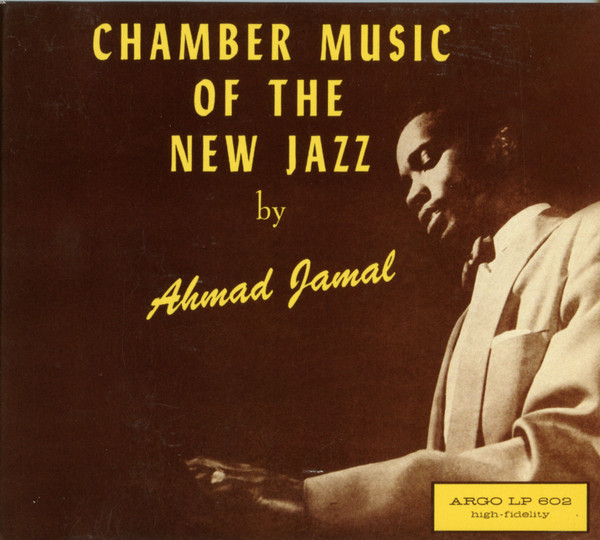
Album of the Week: Ahmad Jamal’s Chamber Music of the New Jazz (1956)

Ahmad Jamal had a long and lucrative career in jazz piano, and it started off with the smooth Chamber Music of the New Jazz. Recorded in 1955 and originally released as Ahmad Jamal Plays, the album was re-released a year later (with every successive reissue known as Chamber Music). Jamal would score a hit in 1958 with his live trio album At the Pershing, recorded with bassist Israel Crosby and drummer Vernel Fournier. Chamber Music is also a trio album but without drums, instead featuring guitarist Ray Crawford (a Pittsburgh native like Jamal).

Crawford’s guitar is notable, as he plays around with little pops on “All of You” and “I Don’t Wanna Be Kissed”. Crawford’s own composition “Jeff” has always been my favorite track here, and it’s opening call-and-response between guitar and piano sticks in my head. The rest of the album is largely standards, with Jamal’s opener “New Rhumba” the exception. That track is mellow, whereas Jamal and company play with a lively flair on “I Get a Kick Out of You” (both modes are great).

The lack of drums makes for a nice late-night listen and really allows Jamal’s piano playing to stand out in all its beauty. Short and sweet, Chamber Music of the New Jazz is an easy record that nevertheless captures a magic exercise in jazz collaboration.

Listen to Chamber Music of the New Jazz here.

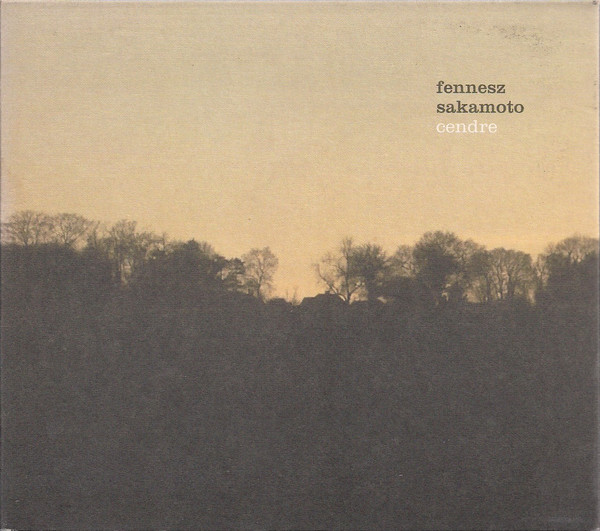
Album of the Week: Fennesz & Ryuichi Sakamoto’s Cendre (2007)

The great Ryuichi Sakamoto passed away recently, and while he has a lifetime of musical achievements under his belt, the work of his I’ve listened to the most is probably this collaboration with Christian Fennesz. The duo had previously collaborated at a live show in Rome, yielding the 2005 EP Sala Santa Cecilia, consisting of one 19-minute track.

If Sala Santa Cecilia is a journey (and an often-brilliant one), Cendre feels a bit more homey. Indeed, opener “Oto” hits like a fresh cup of tea, bright and mellow. Fennesz, whose guitar music occasionally commands with its intensity, steps back as Sakamoto’s piano playing takes center stage.

Sakamoto had the talent of imbuing his playing with emotion, whether that be on a stunning track like “Merry Christmas Mr. Lawrence” or a subdued release like Async. Cendre is no different. “Haru” (sunshine or springtime) radiates with calm satisfaction. “Trace” finds Sakamoto expertly navigating some minor-key dissonance beneath a film of laptop hiss in the record’s first unsettling moment.

Things slow down even more in the album’s back half, with the penultimate “Glow” moving at a crawl. A glitchy duet, it reveals beauty in empty space. Last up is “Abyss”, with Sakamoto’s circular piano melody broken up by a brief respite in the middle of the track. The album ends in 30 seconds of near silence, the curtain closing on an outstanding meeting of two giants.

Listen to Cendre here.

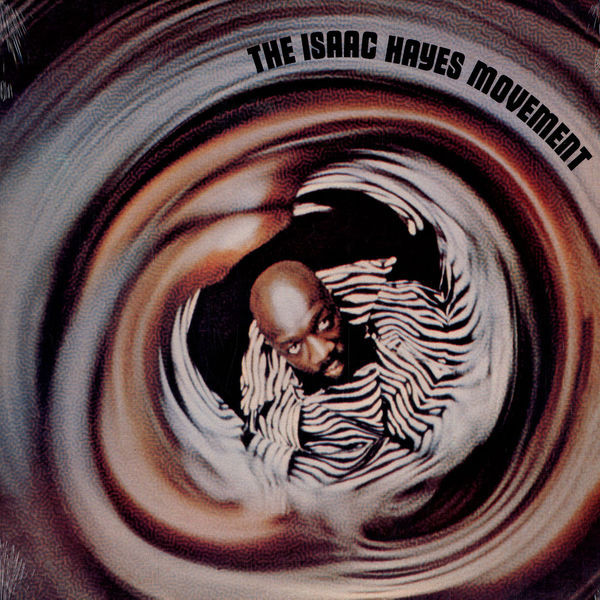
Album of the Week: The Isaac Hayes Movement (1970)

Isaac Hayes released a whopping 6 albums between the 4 years of 1968-1971, including the double-albums Black Moses and Shaft. All the albums are worth seeking out, and I’ve previously covered his excellent debut from 1968. The young artist followed that up with Hot Buttered Soul, his magnum opus, and in 1970 released his third LP, The Isaac Hayes Movement.

Hot Buttered Soul standout “By the Time I Get to Phoenix” is echoed here on Movement‘s opener “I Stand Accused”. The grand narrative buildup, the orchestral accompaniment and the arresting performance of the song make this track nearly as good at nearly 12 minutes. The epic buildup pays off as ol’ Ike, brimming with emotion, rattles off “I love you”s to his unrequited love. Similar in length is the closer “Something”, a take on George Harrison’s classic contribution to Abbey Road, though it fails to beat the Beatles version. The album is filled out with “One Big Unhappy Family”, as bitter in lyrics as it is sweet in sound, and the downbeat “I Just Don’t Know What to Do with Myself”.

I was walking to work in Philly one day, about 2 years ago, when I found a stack of records abandoned on the sidewalk. Among them were gems like Superfly and this Hayes album (which has a sick insert that hangs on my wall). Though it seems to get overshadowed by some of his other work, Isaac Hayes Movement is classic material from the artist at his peak.

Listen to The Isaac Hayes Movement here.

Album of the Week: Sixpence None the Richer’s Divine Discontent (2002)

Have you ever seen She’s All That with Freddie Prinze Jr. (of Scooby-Doo fame), Rachel Leigh Cook and Matthew Lillard (also of Scooby-Doo fame)? It’s basically an above-average teen movie, but the best scene is undoubtedly when Rachel Leigh Cook’s character walks down her staircase as Sixpence None the Richer’s “Kiss Me” is playing. “Kiss Me” (1997) is peak grocery store-core. Happy, catchy, mellow and saccharine, it’s a smash hit that remains Sixpence’s most popular song.

After their (now certified Platinum) self-titled album came out in 1997, it took almost 5 years for the band (with ties to Texas and Nashville) to release a follow-up. Lead singer Leigh Nash, an unabashed Christian, stated in a 2003 interview with Jesus Freak Hideout that label problems delayed the release of Divine Discontent, and that it wasn’t supposed to feature the Crowded House cover “Don’t Dream It’s Over”, which Sixpence recorded for the TV show Smallville.

Though the inclusion of “Don’t Dream It’s Over” may have been a push to sell the album rather than an artistic decision, it’s still a standout here. They stick fairly close to the original version, which is not a bad idea. I became obsessed with the Crowded House version recently, which led me to finding Divine Discontent in the first place. With this song, two versions are better than one.

The rest of the album is cash money too, though. “Breathe Your Name” sets things off with as much sunshine as Natasha Bedingfield’s “Unwritten”, but it’s a little groovier. “Waiting on the Sun” is another pop banger. “Paralyzed” is the rocker that I imagine them ripping in a live setting. “Tension is a Passing Note” is a broken ballad that Nash has called her favorite Sixpence song. “Do I murder us / putting pavement in my veins?” she asks. It’s an unsettling moment, and it works in the band’s favor. The Van Dyke Parks-assisted “Dizzy” is like a primer for the soaring closer “A Million Parachutes”, another stand-out.

As far as being lumped into the Christian rock category, as Sixpence often is, Nash has said “I am a big fat Christian and do not care who knows that. When it comes to our music we’d just like it to be taken for it’s musical value and not lobbed onto a big bandwagon.” Divine Discontent far exceeds any expectations of generic Christian rock, and it has aged well in the same way that Michelle Branch’s early 2000’s hits have aged well. They’re well-written rock songs produced to pop perfection.

Listen to Divine Discontent here.